New Spice

Today in class we watched quite a few interest-piqueing videos. The one that really caught my eye, however, was the ‘Will It Blend’ episode with Old Spice. That’s because the I had seen something similar with, I believe, the same actor before. Here’s the ‘New Spice’ video I was thinking about.

This is just one example of how marketing in today’s world astounds me. Marketers have to be so on top of trends to successfully market their goods and services. This video just highlights marketers’ ingenuity; as soon as Old Spice’s famous ad campaign got big, spin offs erupted all over the internet, with people trying to ride on the metaphorical tailcoat of ‘The Old Spice Guy’. This is not something that would have happened in the marketing world 20 years ago, yet now it’s not even suprising. I guess it just goes to show the versatility of the evolution of marketing.

All for a Rose

I have to say, before I watched Business is Blooming: The International Floral Industry in class, I had absolutely no idea how much time and effort, and how many channel members, could go into the transportation of a good. I was left with one question unanswered at the end of the film, however. How would the distribution channel for Ecuadorian roses be different if they were not as perishable a good?

Lets say, just for a moment, that the flowers could be sold up to about a month after being picked, and still look fresh. Would they still need as many channel members, or as much speed and urgency during transportation? Perhaps some retail stores would want to stock up on the roses before valentines day, or other holidays. This would give the growers a little more leeway as to when their roses could blossom; if they were late or early by a week, there would be no harm done as they could just be stored for later use.

As there would no longer be such a rush through the channel, would channel members be dropped so that more control could be kept over the product? Would the agent still be needed to facilitate getting the roses from the farms to the wholesalers and beyond?

Natural disasters, weather and other such disruptions probably wouldn’t cause such a problem, as some stock could accumulate and not go bad. As well, shopkeepers could keep a larger amount in stock, and thus not be as affected by fluctuations in immediate availability.

Of course there would be many other repercussions from such a shift in the perishability of Ecuadorian roses, both positive and negative for members all through the channel. I’d be interested to hear your views on what would change. 🙂

Is Nike trying to Rebrand?

Eric Tsao’s October 10th blog post about Nike really caught my eye. As he said, Nike and the slogan ‘Just Do It’ are just about synonymous in the majority of consumers’ eyes. That’s why the video in Eric’s post surprised me. Could Nike, of all companies, really be trying to reposition itself, even a little?

This video, Nike’s new ad, does not have one reference to the catchphrase ‘Just Do It’. In fact, one of the only words in the minute long clip is ‘Boom’. This is so rare for a Nike ad that it’s actually startling.

The question is, what is Nike trying to accomplish with this? It is so well known, both by its own name, and by it’s original slogan, that attempting to reposition with a new slogan seems a pointless effort.

My best guess is that Nike, as a major player in a mature industry, has plateaued, and is looking for new ways to increase it’s market share. Nike’s marketers are trying to breath new life into its somewhat stale ad campaigns. Eric and I can’t be the only ones surprised by this new ad, and perhaps that is the point of it; consumers tune out when presented with a typical Nike ad, because they know what to expect. I believe this is Nike trying to spice up a somewhat tired relationship with North American consumers.

Although, in all honesty, it could be one of any number of marketing ploys. It could be simply a new line of products called ‘Boom’. It could be an additional slogan, meant to coexist with ‘Just Do It’. Whatever it is, I sure like the snazzy new shoes associated with the campaign. 🙂

What I'm hoping I get for Christmas

Australian Marketing Blunder

I was reading Stacey’s blog post on an Australian marketing blunder, and I had a few comments of my own to add to it. First, a brief synopsis:

This ad, created by Tourism Australia, backfired when it was employed in the UK. As Stacey pointed out, they should have used different wording; it was found to be so offensive that it was removed.

I believe that the problem was not simply a poor choice of words, but an issue far deeper. Tourism Australia had segmented the market, chosen their target, and moved in. But it missed a step. It forgot to get a clear understanding of its chosen market segment. They moved forward clearly without doing enough market research, not having any idea that the word ‘bloody’ was, in the UK, so offensive.

The cost of this campaign is so much more than the time, effort and money they spent creating and publishing the ads. Now, Tourism Australia, and Australia in general, have a bad image in the minds of UK consumers. They are going to have to do some serious market research, and clearly identify the position they want to occupy in the minds of UK consumers before they attempt any further efforts in this area.

Online Marketing – All it’s Cracked Up to Be?

In the interest of getting a good grade, I was searching the internet for an article or blog post somehow related to marketing to link to this blog. That’s how I came upon what is apparently Google’s number one marketing blog. Michael Fleischner’s ‘The Marketing Blog’ has an article from May of last year discussing Facebook and Twitter’s impact on online marketing. His argument that they are helpful tools, but certainly not all they’re cracked up to be has, I believe, been proven invalid by time. If he were to write a companion piece to that article today, there is no doubt in my mind that he would be forced to eat his words.

Facebook and Twitter have essentially become online marketing. Yes, having a website and buying advertising space on other sites is still widely considered necessary for a successful online campaign. But social media is how marketers are really reaching their consumers today. It’s how people are branding themselves. It is for all intents and purposes the most powerful form of marketing currently available. And as more and more people join these networks, contrary to Fleischner’s belief, their power is only growing.

Viral Marketing

Who hasn’t seen the old spice ads on youtube? Better yet, who hasn’t shown someone else one of these ads? By doing this, you became an integral part of the Old Spice viral marketing campaign, yet I doubt that’s what you were thinking while you sat there laughing over Isaiah Mustafa’s outrageous statements with your friends.

Viral marketing is called that for a reason, if it is successful, it spreads like a virus, from person to person, until nearly everyone has been exposed. To accomplish this it is, of course, a web-based form of advertising, but simply because it is released, it is not guaranteed to go viral. Companies spend inordinate amounts of time developing such ad campaigns.

They have several goals that they want to accomplish; first of all, it has to strike a chord with a maximum amount of consumers. Nearly everyone who sees it should want to show at least one other person the ad. Because of this, companies are actually trying to create more art than they are ad. If consumers don’t think they have benefited from seeing an ad, whether by laughing at it or learning something from it, they are unlikely to want to pass it on.

Once that step is covered and the ad is being passed around the internet, a major weight is off the company’s shoulders. Merely having people see it, however, is not the end goal. The aim of any marketing campaign is to increase sales; if consumers see the ad and like it, but don’t associate it with the product/product line that it is attempting to sell, then all of the money put into the development and release of the ad(s) is wasted.

Not only did we, the consumers, laugh our faces off because of the Old Spice ads, apparently we decided that Old Spice body wash was a great product; sales for the product have increased by 107% since the release of the web-based campaign. That is probably the most successful, or at least most recently successful viral marketing campaign of our generation. As we’ve all seen that already, though, I thought I’d leave you with a viral campaign that flopped: releasing 100 cats inside a closed Ikea store, and filming them: cute, but apparently unsuccessful.

https://www.youtube.com/watch?v=vCB7RqGS684&feature=player_embedded

Guerilla Advertising

Our generation is notorious for being impervious to traditional advertising. We’ve been exposed to it since birth, and we’re just not buying it (pun intended). This has led to some of the most creative, and hilarious, advertising campaigns in the history of marketing. The intent of this kind of advertising is not to inform, but to entertain, because THAT is how you get people telling their friends about your brand. The entertainment factor, the shock factor, is one of the greatest weapons marketers have in their advertising arsenal. Companies continue to go further and further to achieve this, and to have their ads talked about and spammed from email to email. I’ve attached some of my favourite guerilla ads, some of which have probably been spammed to your email before. I hope you still get as much of a kick out of them as I do. Enjoy. 🙂

df02_guerrilla_adcGuerrilla MarketingdfdGuerrilla MarketingGuerrilla MarketingGuerrilla Advertising

Rebranding Halls

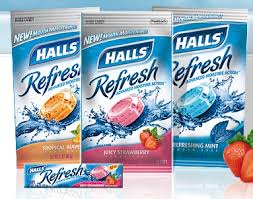
While on the bus yesterday, I came across an advertisement for a surprising new product from a well-known brand. Halls, the cough-drop powerhouse, is attempting to break into a whole new market, something that will require a massive perception overhaul. Essentially it must re-brand itself to the masses.

As with brands such as Kleenex and Play dough, the company name ‘Halls’, has become synonymous with the goods it produces, namely sore-throat relief. While that has been one indicator of huge success in their current market segment, it will only prove detrimental to any efforts to take the company in a new direction. Most of their customer base, and in fact consumers in general, are confident in their product knowledge with regards to Halls. Because the company has done such a thorough job of branding itself, once shoppers see the Halls logo, they often don’t read further, rendering the rest of the packaging moot.

The product featured in the ad I saw is an “everyday refreshment…that’s deliciously mouth-watering” (from the website); in other words, a candy; a candy that has the same packaging, the same look, and probably the same taste as other Halls goods. This is where I foresee a problem. Customers looking for candy will let their eyes skip right over the Halls waiting by the checkout to the chocolate bars beneath them. And customers looking for help fighting off a cold might assume the new candy is simply another take on the product they want.

I’m questioning whether it was a good marketing decision to release such a visually similar product in a new segment under the same name. Maybe with a massive, well-researched and well-implemented advertising campaign they will be able to successfully launch what seems to be a good product. As of yet, their marketing efforts seem inadequate to stave off the product confusion that I’m sure is already happening.

I would love to hear someone else’s opinion on this.  🙂