Pre-Reading and Pre-Viewing for the 2012 Summer Class

by Dr. Norman Stanfield ~ May 1st, 2012

The count-down begins in earnest for M403J, Introduction to the Study of Popular Music, the 2012 edition, so you may be asking yourself if there is something you can do before the first class?

Obviously a lot of lounging, considering that you’ve all struggled and fought your way to the end of Spring semester, with its deluge of end-of-term papers and exams. But I think you’ll find your new freedom replaced with, dare I say, boredom, caused by a daily life without the stimulus of learning. So with the prospects of a summer course to get your synapses firing on all cylinders again, I have some suggestions for reading and viewing that you could do ahead of the course date. Note that these suggestions are not “required” course material; you most certainly could succeed in the course without reading or seeing a single one of these items. But I believe you’ll be far richer for the experience, and definitely get more bang for your buck (i.e., M403J tuition fee) when you’re in my classes.

Granted, you will be doing this summer reading on the bus, to and from work, or perhaps the beach on week-ends, but on the plus side, my recommendations are what could be called inspired over-views that time never allows during a regular semester. They are full of rich insights while avoiding meandering academese. And best of all, they’re easy on the wallet.

Pocket-Books

At the top of the list is Music: A Very Short Introduction, by Nicholas Cook (Oxford University Press). Coming in at a modest 137 pages, it is the most erudite and engaging non-fiction book I have read in a very long time. And it’s very inexpensive. As you work your way through the pages, you’ll discover that popular music features prominently in his discussions. Gone are the days when “music” meant Western Art Music.

If you are as deeply impressed with the book as I was, you will want to go the next step and read World Music: A Very Short Introduction, by Philip Bohlman (Oxford University Press, 150 pages). I approach popular music studies partly from the vantage of an ethnomusicologist who has embarked on a probing study of a far-away music culture. Except it is the music of Us (as opposed to Other). Both books are part of an excellent series of pocketbooks (that can actually fit in a pocket!) called “Very Short Introductions”. The series appears to be missing Popular Music: A Very Short Introduction, but Nicholas Cook has the topic perfectly covered in his book.

Then there is Carl Wilson’s brilliant little pocketbook, Celine Dion’s Let’s Talk about Love: A Journey to the end of Taste (2007). It’s a cheeky look at pop, as opposed to rock, and it explores the topic of popular listening preferences among “the masses”. And it’s a hoot. I guffawed out loud in the airplane when I was reading it, much to the surprise of my movie-watching seat-mates. Best of all, it’s a great Canadian read. His book is from another series of tiny books collectively called 33 and a 1/3. Each one zeros in on a pop music icon to reveal basic truths about music-making and music-listening.

Larger Books

If you have a more time on your hands, or perhaps you are feeling really ambitious, I recommend these larger studies that fill very important gaps.

Bruno Nettl, Heartland Excursions: Ethnomusicological Reflections on Schools of Music (1995). Nettl casts his sharp eye on the world of schools of music, and in the process, illuminates Western art music in a whole new light. By placing WAM in a new context, he provides a level playing field that allows the introduction of topics like the study of popular music. The “heartland” in the title is a reference to a typical music school in the American mid-west, but it applies equally well to UBC’s School of Music. My only quibble is the lack of Canadian content, but I acknowledge that he didn’t write it for “us”, but rather for the thousands of American music students who fill their massive schools of music.

Next, dive into Christopher Small. Although my gut tells me to recommend Music.Society.Education (1977, reprinted 2000), my head says, read Musicking: The Meanings of Performing and Listening (1998). The latter evolved out of former, a ground-breaking study of Western art music in relation to music outside of the concert hall, including popular music.

If you have a vast ocean of time on your hands, then you might want to perform a reality check on your paper writing skills by reading Music: A Short Guide To Writing  About Music (second edition), by Jonathan Bellman. It’s a bit stuffy, but he does make a few good points which could be useful for upgrading your writing style.

None of these books are available as e-books. As inconvenient as that may be, it tells us something about the marketplace for ideas.

Movies

“But wait. There’s more” (K-tel)

I recommend seeing the following movies as well. Brief excerpts of some of them are presented in my classes, so it would be quite an advantage to see them in their entirety before you attend the classes. Of course, like assigned readings in a typical university class, you’ll wonder what part of the myriad details will be the subject of discussion, but seeing the movies ahead of time will set you up for at least a glimmer of recognition.

Also, if you look at the syllabus for M403J in my UBC Blog website, you’ll see recommended (not required) movie titles that have been added to each lecture description. The following brief list of titles is a mix of my syllabus recommendations and other films that I introduce in class. They are movies with music content, unlike some of my syllabus recommendations that veer into non-music topics dealing with popular culture. Also, some of the movies below are “golden oldies” but they still stand out because of their timeless themes.

I acknowledge that “seeing movies” has taken on an entirely different meaning in these modern times. With the death of DVDs and movie rental chains, viewing movies is now restricted to those with access to the internet and Netflix or a similar site (which raises uncomfortable questions of equality of access), or buying the hard copy, which is what I do.

Five Easy Pieces (1970).

Jack Nicholson is at the top of his game, but that isn’t why I think the movie is great. Patiently wait for the scene in the movie when Nicholson’s character plays a classical piano composition, then admits to his dilemma of sounding authentic, while feeling inauthentic. For me, that moment is the climax of the movie, and its central theme. And yes, the title is a riff on Stravinsky’s music for piano of the same name, which I love.

YouTube Preview Image


School of Rock (2003)

Jack Black is hilarious as he challenges the norm of grade school music education with, what else, rock and roll.

YouTube Preview Image


Crossroads (1986)

A classic study of the hybridity that comes from combining classical music technique with rock music know-how, starring the same young guy (Ralph Maccio) who inspired us in Karate Kid.

YouTube Preview Image


The Visitor (2007)

One of the themes in this movie is the fascinating progression of interest in music performance from Western Art Music in the form of piano lessons, to the popular idiom of drum circles.

YouTube Preview Image


Bamboozled (2000)

Despite the fact that this movie does not have a music theme, it does address some issues in the entertainment industry, and it will give you a very important context for discussing rap, in or out of the class.

YouTube Preview Image

What am I listening to right now?

by Dr. Norman Stanfield ~ April 21st, 2012

Students in my 2012 summer music class, Introduction to the Study of Popular Music, will soon be gathering in the School of Music building right about the time the rhododendrons are in bloom, or should I say, exploding from the over-sized bushes they stem from, all over the campus. At this time of the year the university resembles a national park. The evening time slot of my classes is a rare opportunity to take in the atmosphere of the wide expanses of the commons interrupted by towering trees bathed in the soft light of the summer dusk.

Our busy agenda will partly be taken up with shared pop music pleasures in a class project where volunteers present their current musical favourites in a relaxed 20-minute format, using guidelines found in my online course website. It’s worth marks, but I’ll explain those details in the class.

In the spirit of full disclosure, it’s only fair that I should reveal what I’m listening to these days.

Remember that most of my musical life has been taken up with the life of a classical musician, ethnomusicology and teaching, but that’s not to say I have been oblivious or even antagonistic towards pop music. On the contrary, it has provided the sound track of my life, and continues to do so, today. Our western world is totally immersed 24/7 in popular culture, including popular music, so it’s impossible to ignore. To turn my back to the flow of daily life expressed in popular culture and music is to be “off the bus” and out of touch with current and potential audiences. In fact, classical music is beginning to meet pop music at the half-way point, much to the annoyance of its old school listeners.  Given the crisis engendered by classical music’s shrinking audiences, as documented by Greg Sandow and others, it may be too late.

Be that as it may, my interest in the latest top ten has never been far from my mind or my ear, regardless of the distractions of contractual occupations and fatherhood.  Thank God for the car radio.

The background

When I was younger, we all socialized to the sounds of popular music, including those of us training for careers in classical music. Like all adolescents, my first experiences with pop music were deep and life-altering, akin to ducklings imprinting on their mother. No matter the time in history or the genre of the songs, our first pop music love can set us on fire and burn bright when we give in to nostalgia. For those of us in the classical music business, what is unknown is the manner in which these early flames influenced our love of classical music. Now there’s a great dissertation.

Since absorbing myself in popular music studies these last few years, I’ve discovered my listening imprints were formed in The Dark Ages, according to Rock of Ages: The Rolling Stone History of Rock and Roll (1986). Those dark times have also been called the Culture Wars. After the raw sounds of early pop in the 50s, the main-stream music industry, dominated by my parent’s generation, fought to re-gain control of popular music by co-opting and denuding rock and roll (and the folk music revival) with novelty numbers and easy listening composed by producers and composers like Mitch Miller or Percy Faith (a Canadian!). They went further by manufacturing and distributing what they believed to be appropriate “teen” music by producing crooning love songs and pleasant up-tempo numbers sung by white Teen Idols like Pat Boone and Frankie Avalon of Beach Party fame.

“Dark Ages”? That wasn’t my experience. It’s true that we couldn’t bear to see or hear the music appreciated by the previous generation. Also, our sub-generation scorned the Elvis impersonators in the higher grades, rejecting cuffed jeans (a la Grease) in favour of preppy clothing). But, at school dances there was still a whole lot of rockin’ goin’ on, thanks to the heated, distorted sounds of Louie Louie, as sung by the The Kingsmen, and an avalanche of new dance moves like the twist that displaced old-school  jive, a staple of high school dances for about 40 years. (Jive lives on as Ceroc and the rarified world of ballroom competitive dance.) Mind you, my Canadian prairie world had virtually no exposure to the music of black America and only a slight awareness of the American Folk Revival (Bob Dylan et al). There were many local garage bands that provided music for dances, emulating American surf music. Some of them, like the Stampeders, worked their way onto the charts.

My parent’s listening tastes were exactly opposite. No surprise here; that’s typical of generational change. But, there seemed to be more to the contrast than the usual musical opposition generated by youthful rebellion and raging hormones. They listened to “easy listening” and television crooners like Dean Martin, Perry Como, Debbie Reynolds; the list goes on and on. In rural Canada, there were still vestiges of country and western, but not in the cities. Given that their musical tastes were drenched in benign, always soft, musical sounds it’s hard to believe that generation evolved from the jump-sounds of the big band era. The entire urban parental culture seemed to be locked into a unreal state of altered reality, heightened by their suburban life-style. For an example “the book British Hit Singles & Albums states that (Mantovani) was “Britain’s most successful album act before The Beatles … the first act to sell over one million stereo albums and had six albums simultaneously in the US Top 30 in 1959” as quoted by Wikipedia. If you are familiar with the music of those “cascading strings”, you would be horrified. Worse, the dream behind many a parent’s ambition to provide classical music lessons for their children comes from those kinds of music preference.

YouTube Preview Image

When I was in a university school of music, living in a student residence, the Beatles arrived. Of course, they had already been around for several years before that, but as new bottles containing old musical wine (i.e., covers of R & B, and tweenie love songs). But all that changed when the Sergeant Pepper’s  LP became available. Then the deluge. We classical music students began to hear from other music students about Leonard Bernstein’s enthusiasm for the Beatles, comparing Lennon and McCartney’s songs to Schubert. None of this raging discovery penetrated the walls of the music school, but outside, at dances and listening parties, we were all transfixed and mesmerized. Classical music students were living entirely compartmentalized lives, working at classical music while living in the midst of popular music. I haven’t seen that state of mind change until recent times.

Pop music comes and goes, of course. When I first started teaching Popular Music Studies, Curt Cobain had recently died. That had a profound effect on many of my music and non-music students. Now he’s hardly remembered. Thanks to the arrival of many new Canadians into my classroom, I’ve discovered C-pop, M-pop, K-pop, and J-pop.  Another trend I’ve seen in my classes is the general lack of awareness about the Great Canadian Songbook which increases year to year. The GCS not comprised of art music, but rather popular music created by hard rockers like Randy Bachman and soulful prophets like Joni Mitchell. Given its status as the legacy of Canadian music history in the minds of the majority of Canadians (at least, since the 50s), I address that problem in my class.

A confession

I am a CBC addict, and have been for a very long time. I was there during the CBC 2 earthquake when day-time listening converted from wall-to-wall classical music to Canadian folk-rock interrupted by a few hours of Beethoven and Brahms at lunch-time. For me the dramatic shift in programming did not signal the end of the world, but rather a profound witnessing of the displacement of classical music from the centre to the periphery, at least among the CBC listening public. The moment was as dramatic as the time in 1969 when the Canadian fiddler Don Messer was pulled from CBC in order to change its image from local to worldly, as in up-town and sophisticated. Next stop, global. The recent change in their week-day programming has brought me back into the fold of pop music, albeit in only one format, Canadian singer-songwriters. I know that I’ve been missing some key sounds and ideas in the today’s soundtrack, from Lady Gaga and Glee to Drake and Lil Wayne, but with the help of social media and the likes of Pitchfork, I keep up to date.

The envelope, please

So, to return to my opening question, what am I listening to right now? Last summer I couldn’t get enough of Stars (Fixed), Metric (Gimme Sympathy and Sick Muse) and One Republic (Secrets). Lately I’ve been pausing during my busy days to listen to Sarah Sleane (Amen), Kathleen Edwards (Change the Sheets) and Feist (The Bad In Each Other). My son introduced me to a great new singer named Grimes (Claire Boucher).This week’s obsession is Genki Sudo (World Order).

YouTube Preview Image

But, regardless of my current favourites and nostalgic flashbacks, I am also in the enviable position of researching rap, drum-and-bass, punk, Canadian rock and roll, and countless other pop and rock sounds. It all goes towards my deepening understanding of the contents of my pop music course. In addition, I find myself reflecting on popular culture in a far more conscious and “critical” manner than I ever did as a youth. For example, I’ve been re-discovering the Beatles, thanks to the insights of YouTube, the Web, books and articles that could never have been imagined when the Beatles were current. And I even wonder if my teen-age tastes were formed by the same entertainment industry that created Beach Blanket Bingo. “Oh the humanity!”

It’s a great time to be studying music.

Music Appreciation 2.0

by Dr. Norman Stanfield ~ April 6th, 2012

I recently spent umpteen hours in front of a video screen, viewing three television series devoted to the understanding (and then appreciation) of music. But, rather than regretting the down time, I got off the couch very impressed and perhaps even changed. All of them were hosted and researched by Howard Goodall who has an impressive career as a populist music educator and documentarian for the BBC.  I began with the 2006 series entitled  How Music Works and then moved on to his self-titled Great Dates (2002), followed by the piece de resistance for me, 20th Century Greats: The Beatles (2004). Summer 2012 students enrolled in my course MUSC 403J – Introduction to the Study of Popular Music – should have a close look at the latter. The three programs (but not his first documentary dating from 2000, the Big Bangs of Music History, commercially available from Kultur) are unofficially available on YouTube. Naturally, I am anxious for all of them to be formally published so that all concerned can benefit from its sales, but for now they are least viewable, albeit in some sort of legal limbo.

How Music Works

For my blog, I have chosen to describe “How Music Works” in some detail, although it is by no means superior to the others. It jumped out at me because my courses are open to non-music students and his explanations of the mechanics and aesthetics of music would certainly give them a major leg up as they prepare for my lectures.  Also, the series resembles a Music Appreciation program but with an important upgrade I will explain momentarily.

How Music Works is sometimes irreverent and always far-ranging, with profuse use of popular music to make its points. The startling use of pop and rock to underline music concepts normally illustrated by Western art music is reminiscent of Leonard Bernstein’s extremely popular televised children’s programs called “Young Peoples’ Concerts”. In his usual Manhattan button-downed, up-town style, Bernstein introduced the fundamentals of music to a concert hall full of children trucked in from suburban schools. But, in addition to describing musical characteristics with the usual classical music settings, he also employs popular music. When he launches the musicians of his New York Philharmonic into a chorus of a Beatles song to illustrate some sort of construction in melody, the enthusiasm of the tweenies is electric. The camera pans to the audience, showing us the barely contained delight of row upon row of surprised kids.

YouTube Preview Image

Goodall also reminds me of another great explainer of all things music – Robert Harris, an occasional presenter on CBC.  His series called Twenty Pieces that Changed the World, featured on the Sunday Edition, is still one of the most popular items in the history of CBC programming. Although radio-bound, like a radio play, his language and tone more than compensate, conveying information with a marvelous mix of common sense and unexpected wonder. And he too places great emphasis on popular music alongside the usual classical music suspects.

How Music Works is divided into 4 sections in sequence – Melody, Rhythm, Harmony, and finally Bass – each one presented on Youtube in five parts. Although the joints of each part are rather awkward, I didn’t find them disruptive.

The quirks

Right off the bat, you have to accustom yourself to the fact that the program originates from England, complete with accent and jokes that are a bit mystifying. For example, during several discussions, he uses the expression “meat and veg” (i.e., vegetables) as a metaphor for middle-of-the-road musical taste. If you’re a Corrie fan or BBC World Service is your site for international news, you’ll be fine. When he illustrates aspects of music notation, English music terminology prevails, such as minim instead of half note. In general, I personally find it refreshing to hear thoughts from England as opposed to the omnipresent (yet necessary) voice of the States. Another more likely criticism will come from people on both sides of the pond who will accuse Goodall of skimming the surface of Western art music, given the vast ocean of information that has been uncovered by Western Art Music musicologists. However, I find it very intriguing to see what strikes the writer as particularly relevant among so many choices, given the time limitations of a TV production.

There are a few questionable bits. In typical Western fashion, he privileges harmony, as evidenced by the third section, but I will give him that indulgence, considering his audience. His pop music examples are a bit dated, favouring early Cold Play, simply because the series came out in 2006 (with research and production taking place for several years before).

In part 1 of “Melody” he suggests (but does not say outright) that the heart of universal melody is the pentatonic scale and then proceeds to illustrate his point with songs from different cultures. However, when he has a South Asian singer present a song in pentatonic mode, he stretches the facts close to the breaking point. South Asia has a profuse number of scales consisting of multiple numbers of notes and as far as I know, none of them source back to an ur pentatonic root.  This inconsistency should not detract for the uncanny fact that pentatonic set tones do seem to pop up everywhere, occasionally independent of each other. Rather than get in a huff, I found myself enjoying his musings and wanting to engage with them by shooting the breeze around a table full of good cheer with like-minded musicians or ethnoids (i.e., ethnomusicologists).

The good

When I first saw this video presentation I was composing my own syllabus for a future Music Appreciation Course (which can be seen in my blog’s list of syllabi). I wanted to address the listening needs of 21st century listeners, attuned as they are to popular and world music perhaps more than Western art music. In fact, I state in my syllabus introduction that it is no longer acceptable to assume “Music Appreciation” means Western art music, even if the book or instructor occasional wanders into the music of Other (including pop and folk). You might imagine, then, how vindicated I felt as I watched the series. Rather than tangents, popular and world music are on equal footing.

What I find compelling in all the series are the visuals. Instead of just listening as if in a traditional classroom or lecture hall, my brain was equally engaged both visually and aurally in a wonderful parallel experience. And there’s no way a viewer can’t help but notice that all the performers are young people.

After this kind of program, how could anybody think of mounting a Music Appreciation program in pure lecture format? That would be so last century. To put it another way, Howard Goodall’s presentation has raised the bar so high that teachers such as me should either rise to the challenge or make room for the next generation of instructors who can.

Early Popular Music

by Dr. Norman Stanfield ~ February 1st, 2012

As I prepare for my Popular Music course this coming spring, I see in my lecture notes that I occasionally triangulate pop music and Early Music. By “Early” I don’t mean the dawn of rock and roll in the ‘50s; I’m referring to the popular music of decades like, for example the renaissance 1550s, the baroque 1660s or the classical  era of the 1870s. Early Popular Music is derived from “commoners” and is usually gentrified or imagined by court composers, often with instructions to play a la pesante (in the style of a peasant). From the 19th century onwards, music from the same demographic was called folk, a term that has endured up to the present.

Sources of Inspiration

My appreciation of Early Pop Music is not really surprising given my years as a musician in many Early Music ensembles, mostly playing flutes from the repertoire of the French baroque (Cameron Hotteterre, A=392), the Italian baroque (Cameron Rottenburgh , A-415) and the renaissance (Puglisi Verona, A=450). The repertoire in all these groups consisted of High Art from court and church, and Low Art from the villages and city market-places. The High Art could be sublime, but the Low Art was always rollicking good fun.

At one particular twist in the road, I settled on a solo career. The impetus for this adventure began with a challenge presented by my friend and manager in the entertainment division of Expo 86. The organisation had commissioned me to be an Artist-in-Residence for the entire 6 months of the fair. “Could you play your music in a kind of virtual village context (i.e., the streets and by-ways of the fair), using theatrical conventions like costume and patter appropriate to the music-maker I was portraying?” I had already experienced the rich depth of audience reaction when we Early Music musicians successfully used the concert performance model of re-enactment.

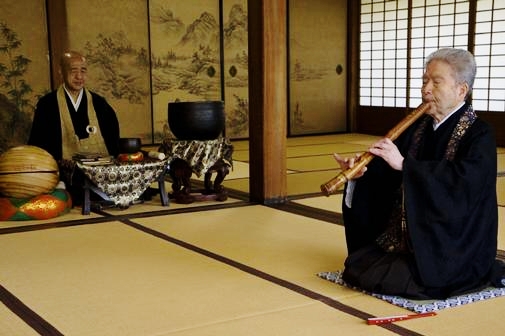
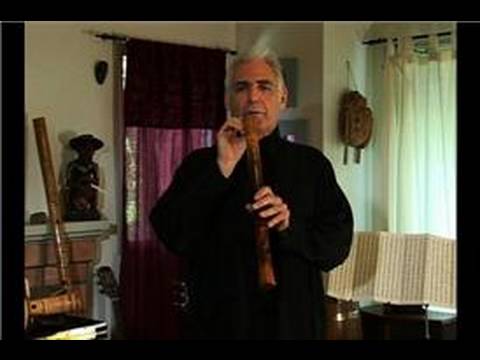
I was eager to try out the same mode of performance using the material I had gathered in my first venture into ethnomusicology – the sacred music of the Japanese shakuhachi flute. The music was originally performed by the Komuso – peripatetic warrior-monks and occasional spies who used a flute(!) to realize their many roles and aspirations. Rather than play the music in the sterile atmosphere of a recital-hall stage, as I had done many times, or inflate the sound with reverberation and electronic pitch correction commonly heard on recordings, I would play the music live while I wandered the streets of the site as an actual komuso, complete with bee-hive hat disguise. If you left your reality check at the gate, you could almost imagine a similar moment in the crowded byways of the Yoshiwara District of old Tokyo.

I was delighted at the success of the project. Not only did it attract the attention and wonderment of thousands of fair-goers, it teased the curiosity of the media. Much to my amazement, I even received alms, the original intent of the music, from Japanese visitors who seemed quite un-fazed by my presence. Best of all, everything I did as a komuso, and the music I performed, was authentic in every detail.

“And thereby hangs many a tale,” perhaps for a future blog.

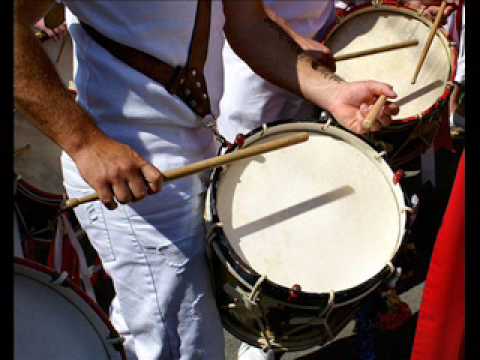
For the second half of the fair, I continued to wander the streets of the Expo, but instead of a sombre Japanese monk, I was a boisterous renaissance pipe and tabor player. My role model was Will Kemp, Shakespeare’s comic  actor and his associate, Thomas Slye, seen on the left. As you can see in the illustration, the player blows a three-hole recorder called a pipe (two Sweetheart reproductions in G and D) with one hand while the other hand plays a drum called a tabor (Paul Williamson, small and large). And, in keeping with the tradition, I immersed myself in the songs and dances of the commoners of long ago, this time from the streets, theatres and public houses of the English renaissance, all drawn from sources and literature regularly used by those in Early Music.  Each day, I recreated the music accompaniment for Kemp’s Nine Day Wonder, as he jigged his way from London to Norwich in 1600 AD. My costume, banter and music was essentially a concert of Early Music in the round and on the run. Anybody who had more than a fleeting interest in my music had to follow me around for 45 minutes to hear my entire concert.

Fast forward to my years as a passionate morris dancer immediately following Expo 86. After an apprenticeship as a novice journeyman morris dancer and unusual pipe-and-tabor musician (a common sound among historical Morris teams, but now rather rare), I followed the team’s tentative venture into group singing after practice sessions, a time-honoured custom among morris dancers in modern (and pre-modern) England.  The idea was introduced and promoted by the English ex-pats in our membership, one of the wonderful and unique features of the team. Again, rollicking songs about seasonal pleasures and adventurous lads filled my musical life, in addition to a host of jigs, hornpipes and reels, all drawn from “the people’s music”.

Now that I am a practicing ethnomusicologist, I find myself again visiting the musical literature of commoners, now called the folk. I discovered that an army of academics have devoted vast amounts of energy and creative thought to the music of western and non-western folk, especially narrative songs generally called ballads in the West. During the latter half of the nineteenth century, some maverick academics had given the repertoire of folk music the same kind of respect normally accorded to courtly songs and bourgeois lieder. The reverence for the musical art of the people was carried forward by songcatchers of the second revival who were motivated by left-wing politics and the call to grant power to the people. Now, when we look at the history of Western art and folk music, we see a divide that began merely as a narrow gap in earlier centuries, only to steadily widen into the gulf that exists today.

The “Top Ten” of Long Ago

Since I began teaching and researching modern-day pop music, I have come to realize that the early songs and dances of urban and rural folk that I so carefully learned in my Early Music and Morris Dance days can also be identified as the popular music or more specifically, the pop music, of those distant times. Not “pop” as in the binary opposition to rock, but pop in opposition to art music.

Imagine renaissance and baroque folk songs and dances driven by the enthusiastic needs of a historical youth culture in the courts and the villages, always on the look-out for new and exciting departures from the norm of a previous generation set in their ways. I am reminded of a wonderful bit of speculation I heard during an Early Music rehearsal. Apparently the pace of certain historical dances (e.g., the minuet) slowed down over the course of their history. Why? As the people who picked up the dance in their youth began to age, their ability and enthusiasm to dance with vigour also waned. I acknowledge that the youth in historical demographics would not be nearly as omnipresent as they are today, given the modern consumer market’s obsession with attracting the disposable incomes of young people. And the life expectancy in pre-modern Europe hovered around the 30 to 40 year mark, blurring the very meaning of the term “youth”. But these are provisos, not rebuttals.

If we apply some of the same critical theories and cultural studies towards Early Pop that have been developed by contemporary pop music scholars, we can bypass some of the hoary debates about orality versus print, rural versus urban, non-literate versus literate, vulgar versus genteel. I dare say we might even be able to apply the insights of pop music’s arch curmudgeon, Theodor Adorno.

Keeping Company

Of course, I am not the only one to re-cast “folk” as “pop”. A hint of the accidental conflation of the two terms can be seen in the title of the first canonic set of ballads entitled The English and Scottish Popular Ballads (1882-1898, my italics), compiled by Sir Francis Childs,. Also, William Chappell’s Popular Music of the Olden Time (1859, ibid italics). Many modern Early Music ensembles have explored the idea of modernity in early popular music. One example that immediately springs to mind is the CD produced by the Baltimore Consort (with Chris Norman) entitled La Rocque ‘n’ Roll – Popular Music of Renaissance France (Dorian Recordings, 1993). Then there is the entire output of the City Waites, founded in the early 1970s by Lucie and Roddy Skeaping. Jeremy Barlow’s Broadside Band in the ’80s. There are many others.

Early Commoner Music is explored in a marvelous, new book called Music and Society in Early Modern England, by Christopher Marsh (Cambridge, 2010).  Following in the wake of social historians like Peter Burke (Popular Culture in Early Modern Europe: Ashgate, 1978; see Marsh, 2010: 15), Professor Marsh has presented the pre-modern English music of the people through the lens of the everyday, the everyman and everywoman. Pop Culture scholars will nod their head in recognition because they know only too well the work of Henri Lefebvre, the eminent sociologist of the everyday. (See his Critique Of Everyday Life, University of California Press; 3 edition 2011, a translation of the original Critique de la Vie Quotidienne, 1947/58). Tia DeNora (Music in Everyday Life: Cambridge, 2000), Harris Berger and Giovanna Del Negro (Identity and Everyday Life: Essays in the Study of Folklore, Music and Popular Culture: Wesleyan, 2004) and Susan Crafts et al. (My Music: Music in Daily Life Project: Wesleyan, 1993) have looked at the same question in the realm of today’s amateur and pop music-makers.

Now the door is open to view Early Pop with the same eyes.

More reading for the avidly curious

Newman, Steve (2007), Ballad Collection, Lyric, and the Canon: The Call of the Popular from the Restoration to the New Criticism (University of Pennsylvania Press)

Mullan, John and Christopher Reid, editors (2000), Eighteenth-Century Popular Culture: A Selection (Oxford University Press; annotated edition)

Reay, Barry (1998), Popular cultures in England, 1550-1750  (Longman)

Harris, Tim, editor (1995), Popular Culture in England 1500-1850 (Palgrave Macmillan)

Barry, Jonathan (1994), The Middling Sort of People: Culture, Society and Politics in England (Palgrave Macmillan)

Hibbert, Christopher (1987), The English: A Social History 1066-1945 (Grafton Books)

Reay, Barry, editor (1988), Popular Culture in Seventeenth-century England (Croom Helm, 1985, reprinted Routledge)

Underdown, David (1985), Revel, Riot and Rebellion: Popular Politics and Culture in England 1603-1660 (Oxford University Press)

Briggs, Asa (1983), A Social History of England (Weidenfeld & Nicolson)

Malcolmson, Robert W. (1973), Popular Recreations in English Society 1700-1850 (Cambridge University Press)

Enlightenment and “Enlightenment”

by Dr. Norman Stanfield ~ December 15th, 2011

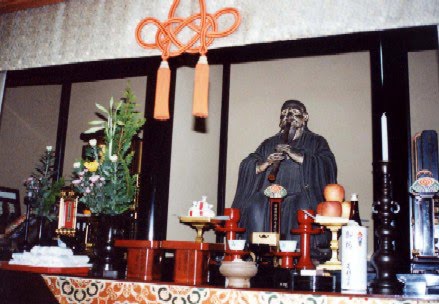
A few weeks ago, during the final classes of my ethnomusicology course (M328C) I once again taught my unit on the Japanese vertical flute called the shakuhachi, and the influence of Zen Buddhism on its sacred solo music.  “Zen Shakuhachi” was the focus of my first excursion into music research, using my newly acquired knowledge of ethnomusicology and buddhology, following my initial fascination with Alan Watts. My field study in Kyoto and Kobe consisted of participating in group lessons and private instruction supplemented with extended explanations of the influence of Zen Buddhism. Essentially, I was learning how to play the Japanese flute, building on my training as a professional flutist. Some of that research was encapsulated in a Master of Music Thesis, The San Koten Honkyoku of the Kinko Ryū (The Three Sacred Traditional Melodies of the Kinko School) but unfortunately there wasn’t space or time to include the detailed lessons I received in the Taizan ryū (対山流) school of Zen Shakuhachi, associated with Meian-ji (明暗寺), the home temple of the lay komusō (虚無僧). I wish I could claim to be alone and unique in the study of Zen Buddhism and the shakuhachi, but many others have investigated the same ground, even more so in the last few years with the advent of the internet and its DIY blogs. Still, I may have one particular and unique point of view; I find it interesting to triangulate Zen Buddhist shakuhachi music with Western Art Music (WAM) and its educational music institutions.

Deep Practice and Deep Listening

Of course, advanced music students in universities and conservatories already expand their traditional knowledge with brief, Zen-inspired encounters. Coyle’s “deep practice” is often cited by private music instructors, and Barry Green’s populist tradebooks, The Mastery of Music: Ten Pathways to True Artistry (2005) and The Inner Game of Music (1986) sit on many a teacher’s shelf of core reference books. In musicology classes, music students are introduced to John Cage et al. His music of silence (4’33”) was partially inspired by Daisetsu Teitaro Suzuki (1870-1966), Japan’s great Zen Buddhist philosopher, during Suzuki-sensei’s residency at Columbia University from 1952 to 1957. Cage sat in on his lectures. The above Western names are only a small sample of the many authors who have explored the intersection of Zen Buddhism and music, and written a range of materials from self-help manuals to philosophical reflections. But these readings are understandably ephemeral to main-stream music studies.

Enlightenment

As I prepared my lecture notes this Fall, I found myself marvelling at the quandary of the word “enlightenment” as described and understood in the West and the East. Music students are somewhat aware of the former, given that their musical heroes such as Bach and Mozart sought to emulate Voltaire’s spirit of enlightenment, if not his atheism. The musical discourse of Western Art Music is, at its heart, “enlightened” with its blend of rational expectations and calculated surprises. Western Art music compositions have even inspired non-musicians to be equally thoughtful and intellectually engaged, be they politicians or philosophers. The academic study of music also aspires to be rational, even ultra-rational, raising musicology from its pedestrian place in the Humanities to a starring role in the Social Sciences.

Still, in the West’s headlong rush to create the Age of Reason in the eighteenth century, WAM encountered a wall that could only be breached by the spontaneous misadventures of the Romantics. Now, that early spirit of triumphant rationalism is parodied by Data, Tuvok and Seven of Nine. But regardless of our modern-day scepticism about the salvation of logic, science in general, and music theory in particular, is still deeply immersed in its mastery.

“Enlightenment”

So what is the nature of Zen “enlightenment”? First, it helps to understand two points of view. There is the vast wave of religious Buddhismt where the powers of heavenly others ( tariki 他力)  are invoked by faith and prayer.  Then there is the thin stream of those who carve their own paths (i.e. jiriki 自力) with the temporary assistance of a master (guru, roshi, etc.).

Second, we must let go of the word “spiritual”, at least in the sense of redemption and peace of mind. As one famous Zen monk said, “now that I’m enlightened, I’m as miserable as ever”.

Third, we are assured that the epiphany of Zen enlightenment cannot be arrived at by logic. Bodhidharma, the South Asian monk who founded Zen Buddhism in China, declared in no uncertain terms that the tools to achieve Buddhist enlightenment were “教外別傳  (kyōge betsuden) A special transmission outside the scriptures; 不立文字  (furyū monji) Not dependent on words and letters; 直指人心  (jikishi ninshin) Directly pointing to the human mind; 見性成佛 (kenshō jōbutsu) Seeing into one’s own nature, attaining Buddhahood”.

Buddhologists are well aware of the irony in the vow to let go of words and letters, given the vast literature that has been generated by Buddhism over the last 2500 years. The core sacred texts, called the Tripiṭaka (大蔵経 Daizōkyō), alone occupy several metres of library shelf space, and a visit to any New Age bookstore will reveal hundreds more books devoted to Buddhism. On the other hand, the profuse literature clearly shows that Zen Buddhism is most certainly not anti-intellectual. In some schools of Buddhism, logic is used to an extreme degree to illustrate the futility of logic. This radical introspection has prompted academics to see parallels in the writings of philosophers like Immanuel Kant, (1724-1804) (Critique of Pure Reason). Recent writings by critical theorists such as Steven Heine and Dale Wright have turned the postmodern gaze towards the classic writings of Zen Buddhism in an effort to purge Western affectations from Eastern reality.

Enlightenment, called kenshō  (見性), by Bodhidharma and everybody else in the history of Zen Buddhism, is arrived at by a judicious confluence of traditional meditation techniques, mindfulness, and random-based epiphany. This third condition is particularly curious, and aggravating to some, because it disallows the steady progress of logic through time to a final flash of acumen that resembles Archimedes’ “eureka!”

The literature in Buddhism is filled with circuitous descriptions of “enlightenment”, the consequences of that awareness, or the factors that must come to play before that awareness can be achieved. In all these places, Buddhism resembles post-modernism.  For example, postmodernists are quick to point out that truth is relative. Buddhists have known this from time immemorial because they have plumbed the depths of truth, only to find that it consists of “nothingness”, or rather “no thingness”.  Along with all aspects of reality, truth is in a constant state of “dependent origination”, pratītyasamutpāda (緣 起, engi), another name for cultural and even physical relativity.

In short, Western Enlightenment is rooted in essentialism and Eastern enlightenment in existentialism (but without the dead hand of fatalism). The binary is reminiscent of modernism and postmodernism.

Enlightened Musicking

So what does enlightenment hold for musicians? In WAM, Western enlightenment is manifested in the patient construction of a composition, the unraveling and quiet discovery of the inner mechanism of a piece of music, or the victory of a great performance after intense preparation, followed by adulation and perhaps a career. In Zendō ( 禅道), the way of concentration (“attention!”), enlightenment has consequences not tied to reason or personal gain. Certainly it is not the disastrous conclusion suggested by Herman Hesse in his magisterial book Magister Ludi, where the glass bead-game master realizes the futility of his ultimate game of universal logic, and drowns himself in a lake. In The Ten Oxherding Pictures and accompanying poems, we are given hints of the stages of progress toward enlightenment, culminating in the tenth edict, a return to society in order to spread enlightenment. This notion has been embraced in popular culture by the Naruto series, one of the best selling manga of all time. The protagonist has a technique named “Kakuan Entering Society with Bliss-Bringing Hands,” a kind of Buddhist “pay-it-forward”.

Perhaps today’s postmodern musician can synthesize both “enlightenments”, despite their seeming diametrical opposition. The result would not be essentially spiritual, rational, or logical, but it would provide a focused and useful lens for the serious student of music and life. Buddhists call it madhyamaka (Japanese: 中觀派Chūgan ha) – The Middle Way.

Rebecca Black gets the last laugh

by Dr. Norman Stanfield ~ November 7th, 2011

Last summer, during the course of my class, Introduction to the Study of Popular Music (M403J,) I wrote a blog entry about Rebecca Black and her song entitled”Friday”. It was just peaking at one million hits on Youtube, and promised to go much higher. I liked it. ”Friday” is catchy, devoid of inner meaning, and polished to a brilliant production shine. It had also been mercilously pounded by professional and amateur critics way out of proportion to its tweenie dreamworld. The crime? Trite lyrics, sung by an unremarkable (if surprisingly accomplished) voice, compounded by an entirely inauthentic context. The reception to the song was a wildly diverse, ranging from fan-based admiration to death threats. Essentially, it appealed to the wrath of those who see it as yet another force in the dumbing down of culture.

Now it seems that Rebecca Black has got the last laugh by receiving an affirmation from an entirely unexpected quarter, mega-pop star Katy Perry. Of course, I am using the names “Rebecca” and “Katy” with the full understanding that their names are code for vast production teams and financial interests, although I grant that Rebecca started from a much more modest place.

Katy has starred in a song and related video called, Last Friday Night, which is a responce to Rebecca’s musical and video production.

YouTube Preview Image

The song’s lyrics are as shallow as Rebecca’s piece, and incidental to the video. They are nothing more than a litany of cliches describing “the day after”. The music, on the other hand, has a great groove with its romansca-like harmonic movement channeled through  a sequencer emulating a 70s guitar amp.

The video, hands down, is excellent, with impossibly high production values to its credit. It is cast as a movie, cut from the same cloth as any teen flick from the 70s to now. The landscapes are the same “burbs” as Arcade Fire’s Suburbs , but without any pretentions towards social commentary. In fact, it is a paragon of all that is dubious in the land of North American 10 per centers.

Everything in Perry’s video is a superlative echo of Rebecca’s shallow ode to Friday. As we get into the narrative we see Katy Perry, portraying a hapless tweenie with an alarming dental appliance, ill-fitting clothes, and whiny voice, demanding entry into a crowded neighbour’s house to complain about the party noise. Who should come to the door but Rebecca Black herself. Katy is instantly welcomed by the delirious, dancing crowd and with the help and insistence of Rebecca, she transforms into one of the Gap party animals, albeit as a cheesy femme fatale. The explosion of music, dance and mayhem moves out to the back yard of the upscale suburban home,  to be greeted by one of the most reviled of soft-adult, kitsch musicians in pop music history, Kenny G (called “Uncle Kenny” in the narrative interlude). He appears on the deck high above the party-goers but instead of cranking out his usual syrup on a soprano sax, he wails a ripping great alto sax riff leading to impossible high notes. The next day, Katy Perry wakes up  in her own bed surrounded by party detritus, including the jock adonis who was the focus of her intense female gaze the night before. Naturally her parents walk in on her unexpectantly after returning too soon from a holiday, but being Valley Parents, no consequence follows. The credits roll, furthering reinforcing the ambiance of a 70s (or 90s?) teen movie.

Throughout the entire visual feast, Katy Perry never steps out of her nerdy character, despite the gamble that such a physical anomaly could present to an adoring public expecting the usual look of the ”Katy Perry” brand of sexualized princess. Even when she transforms into a cartoon femme fatale, she still manages to look unattractive. Nevertheless, her singing voice maintains its signature attractiveness which is normally mirrored in her physical persona.

In short, her character, Kenny G’s appearance, Rebecca Black’s starring role, all subvert the criticisms cruelly directed to Rebecca Black by embracing them in a superlative musical and visual production.

The video is the best pop music can offer. It simultaneously offers food for thought to tweeny girls wrestling with the demands of negotiating personal identity while accommodating the role-models of a prom queen and runway models. It is also an invigorating dance track in a blaze of colour, and a vision of fun in the company of like-minded friends. Of course, a case can be made for the damage done by such a profligate representation, but I hardly doubt that Katy and Rebecca’s tweeny fans are so shallow as to mindlessly follow the lead offered by the video’s portrayal of sex, drugs, alcohol. Tweenie females are not lemmings headed en masse to the ocean cliff, partly confirmed in Gerry Bloustein’s ethnographic essay entitled ” ‘Ceci N’est Pas une Jeune Fille’: Videocams, Representation and ‘Othering’ in the Worlds of Teen-age Girls,” in Hop On Pop: The Politics and Pleasures of Popular Culture, edited by Henry Jenkins et al. (2002).

Not to be outdone, the punk band Woe Is Me, jumped on the wagon with an emo cover version that pushes the boundaries of subversion even further.

Last Friday Night cover by the Woe, Is Me

I give the Katy Perry music video and its follow-up mashup by Woe Is Me, two thumbs up.

Performance Studies

by Dr. Norman Stanfield ~ October 17th, 2011

The Quartet, by Chrisopher Levenson

After the velvet hush
the first chords assail us
gathered in darkness to watch
the intent, horn-rimmed, screwed up
concentration
of four foreign, middle-aged gentlemen
consorting maestoso,
bowing and scraping.

Out of the fidget
Brahms slowly emerges
like the Brocken, misty
and far off and under
another name.
Four spotlights, one over each
perfectly preserved specimen
(a 1750 viola, a violin
from 1672)
skewer these aural butterflies
to their sheets, only the frockcoats
and the black forelock of the one
who is not bald (but perspiring)
presume
to follow other rhythms.

By now the mind has wandered
so far from the auditorium
that it takes a whole avalanche
of flurried sound to return us
to darkness and the strings’ predictable
twitter. The lento massage
of rich sound,
plangent agonies over-rehearsed into
monochrome, are barely in time to
dither once more into a final
reverie, and chase it with a frenzied
rush towards silence.

At last they are bowing, the four
earnest musicians, and leaving
allegro for refreshments, ma non troppo,
to our half-lit applause.

From the author’s book of poems entitled Stills (1972) with permission

This insightful poem illuminates a troubling debate in Western Art Music, where the reception of music has become the topic of discussion. It follows a line of inquiry founded partly by Stuart Hall who formulated a Theory of Reception within the confines of Cultural Studies. Now countless musicians and music scholars are following suit by investigating the highly diverse ways that music is received by the listening public, not always to the good.

What began as a blog entry about performativity grew to an unwieldy essay on the topic. Rather than clog up the blog pages with reams of pages, I have decided to added it to my column entitled Music Matters. Please have a look at the discussion, then come back here to add a comment.

Ethnomusicology by and for Women

by Dr. Norman Stanfield ~ September 30th, 2011

For the Reading Journal assignment in the second week of Fall classes, students were asked to summarize John Baily’s excellent essay, “Ethnomusicology, Intermusability, and Performance Practice,” found in The New Ethnomusicologies (edited by Henry Stobart, 2008). As I re-read the article, I suddenly realized that his wife is the amazing Veronica Doubleday.

I say “amazing” because her research on women’s music-making is extraordinary. She accompanied her husband, John Bailey, to Afghanistan and discovered music performed entirely by women, with the tambourine at its centre. Out of that encounter came her wonderful book Three Women of Herat: a memoir of life, love and friendship in Afghanistan (2006). The book partly culminated her research on the prominent place of the tambourine among women throughout Central Asia, the Middle East and southern Europe. Her findings are seen in Ethnomusicology volume 25, number 4 (1999), pp. 101-34, in an article entitled “The Frame Drum in the Middle East: Women, Musical Instruments and Power”.

I learned about the work of Veronica Doubleday when I was doing my own research on the history and culture of the tambourine among women in the Salvation Army.  My article, entitled  “The Tambourine and the Salvation Army: Rebellion in the Service of Authority,” can be seen in the Canadian Folk Music/ Musique folklorique canadienne, volume 41, number 4 (2007). The project began almost as a lark. I was wondering what it would be like to research a lowly music instrument that was found at the far end of the spectrum, opposite to the lofty Western Art Music instruments like piano and violin. Coincidentally, I was carrying around a memory of an explosive, singular newsflash from my days as a Resident Artist at EXPO 86. The Salvation Army tambourinists, or more properly, timbrelists were performing a kind of “flash mob event” on the main “street” of the fair with their tambourines and brass band accompanists, and everybody who witnessed it were gobsmacked. The delight and surprise crackled over the network of walkie-talkies, but I was unfortunately too far away to rush down and see them.

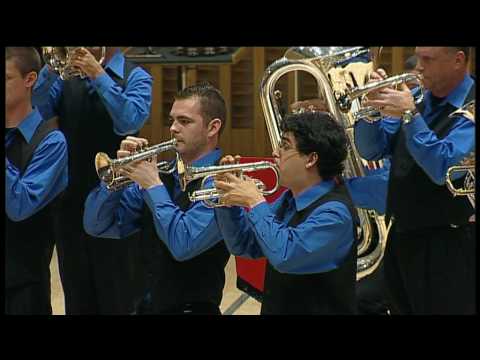
When I conducted my fieldwork among the SA timbrelists years later, I discovered the art of the tambourine in their hands was certainly not a lark. They took their performance art very seriously, and expended countless hours perfecting it. The performance art involves intricate hand and arm movements, sometimes enhanced with stage blocking, all the while striking the tambourine in complex rhythmic patterns, in unison with other timbrelists, and in rhythm to music selections provided by a glorious Salvation Army Brass Band. My best sighting occurred when I was invited to watch the North York timbrelists march through the streets of north Toronto at the head of the Salvation Army congretation,  brass band, a big bass drum (the sound most admired by the founder, William Booth) , flags and banners. Since then, I learned that a similar, even bigger production is seen every New Year’s Day on television across North America. In the morning, the Salvation Army massed brass bands and their massed timbrelists lead the massive Rose Parade. They also participate in the Calgary Stampede parade, to great applause, also in the same manner. But those are all faint echoes of the original context of the marching, when the SA would courageously and defiantly march down the slums and shantytown streets in cities and towns around the world, including Vancouver, broadcasting their message of joy and hope to the desperate and the disenfranchised.

YouTube Preview Image

As I looked further afield, I came across an inspirational tambourine soloist, Layne Redmond, who has embraced the tambourine as a vehicle to express her feminist interests.  She has tied together the history of women’s traditional place as spiritual mentors and guiding lights in pre-historic Europe, with the tambourine (and its kin, the frame drum which is a tambourine without jingles). At one time there was an explosion of research that suggested ancient Europe was a matriarchal society before the arrival of male-dominated newcomers and their patriarchal, violent ways. All of these interests are recorded in her book, When the Drummers Were Women: A Spiritual History of Rhythm (1997).

YouTube Preview Image

Although the theory is now refuted by authors such as Cynthia Eller in her book The Myth of Matriarchal Prehistory: Why An Invented Past Will Not Give Women a Future (2000), Layne Radmond’s  musical-theatrical productions of women re-enacting the spirit of ritual services while using the tambourine to enhance their songs and movements are really something to behold.  Her tambourine ensemble is called A Mob of Angels and I highly recommend looking for them on Youtube. While you’re on the web, be sure to look for Layne Redmond’s website, where you will discover that she is a major force in the world of percussion.

Another name I’m keeping an eye on is Allesandra Belloni who specializes in the tambourine of Southern Italy. When you look into that corner, you discover the truth about the Tarantella; it is a dance of ecstacy, not the hysterical response to the bite of a tarantula. In Spain there is the women’s tambourine ensemble Leilia which maintains the tambourine traditions of the Galician area in the north.

Not all the prodigiously talented tambourine players are women. There are brilliant male performers such as Glen Velez and Xabier Berasaluze “Leturia”, one of the duo of Spanish Basque musicians called Tapia and Leturia. In Brazil, the tambourine, called pandeiro, has taken on the status of national instrument. It is played by men and women. Back in Italy, in the province of Calabria, men dominate tambourine performance, a radical departure from the tradition. There’s probably a great story there.

I acknowledge that among female timbrelists, I am clearly an outsider. Julie C. Dunbar has provided people like me with important insights in her new book Women, Music, Culture: An Introduction (Routledge, 2010). Still, I suspect there is there is a level of appreciation entirely beyond my understanding . No matter. I love what they do.

Vancouver’s 125th Birthday Music

by Dr. Norman Stanfield ~ September 19th, 2011

On Sunday (September 10) I attended a conference devoted to the century-old history of music in Vancouver, in celebration of Vancouver’s 125 birthday. Called Vancouver Snapshots 125, it was organized by David Gordon Duke on behalf of the Turning Point Ensemble and featured a week-end of performances devoted almost entirely to the music of Vancouver composers. I use the word “almost” because a Sunday concert at the Dr. Sun-yat Sen Gardens included the Orchid Ensemble performing Chinese music that would most likely have been heard by the Chinese community. Unfortunately I wasn’t able to attend the concerts so if any of you can shine a bit of light on the concert repertoire, I would appreciate the news.

The conference and evening concert took place in the Roundhouse Community Centre, a very appropriate setting, given its history as a bastion of Vancouver’s railway culture, especially its steam engines. A brass band was present at the arrival of the first train, housed in the Roundhouse. As a member of the Little Mountain Brass Band, I have played several times beside the engine, as we joined with the Roundhouse Community Centre in celebrating its historical arrival.

David Duke is well known as a distinguished college music educator and administrator, and an influential music critic and composer. He is an old friend of mine from music school days. But more relevant to the conference, he has had a long and abiding interest in the music of Jean Coulthard, a prominent Vancouver composer, going so far as to co-author a book on her life and musical output. More about Dr. Coulthard in a moment.

The Saturday afternoon was brilliant and beautiful as only Vancouver can be. Perhaps that explains the modest attendance, with fewer than 25 people in the room, but I fear it may also be a measure of interest. All the evidence suggests that Vancouver is rushing headlong into global status as a hub of financial and real estate activity between Asia and the rest of Canada. Its British parochial and colonial past is becoming increasingly eclipsed and progressively irrelevant. From the perspective of the South and East Asian populations of Metro Vancouver, both recent and long-standing, the city has evolved from the bleak days of draconian Canadian immigration Laws, a by-product of British Imperialism, to a welcoming cosmopolitan centre that has replaced Britain with multiculturalism at its core.  Vancouver’s music history is, for better or for worse, a by-product of the former, no matter how benign.

Mr. Bill Bruneau opened the seminar with a paper about the first 100 years of music-making (up to World War II). He expressed regret at the short amount of time, given the profuse detail he has uncovered, and despaired about its neglect. He offered us a surprising list of great composers who performed concerts in Vancouver, greats such as Ravel, Rachmaninoff and Prokofiev. The explanation given for their interest in such a modest, little city was the simple fact that they could pause between the end of the railroad line, and the dock of Pacific-bound steam ships, in order to pick up a few dollars and admirers.

George Laverock, the next speaker, described Vancouver as a city ”on the edge of the continent”, requiring special efforts to attract musical talent. His point was that many organisations, especially choirs, rose to the challenge. (Mr. Laverock is also a witness to one of most monumental occasions of Vancouver’s music history, the visit of Stravinsky who had been engaged to conduct a number of concerts here. George was in the Vancouver Symphony at the time, as a trumpeter. A full accounting of the event is available on the net and in person at UBC, thanks to the efforts of The H. Colin Slim Collection.)

Janet Danielson focused on two of Vancouver’s earliest and most important composers, Jean Coulthard and Barbara Pentland. In David’s introduction, he observed that Vancouver’s music history is particularly unique in that its most important composers are women, a point that Dr. Danielson amplified. Finally, David spoke on Vancouver’s musical exiles, the great composers who had to leave in order to find a career and a following. I was reminded of an expression I have heard many times; if you want a career in Vancouver, you have to leave. In the questions and answers that followed, a fascinating observation emerged about the Royal Conservatory of Music in Toronto. Thanks to its unique form of distance education, its piano certification program offered across Canada became a viable and very popular lifestyle alternative for women who wished to create a career instead of submitting to the restricted options offered by a patriarchal society.

As you can see, what was left out of the proceedings was the vast world of folk, popular, and “ethnic” music. As to be expected, Western Art Music (WAM) was privileged by the speakers, although they did acknowledge the presence of non-WAM music-making (as seen in the Chinese music concert and passing remarks during the conference).

Perhaps interest in Vancouver’s music history could be rejuvenated after ethnomusicologists lead the way with research directed towards a new, more inclusive history by foregrounding Vancouver’s multicultural past. Some of this research is evident in the articles about Chinese opera, seen below in my select bibliography. Pop music scholars would simultaneously create vast murals of Vancouver’s past and present everyday with Elvis Presley and Jay Chou on equal footing. First Nations music would be placed centrally in the picture while respecting their rightful claim to intellectual property. Once this work is well on its way to completion, Vancouver’s parochial music history, both folk and WAM, could then be inserted as one record among many cultural expressions, divested of its privileged status from the past to reveal the pre-occupations of just one segment of Vancouver.

Select Bibliography

Dale McIntosh History of Music in British Columbia, 1850-1950 (Sono Nis Press, 1989)

Ivan Thackery, Fifty Years of Theatre Row (Hancock House, 1980)

Lawrence Aronsen, City of Love and Revolution: Vancouver in the Sixties (New Star Books, 2010)

Red Robinson and Peggy Hodgins, Rockbound: Rock’n’Roll Encounters: 1959-1969 (Hancock House, 1983)

Red Robinson and Greg Potter, Backstage Vancouver: A Century of Entertainment Legends (Harbour Publishing, 2004)

Philip J. Thomas Twenty-five Songs for Vancouver, 1886-1986 (Vancouver School Board, 1985)

Philip J. Thomas, Songs of the Pacific Northwest (second edition, edited by Jon Bartlett, Hancock House, 2006)

Kaija Pepper Theatrical Dance in Vancouver: 1880s-1920s (Dance Collection, 2000)

Carolyn MacHardy “Evidence of an Ephemeral Art: Cantonese Opera in Vancouver’s Chinatown,” in BC Studies: The British Columbian Quarterly, number 148 (Winter 2005/06), pp. 55-92

Elizabeth Lominska Johnson, “Cantonese Opera in Its Canadian Context: The Contemporary Vitality of an Old Tradition,” in Theatre Research in Canada/ Recherches Theatrales du Canada, volume 17, number 1 (Spring/Printemps, 1996)

Huang JinPei and Allen R Thrasher, “Cantonese Music Societies on Vancouver: A Social and Historical Survey,” in Canadian Journal for Traditional Music (1993)


The World Music Textbook Dilemma

by Dr. Norman Stanfield ~ September 4th, 2011

“To textbook, or not to textbook; that is the question.” (Sorry, Will!)

I have struggled with this question since the very beginning of my teaching career. Each time my “Introduction to World Music” (M328) course rolls around in the school calendar, I re-visit my dilemma by looking at the fresh stock of World Music textbooks newly published. But I have never found the right fit. Now that we have arrived in the age of the webisphere and sites like Wikipedia, the question becomes moot. I should add that I entered the study of ethnomusicology at the graduate level, so I don’t have a fondly remembered and well-thumbed undergrad book to act as a role model.

Here is my problem in a nutshell. I teach a very unique set of lectures which are not mirrored by any one book.

Be that as it may, I want to take you on a quick tour of the World Music textbook literature created for undergraduate students. A more thorough survey is preferable, but this is the wrong place for such an ambition. Another, far better option would be for you to physically browse through the titles in the Music Library. Many of them include music examples in CD format, and online access to yet more information via their publisher’s website when you buy the book. I have added some example titles and their library location at the end of this blog entry, in case you take me up on the challenge.

As you casually flip through the pages, you will discover that many of the texts have virtually no music notation examples. This is because they are destined to be used in general interest classes comprised of non-music students in the same mold as campus-wide Music Appreciation classes. In fact, World Music Appreciation, and its close neighbour, Pop Music Appreciation, may be overshadowing that old standby called, anachronistically, Music Appreciation (that is, Western Art Music Appreciation, although units devoted to pop, jazz, and world, make brief appearances these days). This shift in interest is foreshadowed by the hundreds of undergrads who enrol for the Pop Music course at University of Toronto each year, and the dire statistics of the steady decline of WAM audiences and piano students interested in learning classical music. “Roll over Beethoven!”

World music textbooks are indescribably rich in information, delivered somewhat in the manner of a travelogue – one country, then the next, and so on as you travel the world, gobsmacked at the variety. Heather Sparling, one of my colleagues and a great friend in the CSTM (Canadian Society for Traditional Music, conducted a detailed comparison of three of them in a recent edition of MusicCultures, vol 34/35 (2007/08), the scholarly journal of the CSTM. Her interest was in the area studies, physical characteristics, costs, and supplementary goodies that come with each book upon purchase.

But all of the travelogue texts have two problems, in my opinion.

First, each book contains a vast amount of facts that likely would require intense and sustained study that could easily collapse into a “cramming” fest, given the many other course demands made of students. Oxford University Press, under the guidance of the editor Bonnie Wade, created an interesting solution to this problem of saturation. In addition to a general text on how to listen to World Music, Oxford publish a number of mini books devoted to individual music culture areas, to be chosen by the ethnomusicology teacher.

Second, I am hugely irritated by the lack of Canadian content. Each textbook casually and constantly employs references to America when making one or another point. No doubt American readers enjoy seeing familiar names and places in their textbook. (“I didn’t know that about Cleveland.”) But Canada is utterly invisible. Given that the textbooks are written and designed in America to service the huge and lucrative American university market where many World Music classes have enrolments in the hundreds, the lack of Canadian content is understandable.

So why are there no World Music textbooks specifically created or adapted for Canadian students, especially those who are new to Canada? An obvious answer might be that there simply aren’t the numbers to warrant the time and investment. But this answer does not hold water. Oxford University Press made a superb adaptation of their standard American textbook, American Popular Music: From Minstrelsy to MP3, for the Canadian market. It is entitled Rock: A Canadian Perspective (2008). Ryan Edwardson has written an excellent textbook called Canuck Rock: A History of Canadian Popular Music (2009) which has no American precedent.

Be that as it may, there are two general World Music textbooks that I am very fond of. First, there are the Rough Guides to World Music. They are cheeky and irreverent, but unfortunately too succinct to get under the skin of any one genre. They have a tone similar to Rolling Stone magazine, with a quick survey of each country’s traditional music, followed by a detailed look at its indigenous, hybrid pop music. Another favourite of mine is Music of the Whole Earth by David Reck (with photos by his wife, Carol), now out of print. It was savaged in the Ethnomusicology journal book review section, partly because of the author’s” gee whiz” tone and Pollyanna attitude. I loved it from the first moment I looked in its pages. The book has an irresistible sense of wonder, even if several facts are tossed about in a cavalier manner. The book has the same breathless rush of discovery as a great public lecture delivered by a charismatic speaker. It is ahead of its time as a “graphic text”, and the author solved the central problem of presenting music notation examples for non-music readers by devising a brilliant system of graphic notation. It is on reserve shelf in my course, M328, if you want to have a look at it.

Select Bibliography:

William Alves, Music of the Peoples of the World
ML3545 .A48 2006

Michael Bakan, World Music: Traditions and Transformations
ML3545 .B24 2007

Dorothea Hast and others, Exploring the world of music: an introduction to music from a world music perspective
MT90 .E97 1999 (Okanogan Library only!)

Terry Miller and Andrew Shahriari, World Music: A Global Journey
ML3798 .M53 2009

Bruno Nettl, Excursions in World Music
MT90 .E98 2008

William Malm, Music cultures of the Pacific, the Near East, and Asia
ML330 .M3 1996 and its companion volume (both published by Prentice-Hall as a set),
Bruno Nettl, Folk and traditional music of the western continents
ML3545 .N285 1990

Kay Kaufman Shelemay, Soundscapes: Exploring Music in a Changing World
MT90 .S53 2006

Jeff Titon, Worlds of Music
ML3545 .W67 2009

David (and Carol) Reck, Music of the Whole Earth
MT6.R273 M9 1977 (on reserve, in the MUSC 328 section)

Bonnie Wade, Thinking musically: experiencing music, expressing culture
ML3798 .W34 2009
Also look online for her collection called Global Music Series


Spam prevention powered by Akismet