Categories
Uncategorized

Uber & Spotify: The risk of higher expectations

Uber’s new Spotify partnership is a step closer to “driverless” cars by allowing users to control the music.  Uber is a ride sharing application that connects passengers with drivers of vehicles for hire. The smartphone app allows customers to reserve rides, track the location of the driver and also rate these drivers. Spotify is a music streaming service. The new partnership will allow users to play their Spotify playlists even before they enter the car. So once they start their journey, they no longer have to listen to the drivers talk, they can just enjoy their favorite music. Supposedly the synergy from this partnership will cause a win-win-win situation for everyone involved.

Uber Spotify


What could go wrong? Firstly, Uber drives rely heavily on their ratings. Even though the company says that drivers will be able to choose whether or not they want to participate in this Spotify partnership, consumers might still rate drivers poorly if they choose not to opt in. This would mean that the drivers who allow for the music would be rated higher than drivers that don’t, even if it doesn’t have any indication of their driving abilities or other factors. Users might start expecting more from drivers, without actually improving the main idea behind the app, ride sharing.

Furthermore, the user’s need for music might cause a distraction to the driver depending on what sort of music it will be or how loud they want to listen to it. These distractions could lead to unsafe driving conditions and jeopardize the safety of the driver and the passengers. We can’t determine how this will play out, but Uber will be smart to make sure they pull the plug on this partnership as soon as they see any discontent from the drivers. Discontented drivers will only reduce the quality of their actual product, the transportation.

 

Categories
Uncategorized

Kim Kardashian: Talentless, Hated, Rich, Famous, A Genius?

Kim K cover


As a disclaimer, it should be noted that I am not a fan of Kim Kardashian, nor have I watched an episode of the extremely popular TV Show “Keeping up with the Kardashians”. Paper Magazine recently published an article and some very controversial pictures of Kim Kardashian that have caused quite a stir on the Internet. While the issue did NOT #BreakTheInternet like they intended, the issue and it’s NSFW pictures did go viral. With regards to Kim, a lot of people might actually wonder why exactly she’s still famous in the first place. However, it is impossible to argue that she is extremely relevant in pop culture. She has the third most popular Instagram account and is only One million Twitter followers behind Oprah Winfrey.  Whether people love her or hate her, they just can’t seem to ignore her and can’t stop talking about her.

The pictures themselves seem quite photoshopped and this sparked many negative comments about the message it sends to woman about their body image. But is this really different from any magazine or advertisement in today’s world? That is beside the point still. Kim Kardashian has managed to build herself into a brand, quite ingeniously. While she will always have her haters, the fact is that she is making millions by playing to her own strengths.

She might be labeled as “classless” and “talentless”, but the point is that she never signed up to be some sort of role model to young woman everywhere. She is in the business to make money and she does it well. While the dignity of her methods can be debated, she is certainly not forcing anyone to buy into her life or brand. The more people seem to criticize her, the more famous and rich she seems to get, isn’t that a talent in itself? If people are so outraged by how she makes money, how come there is still a demand for what she does?

Categories
Uncategorized

Freemium Isn’t Free

freemium-not-really


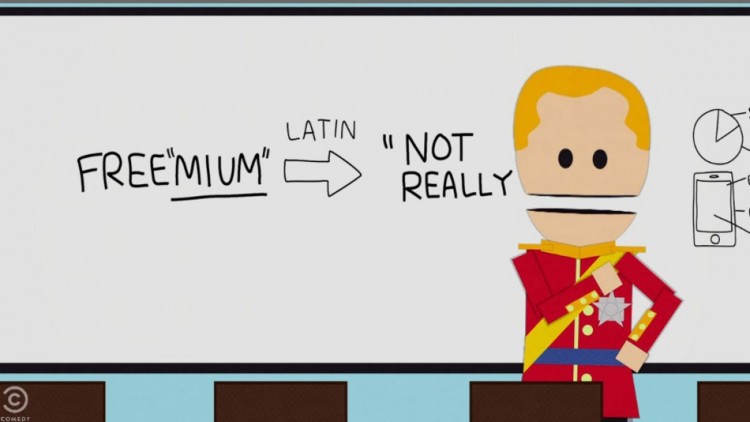
I recently watched a South Park episode called “Freemium isn’t Free” and it really got me thinking. South Park is known for it’s pop culture references and maybe taking it too far sometimes on undeserving people or issues. However in this case I really did think that Freemium apps did deserve having their crooked business model made fun of.

The idea behind Freemium apps is that you can purchase the initial app or service for free, but then subsequent services or features are then charged. Slightly deceivingly, Freemium apps are under the “Free” category in App Stores. These Apps provide a much more consistent and growing revenue stream then other free and maybe even paid apps. Due to their attractive revenue model, there is an exponentially rising amount of Freemium game apps.

The first main type of Freemium app is like a “False Demo”. They provide you the first level, fully functioning, for free. In order to play any more levels, you have to pay for each individual level. This type of business model is effective because after completing a level, users might feel like their efforts have been wasted if they can’t proceed to the next level.

The other type of Freemium game is where in order to purchase certain characters or features you need to use coins or similar in-game currency. Of course you could play the game repeatedly to earn those coins. However, the way the game is set up, it would take an extremely long time to earn coins organically and makes it almost impossible to buy those extra features. Because of how nice these game creators are, you can use real dollars to purchase these in game currencies, which then allows you to buy those features that seem so alluring.

In the words of South Park, Freemium apps are just enough fun to keep players hooked, but not fun enough without the extra charged features. A dominant primary target consumer for these apps might be young children or teenagers. While they might not be spending large amounts of money each time, it could all add up to a substantial value spent on a very addicting and crooked business model.


Categories
Uncategorized

Viral Campaigns: Not in it for the long haul?

Approximately 3 months ago, I think everyone’s news feed on Facebook was dominated by videos of their friends or celebrities dumping buckets of ice water on themselves. The ALS Ice Bucket challenge was a viral success and a pinnacle in terms of viral and Internet marketing. Back in 2012 there was a similar success story, the KONY 2012 video and campaign. These sorts of campaigns spread like wild fire and seem to be just everywhere. But just like they enter our world, they seem to disappear and be extinguished just as fast. The question that arises is that would companies prefer a meteoric rise to fame followed by almost oblivion or would they prefer their campaigns to have a more gradual trajectory and survive in the long run?

It’s a bit unfair to compare KONY 2012 and the Ice Bucket Challenge because the latter raised awareness for a significant and hidden issue. While it did receive it’s fair share of criticism, no one can criticize the effectiveness of the campaign. The campaign helped raised millions of dollars in a very short period of time, but since late August I have seen nothing mentioned about ALS. The organization could still be raising money but there is no way it can compare to the amount raised when the challenge was popular.


ALS bill gates


Popular is the key word here because it seems these viral campaigns are merely trends, no matter if they actually promote important issues or not. A couple of months ago that’s all people could talk about, so is the success of these campaigns only due to our propensity to get caught up in online fads? I mean if planking can become a thing, then almost any campaign can have hope. Having said that, maybe these short-term spikes in popularity are exactly what the organizations want; Massive revenue influxes with little cost. Yet, some companies might prefer a more long-term strategy. The short-term revenues will not compare, but they might end up being relevant for much longer.

Categories
Uncategorized

Social Media isn’t just changing the way we think; it’s changing our brains

It’s not a surprising fact that Social Media has had a major impact on us in the last couple of years. With approximately a third of the global population active on social media channels, it has altered how we view and act in this world. So much so, that our infatuation towards social media is actually altering our bodies. Here are some of the ways our internal systems might actually be getting influenced by social media:

Addiction

5-10% of Internet users are actually unable to control how much time they spend online. Though it’s psychological addiction, MRI scans show a comparable deficiency of regions with those that are drug addicts. Social media provides immediate rewards with very little effort required, thus we start craving these neurological stimulations achieved by online interactions.

Reduced Multi-tasking

It’s a false conception that social media users are able to multi-task more efficiently between their social and work related lives. Increased multi-tasking online reduces your brains ability to filter out interferences, making it easier for you to get distracted. Furthermore it can even make it harder for the brain to commit information to memory.

Phantom Vibration Syndrome

Have you ever checked your phone after you felt a vibration only to realize you had no new notifications? You aren’t the only one. Phantom Vibration Syndrome is a relatively new psychological phenomenon where you think you felt your phone go off, but it didn’t. Technology has begun to rewire our nervous systems and our brains are being triggered in a way they never have been before in history.

Release of Dopamine

Social Media triggers a release of dopamine, the feel good chemical. Using MRI scans, scientist found that the reward centers in people’s brains are much more active when they are talking about their own views, as opposed to listening to others.

Our body is physiologically rewarding us for talking about ourselves online.

Verbal Communication

With the rise in online dating apps and websites, it seems that partners tend to like each other more if they meet for the first time online rather than with a face-to-face interaction. The reasons behind this might not be so clear yet but there is a statistical increase in successful partnerships that started online.

Here is a link that illustrates these changes in a clear and informative video:

https://www.youtube.com/watch?v=HffWFd_6bJ0


Categories
Uncategorized

The Narcissistic Nature of Social Media II: The Selfie Pandemic

Selfie is now a recognized word in the dictionary, “A photograph that one has taken of oneself, typically one taken with a smartphone or webcam and shared via social media”. While I was growing up, a webcam Selfie was reasonably common in the adolescent population. Yet, it was always accompanied with severe mocking, especially if it was one of your guy friends.

Fast-forward to today and the Selfie is now an extremely socially acceptable thing to do. From teenagers to adults to celebrities to athletes to presidents, it has taken over. We are quick to whip out our cameras and share parts of our life with our friends. But are we so eager to share these Selfies as some form of connection to our social circles? Or has it just become a common practice in order to express our obsession with ourselves?

I think if you told certain people that they could meet a celebrity, but they could not take any pictures with them, they would be frankly devastated. Because what good what it be to meet your icon, if you couldn’t show the world? We no longer strive to form lasting human connections. We are driven by likes and followers.

I believe the Selfie epidemic has changed the way we do certain things in our life. Daily tasks like driving to work or eating a meal are now opportunities of receiving admiration from our friends and acquaintances. The obsession with celebrities has little to do with their personalities or who they are as people, but a way to demonstrate that you’ve met them. Something to add to your Selfie Trophy Collection.

This short film depicts an exaggerated look at the Selfie Culture. The problem is that it is no longer as exaggerated as we might think so.

The Selfie Culture starring Kirsten Dunst

Categories
Uncategorized

The Narcissistic Nature of Social Media I: Self Obsession

Narcism


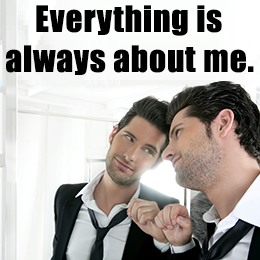
“But first, let me take a selfie”. We live in a generation where it’s socially acceptable to be narcissistic. Social validation is a component of our daily lives. We might forget this, but social media wasn’t created to express our vanity or for others to stroke our ego. Social media was created to share content, make connections and to foster a community.

Forming actual and worthwhile connections is no longer a primary use of social media. Understanding our friends better and how they live their lives is only a secondary purpose. The key drive of social media these days is self-promotion. How can we make create the best possible social image of ourselves. How do we make our lives seem interesting.

Instead of choosing a profile picture that includes our family or friends, many of us will choose a picture that enhances our beauty and thus increases our social desirability. Social media might not have created the shallow world, but it definitely increases the “visibility” of that world.

Rather than worry about how our friends are doing, we post a picture of our ordinary and honestly unexciting lunch. Rather than worry about if we actually know anything real about the people we “connect” with, we worry about how many likes we have on that picture of our lunch.

I think we could talk all day about the narcissistic nature of our generation and the different sub cultures such as the gym community that help foster it. However a key implication for businesses is that, if they can successfully channel this vanity into a smart social media strategy, it could be quite beneficial for them. The use channels such as Snapchat and Instagram could be used in innovative ways to utilize the narcissistic nature of the world to raise brand awareness and sales.

Categories
Uncategorized

Urban Outfitters: Who Approves this Stuff?

In an age where news spreads like wildfire, Urban Outfitters’ recent controversies have become quite well known around North America. I’ve never been to Urban Outfitters, and I probably never will. To some extent, the brands that you choose to associate yourself with say something about who you are or the values you might have.  Urban Outfitters has clearly had some horrendous product ideas in recent times. They have been forced to apologize and pull these products in certain instances. In the world of social media, potential consumers who might never have seen these products in the stores are still able to view some of these atrocious designs online. Which asks the question, how can a global company allow some of these products to go on sale to the public?

They have come under the scrutiny of the public due to offensive and thoughtless clothing designs. The most recent slip up was a T-shirt with the words “Eat Less”. Corporations have always been criticized for subconsciously making woman feel self conscious about their body image and contributing to the growing number of women with eating disorders. Many women go through serious depression and experience severe insecurities. A downside of social media is that we are constantly forced to see beautiful people everywhere we look. From our friends to famous celebrities, a person suffering from mental illnesses has no escape from a constant reminder that they might not fit society’s image of beauty.

Urban Outfitters Eat less

However, Urban Outfitters seems to be doing this in the most careless and blatant manner. Instead of promoting a healthier lifestyle and embracing individual beauty, they seem to be stuck in the dark ages of advertising through the belittling of  the consumer.

A look into their other controversies. http://theweek.com/article/index/220370/racist-navajo-attire-and-7-other-urban-outfitters-controversies

Categories
Uncategorized

Net Neutrality: A Level Playing Field

In the most basic sense, the concept of Net neutrality is that all data on the Internet is treated equally, regardless of who created it. This basically means that anything created by a startup or a small company, has the same importance as content created by an established corporation. This is one of the key reasons why new E-commerce and Internet based companies have been able to flourish. Net neutrality has allowed new businesses to compete in the same arena as everyone else, possibly giving them the chance of one day being able to displace a previously established brand.

A proposal that would reduce the competitive nature of the Internet, The Federal Communications Commission (FCC) in the US is suggesting a two-tier system for the Internet, a normal and a faster bandwidth. Essentially, companies could pay Internet providers and telecom companies a premium to guarantee that consumers received their content faster. The so-called level playing field would not longer be in play. Data created by smaller companies might not be treated equally anymore, if they don’t have the resources to pay the premium. Established firms who would definitely have the resources could leave all the other companies in the dust, never even giving them a chance.

Having said that, the possibility of replacing net neutrality isn’t even supported by the larger corporations. For obvious reasons, the smaller companies would be the biggest losers. However, the established corporations aren’t necessarily the biggest winners. The main benefiters of this proposed change would be the telecommunication companies. The freedom they have to alter speeds could allow them to slow down websites, “forcing” companies to pay them to ensure a more reliable speed for their consumers.

The idea of net neutrality benefits everyone except the telecommunication companies. It is in the best interest of both the consumers and the competitive nature of the free market that we ensure the continuation of it.

Bonlie-Net-Neutrality-Cartoon

Categories
Uncategorized

Social Media in Sport: A Culture in Itself

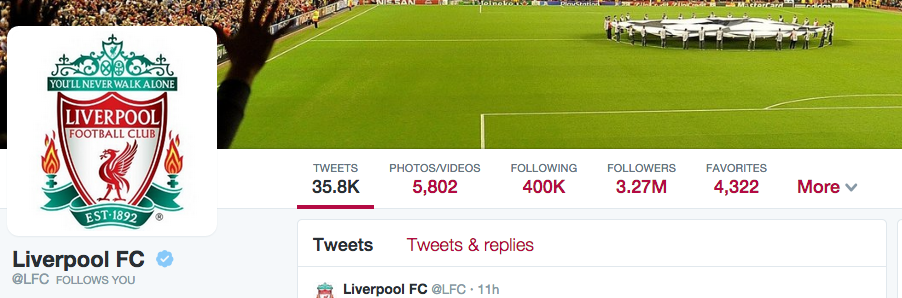
Like many businesses and industries, professional sports clubs have vastly altered the way they utilize social media. Social media accounts are updated with new content several times a day, providing an up-to-date view of the inner happenings of the clubs. From team news to Twitter Q & A’s, there is a level of transparency that goes far beyond anything we experienced before.

Moreover, social media in sports has gone further than just faster and more informative news. Over the last couple of years, there has been a development of a real online sporting community. Fans and organizations are able to interact on a common forum. The jokes and the norms of this online community are understood almost immediately to any new comers. There is a fusion of diverse cultures and different opinions, connected by the single and universal language of sport. Social media has helped create this subculture that now seems key to sport. You can’t even imagine the days when there wasn’t an ever-constant conversation about the daily events.

Screen Shot 2014-10-05 at 7.51.06 PM

Furthermore, this subculture has helped Sports clubs grow their brand. They have been able to become more than just a team of athletes; but have evolved into global brands with millions of followers. Teams like Manchester United and Liverpool have a following in parts of the world like Africa and Asia that most companies would envy. An important advantage that these brands have is that they do not have to try and build passion among their followers. Sports fans are already emotionally linked to their teams and will continue to follow them regardless of the state of the social media.

Unlike many industries today, a social media strategy is not a requirement. However a smart social media approach is a major advantage for brand growth. I’m a die-hard Liverpool fan. Hypothetically if Liverpool shut down their social media pages tomorrow it wouldn’t affect how much I was invested in the club. However, through social media I have been able to view a much larger piece of the fascinating world of professional sports and therefore feel more involved and valued.

Spam prevention powered by Akismet