
Categories
Uncategorized

Merging Across Borders


In 1998 the German company Daimler-Benz and the American comany Chrysler merged to form DaimlerChrysler. The merger ended up being a failure, with DaimlerChryler’s stock being valued at half of what it had been on the day the merger was announced.

    As with  my previous blog of the Greek economic crisis, this specified disaster can also be explained through studying the foundations of organizational culture. Daimler-Benz was an extremely hierarchical firm while Chrysler held strong core egalitarian values. When the two companies merged many cases of “infighting” arised directly resulting from the clashing of opposing cultures. The infighting including cases of unethical competition such as use use of internal sabotage or blackmail. Jurgen Schrempp, chair of the merged companies until 2005, admitted that he initially intended for the merger to be a takeover of Chryslers firm, this explains why many American employees were, “slow to trust” German management. The obvious friction between these two cultures eventually led to Daimler selling Chrysler to a private equity firm in 2007.

    This example illustrates how important organizational culture is to the creation, success, and ultimately perseverence of any corporation, even those extending beyond national borders.

Resources: Article and Informing Video


Categories
Uncategorized

The Greek Economic Crisis

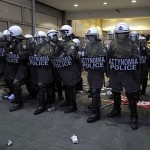
    On May 5, 2010 tens of thousands of protesters flooded the streets of Athens angered by huge tax hikes and drastic spending cuts (video link here.) The protest turned violent when protesters set the Greek Finance Ministry aflame with crude gasoline bombs killing three people inside. The question on everyones minds is how did the crisis get so bad?

    In focusing on the cultural aspect of Danielle Van Jaarsveld’s October presentation in Comm 101 it is evident that Greece’s organizational culture played a large part in fueling this crisis. Organizational culture is basically the shared beliefs and values held within a organization. According to David Muir and Bradley Blackburn’s article analysing the Greek economic crisis, “tax evasion was not only accepted but embraced by much of the [Greek] population.” This ideology created a very negative organizational culture which lead to an unstable relationship between employees and firms. High compensation rates, huge holiday bonuses, and generous salaries allowing many Greek citizens to retire in their early 50’s may seem like a good thing, but someone had to cover for this. The Greek Government supported this negative organizational culture by financially supporting the commodities Greek citizens enjoyed, unfortunately in the end everyone felt the consequences.

Categories
Uncategorized

A Degree? I rather be an Entrepreneur!

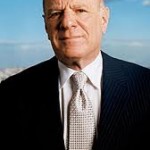
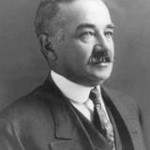
After learning about entrepreneurship and recent successful Sauder alumni such as Brian Wong I explored the subject online, stumbling across an article titled 15 Successful Entrepreneurs Who Did Not Need College. The members of this exclusive list include such prestigious names as: Richard Branson, Bill Gates, Milton Hershey, and even the legendary animator Walt Disney himself. During our presentation on entrepreneurship we learnt that 50% of businesses fail within 5 years, the main reasons associated with these failures included lack of experience and capital. Mr. Michael Dell however dropped out of college at the age of 19 with a mere 1,000 dollars in his pocket and managed to begin what became the most profitable PC manufacturer among the world.

    In consideration of the title of the referred article it is clear that a lack of educational experience is held across the list. So if it wasn’t a Harvard degree or Daddy’s investment fund that made these men some of the most influential figures in the world today what was it? In short, what skills they lacked academically were more than regained by their burning sense of passion. Passion holds no bias to its beholder no matter what the environment it is fueled in may be, as illustrated in these 15 brilliant examples.

Categories
Uncategorized

Money, Power, and Compliments?


    What truly motivated employees? Is it as simple as material goods, or perhaps an underlying trace of intrinsic motivation that pushes the common worker to their best? A Human Resources Article I found distributes motivation into 8 diverse categories which I interprated may be generalized into two basic classifications: Extrinsic and Intrinsic. I refer to intrinsic as an employee’s internal desire to do something arising from interest, satisfaction, or pleasure. This topic arouses my attention for it covers both the matters covered in the Oct 14 class for Comm 101 about people,culture and teams as well as interconnecting to many Organization Behaviour theories we learnt along the year.


   Ideally, from an executive’s perspective all employees would be intrinsically directed placing valence on compliments and verbal recognition rather than shares in company stock or fat paychecks – after all it’s cheaper! However, this is not the case, employee motivation ranges from specific cases ranging from both extremes of the spectrum. It is therefor important to consider both varieties of potential workers and specify managerial techniques to match each employee’s expectations specifically. In return higher employee productivity, loyalty, emotional identification will result, while decreasing turnover. A win-win.

Categories
Uncategorized

Local Sustainability

YouTube Preview Image 

    Business organizations around the world are now more than ever adapting to increasing Corporate Responsibility Standards in regards to sustainability. Our CSR and Sustainability class covered October 12 covered many interesting topics concerning our changing views on environmental issues and how businesses are beginning to further associating themselves within this area of interest.

    I researched the local efforts made by our community in sustainability and was surprised of the amount of effort and resources dedicated to reinforce the sustainable cause. The city of Vancouver’s Governmental Website provides an astonishing analysis on Vancouver’s environmental efforts. It may surprise most readers to know that Vancouver has the Strictest Energy Efficiency Requirements in Canada, is a dedicated member of the EcoDensity initiative and in recent 2009 has also launched the Greenest City Initiative. Altogether what does this leave Vancouver with??? The title of Canada’s most sustainable city by the Corporate Knights Survey and a sense of pride, to be held by all residents of our socially responsible community. Vancouver will serve as a role model for both governmental and business powers alike to pursue sustainable methods of practice within their command. Please refer to video above, a very interesting light revealed about our city.

Spam prevention powered by Akismet