Categories
Uncategorized

What It Comes Down To: The Importance of Socially Responsible Companies

Ultimately, companies having so much power to create change is important because they are able to utilize this power appropriately when needed

France flag, three dimensional render, satin textureThe Facts: When tragedy occurs in whatever form, help from anyone is appreciated. In the case of the horrific events that occurred in Paris within the last few days, we have seen millions of people around the world showing their respect for the country in many forms. In the wake of this attack, companies have been fulfilling their corporate social responsibilities in many different ways, specifically business like Airbnb, Skype and Verizon [1]. In response to external pressures, disregarding maximizing profit these companies lowered and/or made free their products completely free.

My Thoughts: It should be expected of companies to help in times of need, but typically corporations are looked at as “the bad guys” especially when their decisions are between social responsibility and profit. Obviously this stereotype isn’t true typically, but seeing such huge companies respond in such remarkable ways makes me feel very proud.

The Interesting Part: Why am I so impressed when companies act socially responsible? Am I simply falling in too deep with the “bad guy cooperation” stereotype or is there a real need for companies to become more socially responsible in the future?

Categories
Uncategorized

Responsiveness, Involvement and Conviction: The Perfect Cocktail for the Perfect Relationship

The Facts: An interesting blog post I came across on Logic+Emotion looked at what seemed to be a concoction of what consumers wanted most from companies- which wasn’t physical. The top three key themes which emerged when David Armano (creator of blog) surveyed with his team over 15,000 consumers in 12 different countries were as followed:

1) Responsiveness– 78% of people agreed on the following

2) Involvement- 68% of people agreed on the following

3)Conviction– 58% of people agreed on the following

The Interesting Part: In such a globalized and digitalized age, relationships consumers have with companies (or would like to have), seem almost similar to the types of relationships people seem to want to have with one another. Are company relationships becoming similar to real human relationships? Is a successful company one that is able to forge these strong relationships?

My Thoughts: The reality of the matter is, at least when comparing it to just myself, is that these values are basically what I’d expect from a company and a companion. As a generation, we are more interconnected with our companies and products than ever before. When surveying my own friends similar themes appeared for what they wanted from companies: reliability, honesty and transparency. With corporations having “human” rights in terms of legality, maybe cooperations are now beginning to similarly stimulate “human” relationships with real people. This begin said, the future of companies and their success will rely on how easily they are able to connect with their consumers.BN-KT336_MINDMA_P_20151014100809

Categories
Uncategorized

Short-term Solution and Personal Gain vs. Long-Term Solution and Real Social Change

The Facts: A one to one business plan (Tom’s), gives one pair of shoes to someone in need for every pair bought. This one to one business plan has gained a large amount of popularity within companies in different markets around the world.

The Interesting Part: When overlooking the superficiality of the “one to one” marketing business model, we must actually ask ourselves does it REALLY work?

My Thoughts: Looking from a marketing perspective, Tom’s one to one business plan is excellent. Pulling at consumers heart-string’s while specifically focusing on a segment of caring consumers, the company has “nailed” their look. But if one were to dig just slightly bellow the surface, as many have recently begun to do its clear to see that this isn’t the most effective way of really helping people. A quote in one of our pre readings states: ” Widmer and others say the model can create dependency, sap local initiative, kill demand for local businesses, and make developed world buyers of one-for-one products complacent about taking other action to address social needs.” Which makes complete sense. Providing temporary fixes for countries in need does nothing but pro-long their real development. What may at first seem like a great company, is really a company profiting from a “good image.”

The Solution: Helping countries develop good long-term and sustainable local business will help them flourish in the future. Companies like Sole Rebels is an excellent example of a company which benefits buyers and the company,  which also prompts positive social change. In an age where social change is becoming so valued among consumers, it is important for buyers to promote the right brands so that business can follow suite, and help create positive change.

216


Categories
Uncategorized

Concerned Student Suddenly Becomes a Little Less Concerned

The Facts: AirCarbon is a product recently developed by a company called Newlight, which captures carbon and then combines it with methane-based greenhouse gas emissions to produce a eco-friendly type of plastic. The product is said to be able to match the performance of other oil-based plastics while also begin able to out-compete the price of the same products.

The Interesting Part:One of my immediate thoughts when beginning business school was a concern on whether is was possible to be a good business woman while being a “good” person as well. Can you thrive in such a competitive industry while still begin not only ethical but also searching for sustainable products which benefit the world?

My Thoughts:  Looking at AirCarbon’s successful company it is safe to say it’s possible to be both. Being introduced to this company through Maria Acosta’s blog posts her thoughts on the company are positive; similar to mine. What impresses me most about this company was the initial start up of the company itself. It all started when the founds asked themselves simply “why can’t we use greenhouse gas emissions as a resource to make materials?” Not only did these entrepreneurs fall in love with a problem (vs a product), but they were able to create a company which has huge potential. In Maria’s blog she states “this is a huge deal for the company and a huge threat to the industry; Air Carbon has the potential to disrupt the $327 billion/year US plastic industry.” With such a sustainable and cheap product, it’s no wonder they’re making such disruptions in the plastic industry, especially since it has been stated the 87% of global consumers believe business should place equal weight on societal issues and business issues [1].  Seeing such an ethical and sustainable company being so profitable and successful is something I believe will challenge other business’ not only within the plastic industry but in all industries. In one of our pre-readings a quote becomes very relevant in this context “emotional impact on your customers will be in direct proportion to the social impact of your purpose.” In the future, more than ever the importance of global awareness will only help profit a company and give them a competitive advantage.

Unknown

Categories
Uncategorized

Not For Everyone: Especially Not in Business

The Facts: Retail businesses such as Kate Hudson’s retail company are adapting subscription business models, such as one’s implementing in Amazon and Netflix. Even though the same business model is being implemented the results are completely different when looking at retail verses entertainment products.

The Interesting Part: So why is it that a “copy and paste” method doesn’t work when looking at subscription business models?

My Thoughts: I mean, just the idea of there being a subscription to clothes personally just seems a little silly to me. Hearing it first from  Rohin Buttar’s blog, I was confused by the concept. The whole concept of having a subscription based business model revolves completely around the value proposition of the product itself and the consumers needs. Rohin states in his post: “all though the business model is extremely efficient, it simply is not in touch with the needs of the consumers in the market.” I could not agree more. The subscription business plan is most useful when taking away pains for the consumers.  Services such as Netflix which have continuations to their products (monthly magazines, weekly uploads to new episodes) take away the “pains” for consumers to consistently buy/ find new episodes, while rewarding them with additional free movies, and episodes of several extra shows. When looking at clothes, the way consumers buy clothes is different than the way they would buy magazines, TV shows even products from say Amazon. Even though, yes some would say there is a constant unfulfilled need to buy new clothes, clothing is unique to the buyer, which is why receiving the same subscription would not be as appealing. The most important point to learn from this, is that just because a business plan is efficient for a certain type of company in no way means it will fit every other company.
3322329996_d0d28216b1

Categories
Uncategorized

The Age of Innovation: Chicken Noodle Soup Edition

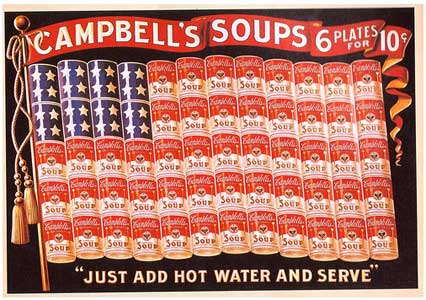
What happens when classic brands are forced to adapt to different generation’s new evolving values? You get a little something like Campbell’s new business plan.

The Facts: In a world where there is a rising concern for organic foods and real flavours in food, Campbell has experience some issues within the last years.  For Campbell Soup, sales peaked in 2012 at $16.2 billion, but since has decreased to just a little over $15 billion [1]. In order to bounce back the company has decided to “revamp” their beloved classic recipe including ingredients which are more commonly found in house-hold kitchens.

The Interesting Part: Will changing the “classic product” scare away old consumers, or appeal to more consumers than before?

My Thoughts:  With right about 80 million millennial hitting the consumer market, this new generation is considering different things when buying food. In order for even classic well known companies to stay appealing in such a fast-paced industry, changes must be made, even sometimes to the “classic product” itself. It’s no surprise that the shift in values is hitting something as simplistic and harmless as soup, and in my opinion the sooner the change the better. Even within something as classic as soup, there is always a clear need for “intra-preneurs”. With such a decrease in sales, even though changing the recipe may be risky, adapting to consumer values is the best way to become as profitable as possible in the future, as well as create a possible competitive advantage. Even though there are many “organic” soup companies, none have developed well-known household at the same magnitude of Campbell Soup. By adjusting to new consumers’ values now, in the future Campbell will be more competitive than ever.campbells_flag


A once appealing statement is probably not as comforting for newer health concerned generations


Spam prevention powered by Akismet