Categories
Uncategorized

Diving Deeper: Communism and Technology, and the Jump From One to the Other (Podcast Version)

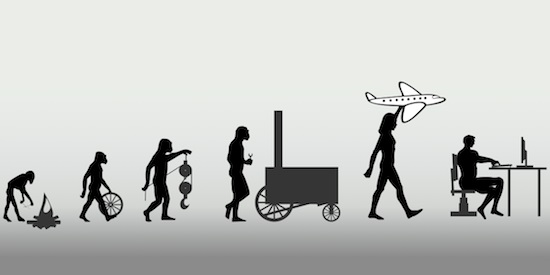
Summary: Ever try to think of living in a world where your best friend wasn’t one text away? Or maybe a world where research was done by rifling through stacks of books verses simply just googling it? In today’s podcast we explore technological changes immigrants, from the once communist country Romania have experienced throughout their lifetimes and how they have grown in the technological world around them. As we dive deeper into the subject as a podcaster I will try to create a timeline for listeners about our speakers lives throughout technology, as Ana Wiener did in “On reading issues of Wired from 1993 to 1995” and Astra Taylor did in her piece “The People’s Platform: Taking Back Power and Culture in the digital age.”

Guest Biographies

Norocel Popa

Norocel Popa is 50 years old, and immigrated to Canada in 1996. He grew up in Deva, Romania while Romania was a communist country. Now he lives in Mississauga, Ontario working as a BI (business intelligence) developer for Woodbine Entertainment Group.

Anca Schmidt

Anca Schmidt is also 51 years old and immigrated to Canada in 1995. She studied organic chemistry in Romania and now works as the Senior Director for Quality Control at Mylan Canada in Etobicoke.

Simona Cheoreanu

Simona Cheoreanu is 56 years old and immigrated to Canada in 1998. She is now a Project Manager in Equity Research for BMO Capital Markets. Fun fact:

Host: Welcome to Diving Deeper. I’m Audrey Popa, and as I’m sure you already know I will be your host for the evening. On today’s show we will be looking at the technological transitions three very unique people have gone through within their lifetime. Their one similarity is that these people spent most of their lives growing up in a communist country, yet when immigrating to Canada were immersed the world of technology in three very different ways. Today we will hear from Anca, Norocel and Simona, three Romanian immigrants and we will attempt to understand how technology has changed their lives. Thank you again to our lovely guest speaker’s for coming in to speak with us. Okay let’s get started shall we.

To begin, I’ll ask Simona the first question. Growing up in Romania, what was the extent of your interaction with technology? What products did your use and how did they effect your daily life?

Simona: Growing up during communist Romania, I was secluded from the world- especially from a technological standpoint. The government believed that the people of Romania could do everything by themselves and that they didn’t need to import anything into the country. The good thing was that there was a very strong emphasis in school on learning and developing technological skills, but everything was done with outdated labs, and while we did learn a lot of theory about technology we were well behind practically. Just to give you an example, I graduated with a computer science degree in 1990 and yet I was not able to touch a computer in the first 4 years of university studies; only after the revolution (in December 1989) in the last 4 month of my degree did new technology start to get imported into Romania.

Norocel: When I was younger, I grew up an only child in a small one-bedroom apartment. Both my parents worked, but my father was really passionate about music, especially the older stuff, so we had a lot of audio equipment around the house I could use- amplifiers, reel to reel tapes, turntables. That’s what sparked my love for music. Eventually these passions were what led me to electrical engineering and computers when I went to university, although that doesn’t say much- the only options for schooling at the time was the army, teaching, medicine, law and engineering. I’m lucky I was actually curious about the field though, as it was very competitive and I went to the best engineering school in the country.

Anca: Growing up in the 70’s and 80’s, the technology that surrounded us was pretty much limited to black-and-white TV, radio, audio (turn table and cassette player) and rotary telephones. There were no computers – I saw a computer for the first time in the first year of university – it was a huge machine, located in the basement of the IT school, and was running with perforated cards! We were fortunate enough to have access to most of the home technology available at that time, what was though specific (and not in a good way) to the communist system is the extremely limited access to information which was restricted and highly censored to information outside the communist world.

Host: Giving a quick description of your job now, did you ever expect yourself being as immersed in technology as you are now? How has technology benefited and retracted from your personal and social lifestyle?

Simona: This is a loaded questions with multiple parts to it, I could write a book on it. So, I currently work in BMO Capital Markets in Equity Research which is a business department, not a technology department. If I compare today’s technology with what I had experienced in Romania it is certainly a huge difference both because of the regime difference but also because of world’s technological advancement. Had I ever dreamed to use this kind of technology in university? Obviously- I just had no real understanding how the technological world would have moved forward! I love technology and I believe in it’s benefits in all places: at work and at home to speed up processes and to open up the world. To be able to face all the technology changes I had to continue to learn non-stop. I had to enroll myself in multiple courses, but also as the web technology and the Internet world expanded, learning and finding answers to technological problems became easier. Dr. Google today knows everything, you just have to want to learn.

Norocel: I am currently working as a BI (business intelligence) developer for Woodbine Entertainment Group. I helps businesses make sense of data by mining and creating visualizations to help better understand what data tells by displaying it, but yes I love new technology. If anything, things are moving forward too slowly. Technology helps keep in touch with family and friends even when they are not in the same area (or continent) as you. I skype my parents every day, as my father has a heart condition which keeps him from being allowed to fly. Not only that, but these advancements help you listen to very good quality music in ways that wasn’t accessible 40 years ago. I have people I don’t even know from across the country sending me playlists weekly just because we share the same taste in music, it’s awesome.

Anca: I am working in the pharmaceutical field, leading the quality control activities of the Canadian branch of a global company. About 95% of the work performed in our laboratory would be impossible without the current advanced technology used, as it would be the worldwide instant communication through email and video calls with my collaborators across the world, as far as Australia, Asia or Europe. I could not do my current work without my laptop and cellphone, which allow me to connect with anyone and at any time, even when away. While this allows me immediate access to all information and people I need to connect, it also can negatively impact my personal time away from work, as I in fact end up connecting with work even on vacations or on holidays

Host: Looking at the different macro environmental and social factors, how do you think technology/the immensity of social media will effect future generations? How does this compare to the impact it had on your own childhood?

Simona: To begin, I think that the education system will have to change. During my time as a student I went to school to find answers. It was the only place to where one could find answers that were buried deep in books. Today you have answers everywhere but young people need guidance and motivation, which in my eyes seems to be lacking among the general public. We need to teach them to ask these questions, and be curious. There is this sense that since you can find everything on Google you actually know everything, that is simply not true. Technology is here to help, not to replace. It can replace repetitive work but not intelligence. On another page technology makes the world feel small. You may be in Australia communicating face to face with a friend while you lay in your bed, but it can also keep you in bed instead of going out and feeling the real world and the real interactions.

Norocel: If anything, it should make humans smarter and more informed. There is a good chance, though, it might exacerbate the extremes. Those people that will be interested in what technological advancements have to offer will have all the info and knowledge at their fingertips. There will be no need to pay for expensive schools to learn something valuable when it’s all available on the internet. But those who will not be interested, well, they will play video games all day.

Anca: The immediate access to any type of information through the internet is something we could have not imagined growing up. For example, to study for my Masters thesis I had spent thousands of hours searching information through hundreds of books – the same amount of information is now available with a simple google search within a single day! The biggest challenge current and future technology brings is information overload – it is very easy to feel overwhelmed by the thousands of entries popping out for a simple search! While technology makes everything we need available at the tip of our fingers, it also limits direct human interaction, that cannot be replaced, at least not yet by a keyboard or a screen.

Host: Our guest Simona, Norocel and Anca have all explained to us their different experiences with growing up in a communist country, their immersion into technology and finally their love for technology. As different as all their stories are, the common thread between them all is the importance they place on technology within their lives, but also the potential dangers it could bring moving forward. Thanks so much for listening, and well see you next week on Diving Deeper!


 

Categories
Uncategorized

What It Comes Down To: The Importance of Socially Responsible Companies

Ultimately, companies having so much power to create change is important because they are able to utilize this power appropriately when needed

France flag, three dimensional render, satin textureThe Facts: When tragedy occurs in whatever form, help from anyone is appreciated. In the case of the horrific events that occurred in Paris within the last few days, we have seen millions of people around the world showing their respect for the country in many forms. In the wake of this attack, companies have been fulfilling their corporate social responsibilities in many different ways, specifically business like Airbnb, Skype and Verizon [1]. In response to external pressures, disregarding maximizing profit these companies lowered and/or made free their products completely free.

My Thoughts: It should be expected of companies to help in times of need, but typically corporations are looked at as “the bad guys” especially when their decisions are between social responsibility and profit. Obviously this stereotype isn’t true typically, but seeing such huge companies respond in such remarkable ways makes me feel very proud.

The Interesting Part: Why am I so impressed when companies act socially responsible? Am I simply falling in too deep with the “bad guy cooperation” stereotype or is there a real need for companies to become more socially responsible in the future?

Categories
Uncategorized

Responsiveness, Involvement and Conviction: The Perfect Cocktail for the Perfect Relationship

The Facts: An interesting blog post I came across on Logic+Emotion looked at what seemed to be a concoction of what consumers wanted most from companies- which wasn’t physical. The top three key themes which emerged when David Armano (creator of blog) surveyed with his team over 15,000 consumers in 12 different countries were as followed:

1) Responsiveness– 78% of people agreed on the following

2) Involvement- 68% of people agreed on the following

3)Conviction– 58% of people agreed on the following

The Interesting Part: In such a globalized and digitalized age, relationships consumers have with companies (or would like to have), seem almost similar to the types of relationships people seem to want to have with one another. Are company relationships becoming similar to real human relationships? Is a successful company one that is able to forge these strong relationships?

My Thoughts: The reality of the matter is, at least when comparing it to just myself, is that these values are basically what I’d expect from a company and a companion. As a generation, we are more interconnected with our companies and products than ever before. When surveying my own friends similar themes appeared for what they wanted from companies: reliability, honesty and transparency. With corporations having “human” rights in terms of legality, maybe cooperations are now beginning to similarly stimulate “human” relationships with real people. This begin said, the future of companies and their success will rely on how easily they are able to connect with their consumers.BN-KT336_MINDMA_P_20151014100809

Categories
Uncategorized

Short-term Solution and Personal Gain vs. Long-Term Solution and Real Social Change

The Facts: A one to one business plan (Tom’s), gives one pair of shoes to someone in need for every pair bought. This one to one business plan has gained a large amount of popularity within companies in different markets around the world.

The Interesting Part: When overlooking the superficiality of the “one to one” marketing business model, we must actually ask ourselves does it REALLY work?

My Thoughts: Looking from a marketing perspective, Tom’s one to one business plan is excellent. Pulling at consumers heart-string’s while specifically focusing on a segment of caring consumers, the company has “nailed” their look. But if one were to dig just slightly bellow the surface, as many have recently begun to do its clear to see that this isn’t the most effective way of really helping people. A quote in one of our pre readings states: ” Widmer and others say the model can create dependency, sap local initiative, kill demand for local businesses, and make developed world buyers of one-for-one products complacent about taking other action to address social needs.” Which makes complete sense. Providing temporary fixes for countries in need does nothing but pro-long their real development. What may at first seem like a great company, is really a company profiting from a “good image.”

The Solution: Helping countries develop good long-term and sustainable local business will help them flourish in the future. Companies like Sole Rebels is an excellent example of a company which benefits buyers and the company,  which also prompts positive social change. In an age where social change is becoming so valued among consumers, it is important for buyers to promote the right brands so that business can follow suite, and help create positive change.

216


Categories
Uncategorized

Concerned Student Suddenly Becomes a Little Less Concerned

The Facts: AirCarbon is a product recently developed by a company called Newlight, which captures carbon and then combines it with methane-based greenhouse gas emissions to produce a eco-friendly type of plastic. The product is said to be able to match the performance of other oil-based plastics while also begin able to out-compete the price of the same products.

The Interesting Part:One of my immediate thoughts when beginning business school was a concern on whether is was possible to be a good business woman while being a “good” person as well. Can you thrive in such a competitive industry while still begin not only ethical but also searching for sustainable products which benefit the world?

My Thoughts:  Looking at AirCarbon’s successful company it is safe to say it’s possible to be both. Being introduced to this company through Maria Acosta’s blog posts her thoughts on the company are positive; similar to mine. What impresses me most about this company was the initial start up of the company itself. It all started when the founds asked themselves simply “why can’t we use greenhouse gas emissions as a resource to make materials?” Not only did these entrepreneurs fall in love with a problem (vs a product), but they were able to create a company which has huge potential. In Maria’s blog she states “this is a huge deal for the company and a huge threat to the industry; Air Carbon has the potential to disrupt the $327 billion/year US plastic industry.” With such a sustainable and cheap product, it’s no wonder they’re making such disruptions in the plastic industry, especially since it has been stated the 87% of global consumers believe business should place equal weight on societal issues and business issues [1].  Seeing such an ethical and sustainable company being so profitable and successful is something I believe will challenge other business’ not only within the plastic industry but in all industries. In one of our pre-readings a quote becomes very relevant in this context “emotional impact on your customers will be in direct proportion to the social impact of your purpose.” In the future, more than ever the importance of global awareness will only help profit a company and give them a competitive advantage.

Unknown

Categories
Uncategorized

Not For Everyone: Especially Not in Business

The Facts: Retail businesses such as Kate Hudson’s retail company are adapting subscription business models, such as one’s implementing in Amazon and Netflix. Even though the same business model is being implemented the results are completely different when looking at retail verses entertainment products.

The Interesting Part: So why is it that a “copy and paste” method doesn’t work when looking at subscription business models?

My Thoughts: I mean, just the idea of there being a subscription to clothes personally just seems a little silly to me. Hearing it first from  Rohin Buttar’s blog, I was confused by the concept. The whole concept of having a subscription based business model revolves completely around the value proposition of the product itself and the consumers needs. Rohin states in his post: “all though the business model is extremely efficient, it simply is not in touch with the needs of the consumers in the market.” I could not agree more. The subscription business plan is most useful when taking away pains for the consumers.  Services such as Netflix which have continuations to their products (monthly magazines, weekly uploads to new episodes) take away the “pains” for consumers to consistently buy/ find new episodes, while rewarding them with additional free movies, and episodes of several extra shows. When looking at clothes, the way consumers buy clothes is different than the way they would buy magazines, TV shows even products from say Amazon. Even though, yes some would say there is a constant unfulfilled need to buy new clothes, clothing is unique to the buyer, which is why receiving the same subscription would not be as appealing. The most important point to learn from this, is that just because a business plan is efficient for a certain type of company in no way means it will fit every other company.
3322329996_d0d28216b1

Categories
Uncategorized

The Age of Innovation: Chicken Noodle Soup Edition

What happens when classic brands are forced to adapt to different generation’s new evolving values? You get a little something like Campbell’s new business plan.

The Facts: In a world where there is a rising concern for organic foods and real flavours in food, Campbell has experience some issues within the last years.  For Campbell Soup, sales peaked in 2012 at $16.2 billion, but since has decreased to just a little over $15 billion [1]. In order to bounce back the company has decided to “revamp” their beloved classic recipe including ingredients which are more commonly found in house-hold kitchens.

The Interesting Part: Will changing the “classic product” scare away old consumers, or appeal to more consumers than before?

My Thoughts:  With right about 80 million millennial hitting the consumer market, this new generation is considering different things when buying food. In order for even classic well known companies to stay appealing in such a fast-paced industry, changes must be made, even sometimes to the “classic product” itself. It’s no surprise that the shift in values is hitting something as simplistic and harmless as soup, and in my opinion the sooner the change the better. Even within something as classic as soup, there is always a clear need for “intra-preneurs”. With such a decrease in sales, even though changing the recipe may be risky, adapting to consumer values is the best way to become as profitable as possible in the future, as well as create a possible competitive advantage. Even though there are many “organic” soup companies, none have developed well-known household at the same magnitude of Campbell Soup. By adjusting to new consumers’ values now, in the future Campbell will be more competitive than ever.campbells_flag


A once appealing statement is probably not as comforting for newer health concerned generations


Categories
Uncategorized

Nike: They’re Doing It

When thinking of companies who have dominated the marketing world, one obvious company comes to mind for me: Nike. What pulls at the heart strings better than a triumph sports commercial? A huge example of how successful they are in the marketing domain would be their product Nike Digital Sport created in 2010.  This includes popular apps such as Nike+ running sensor and the Fuel Band. The reason Digital sports is considered such a success though, is because all the consumers’ data gives Nike the ability to follow them and their statistics, create an online and technological community for them and finally create a close and personal relationship with consumers. With so much data, they are able to construct their products and apps specifically to the direct data they are receiving from their applications. This concept alone, is considered the next big thing comparable to Nike’s unforgettable Swoosh symbol, or Just Do It slogan. So what makes Nike so great at what they do? The obvious examples are as follows:

  • They truly understand their target market, whether it be Men’s football, Women’s yoga, children’s gear; etc. They specialize and do so in a successful way.
  • Their overall marketing as a company, “JUST DO IT”
  • The athletes they get to sponsor their products
  • Their constant adaptation to a digital age and growth as a company

As someone who is interested in marketing, constantly looking at Nike among other companies like Apple, Samsung and Toyota, I’ve learned more from these companies than most “marketing how-to do’s” on the internet.

https://www.youtube.com/watch?v=Iy1rumvo9xc

A Nike commercial which got close to 90 million views. Not too shabby.

http://fortune.com/2012/02/13/nikes-new-marketing-mojo/

Categories
Uncategorized

Ethics: Who’s to Blame?

My favourite iclicker question up to date: What is the appropriate amount of ethics needed in business. Seeing the class dynamic was interesting, but also slightly discouraging. I understand the importance of being a profitable company- as I am someone who wants to succeed in business, but what I cannot wrap my head around is how there are people in my class who believe that profit is more important than ethics completely. The best way to understand, obviously is to research and learn more about who “cooks their books”, what companies have done so and the success as well as punishments they were given for doing so. Doing my research what I came to understand was that maybe the issue weren’t people and companies themselves, but how easy, and tempting it was to “cook the books.” An interesting article I came across by Investopedia, was literally called “Top 8 Ways Companies Cook the Books.” Looking at companies like Enron, Aldelphia and Worldcom, the quick article goes through accelerating revenues, delaying expenses and other tricks multi-billion dollar companies have used in the past. I understand that governments around the world are attempting to sweep away white collar crime, but with it being so easy how can you blame people in these companies for letting the glitz and the glam of greed get to them?


cook-the-books


http://www.investopedia.com/articles/analyst/071502.asp

Categories
Uncategorized

Successful Direct Business Model: TRIANGL

http://international.triangl.com

In our operations class, our guest speaker informed us that contrary to the article focused on Dell, typically a direct business model is not the best way to go. After the class struggled with even just coming up with business with this type of model, I was intrigued to find a business that not only had this type of model, but was successful with it. What I came across was that lots of modern, business model focused company primarily worked from online stores. Super successful companies include the Triangl bathing suit. As a teenaged girl, I’ve noticed that most, if not all of my friends own one of these bathing suits. As someone trying to study direct business models, its easy to understand why. The reason they are so successful is because of how specific their product is. Selling primarily bathing suits for teenaged girls gives them the ability to specialize their products and help consumers customize the bathing suits they want. As an online company, people could argue that they would have troubles marketing their product. Triangl find and contact popular women on social media, sending them their product for free and have the marketing done for themselves. Through conquering social media, and making their product loved by their specific target market they are a company I would personally consider of an example of a good use of a Direct Business Model.

With a live chat option, consumers are able to ask questions about the product and get immediate feed back.
Using different social media stars, they are able to market their product to a select group of consumers at a very low cost.

Spam prevention powered by Akismet