Practicum Application

Standard

What I have learned through this inquiry process is there are no easy answers or solutions. The gaps and waste of human potential will continue for years to come. It is only through deliberate, hard word that things will get better. Both settlers and Indigenous people have things to bring to the table. Decolonization is about the advancement of Indigenous interests and rights not some metaphor for social justice in general. I’ve learned it is important to carve out space for the unique needs Indigenous learners because of the unique injustices they face.

Articles like this one from the CBC give me hope that people are aware of the issues and are working towards doing something to change the current pattern.

http://www.cbc.ca/radio/thecurrent/the-current-for-february-18-2016-1.3453054/b-c-moves-to-address-racism-of-low-expectations-for-indigenous-students-1.3453069

In my practicum, I will try and bring Indigenous worldviews into the classroom. I will attempt to help my students understand the truthful history of this country. I will attempt to help my students understand the roles and settlers and Indigenous people in moving forward. However, I have no faith I will be successful at this.

Annotated Bibliography

Standard
  1. Brendtro, L. K., Brokenleg, M., & Bockern, S. V. (2002). Reclaiming youth at risk: Our hope for the future. Bloomington, IN: National Educational Service.

This book lays out the circle of courage, a framework of raising children according to Native American principals and values. The circle of courage framework is important to my inquiry project because it comes from Indigenous philosophy and worldview. While there is significant overlap between the CASEL SEL wheel and other ways of supporting young people, it was important to explore a framework that was informed by decolonized thinking. The circle of courage may hold some of the answers about how to bridge the gap between Indigenous and non-Indigenous learners.

2. Hermes, M. (2000) The scientific method, Nintendo, and Eagle feathers: Rethinking the meaning of “culture-based” curriculum at an Ojibwe tribal school, International Journal of Qualitative Studies in Education, 13:4, 387-400, DOI: 10.1080/095183900413340

This article explores the dichotomy that is created between academics and culture when both have separate goals in First Nations education. When we separate academics and culture into two distinct areas of achievement we reduce the value of both. The author suggests a merging of the two. While not a decolonized approach it is a plausible solution to some of the current gaps between Indigenous and non-Indigenous learners.

3. Joseph, P. B. (2000). Cultures of curriculum. Mahwah, N.J: L. Erlbaum Associates.

This textbook lays out six goals of education from a western view point. It was important to explore what the goals of the Western education system are in order to compare them to an Indigenous worldview. I believe that the difference between Western and Indigenous goals for education is a key part of the puzzle when trying to figure out why there is so little progress toward addressing the current gaps. The two sides want different things from the system and view the system very differently.

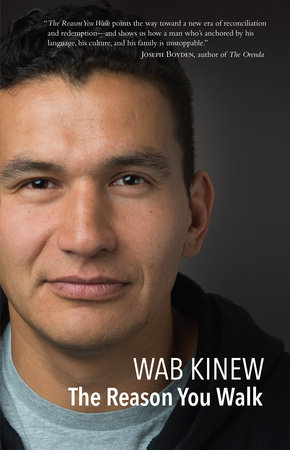
4. Kinew, W. (2015) The Reason You Walk. Penguin Canada

This book is a work of creative non-fiction that explores what reconciliation means on a personal level. It talks about the hard work that reconciliation takes on both the parts of Indigenous individuals and settlers. It explores the motivations behind the hard work. It really taught me that if Canadians want to make this work they have to work together until the job is done.

5. Giles, W. & Travis, T. [Button Poetry]. (2015, Dec 23) Oral Traditions. [Video file]. Retrieved from https://www.youtube.com/watch?v=r3pslYJjpDo

This is a spoken-word piece that explores the loss of language and the complicated process of reclaiming oral traditions. Decolonization is about reclaiming Indigenous spaces and knowledge. This piece explores the emotions of decolonization. I tried to take a wholistic approach to this inquiry and it was important for me to explore the art and emotionality of this topic.

6. Rasmussen, D (2011). Some Honest Talk about Non-Indigenous Education. Our Schools/Our Selves, 20(2), 19-33

This article discusses the very different concepts of education of Euro-Canadians and Indigenous peoples. This was important to my inquiry question because the difference between how education is conceptualized informs what each party wants from the system. The disconnect leads to different goals and a lack of progress towards addressing the current gaps that exist. There needs to be some kind of understanding between the groups to allow for the hard work to begin.

7. Tuck, E., & Yang, K. W. (2012). Decolonization is not a metaphor. Decolonization: Indigeneity, Education & Society, 1(1), 1-40. Retrieved January 15, 2016, from http://decolonization.org/index.php/des/article/view/18630/15554

This article speaks about how decolonization is the deliberate working towards Indigenous rights and interests. It is not a synonym for social justice. This is an important understanding to have when addressing decolonization. Sometimes we get caught up in working towards general social justice and forget about the specific injustices that Indigenous people face.

Living Inquiry

Standard

In the second group I joined we talked about active learning, play and outdoor learning. I was really inspired by the diversity of views on the topic.

The group had a great conversation around being outdoors and incorporating technology. We ended up talking about what technology actually is. We started out with GPS and ipads and quickly reframed to older technology. We discussed using compasses and older forms of way finding (natural markers, the sun).

In the beginning, the PLTECH cohort members felt limited by having to incorporate technology into outdoor play based learning. After we reframed what technology is we had a deeper conversation.

Everyone in the group had a memory of active outdoor learning that happened in their school experience. We all agreed these were memorable lessons and that we wanted more of this learning to happen in our teaching. I walked away inspired to explore geocaching and placed based learning with my Grade 7’s.

What is educational success?

Standard

What is the goal of education?

This questions has been answered may times over by scholars, institutions, and philosophers. According to the textbook Cultures of Curriculum edited by Pamela Bolotin Joseph there are six purposes “training for work and survival”, “connecting to the canon”, “developing self and spirit”, “constructing understading”, “deliberating democracy”, and “confronting the dominant order” (2001). This seems to be a fairly comprehensive list of the many goals of Western education. Of course the many interest groups in society would all prefer that education did a little bit more of one than the others.

When I attempt to answer this question I go back to what is the goal of raising a child. This is as close to the same questions as I can get, as my ancestors did not have a formal education system. Of course we had/have cultural transmission systems that fulfilled the same functions as education does for Euro-Canadains. These are simply embedded in our culture.

The answer is pretty simple. My Elders taught me that the goal of raising a child is that one day they might be an Elder. An Elder is a person who holds a meaningful role within my community as a holder of wisdom and experience. They are loved and cared for by the community because they are invaluable to its functioning.

Rasmussen explores the restaurant model of education. How Euro-Canadians assume every culture had some form of education. That we start to look for evidence of education within cultures. Cultural knowledge transmission happens in every culture but this does not mean that it happens within the narrow confines of what settlers would call education (formal schooling). The analogy is drawn between every culture has food but we do not go looking for evidence of restaurants in every culture.

Measurement/Benchmarks:

In the Western world, educational success could be said to be measured by the highest level you achieve in the formal schooling system. It could be argued that a PhD is the highest level to be achieved. This is a hierarchy and relies on more knowledgable strangers, on the written word, and a complex system to achieve.

If the goal of raising a child is for that child to one day become an Elder of the community, how do measure this? How do you know they are living a well lived life? Contributing? Making mistakes and learning from them? Living according to traditional values and teaching?

With the large gap between understandings of success how can we reconcile these? What becomes more important? Should Indigenous learners be measured according to the levelled system or on their progress toward being an Elder?

A dichotomy is often created in First Nations schools between academic and cultural goals and achievements. Mary Hermes explores this complex relationship in her article. She suggests that bringing academics and culture together in measurement is better than separate goals. I believe this is the path forward. We need to bring these two very different idea of education together without loosing either. Not a small task. It will take years of dedication and hard work, but hopefully in a few generations there will be some change.

References.

Joseph, P. B. (2000). Cultures of curriculum. Mahwah, N.J: L. Erlbaum Associates.

Rasmussen, Derek (2011). Some Honest Talk about Non-Indigenous Education. Our Schools/Our Selves, 20(2), 19-33

Mary Hermes (2000) The scientific method, Nintendo, and Eagle feathers: Rethinking the meaning of “culture-based” curriculum at an Ojibwe tribal school, International Journal of Qualitative Studies in Education, 13:4, 387-400, DOI: 10.1080/095183900413340


“The Reason You Walk”

Standard

book cover - the reason you walk

This week I read The Reason You Walk by Wab Kinew. Earlier in the term I had attended a talk with Wab and he talked a little about the book. I remembered his introduciton and realized this book might have some of the answers I was looking for.

Decolonization has become a slippery theoretical eel to me. I cannot quite grasp it without crushing it or hammering its head into the cutting board.

The Reason You Walk explores the Wab’s reconciliation with his father. It is a work of creative non-fiction. He discusses the Indian Act, the current state of politics in Canada, and the deep hurts of colonization. The climax is when Wab’s father traditionally adopts the Arch Bishop of the Anglican Church. This act symbolizes a deep forgiveness and a true act of reconciliation. Wab’s father had been horrifically abused in Indian Residential School and had worked his whole life to help his community heal. The price his family paid was emotional distance.

Wab’s father dies of cancer and on his journey to death he works in relationship with Wab to repair their broken bond. By the end they are best friends. This understanding is hard earned.

Wab explores what reconciliation and decolonization means on deeply personal level. What I learned is that decolonization and true reconciliation is about hard work. Work that takes daily, conscious effort. Decolonization is not an easy thing. In fact my good friend, former olympian, and survior of a stab to the chest by a Canadian solider during Oka puts it this way:

“I recently was talking to someone about colonization and decolonization. They are the buzz words these days and my friend wanted to understand it all in what he called “normal” English and not all academic. So I said ” have you ever seen the movie Wolverine?” He said “um Yah, why?” I said remember that black spider thing the woman put on wolverine’s heart? Well let’s say that colonization. That thing clamped on to his heart was designed to suck his special life energy out of him. It was ultimately changing who he was, by slowing his healing and would have killed him if he left it there.
Well he had two decisions; dye slowly while his life is sucked out of him, the less immediately painful choice but ultimately would lead to his demise and he would die not being who he once was…or option 2 was to reach in and rip it out, potentially dying…the more painful but in the end he could regain who he was and he knew there was a good chance he would recover. He decided to “decolonize” his heart..it was hard painful and almost killed him..but he was able to survive it and be what he once was.
I said to my friend, if we are to decolonize, some of the things that have clamped onto our hearts, and almost feel like they are part of us..are really what are killing us..and ripping them out is potentially going to a bit painful, be we have to remember we have the same ability to recover and be strong again….just like wolverine.”
                                  Waneek Horn-Miller

Throughout the book Wab talks about walking in a good way and the red path. Decolonization is a road you walk. You walk it for love. Settlers and Indigenous people both have to walk this road together. Action is what is important.

In education, this means we have consciously walk towards decolonization in our classrooms, policies, resources, pedagogy, and curriculum. Twenty years ago the Royal Commission on Aboriginal People’s gave us action items around education. We have failed miserably.  Eleven years ago, the Kelowna Accord gave us directives on closing the gap including in education. We have failed miserably. Last year the Truth and Reconciliation gave us calls to action, many around education. Hopefully, we do not fail again.

If we work together, in relationship, with intention as  settlers and Indigenous people, maybe, just maybe we can tackle these gaps that continue to rob Canada of immeasurable human potential.

The Circle of Courage

Standard

CofCLabeled


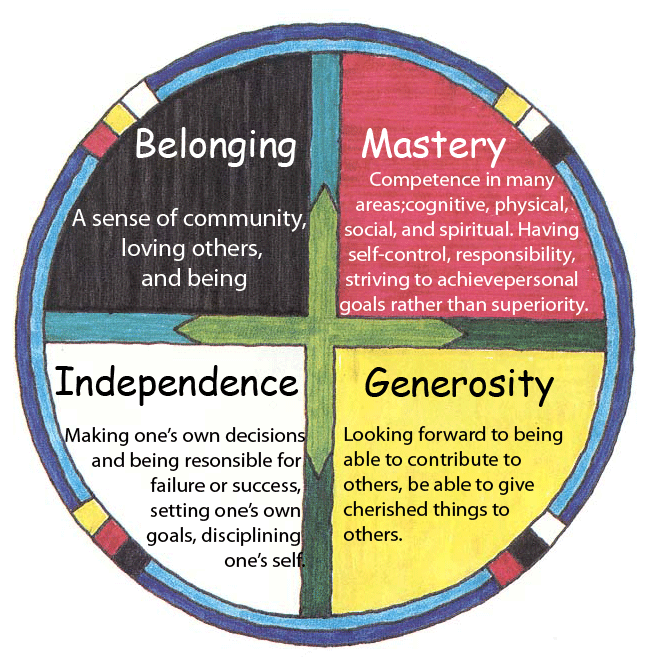
Dr. Martin Brokenleg’s framework to address the many issues facing Indigenous youth is one way to look at supporting success that takes a decolonized approach. The framework is based on four universal needs of youth: Independence, Generosity, Mastery, and Belonging. This is based on traditional First Nations teachings from the plains. It is based on the medicine wheel and is easy to understand and work with. However, The approach/paradigm shift is not without problems. It is not a place-based approach and may clash with local knowledge and belief systems.

I have been a fan of the Circle of Courage for some time. I am familiar with the framework itself but I wanted to know what happens when it’s applied.

I read “Creating Circle of Courage Schools” by Steve Van Bockern & Tim McDonald, “The Socialization of Youth in the 21st Century: The Circle of Courage” by William Jackson and an excerpt from a blog written by David Bryant “The Circle of Courage In The Classroom”.

The blog excerpt focuses on building a positive classroom climate, true mastery through peer teaching, discipline not punishment, and transforming obligation into enthusiasm through relationship and caring. The blog asserts that a blanket set of regulations to deal with behaviours is counter productive as it does not recognize that every district, school, and classroom are different with a unique set of needs. The blog also addresses how the circle of courage is a valid behaviour intervention model. This blog clarified some of the application of the model and how it can help with problem behaviours. While prosocial behaviour is important is it decolonization? Is the goal to have well behaved students or to have strong Indigenous leaders?

I will address the other two articles in another post.

http://centerstonefcs.org/wp-content/uploads/2011/02/implementing_the_circle_of_courage_in_a_classr.pdf

Spoken Word As Decolonization

Standard

In this inquiry process I have been examining what exactly decolonization is. What does it mean to decolonize something in practice? What are the actions, steps, processes that need to take place? What does that mean for education at a systems level? What does it mean for teachers and learners? These are questions that are big and hard for me to answer. It seems that decolonization

I find that my question is becoming less specific and more general. I cannot answer the “how” because I don’t understand the “what”. I understand the why. I believe I understand the “why” we need decolonization, but what exactly is it?

When I am trying to explore anything complex I usually turn to art. I feel like a deep down emotional response to a subject helps me understand it it cognitively. So I went in search of my favourite medium, spoken word. There are tons of videos out there that explore the idea of decolonization.

This video was particularly powerful.

“So now when I re-tell the tales of my Ancestors, in the colonizer’s English, I am unsure if my act is one of resistance or oppression” This line expresses my frustration with the conundrum of decolonizing through/in Western education. If Western education was/is a tool of colonialism can it ever be a decolonized space/system? My truthful answer is I hope so.

For me that is what this spoken word piece explores: hope. It’s powerful and angry but for me it is hope. So from now on I’m going to look at the messy hopeful side of this question.

Giles, W. & Travis, T. [Button Poetry]. (2015, Dec 23) Oral Traditions. [Video file]. Retrieved from https://www.youtube.com/watch?v=r3pslYJjpDo


A Philosophy of Education

Standard

Mount Keys

I believe the fundamental role of education is to prepare young people to be contributing members of their communities. Education should be highly adaptive to individuals and their communities. Education should be holistic and support the four fundamental elements of a person – mental, emotional, spiritual, and physical. More than ever young people need to be strong and capable in all elements of their whole-self, for they will face many challenges in our rapidly changing world.

Education should  support the development of both independence and interdependence. Young people need to be self-sufficient and resilient. Education should provide them with a “tool-kit” that will help them navigate all life’s adventures. They need to learn to be generous offerers of help and gracious acceptors of it.

Education is life-long and never ending. Education should encourage young people to be curious about the world around them and question sources of knowledge. Young people should be taught to question ways of knowing and how they came to be.   I believe there is education that can be purchased from a university and there is education that no amount of money can buy. The latter is earned through relationships with others and the world around us.Education should include placed-based and experiential learning.

Most importantly, education should guide young people to a way of walking in the world that is both brave and gentle.


Colonial Discourses

Standard

In order to explore the role of decolonization and/or anti-colonialism it is essential to first understand colonization’s role in education.

From both a familial and lived experience perspective I will discuss some of my understandings of colonization’s relationship to education. The discourse of colonialism, as it is known to me, is one of erasure and dichotomies. Colonial discourse works to erase the original people of the land by rendering them savages – unable to make “good” use of the land. It works to erase their humanity by painting them less than.  Not equal to white Europeans by any measure; not in culture, not in language, not in technology, not in beliefs, not in intellect. By creating a discourse of savages, being who are less than human, colonialism made rendered their lands empty. Essentially claiming terra nullis, “a Latin expression deriving from Roman Law meaning “nobody’s land”, which is used in international law to describe territory which has never been subject to the sovereignty of any state”  (Wikepedia).  This was a deliberate creating of a discourse that would allow colonization of North America to be acceptable.

As evidence of this mindset I quote the first stanza of Rudard Kipling’s poem from 1899 “The White Man’s Burden”

“Take up the White Man’s burden—

Send forth the best ye breed—

Go send your sons to exile

To serve your captives’ need

To wait in heavy harness

On fluttered folk and wild—

Your new-caught, sullen peoples,

Half devil and half child”


That poem and the colonial mindset from which it came belong only in history books, some might say. However, it is only in 2016 that we are attempting to include them in history books. Prior to movement of reconciliation started by Indian Residential School Survivors taking the govern of Canada to court, Canada purposefully left out their darker colonial past. Of course it was fine to teach about the white side of the story. I cannot tell you how many times I learned about the fur trade, Champlain and the war of 1812 in school. This is colonial history told from the side of the colonizers. First Nations voices are absent from the story. Who exactly were those fur traders trading with? Until recently Canada has still be practicing a colonial discourse of erasure.

The fact that the fur trade exploited Native people, their resources, and lead to mass epidemics that wiped out as much as 90% of the Native population (from the book Guns, Germs, and Steel by Jared Diamond) is left out of the history books. In the media Native people are only shown in the context of the four D’s – drumming, dancing, drunk, and/or dead (Duncan McCue, CBC). It sad but true.  The old power imbalances that are imbedded in our current systems,  left over from colonial times, dictate who gets to tell the story.

As much as I would like to think that our current new direction in education came from a place of enlightenment and all of us coming to our good sense – it didn’t. Many Indigenous people had to fight to be included in the history books. Although they might not have known that that was what they were doing at the time. Indian Residential School survivors went to court for justice. They knew that the cultural genocide committed against them and their communities by the government of Canada was wrong and someone needed to pay. It was only through their victory that things began to change. A formal apology was  made by Canada’s prime minister. The Truth & Reconciliation Commission was established. Through the hard work of the commission and other advocacy groups and powerful individuals the mindset of Canada began to change. As the stories were told and places of higher learning began to wake up to the truth, we slowly realized that we could not continue to tell a one sided story.

Decolonization is about action. It is about fighting for justice. Things do not change because you know it is the right thing – they change because someone cared enough to take action. Which is why I think decolonization can be so transformative for Indigenous learners.

Two of the basic needs of young people are empowerment and connection. Decolonization can lead to both. Because decolonization is about action, if Indigenous learners take up decolonization they will gain empowerment through forward moving action. Secondly, the process of decolonization will connect them to their communities. For it is only by going back to the community, families, elder’s, teachings, and land that we can truly decolonize.
 

Key Assumptions

Standard

Inquiry Mind Map

Before I begin to examine the how of my inquiry question I believe it important to make clear the assumptions behind my question. As with every question my question makes some key assumptions that should be made clear to aid in my own understanding of the perspective/approach I will taking to this inquiry process.

Assumption 1:

Colonization was and still is a contributing factor in the lack of success Indigenous learners currently have in the Western academic classroom.

Assumption 2:

Indigenous learners are not currently achieving satisfactory success in the academic classroom. There is a great deal of research that would indicate this but I intend to question that research at a later point. One of my key points of questioning will be around how exactly success should be defined in the context of Indigenous learners. This will require me to grapple with ideas of validity and the trope of “giving ‘them’ their best chance.”

Assumption 3:

That decolonization and/or Indigenization are capable of closing some of the current gaps that currently exist between Indigenous and Non-Indigneous learners.

Every question we ask is formed through our unique lens. Every person’s lens is shaped and changed by their experiences and learning. My particular lens has been heavily shaped by my lived experience as an Indigenous person in a colonial country. Some of the more influential people in my life are radical Indigenous rights activists. They believe that to truly achieve decolonization the system must be rebuilt. It must be indigenized.

The online edition of the Oxford English Dictionary defines indignization as follows:

“indigenization, n.

Pronunciation:  /ɪnˌdɪdʒɪnʌɪˈzeɪʃən/
Frequency (in current use): 

The act or process of rendering indigenous or making predominantly native; adaptation or subjection to the influence or dominance of the indigenous inhabitants of a country; spec. the increased use of indigenous people in government, employment, etc.”

This definition seems narrow and limiting. While indigenizaiton is a process it is not a process of dominance. It is clear that this definition comes from the same culture that asserted its dominance over Indigenous cultures all over the world. I am not surprised that a culture that created colonization would view indigenization in this way.

Another definition that comes from Camosun College’s Center for Excellence in Teaching and Learning says

“Indigenization is the process of infusing Aboriginal knowledge and perspective into the structural layers of an institution.

The goal is to create a more inclusive environment through the presentation of a different world view, and to enhance and enrich the educational and cultural experience of the educational community. This does not mean the institution is Indigenous-centred, but it does mean that consideration of Aboriginal issues comes ‘naturally’.”

This definition is more in line with what my understanding of indigenization is. Firstly, it hits the nail on the head with idea of this being an institutional process. Indigenization needs to occur at the systems level for there to be any real impact. It was cultures, beliefs, values, and systems that created colonization and it’s horrific legacy. It is these things that need to change to undo that legacy. While it still holds out some reserve when it comes to the institution being Indigenous centered, it is better. This reserve probably comes from a place of wanting to remain inclusive to diverse communities but I question why it is assumed that an Indigenous centered institution cannot be inclusive all diverse communities.