Categories
Business Fundamentals

RE: Is Franchising Right For Your Business?

In response to Brian’s blog I’d like to say that the franchises are a very broad market. However the franchise models differ, most of them are strictly controlled, the digree of flexibility for a franchisee depending on franchise contract. Therefore I do not fully agree with Bryan’s the statement that once you sell a right to run franchise “You no longer wholly own your business either because the franchisees are not employees, but partial owners in their own right.” You can still remain desired level of power if the right contract is signed.

I do not agree that franchise lowers the startup costs, as it is in itself a significan cost to a franchasee, however, it significantly lowers business risk, as the franchises’ business models have been tested before and have proved reliable. It is also relatively easier to run a franchise for somebody that has no previous experience in business as many of the functions are outsourced to the mother organization.

 

Categories
Business Fundamentals

Re: “Power Tabs and BC Hydro”

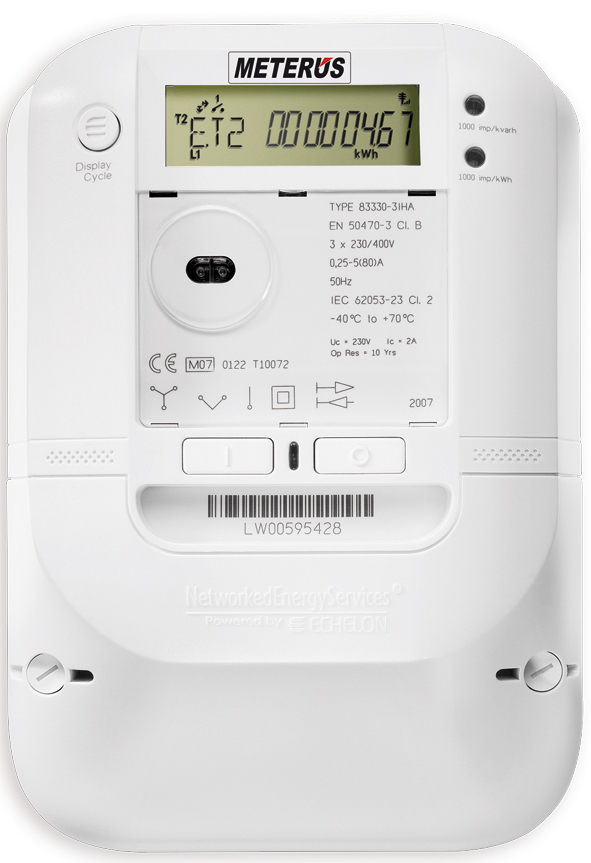
I understand the concern Frederick has expressed in his post “Power Tabs and BC Hydro “. However, two of the main reasons why BC Hydro got into troubles when implementing the system of small meters were the lack of possibility to opt-out and the privacy concerns.

In this sense Energy aware’s solution is different as it’s fully optional and the information is circulating in a closed system, with no possibility of being retrieved by third parties. The only issue I’d like to adress is how to reach the clients. Should Energy aware do it through BC Hydro (which has quite a bad image among many customers because of the small meters) or directly? The question will be easier to answer once the company gets sales result from its retail in California.

Categories
Business Fundamentals

Concept of a triple bottom line company

The concept of triple bottom line company is recently very popular. Traditionally, the companies were analyzing the financial balance sheets to determine how successful they were. Triple bottom line companies assess their success in view of their financial, social and environmental impact.

This holistic approach potentially brings many advantages: it can be seen as a Point of Difference, cement customer loyalty and improve firm’s relationship with employees. However, if badly managed and communicated, it can provoke accusation of, for example, green washing. Therefore, before declaring the company as green or socially responsible, the real impact should be assessed.

Let’s look at the example of company that tries to project itself as a triple bottom line.

Wal-Mart’s implemented a greening strategy in 2005. It has let the company significantly improve its image among the customers; nevertheless, initiatives as Wal-Mart Greenwash provided by ILSR are continuously challenging Wal-Mart’s  practices, accusing it of being dishonest, which could in medium term hinder the company’s image.

Wal-Mart has also stated that it has positive impact on the local SMEs. However, research shows that in fact its impact is negative for companies that provide similar products and services in first place, but also for other businesses. This can also hinder giant’s image and be considered as a proof of dishonesty.

Categories
Business Fundamentals

Wells Fargo’s troubles or how wrong motivation mechanisms can blow up your business

Wells Fargo & Co., the fourth biggest American bank, has been accused of abusing and defrauding US government’s mortgage insurance program. Starting from 2001, the company has developed a mortgage program addressed to the borrowers that couldn’t normally classify for a loan. In order to bust the business’s growth, company’s employees were paid based on the number of approved loans, rather than the reviewed loans. This have led to a dramatic fall in the loan quality and “hundreds of millions of dollars” in loses, as reported by the Federal Housing Administration.

Many banks have committed similar mistakes prior to the current economic crisis that has started in 2006. The issue may be in the organizational culture of the companies like Wells Fargo. Only the best rewarding firms get the best talents and there is a fierce contest on the market. Nonetheless, the companies should analyze better risks stemming from this kind of motivation practices, as the price they may have to pay has proved to be higher that anybody might have expected.

To read more on Wells Fargo’s troubles: http://www.economist.com/blogs/schumpeter/2012/10/wells-fargo-and-mortgages

Categories
Business Fundamentals

Inditex finds a way to get rid of unsold inventory

Inditex’s (Zara, Pull & Bear, Massimo Dutti, Bershka, Stradivarius, Oysho) business model is based on a revolutionary supply chain that allows the company to deliver new products from design board to its stores in less than 1 month. As a result the company boasts one of the lowest ratios of discounted sales as the product lines are changed frequently and clients must get the merchandise they desire before the sales (most of the models is gone by that time). This is not enough for the ambitious Spaniards who have found yet another way of increasing firm’s benefits.

Lefties is Inditex’s low-cost outlet. It offers its own, low-cost basic products (simple t-shirts, jeans, shoes) and “lefties” from other INDITEX’s brands (with new Lefties brand tag). This strategy lets the company monetize the inventory that would otherwise affect its balance sheet, at the same time addressing lower-income customer segments, thus further expanding company’s market share.

This is yet another example of how innovative business model can create a significant advantage to the companies.

Lefties' logo

Spam prevention powered by Akismet