Categories
Campaign

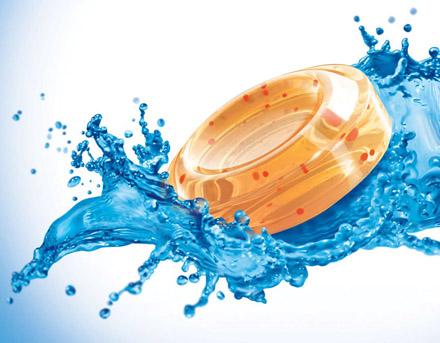
Refreshing Halls with Halls Refresh

I am all too familiar with the encroaching wave of utter exhaustion that overtakes you during the trek home after school. One day, my haggard self was on the way to catch yet another bus transfer when I spotted a huge billboard at the bus loop in Lonsdale Quay. It was a bright blue ad for Halls Refresh, a product that promises to rescue me from my three o’clock slump. I was temporarily snapped out of my lethargic state, and I’m positive I wasn’t the only one: the choice to display the advertisement at a major hub where weary citizens–Halls Refresh’s target market–cross paths everyday was no coincidence.

The cough drop is currently in the mature stage of the product life cycle. There are many competitors and substitutes, and sales and demand have reached their peak and are beginning to level off. How can market share be increased for a company in this position? Halls’ answer was to find a new use for its existing product.

In my experience, Halls cough drops have been kind of regarded as candies for quite some time (if I recall correctly, Halls has been placed by the cashiers alongside other candy and chewing gum in grocery and convenience stores for as long as I can remember), but the product was just never explicitly marketed as such.  Just as a classmate mentioned, the repositioning of Halls aims to capture a whole new segment of consumers who like to use cough drops in the absence of a sore throat.

While this strategy has the potential to be highly successful, Halls Refresh’s bold repositioning statement of “It’s not a cough drop” worries me slightly. Halls, practically a genericized trademark much like Coke and Kleenex,  has been inextricably linked to cough drops–and rightfully so, as it’s what the brand is originally known for. So by declaring that Halls isn’t a cough drop any longer, conflicting signals are sent, which results in a discrepancy between this new image of Halls and what the Halls name has always stood for. I am sure the folks at Halls had already anticipated this concern. By following through with Halls Refresh anyway, the company braved possible risks and costs, demonstrating faith in the strength of the Halls brand.

Categories
Promotions

Coffee Craze

You may not have heard about it, but you may have seen it. Last week, I noticed a curious increase in the number of McDonald’s coffee cups on campus. It did not take me long to learn that the fast food chain is serving free coffee from November 15th to the 28th. Seeing as 9 out of 10 Canadians drink at least one cup of coffee a day, McDonald’s saw this window of opportunity and seized the chance to reintroduce their coffee sales promotion in an effort to encourage further interest in the product. While consumers storm their local McDonald’s, the company is sitting back and reaping the benefits of this clever promotional strategy.

I observed that McDonald’s has taken many steps to ensure a precisely planned sales promotion:

  • Timing is crucial, and McDonald’s has hit the bullseye. The offer of free coffee runs for two weeks, which I feel is a happy medium–not too long as to decrease the value of the promotion (and to augment costs), and not too short as to leave consumers too unsatisfied. The two-week time frame provides ample time for consumers to learn of the promotion and to stop by their local McDonald’s. Furthermore, the choice to offer this promotion during the chilly month of November is even more effective than during a warm month. Who doesn’t love being warmed up by a piping hot cup of joe?
  • It is an absolute fact that everyone loves free stuff. By giving out coffee with no strings attached, McDonald’s is lowering the risk of consumption: “You have nothing to lose.” The absence of financial risk is enough to possibly lure the coffee drinkers segment from other coffee establishments, as well as convince the non-coffee drinkers segment that it wouldn’t hurt to try. After all, if it’s free, why not? What follows is increased brand exposure and awareness through the ensuing ubiquity of McDonald’s distinct coffee cups, which I mentioned earlier.
  • Coffee is generally considered a convenience product–minimal effort is exerted during the consumer decision process. (This is especially true for McDonald’s positioning for its coffees. Unlike Starbucks, McDonald’s targets consumers seeking a fast cup of coffee at a low price.) Caffeine is addictive, and by promoting free coffee, I am thinking that McDonald’s is hoping to foster and facilitate a habit of coffee consumption in the spirit of modern society’s coffee culture. Not everyone may find McDonald’s coffee good, but those who try it and develop a liking will probably return to McDonald’s after the promotion ends with a new willingness to pay the normal price.
  • Where there is free stuff, there is also a long lineup. As people queue for their free coffee, McDonald’s restaurants’ noticeable signs and menus attempt to squeeze a last sale from each of them at the point of purchase. For instance, certain individuals may feel that all the time spent lining up for one measly cup of coffee simply isn’t worth it, and would ultimately be persuaded to buy something else to make the extended wait worthwhile.

Competitors of McDonald’s, take note! If they are indeed paying attention, I happily look forward to more free food.

Categories
Fashion

Luxury and Lanvin

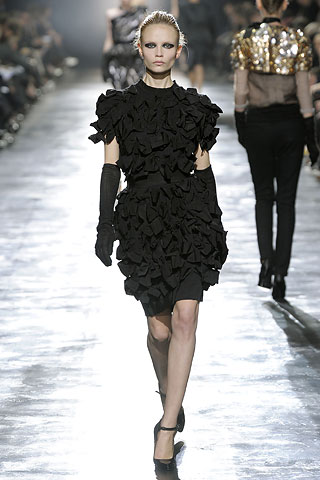
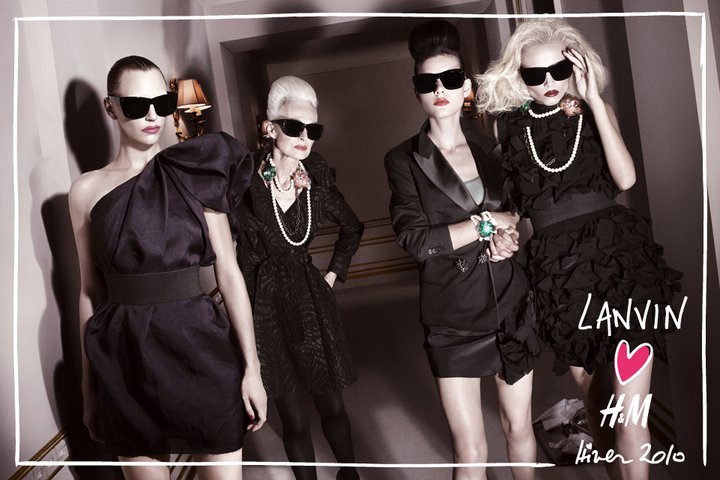
The highly anticipated collaboration between French fashion house Lanvin and fast fashion giant H&M debuted today in Canada. Regarded as a blessing by many fashion-forward folks with a constrained budget, consumers can now achieve the signature Lanvin look perfected by Alber Elbaz, Lanvin’s head designer, at a fraction of the cost: a typical Lanvin dress can cost approximately $10,000 on average, but a Lanvin x H&M dress retails for “only” $199.

Based on the successes of previous guest designer collaborations, H&M has realized the profitability of cobranding with high fashion labels. By fusing two brands of value together, cobranding can create an even higher level of perceived value. H&M is generally regarded as a reliable source for inexpensive but trendy clothing; Lanvin is recognized as the oldest fashion house still in operation. Together, Lanvin’s premier status allows H&M to command a premium price. To certain consumers, however, this premium is a small price to pay for the status attached to the designer name.

As much as I am a frequent customer at H&M and a great admirer of Mr. Elbaz’s work at Lanvin, I have no intentions to purchase a Lanvin x H&M piece. While others value this special collection enough to begin lining up last night in front of H&M, I personally do not see the worth of such a collaboration. Lanvin conveys a portrait of classic French sophistication and opulence with a bold edge. H&M has attempted to translate this image in a more affordable way–which will delight many people–but I value the high standard of quality that can only be guaranteed with genuine designer products more. Without the Lanvin brand and all it stands for, any piece from the collection is reduced into a cheap knock-off with a ludicrously steep price–and hardly anybody expects to pay over $100 for something from H&M. That is, unless you slap a designer name on the label.

Categories
Advertising

Art in Transit

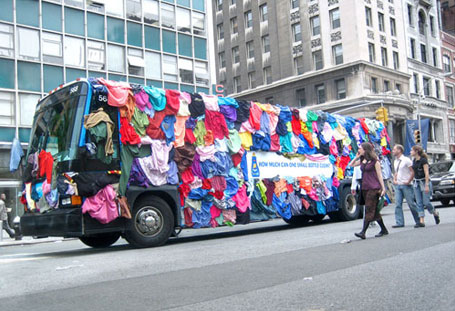
I found my fellow classmate’s blog post on bus ads compellingly relatable: also a one-and-a-half hour commuter student myself, I too share a certain fascination with public transit advertisement. Be that as it may, it is the norm for me to breeze past bus ads without so much as a sparing glance. I blame the run-of-the-mill ads so prominent in Vancouver. Thanks to the internet, I am able to see the artistic efforts dreamed up of ad agencies around the world. It would be nice to see a little more inspiration and pizzazz in our bus ads. I know it’d make my early morning commutes much more enjoyable.

Click through for some examples of interesting bus advertisements…

Categories
Campaign

Think Pink

I remember our class discussion about “thinking outside the box” when it comes to the demographics segmentation base, with the NFL’s high-profile partnership with the American Cancer Society during National Breast Cancer Awareness month as an example. Upon learning of this campaign, I felt deeply appreciative of such efforts. It seemed unconventional, effective and sincere. The presence of pink in the masculine sport was apparent yet unobtrusive. Thoughtfully engineered, “A Crucial Catch” showed all signs of a marketing success.

But was it genuine? Marketing is no stranger to “ethically ambiguous” territory, so naturally, what came to my mind was corporations being socially responsible for the sake of appearing socially responsible. This may not be the perfect analogy, but this situation reminds me of the fact that we utter “sorry” so often that the word becomes devoid of any honest meaning: there is definitely something amiss when I catch myself apologizing after I drop all my books as a result of an accidental shoulder-check from a stranger. I therefore get the sense that firms and organizations are jumping on the charitable bandwagon instead of taking action out of the goodness of their hearts. To corporate bigwigs, is this “just another marketing scheme”? Now don’t get me wrong, I am not undermining companies who actually undertake initiatives with the best intentions; on the contrary, I applaud them. But what ultimately distresses me is that it’s getting progressively difficult to tell the difference between what is true and what is false.

Spam prevention powered by Akismet