Categories
Advertising

Tumblr: A Brave New World

Advertisers have long staked their claim on the social media behemoths Facebook, Twitter and YouTube. Tumblr has been on the scene since 2007, but it’s only until now that marketers are meekly exploring the option of advertising on the platform.

One of the earlier promotional uses of Tumblr was for The Hunger Games film earlier this year. A fashion Tumblr site was created to coincide with the movie’s release, called Capitol Couture. The selection of Tumblr as the film’s promotional platform was no mere accident. Firstly, the intended target audience already held a strong fan presence on the microblogging site (this wasn’t just with Hunger Games; Tumblr plays home to virtually every fan community of other movies and TV shows, past and present). Secondly, the inhabitants of the film’s dystopian setting dress in bright futuristic ensembles. Tumblr also happens to host a lively fashion community, so it was a fitting choice to settle down there.

The Tumblr blog doesn’t merely consist of content from the movie studios – for instance, flamboyant images of  haute couture designs that happen to echo the costume designs in the film were “reblogged” to diversify content. The Tumblr and Hunger Games was a good match: it was a relevant and intelligent way of getting fans that were already there to interact with the Hunger Games universe in a familiar medium order to build hype.

Tumblr excels at brand advertising. Skepticism taints the modern consumer’s perception of push marketing strategies. We are ever aware that companies are trying to sell us something we might not need or want. And so up comes the resistance. Suddenly we’re no longer paying attention. But we humans are hardwired to be drawn to narratives. Tumblr is all about “visual storytelling”, which is what makes the site so compelling. In this way, brands aren’t necessarily selling anything… anything tangible anyway. It could be a lifestyle, or simply a feeling. There may not be a direct measure of return on investment,  but the interactions gained and interest piqued could bring your brand to the forefront – and keep it there.

 

Categories
Campaign

Refreshing Halls with Halls Refresh

I am all too familiar with the encroaching wave of utter exhaustion that overtakes you during the trek home after school. One day, my haggard self was on the way to catch yet another bus transfer when I spotted a huge billboard at the bus loop in Lonsdale Quay. It was a bright blue ad for Halls Refresh, a product that promises to rescue me from my three o’clock slump. I was temporarily snapped out of my lethargic state, and I’m positive I wasn’t the only one: the choice to display the advertisement at a major hub where weary citizens–Halls Refresh’s target market–cross paths everyday was no coincidence.

The cough drop is currently in the mature stage of the product life cycle. There are many competitors and substitutes, and sales and demand have reached their peak and are beginning to level off. How can market share be increased for a company in this position? Halls’ answer was to find a new use for its existing product.

In my experience, Halls cough drops have been kind of regarded as candies for quite some time (if I recall correctly, Halls has been placed by the cashiers alongside other candy and chewing gum in grocery and convenience stores for as long as I can remember), but the product was just never explicitly marketed as such.  Just as a classmate mentioned, the repositioning of Halls aims to capture a whole new segment of consumers who like to use cough drops in the absence of a sore throat.

While this strategy has the potential to be highly successful, Halls Refresh’s bold repositioning statement of “It’s not a cough drop” worries me slightly. Halls, practically a genericized trademark much like Coke and Kleenex,  has been inextricably linked to cough drops–and rightfully so, as it’s what the brand is originally known for. So by declaring that Halls isn’t a cough drop any longer, conflicting signals are sent, which results in a discrepancy between this new image of Halls and what the Halls name has always stood for. I am sure the folks at Halls had already anticipated this concern. By following through with Halls Refresh anyway, the company braved possible risks and costs, demonstrating faith in the strength of the Halls brand.

Categories
Advertising

Art in Transit

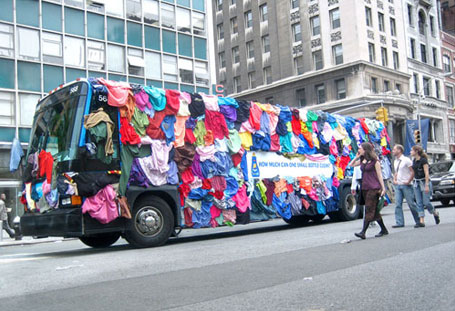
I found my fellow classmate’s blog post on bus ads compellingly relatable: also a one-and-a-half hour commuter student myself, I too share a certain fascination with public transit advertisement. Be that as it may, it is the norm for me to breeze past bus ads without so much as a sparing glance. I blame the run-of-the-mill ads so prominent in Vancouver. Thanks to the internet, I am able to see the artistic efforts dreamed up of ad agencies around the world. It would be nice to see a little more inspiration and pizzazz in our bus ads. I know it’d make my early morning commutes much more enjoyable.

Click through for some examples of interesting bus advertisements…

Categories
Campaign

Think Pink

I remember our class discussion about “thinking outside the box” when it comes to the demographics segmentation base, with the NFL’s high-profile partnership with the American Cancer Society during National Breast Cancer Awareness month as an example. Upon learning of this campaign, I felt deeply appreciative of such efforts. It seemed unconventional, effective and sincere. The presence of pink in the masculine sport was apparent yet unobtrusive. Thoughtfully engineered, “A Crucial Catch” showed all signs of a marketing success.

But was it genuine? Marketing is no stranger to “ethically ambiguous” territory, so naturally, what came to my mind was corporations being socially responsible for the sake of appearing socially responsible. This may not be the perfect analogy, but this situation reminds me of the fact that we utter “sorry” so often that the word becomes devoid of any honest meaning: there is definitely something amiss when I catch myself apologizing after I drop all my books as a result of an accidental shoulder-check from a stranger. I therefore get the sense that firms and organizations are jumping on the charitable bandwagon instead of taking action out of the goodness of their hearts. To corporate bigwigs, is this “just another marketing scheme”? Now don’t get me wrong, I am not undermining companies who actually undertake initiatives with the best intentions; on the contrary, I applaud them. But what ultimately distresses me is that it’s getting progressively difficult to tell the difference between what is true and what is false.

Categories
Campaign

Barbie Girl

Marketing isn’t just the selling of products and services; ideas, philosophies, thoughts, opinions and concepts also manage to fall under its expansive radar.

Like most girls, Barbie was a favourite toy of mine while I was growing up. An aspect of the Barbie doll I found likeable was how seamlessly she bounced from career to career: from a veterinarian to astronaut, chef to presidential candidate. She made it all look so easy! Now that I am older, I have realised the significance of Barbie’s impressive résumé–and it seems like Mattel has, too.

In early 2010, they launched their “I Can Be…” campaign, allowing girls across the globe to vote for the next career Barbie should tackle (news anchor and computer engineer came out on top). Mattel recently expanded this inspirational campaign with a new commercial, tapping into the huge segment of women who can fondly remember the days of playing with Barbie, and thus easily identify with its message. Barbie is a prime example of a company making good use of its brand equity to promote a worthy social cause, which in this case is female empowerment. While it is primarily a reminder to girls of their true potential–that they “can be anything”–it also wouldn’t hurt to sell a couple more Barbies.

YouTube Preview Image
Categories
Advertising

Play Nice, Boys

I have been paying a lot more attention towards male grooming product brands ever since I started working on my group project, what with Axe as our focus company. Which is why I noticed this picture I stumbled across yesterday…

Ouch! Although Old Spice may have eclipsed all other brands in the category for now with the success of Old Spice Guy, Canadian marketers for Axe have come up with a cheeky proclamation that is sure to get people talking.

Categories
Campaign

Simplicity Speaks Volumes

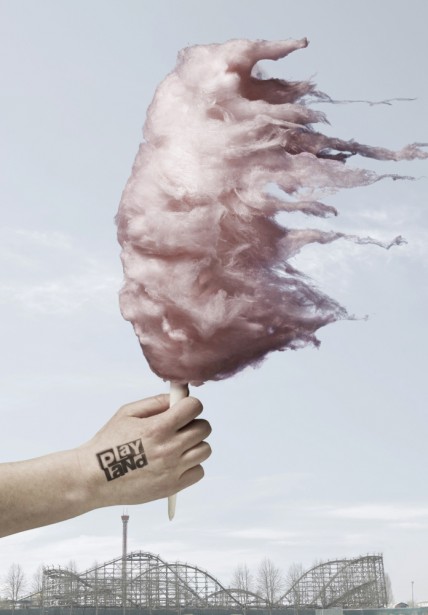
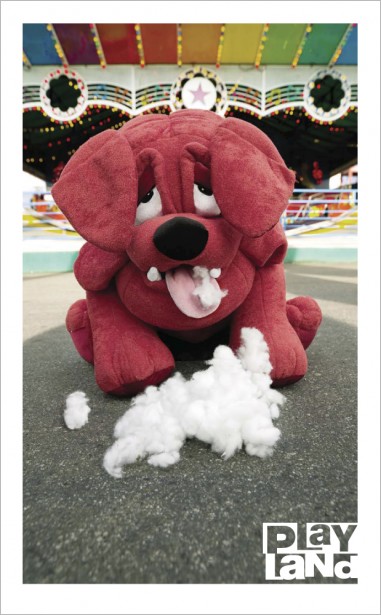
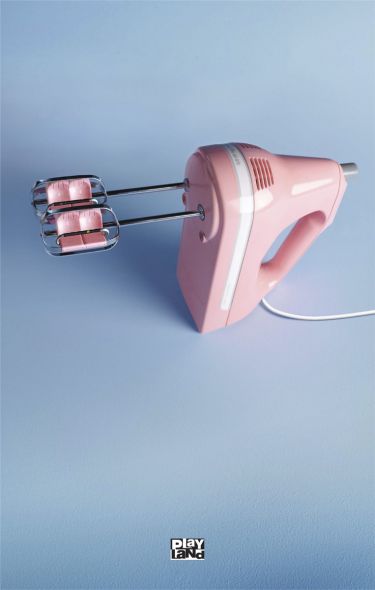
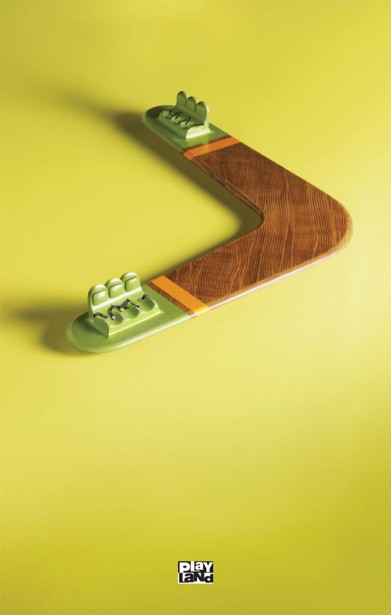
When school’s out and summer’s in, I inadvertently find myself hoping to catch a glimpse of Playland’s annual ad campaign. The advertisements first caught my eye a couple of summers back: while it was the playful colours that piqued my interest, it was the campaign’s effective simplicity that I found charming. Playland’s ads rely primarily on witty images that transcend words. Using the power of humour (plush toys vomiting stuffing) and familiarity (quintessential amusement park food) to their advantage, Playland has created a winning formula that inspires nostalgia for carnivalesque experiences people relate to. The ads have a way of capturing the precipitous feeling of screaming your throat dry, of your heart reverberating against your chest, of your breath getting caught in your throat. Indeed, outside of an amusement park context, such feelings should be the opposite of fun, bringing to mind society’s perverse behaviour of paying to get scared for entertainment. Luckily for Playland, on carnival grounds, all bets are off.

Categories
Campaign

Shock Value

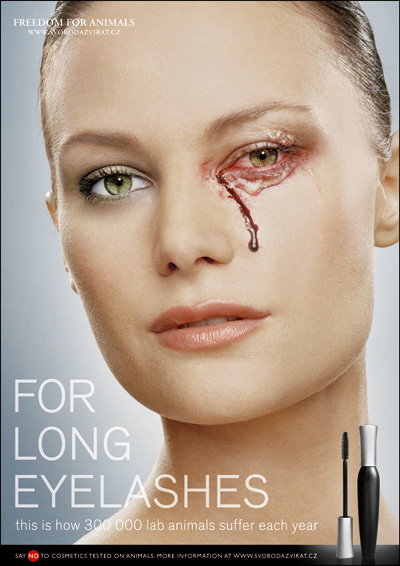
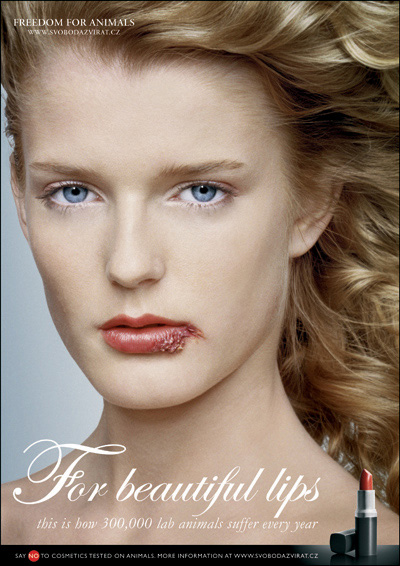
We are inundated with marketing nearly everywhere we turn. The oversaturation of advertisements in particular has rendered us desensitised, so much that we are in need of something shocking to capture our waning attention. Stemming from the Czech Republic, Freedom for Animals takes the grotesque route to get noticed. (True, shocking ads have been so overdone to the point of becoming passé, but you’ve got to admit it–they never fail to turn heads.) Similar to other areas, cosmetic testing on animals has long been a subject of great debate. Freedom for Animals prefers to get right to the point.

(Source)

Categories
Advertising Television

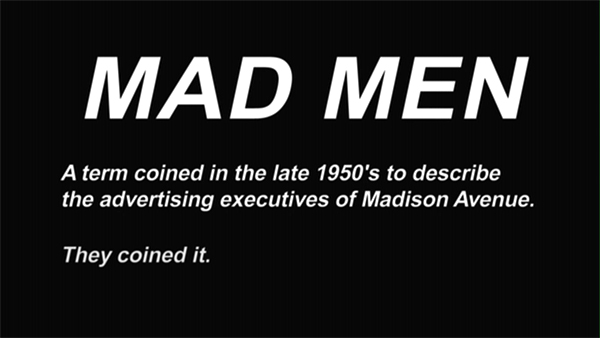
Mad Men and Marketing


Mad Men
is arguably my favourite show on air right now. It’s quality television at its finest; populated with chain-smoking, alcohol-guzzling yet fleshed out and flawed characters, each episode is impeccably penned, designed so that the different storylines eventually converge into the one theme that encapsulates them all. Authenticity too takes a front seat: the series is known for its extreme attention to detail. The herculean efforts placed into historical research, set design, props and costumes (and that’s only the tip of the iceberg) are nothing short of amazing–and with such beautiful results. Even the minute and seemingly mundane details are taken into account, such as the authentic Highlights children magazine that was only casually flipped through. The fact that this show is so closely tied to marketing is just a bonus. For these very reasons, I thirstily crawl back to the well every week with antsy anticipation.

To give you a little taste of Mad Men‘s genius, below is main character Don Draper pitching his idea for Kodak’s new slide projector, which is meant to appeal consumers emotionally in order to connect with them on a deeper level. (Not coincidentally, this scene in turn evokes pathos in the viewer.)

YouTube Preview Image

The premise and setting of the show allows for some serious marketing. Each episode focuses on at least one household name brand as a client at the ad agency. And you know what that means! That’s right–product placements. And there has been a lot of them. Over the span of four seasons, a multitude of brands that are still familiar with us today have been featured, including Heineken, Clearasil, Gillette, London Fog, Honda, and most recently, Mountain Dew… just to name a few.

Funnily enough, the show about advertising does not resort to much traditional advertising itself. In fact, according to Ad Age, Mad Men draws in unimpressive ad revenues, with perhaps its relatively low viewership–in comparison to the stats of major networks–to blame. Nevertheless, this hurdle does not appear to be hindering its crescendoing success. Not only has Mad Men sweeped the Emmys for Best Drama Series three consecutive years in a row, it is also the first cable network television show to win the category back-to-back. The series’ massive cultural influence has left an indelible mark in pop culture, too. You know you’ve made it into the mainstream when you’ve been parodied endlessly on the internet, showcased on Saturday Night Live and spoofed on Sesame Street! What’s more is that current social trends allow the series to take the marketing road less travelled; Mad Men capitalises on society’s fascination and reverence for all things vintage and classic. So what have been some of their marketing ventures? There has been the online avatar-maker Mad Men Yourself for the techies; the casting call competition for the creatively-minded; the vintage Barbie dolls for the collectors; and their collaboration with Banana Republic for the fashion-conscious.

As an observer of the ample opportunities within and outside the show, I daresay marketing and Mad Men were meant to be a match made in heaven from the very start.

Spam prevention powered by Akismet