
Business ethics blog

I believe that an ethical business seeks to compromise profit in order to fulfill societal demands. Unlike amoral business which seeks to maximise profit under unlawful circumstances.
In order for a business to maximise profit while maintaining good relations with the public, it must uphold the stakeholder theory. Moreover, it must be able to differentiate between what is morally right and wrong.
In my opinion, it is important for ethical businesses to maintain a good public image and good relations with society. This is because business and consumers are interdependent on one another. Businesses require consumer demands such as public assets, legal protection, infrastructure to operate. On the other hand, consumers require wages, employment, innovation, and investment to thrive in the 21st century.
An ethical business abides by safety and health standards, refrains from employing child labor, refrains from employing sweatshop workers and violating workers’ rights. Moreover, an ethical business cares for the well-being of its employees – ensures that each worker is paid fair and reasonable wages, along with safe working conditions, sustainable sourcing, responsible marketing, supporting social causes and more.
Furthermore, ethical businesses should uphold corporate social responsibility by reducing and preventing morally reprehensible practices which are a danger to society. This includes bribery, corporate fraud, dummy corporations and more.
Often, businesses that refrain from following ethical practices face serious consequences. Discovery of unethical business practices can lead to loss of trust between businesses and consumers, loss of reputation, employees losing their jobs and much more.
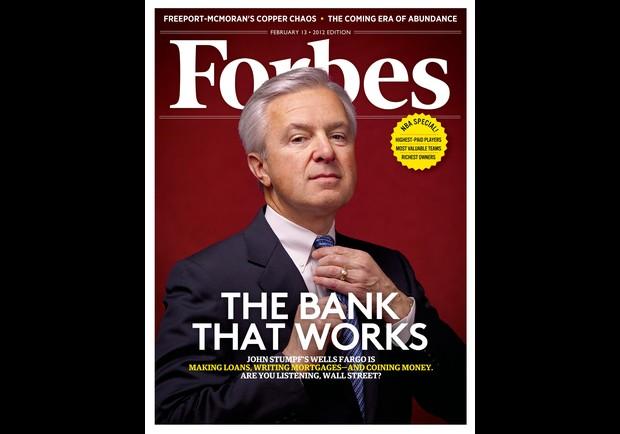
Wells Fargo is a great example of a business that committed unethical practice and faced serious consequences for their actions. Ranked the 7th largest public company in 2013 and serving over 70 million customers worldwide, Wells Fargo was well known all over the world.
Their reputation took a turn for the worst, however, when bank fraud investigators made a shocking discovery. In September 2016, it was discovered that since 2011 Wells Fargo employees covertly and fraudulently opened bank accounts without customers’ authorization.
As a result, millions of people were affected. Five thousand three hundred Wells Fargo employees were laid off. Wells Fargo’s reputation was destroyed and the company charged with over 185 million dollars in fines.
In conclusion, acknowledging and practicing ethical business behavior and corporate social responsibility is essential for a business to operate.
Word Count: 393 words
Citations:
Brown, P. (2017, August 31). Wells Fargo Fake Accounts Scandal: Why It Might Not Survive | Fortune.com. Retrieved from http://fortune.com/2017/08/31/wells-fargo-fake-accounts-scandal-2017-tim-sloan/
business ethics [business header]. (2017, September 13). Retrieved from http://www.brainkart.com/media/subject/120.jpg
Wells Fargo CEO sees progress on expenses in second half. (2017, September 12). Retrieved from https://www.cnbc.com/2017/09/12/wells-fargo-ceo-sees-progress-on-expenses-in-second-half.html
How low can wells go. (2016, September 24). Retrieved from http://crooksandliars.com/files/images/13/08/6924809997_87960114eb.jpg
The bank that works. (2016, September 26). Retrieved from https://b-i.forbesimg.com/lewisdvorkin/files/2013/08/08CQ6lefyobqf_9829.jpg
2 responses to “Business Ethics (Blog post 1)”