Categories
Uncategorized

The Future of Printing

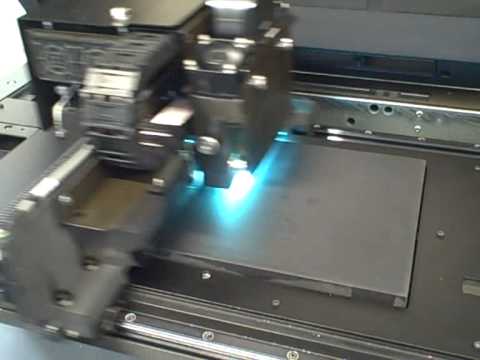
A feature article in a February edition of the Economist really caught my eye.  It highlighted a “new-to-the-market” product that will have an impact on the way high-tech and everyday products are created in the future: a 3D printer.  Not surprisingly, this sophisticated technology has existed for more than a decade, however it remains unknown to the majority of consumers.

These 3D printers have the capacity to print out products ranging from jewellery, soccer shoes, race-car parts, lampshades, to even functioning grandfather clocks, depending on the size of printer! Imagine what this means for the production of complex and everyday products. One day, a simple desk lamp sold at Walmart may be “printed” by the manufacturer rather than assembled piece by piece. Although the 3D Printers are still in the Introduction Phase of the Product Life Cycle, researchers are estimating a significant growth in the demand for this product as it is continuously being reengineered to the level of commercial use by both large-scale manufacturers, and in-home designers.
YouTube Preview Image

Currently, the 3D printers are being used by engineers and product designers, who make up the 2.5% of innovators on the Diffusion of Innovation Curve, to easily create prototypes of their new invention or design as well as manufacturers of products who require complex parts, such as airplanes, to save time, materials and labour costs. Although it may become the new trend for product manufacturing, the impact that this would have on the labour market and manufacturing industry should be taken into careful consideration as well.  This product could mean the loss of thousands of jobs as labourers are replaced by 3D Printers, but it could also spark the imagination of entrepreneurs who can utilize this product to invent new creations that the world has never thought possible.
Categories
Uncategorized

Tello – Consumers “Tell All” About Customer Service

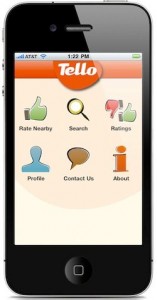
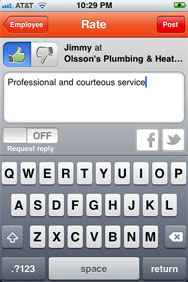
Excellent customer service is becoming an increasingly important focus to companies who recognize the value they are creating for their target market through their front-line employees, especially in the retail and food and beverage industries. Tello, released on Wednesday, February 8th, is the latest customer service rating app available at the iPhone App Store. This new app builds on the innovative geolocational technology built into smartphones to allow customers to rate the employees in nearby businesses including the barista who handled their coffee order to the bellboy at their hotel. They have the option to give the employee a thumbs up/down and leave a comment.

www.tello.com

I am a HUGE believer in having a constant stream of feedback in order to improve performance! I can certainly think of numerous situations where I was given outstanding service by an employee, but did not have the time to seek out the manager to let him/her know about my experience. On the other hand, I’ve also had my share of run-ins with employees who absolutely did not understand the meaning of customer service, but again could not notify the manager. Rather, I end up venting to others about this bad experience. With this app, I would be able to direct my negative feedback to the business so that they will (hopefully) correct the situation and avoid similar mishaps in the future. Taking the feedback seriously shows that the company cares about its consumers, while also consistently reminding employees of the importance of good customer service. This app definitely has the potential to become another tool for businesses to engage customers and gain their loyalty.

Categories
Uncategorized

Marketing Mistake: The “New Coke”

After trying my hands at the infamous blind taste test for our Marketing Research Activity in class, it made me wonder how the Pros do it. With the help of Google, I dug up a study done by Coca Cola which led to the introduction of “New Coke”.

Back in the 1980’s, Coke held the majority of the cola market share, but Pepsi was quickly gaining momentum, outselling Coke in the supermarkets. In an attempt to remain competitive, Coke decided to conduct a market research study to determine which formula of cola the consumers preferred. The design of their research project consisted of a blind taste test in which the subjects compared the taste of Coke and Pepsi along with 3 new formulas. Analyzing the primary data collected revealed that the majority of consumers preferred a new sweeter formula over both the Coke and Pepsi formula. This conclusive finding was enough to persuade Coke to deviate from their traditional formula to “New Coke” in 1985.

The result of the switch was an even greater drop in Coca Cola’s sales. Consumers were furious with this decision, refusing to buy the New Coke, although the taste tests proved otherwise. But where did the marketing team behind this research go wrong? They realized that the problem lied in the objective of the taste test study. Coke focused too narrowly on the physical attributes of its product (the taste) while ignoring the psychological implications such as brand loyalty. The taste of Coke clearly wasn’t the problem, but perhaps it was Coke’s ability to penetrate its market and reinforce its brand image.

However, once production of New Coke had seized and the company reverted back to its traditional formula, sales skyrocketed, leaving some analysts wondering if that was their strategy all along.

Spam prevention powered by Akismet