Categories
Marketing

Puedo pedir chicken nuggets?

How hard is it to walk on the streets of a developed country and not see a pair of golden arches accompanied by the ubiquitous red and grey storefront? If you’re a travel aficionado like me, you’ll know the answer to this.

McDonalds…the emblem of globalization and arguably the most well-known chain of fast food restaurants, was founded in 1940 in California. It has now grown to serve 120+ countries around the world and counting!

As we recently learned in class, some companies stick with a standardized marketing strategy while others adapt to their situational surrounding. There are some things that are kept consistent, such as branding. In other words, people all over the world need to have ways of associating the products that they see with McDonalds. This is why you wouldn’t see them changing their logos, colour scheme or interior design. BTW, I’ve noticed a rebranding trend going on whereby they’re trying to establish a classier image by emphasizing modernity and comfort in the design of their interiors, but that is another story I won’t dive into this time.

The following are instances in which the storefront changes to adapt to a country’s culture and as you can see, a lot of McDonalds stores blend into the traditional architecture of the building in which they are found. If you have the time, Flickr has a group that aggregates all the McDonalds storefronts people post on the site. There are over 8,500 of them.
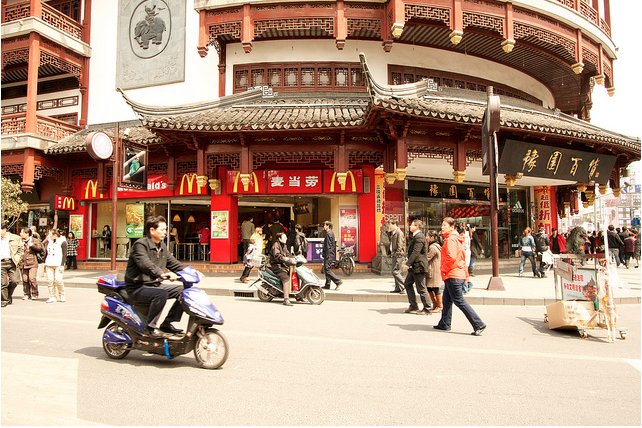
Don't mind me, I'm just a temple!

We’ve just briefly touched on the situation analysis but something else to consider when expanding globally is the Marketing Mix! For the four P’s – Price, Product, Place and Promotion, I’m going to provide examples of how McDonalds is a “chameleon”.

  • Price–A bit of macroeconomics/econometrics here, but economics have actually developed this index that measures the difference in PPP between countries. It’s called the Big Mac Index because it uses the price of Big Macs around the world. Talk about globalization. The point is that you’d think that currency rates would ensure that you’d pay the same price for a burger in Australia as you would in Japan, but this is not the case. The most expensive Big Mac is in Norway and the cheapest Big Mac is in Ukraine.
  • Product–It is truly amazing how products will differ around the world. For Americans, there’s always some sort of new variation of beef coming out, but in other parts of the world…some cultures just aren’t beef fans. It is said that pictures speak louder than words.
Across Asia, you can pick up the McHotdog Mega Breakfast Sausage.
Also in Asia, the Cheese Katsu sandwich, a fried pork sandwich stuffed with cheese.
In Hong Kong, the Shogun burger consists of teriyaki pork patty with lettuce, served in a sesame seed bun.
In India, the Chicken Maharaja Mac has two grilled chicken patties with a smoke-flavoured mayonnaise, fresh onions, tomatoes, processed cheddar cheese in a toasted sesame seeded bun. Also available in Lamb.
The McKebab -- Kebab served on flatbread. You can find this in Israel.
Canada's own McLobster/McHomard.
I'm having trouble guessing where this is from. Mmm...pita.
Japan's Ebi Filet-o a.k.a. Shrimp burger.
You can get fried rice cakes instead of buns in the Philippines, Thailand, Singapore and Malaysia.
The Lakse wrap (a kind of fish) is sold in Norway and Finland.

And now for my favourite…

McDonalds beer! I'm not kidding, I saw this when I was travelling in Madrid, Spain but it's also available in France and Germany.
  • Place–Just check out the link for the storefronts! It’s also interesting to see how McDonalds integrates itself into traditional architecture. I love how they vary their locations and yet stay recognizable.
  • Promotion–McDonalds uses celebrity endorsement in some countries. A lot of the commercials are geographically unique.

I hope you had as much fun reading this post as I had writing it.

C

Picture source

Source for the menu items: One, two, three

Categories
Marketing

Love at first sight: the ballad of Foursquare and AmEx

I recently came across Tom Rattray’s blog post about co-marketing through credit cards via his Twitter account. (Go Twitter!) It got me thinking back to an article I read on Mashable called “How Foursquare & AmEx Are Putting a Fresh Twist on Loyalty Marketing“, this partnership is not co-branding by definition, but I wanted to address this unique marketing strategy in my post.

Traditionally, co-branding is the practice of two or more brand names fusing together to create a new product that highlights each product’s competencies. Examples include American Airlines Visa Card, Oral-B/Braun plaque remover, Pillsbury brownies with Nestle chocolate, and LG Prada phone, just to name a few. According to Tom’s post, successful co-branding occurs when both companies “can achieve greater brand recognition, reach larger markets, and increase consumer spending”.
What Foursquare and American Express are doing is not exactly co-branding, but this partnership does touch on one important implicit goal that co-branding encourages. That goal is to create new benefits that each product would not have been able to on its own.

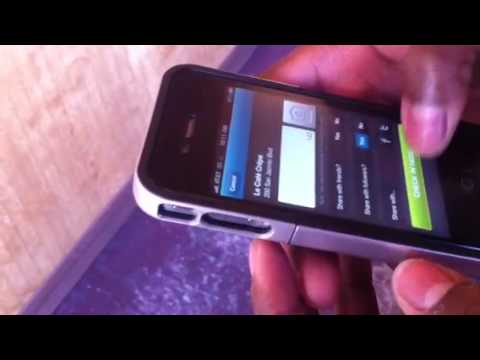
It’s a new initiative that just got launched and how it works is that you register your American Express card on Foursquare and your credit card company will reward you with deals after it has verified that you checked into the venue.

Here’s a short walk-through provided by Mashable on how to activate your deal. The people in the video are at Cafe Crepe and they are trying to activate the “Spend $5 Save $5” deal.

YouTube Preview Image

Some of the benefits that this partnership provides for Foursquare, American Express and third-parties include:

  • Foursquare.        Potential to generate more income for the start-up company; opportunity to work with one of the biggest credit card companies in the world, hence to increase usage and market penetration.
  • American Express.        Opportunity to work with a cool brand; opportunity to appeal to a younger consumer base; opportunity to explore how mobile apps will influence the personal credit industry in the future.
  • Third parties.     Potential to generate donations through check-ins.

Information credited to Business Insider, Mashable and WSJ.

Categories
Marketing

Ads that make you think and go “awwww”

On a random, more unusual note, I wanted to share some of the best ads I’ve seen so far. This is a marketing blog, so anything “marketing-related” goes. All of these were found on the internet, either via YouTube or Coloribus, a global advertising archive of sorts. Many of these ads follow these common themes:

  1. They are epic,meaning 2+ minutes. (Though not all)
  2. They have a developed storyline, which captures and holds attention.
  3. They will make you bawl like a baby, so have tissues handy!

Here’s my list in no particular order. The foreign ones start about halfway down the list.

1. McDonalds: Proud PapaYouTube Preview Image The lengths that bears will go to have some McDonalds.

2. Sketchers: Break UpYouTube Preview ImageThis one aired during the Super Bowl. Kim Kardashian breaks up with her trainer because she has those awesome/ugly Sketchers shape-ups.

3. iPod Nano: Teddy Bear StoryYouTube Preview Image“This Valentine’s Day, teddy bears are history.”

4. AT&T Bedtime StoriesYouTube Preview ImageTouching! Kind of reminded me of the FaceTime commercial.

Thanonchai Sornsrivichai is an amazing Thai director. Some of his “best” works can be found here. The following is by him:

5. Thai Life InsuranceYouTube Preview Image This ad is about a middle-aged woman who suffers from cancer. But instead of feeling sorry for herself, she takes into her care numerous sick orphans in the hospital where she is treated.

5. 7UP Funny CommercialYouTube Preview ImageThough the entire video is in Chinese, you can understand the general plot of the commercial. But just to be safe…the guys make a bet that whoever get a winning 7Up bottle tab (kind of like Roll Up The Rim) will have to ask out the next girl they see. At the end of the commercial, the “woman” asks why the main guy had chosen her out of all the girls available. He reflects back to the day with his friends. The point of this commercial is to advertise that there are many chances to win. This is a “Hu Ge” viral video, I believe that’s the name of the actor who appears in many of these videos. He has very bad luck with love (as you will see).

6. 7up Christmas viral video (prequel)YouTube Preview Image

7. McDonalds China: A ‘Hu Ge’ Viral 2010YouTube Preview ImageNo subtitles, but basically McDonalds has a promotion whereby if you bring in any coupon that has a zero, you get 10% off your purchase. The main character relentlessly tries to pursue the same girl with different coupons each time but she rejects him over and over again because she doesn’t know that this promotion exists. At the end of the video, the girl is seen with her daughter at McDonalds, the daughter overhears the cashier telling a customer that they get 10% off and asks her mom what this means. The woman says to her daughter that she doesn’t have the coupon and thus can’t get 10% off. The main character is all grown up and finally saves the day (and wins the girl?) with his coupon!

8. Air China: Be Our guestYouTube Preview ImageI can vaguely understand what the stewardess is saying.

9. TC  Bank: Dream RangersYouTube Preview ImageThis is an ad for a Taiwanese bank which depicts a few senile fellas who are sick of being old, so they go out and try to fulfill their dreams. (I shed a couple of tears when I first saw this one, just saying.)

10. Pantene: Deaf Girl Learns How to Play the ViolinYouTube Preview ImageI thought this ad was kind of weird…a 4-minute video about hair, yet there’s a really touching story behind it, which is slightly unrelated but I decided to put it here because it also made a cry. Hey, I’m sorry your violin broke but at least you have pretty, flowy hair!

Enjoy! What are your favourite ads?

Categories
Marketing

When innovation meets packaging

Petroleum based plastics = bad. The plant based alternative will use leftover food material from umbrella companies.

I was browsing the Comm296 blogroll when I found Chi Yui Hui‘s post about SunChips’ new 90% plant-based/100% compostable chip bag–the first of its kind! They became available to the masses this month. Chi Yui’s post reminded me of an article from Fastcompany that I read just recently, except this one talk about Pepsi bottles. SunChips is owned by the snack giant FritoLay, which is a division of PepsiCo. No wonder Pepsi is rolling out their new plant-based bottle idea at the South by Southwestern Conference! (See this article for more info!)

The new plant-based bottle will have the same molecular structure as petroleum-based PET so it won’t look or feel any different than regular PET bottles. This is a huge advantage because people don’t react too well to change. FYI, the new Sun Chip bags are a lot louder than the old ones, which kind of turns me off when I want to open one up in a quiet classroom. I heard from my friend that the test run south of the border didn’t fare so well, so SunChips will be switching back to the old packaging.

Pepsi will use material that is already available to them such as oat hulls, patato and orange peels, basically agricultural by-products from Quaker and Tropicana. As for packaging, expect to see distinctive labelling for clear identification. Coca-cola already has about 2.5 million 30% plant-based bottles out on the market, so it will take at least a year for Pepsi to test their new product and build a sustainable supply-chain that uses raw material and waste from other markets. If the tests succeed and people react positively toward the change, then Pepsi will be the first company to introduce this kind of product to the market.

Categories
Marketing

How Texas reduced highway littering by 72% and created a national slogan

Personally, I’ve never been to Texas but I’m assuming these signs are everywhere:

First, a little bit of background. Prior to 1986, the state of Texas was incapable of reducing highway littering with their expensive and highly publicized advertisement campaign that emphasized civic duty. The litterers were males between the age of 18-24 (or 18-35 depending on the source), who probably didn’t care that some state official was trying to tell them what to do. How did Texas fix this issue and create a now-trademarked slogan that ended up in the Advertisement Hall of Fame? We call this a successful application of Segmenting, Targeting, Positioning.

The first two tasks are fairly easy to recognize. Dividing the population of Texas into segments, the state chose to target adult males under the age of 35 because they are statistically more likely to litter. With this information in hard, officials wanted to appeal to feelings of pride and toughness. They recruited popular Dallas Cowboys football players and famous singers like Willie Nelson over the years. In this vintage commercial, Randy White and Too Tall Jones are shown collecting trash along the highway, not to mention crushing beer cans and yelling “Don’t mess with Texas!” If you were a young man in the late 80’s, would you think twice before littering? YouTube Preview Image

I decided to write about this slogan after reading a chapter in Richard H. Thaler and Cass R. Sunstein’s recent book titled Nudge. In a nutshell, the authors explain how people make decisions, and sometimes they require shortcuts (hence, “nudge”) in order to get to the decision that makes the most economical sense. The Texas example is a case of “following the herd”, which happens to include recognizable figures in sports, television and music. Basically, people are more likely to do something (positive or negative) if they are convinced that other people are doing it. Why do you think trends happen?

Now, an estimated 95% of Texans know this slogan. I don’t even think 50% of British Columbians know what the BC slogan is. (Answer: The best place on earth) Ten years and 38 commercials later, it became (by a landslide) America’s Favourite Slogan. The spelling of “favorite” is really ironic here.

YouTube Preview Image How many celebrities do you recognize here? And if Chuck Norris says not to do it, I sure wouldn’t try to.

Categories
Marketing

Product placements aren’t just found in rap videos anymore

I remember the first “product placement” I ever saw in a music video was for the 1st generation iPod way back in 2003. I didn’t understand this concept until I noticed some of the obvious brands in other videos were blurred. Basically, companies pay the record label to use and blatantly display their product in music videos.

According to an article in the Economic Times, revenue from product placement has doubled since 2000. With all the new technology and editing software available, it is no surprise that costs to produce music videos are increasing. Product placements work to offset the costs. Additionally, we’re seeing fewer and fewer hours of music video airtime (thanks to Jersey Shore and the myriad reality shows) so YouTube/Vevo is becoming the preferred destination for music videos. You can watch what you want, whenever you want! The predominance of the Internet makes marketers’ jobs easier since people can simply google the product right after they watch the music video, while it’s still fresh in their mind. And the subtle “integrations” are, well, not that subtle.

I got the idea to write about this topic after watching Britney Spears’ latest music video “Hold it Against Me”. The first time I watched it, I was immediately struck by all the brands displayed in front of me. When you get passed the initial YouTube advertisement barrier, this is what you will see:

  1. Radiance. Self-promotion for her new perfume
  2. Make Up Forever. She dips a brush into an eyeshadow jar and applies it on her eyes.
  3. Sony. Amidst the flashing bulbs and microphones, there are many Sony flatscreen televisions displaying Ms. Spears herself.
  4. Plenty Of Fish. American dating site, on what else? A Sony laptop.

If the site Plenty Of Fish seems familiar to you, then you are probably a Lady Gaga fan as well. Her music video for Telephone is a whopping 9-minutes in length and is filled with random plugs everywhere. Here’s a short list of brands you can see in Telephone. Apparently, not all were paid endorsements, such as the Coke cans used to curl her hair.

  1. Virgin mobile. In her jail scene, she holds it several times and you can clearly see the label in the close-up.
  2. Plenty Of Fish. The return of the dating site! Here, a female guard logs on using an HP “beats” laptop. This latter was unpaid, stemming from many of Gaga’s partnerships.
  3. Diet Coke. Great idea, but unpaid. Gaga pays tribute to her mother, who used a similar technique in the 70s.
  4. Polaroid. Gaga snaps pictures of Beyonce on what is clearly a Polaroid instant camera. Also, a Polaroid booth makes an appearance.
  5. Miracle Whip. Used to make sandwiches in the kitchen scene.

Obviously, video producers tried to make the integrations as smooth as possible. Personally, I try not to notice them too much. But the bottom line is, these multi-million dollar videos need sponsors. If only amazingly lengthy videos such as Michael Jackson’s Thriller were made today, it would be interesting to see what products they’d advertise.

Categories
Marketing

Sketchers should look at hiring a new marketing director

During my break today, I went into Town Shoes inside Pacific Centre mall where I made this amazing discovery.

Looker closer.

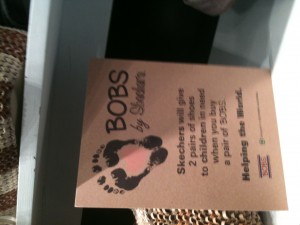
Yes, Sketchers did really produce a carbon copy of the famous “TOMS” slip-on shoe. If that wasn’t bad enough, they are called “BOBS” (sounds familiar?) and Sketchers promises to donate a pair to a child in need for every pair bought. Looks like Sketchers didn’t even bother to change the philosophy behind their new “socially responsible product” much less the design and name of the shoe.

When TOMS started in 2006, founder Blake Mycoskie relied on his first-hand experience traveling in Argentina where  he saw countless barefoot children to form the foundation of his marketing strategy. (philanthropy + ingenuity) The emergence of BOBS four years later only seems insincere at best. TOMS gambled on their unique idea and succeeded. It just seems like Sketchers saw the potential and entered the market with their copy-cat product. Mycoskie did mention on his website that he hoped that people would copy his business model, but how far is too far? One article from FastCompany magazine points out “Is the TOMS concept fair game?”…well, is it?

Personally, I don’t think BOBS’ campaign will work, as people can distinguish between who’s authentic and who simply hopped on the bandwagon after observing huge market potential. If Sketchers wants to continue to sell these shoes, they better come up with something unique fast.

Oh, and just for hilarity… the sign I saw at Town Shoes indicates that BOBS will actually donate TWO pairs of shoes to needy children for every pair that you buy (as opposed to TOMS who will only donate one pair).

Sources: here and here

Categories
Marketing

Don’t underestimate cheap marketing

One of my favourite online news sites, ChinaSMACK translates hundreds of articles from the Chinese-language internet, along with comments from its netizens to give foreigners some fascinating insight into China’s society. The website also has a sub-section called Advertising @ ChinaSMACK, which focuses on the advertising industry in China. In an article written by Daniel Gilroy entitled “Weird & Wonderful Chinese Advertisings of 2010“, there was one particular marketing tactic that stood out.

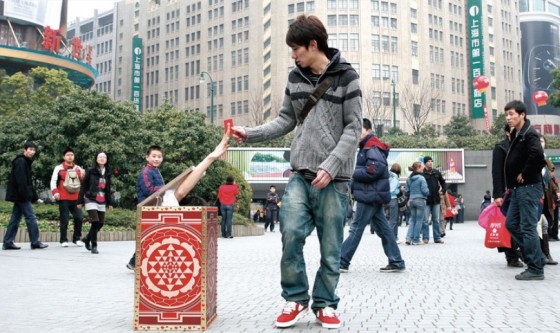
Personally, I’m a huge yoga fan (Bikram is my favourite) and when I visited Shanghai in the summer of 2010, I discovered that this trendy form of exercise is also starting to become popular back East. Although quickly changing due to Westernization, most Chinese people aren’t overweight, maybe due to their nutrition and a lower dependency on cars. I also noticed that a lot people in Shanghai weren’t particularly fit, as exercise is seen as a way of staying healthy but less so seen as a lifestyle. (I will not go further into this as it can spur a whole new debate.)source: advertising.chinasmack.com

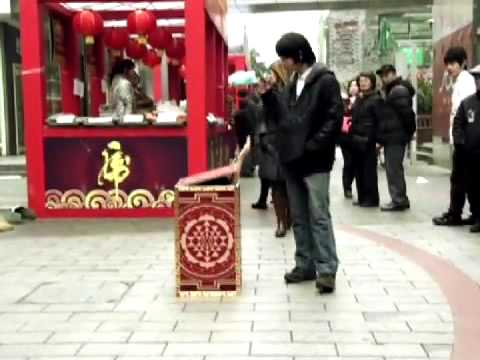
This is where yoga comes into play. As the population of China is mainly Buddhist, yoga combines exercise and meditation to deliver many health benefits to people who practice it. To attract more students, Guangyin Yoga Club decided to use direct marketing to promote their studio. “Innovative, cheap and gets results,” that’s what the author says. The video below will show you just how many people were intrigued by the man in the tiny red box. After 15 days of campaigning, box idea generated many news reports, a video that was viewed over 300,000 times on Tudou, China’s version of YouTube and 682 new member sign-ups. All of this cost the studio $74. In the era of expensive 30-second ads, the power of reaching out to people directly should not be underestimated.

YouTube Preview Image
Categories
Marketing

For all the spicy mamas out there

I attended UBCMA’s Gateways conference today and found the keynote speech quite interesting. It was actually a collaboration between A&W’s director of Marketing and Glen Chalcraft from a Canadian ad agency called Rethink. Basically, they were the guys responsible for creating the print and tv ads for A&W’s limited edition spicy mama burger. I enjoyed hearing about all the work that gets put into a 30-second commercial! They talked about how A&W is now the second biggest fast food retailer next to McDonald’s and how they company’s primary market are the baby boomers. (As if you couldn’t already tell by their storefront, diner atmosphere and ROOTBEER!) To come up with a recipe that was spicy but not too hot, the test kitchen tried nearly every combination of ingredients and ended up choosing jalapeno cheese and chipotle mayo for the perfect spicy factor.

Only $1.99

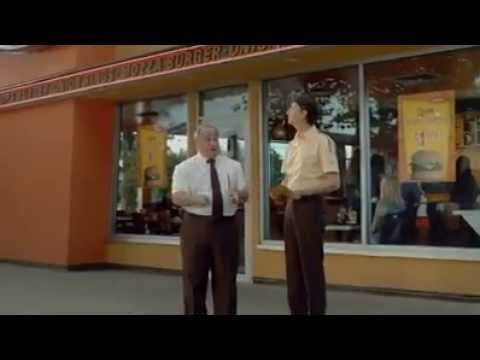
If you’re not familiar with A&W’s commercials, they typically all include a cute but nerdy employee named Ryan and his manager Allen. I find their commercials to be quite wholesome and memorable but on the marketing side, it’s brand consistency. A&W wants to create a down-to-earth environment that focuses on good food and good times. (Let’s not forget the family, assuming baby boomers all have large families now.)

The commercial that did run involved Ryan handing out flyers of the spicy mama deal to only hot women (i.e. “hot mamas”), thus misinterpreting the purpose of the promotion. His manager tries to correct him by explain that the deal is for everyone but Ryan thinks Allen wants to be considered a “hot mama” as well. According to Glen, the commercial was very successful and received positive feedback. A&W also sold out of their product earlier than expected.

I want to talk about how A&W is effective at adding customer value. Their whole concept of “family” burgers and rootbeer is truly their own brand, and it’s an example of product excellence. I’ve never worked at A&W nor am I a regular customer but I can see how they would retain customers through good service. Their locations are quite convenient and I see no problems with their supply-chain management. Their internet presence is also quite rich, having used Twitter to track people’s reaction to their new burger.

And without further ado…the finished commercial.

YouTube Preview Image
Categories
Marketing

You bought a what!?

Social coupons are clearly hot right now in the Internet world. I remember when Groupon first launched, I thought to myself…”this is actually a good idea, except why would you ever need (insert useless deal here)”? In a year, more big names are starting to appear and the trend is also catching fire in Europe. Some guy even proposed to his girlfriend on Groupon.

Groupon is apparently now overvalued at $15 billion, more than double the $6 billion Google offered a couple of months ago. (Source) On the same day as its IPO rumour surfaced, Groupon also announced that they have saved users over $1 billion…well sort of. If I look at my “Purchased Groupons” right now, you will find that I have a yet unused spa voucher, a paddleboat lesson voucher from last summer, a 50% deal on American Apparel merchandise, and a two-for-one movie voucher at a sketchy cinema in East Vancouver. The question is, how do social coupon websites make you buy so many things you don’t actually need?

That's in thousands, by the way.

Looking at this from the store’s perspective, being featured on Groupon is like a glorified news ad. The time needed to browse Groupon is about 5 seconds. Traffic is growing like crazy. Those smart bastards also have an iPhone/Blackberry/Android app that sends you push notifications, forcing you to stay updated with their daily deal. Additionally, when you sign up for the service, you get the privilege of receiving a daily reminder in your inbox about what deal they’re currently feature.

The worse case scenario from a business’s perspective is not selling enough vouchers and ending up losing money for those they do sell. Solution: companies can set up a minimum amount required to be sold before the deal becomes valid. Today, Groupon has a 50% deal for hats at Edie Hats and Tart Boutique. You pay $25 right away but you actually get a $50 voucher redeemable at the store. Yes, 644 people as of 11:14pm actually bought this voucher. 644 people will likely be sporting new hats in Vancouver…that is, if they ever redeem the coupon before it expires. Assuming that all the purchased coupons are redeemed, it should be a win-win situation for everyone. You also have a choice to publicly announce your recent purchase via Facebook or Twitter, creating free advertising of them and a referral link for you.

Whoever thought of this website is a marketing genius, and I must tip my hat to you. When companies choose to feature themselves on Groupon, they are hoping to make their regulars buy more but mainly to get introduce non-supporters to their brand. Basically, they want to attract new customers and develop a relationship with them. In this value-based marketing era, it’s more than just trying to sell a $40 product for $20 and hoping to compensate for your smaller profit margins with a larger volume of sales, it’s about seeing that $20 customer as a potential lifetime supporter. The marketing textbook example is Starbucks coffee. Starbucks spends tons of money on their brand and image, because if their loyal customers buy their coffee every day for a year, they’re no long looking at $2 customers, but at $730 customers.

Breaking down Groupon’s strategy into the marketing mix learned in class, we have.

  • Product – Anything!! Food, movies, clothes, services, luxury goods are all excellent products to market.
  • Price – Doesn’t matter as long as it’s discounted. Groupon promises 50-90% off. Sounds good, doesn’t it?
  • Place – They have services in almost all the major cities in North America. Convenience of online purchasing is a plus. Distribution is instant!
  • Promotion – Discounts provide customers motivation to buy. Time ticker adds urgency: do I buy or not??? Many people buy things on impulse.

As I mentioned before, whoever came up with this idea is a marketing genius. In the future, we will not only start to see more look-a-likes emerge in the existing market, but we’ll also start seeing perhaps lesser-developed countries come up with their own versions. I, for one, cannot wait to see what their IPO will be.

Spam prevention powered by Akismet