Categories
Uncategorized

How does Joe Keep it Fresh?

After having read an article about Joe Fresh’s marketing director, Susan Krashinsky, and the store’s original marketing strategies, it occurred to me that there are aspects of the company that are similar to those of the companies Zappos and Zara, which we discussed in the class regarding marketing and operations and in another class regarding people, cultures and teams.

Susan Krashinsky truly believes, like Zappos’ CEO Tony Hsieh, that the success of a company lies in the workers’ passion for their job and their willingness to be a part of a brand or company that they find inspiring.  While Joe Fresh doesn’t require the same vigorous interview process as that of Zappos, its marketing director does believe in the impact of a positive environment, and this has undoubtedly been a source of both companies’ successes.

Joe Fresh is also undergoing development similar to that of the popular European clothing store Zara. Like Zara, Joe Fresh has begun to expand globally, namely to the United States, where it has opened pop-up stores in order to further delve into the minds and preferences of consumers. Susan notes that, “it’s all about how it’s received by the customer”, stressing the importance of getting consumers to “interact” with the brand. Joe Fresh’s pop-up approach closely resembles Zara’s fast-fashion approach, where they have a quick inventory turnover and keep track of consumers’ product preferences in order to keep customers hooked and loyal to the store.


The links between Joe Fresh’s and Zappos’ cultural organization and the links between Joe Fresh’s and Zara’s operations and marketing are evidently a sign of success… and that’s how Joe’s keeping it fresh.

Sources:

http://www.nationalpost.com/related/topics/Fresh+makes+major+push+with+Penney+partnership/6987230/story.html
http://www.theglobeandmail.com/report-on-business/industry-news/marketing/how-joe-keeps-it-fresh/article4621873/
http://coolspotters.com/brands/zara
http://ca.news.yahoo.com/blogs/dailybrew/target-arrival-could-slow-joe-fresh-momentum-even-20110119-090044-896.html
http://www.dragonflyeffect.com/blog/dragonfly-in-action/case-studies/zappos/

Categories
Uncategorized

Female African Entrepreneurs a Source of Economic Growth

After having read Josh Kron’s article on female entrepreneurship in Africa, I was shocked to discover that female African entrepreneurs are proving to do the seemingly impossible. Not only are they outperforming the men in regards to economic contributions, they are also transforming the world’s prejudice of a country that is supposedly stuck in the hopeless depths of poverty, illness and misfortune. One entrepreneur named Bethlehem Tilahun was motivated by her contempt for the media’s tendencies to pity the Africans and disregard the whole new realm of opportunities currently being pursued in her country. She transformed her local, homemade, eco-friendly shoe shop, “SoleRebels” into a multi-million dollar enterprise that is now recognized and advertised in countries all over the world.

Bethlehem Tilahun, creator of “SoleRebels”

It is women like Bethlehem that are transforming the image of Africa from a country that consumers are willing to fund into one that consumers are willing to buy. After having completed the class preparation for our class on social entrepreneurship, it is clear to me that social entrepreneurs like Ms. Tilahun see opportunities and potential where others see tragic failures, and they take initiative to pursue these opportunities, despite the potential risks or consequences. This is a daunting endeavour that I find extremely impressive. And although they are daunting, it is acts like these that are the source of a country’s potential to, according to the article, “have the fastest-growing economy of any continent over the next five years.”

Sources:

http://www.nytimes.com/2012/10/11/world/africa/women-entrepreneurs-drive-growth-in-africa.html?pagewanted=2&_r=0&ref=entrepreneurship

http://www.gatewaytoafrica.com/profiles/entrepreneurs-sole-rebels.htm

Categories
Uncategorized

Re: First Nations Want “More” out of Mining Talks

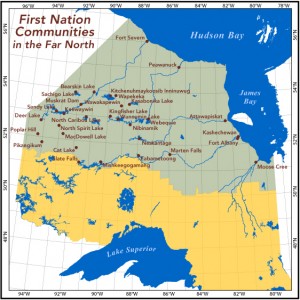
Carey Lee’s blog post on the complexities regarding consultation processes between First Nations and the mining industry led me to ponder the importance of business ethics in situations such as these. First Nations in Northern Ontario have recently disputed the new mining regulations that have an effect on their territory, stating that they fail to take into account the First Nations’ wish for there to be an effective form of consultation and communication between them and the industry.

A map of First Nation Communities in northern Ontario

Reading this blog post led me to truly see the connections of both Freeman and Friedman’s interpretations of business ethics in this particular story. According to Freedman’s Stakeholder Theory,  parties other than the company itself (such as the First Nations) are involved in and affected by the company’s actions and should therefore be treated as stakeholders with valued opinions and concerns. However, according to Freeman, corporate executives (the mining company in this case) do not have any responsibilities in their activities other than making as much money as possible for stockholders. In the blog post, Carey brings up the thought-provoking question of whether the First Nations’ concerns lie in the environment or rather the money associated with the industry. While I believe that concerns with First Nations’ ethicality are important, we must not forget about the industry’s position on ethicality. In business ethics it is truly up to the business (the mining company) to decide whether or not they listen to shareholder or stockholder (First Nations) concerns… or, in other words, whether they side with Freeman or Friedman.

Who is right? While many people in class argued that both Freeman and Friedman’s approaches are effective, it seems to me as though in this particular case, Freeman’s is being emphasized more than that of Friedman and should this continue, First Nations will continue to feel as though their values and concerns are being ignored.

Sources:

https://blogs.ubc.ca/careylee/

http://www.cbc.ca/news/business/story/2012/10/05/sby-mining-act-changes.html

http://en.wikipedia.org/wiki/Business_ethics

http://www.vancouversun.com/news/First+Nations+want+more+resource+development+says+Chief/6960415/story.html

http://www.mnr.gov.on.ca/en/Business/FarNorth/2ColumnSubPage/266514.html (photo)

Spam prevention powered by Akismet