Categories
Uncategorized

Interactive Advertising

I’m sure most people are already used to having to be forced to sit tightly through advertisements before every other Youtube video. This can get extremely frustrating, especially if one wants to watch a promotional product, such as a movie trailer.

I have recently encountered a new level of frustration, in the form of interactive advertisements. These ads are exactly as they are named; they force you to “interact” with the ad. For example, if the ad is promoting ketchup, it will run through the regular sales pitch, then display a bottle of ketchup, and a burger on a plate. Then comes the worst part: the ad will kindly ask for you to pour ketchup on the burger, which can be accomplished by using your mouse and dragging the digital bottle around.

The most crucial and annoying point is, these ads do not go away with time. So, if you’re eating dinner in front of the computer and have your hands full, you can’t simply wait for the ad to disappear. You’re basically forced to comply with the ad’s demands, or give up on the video/program you initially wanted to watch.

In my opinion, the most effective form of these interactive advertisements is when they are completely voluntary. A GREAT example of this is:

YouTube Preview Image

I understand that marketing directors are constantly thinking up of creative ways to get consumers to recognize and try out the product for themselves, but is forcing me to pour digital ketchup on an equally digital burger (without even allowing me to taste it, may I add), really going to increase market share, or just piss off consumers?

Categories
Comm101 Uncategorized

Strange advertisements

Why did the chicken cross the road?

To get to the other side, where there weren’t cheesy corporate advertisements!

We’ve all seen our fair share of advertisements, and in my honest opinion, I probably could have designed most of the humor better myself

I do realize my definiton of “cheesiness” could very well differ from yours. So, here are a few which I personally think are….below par…

YouTube Preview Image

This one meshes perfectly with the well tread template for car advertisements:  white male in driver’s seat, car traveling at high velocity, deep voice in the background.

YouTube Preview Image

What’s a bloody monkey got to do with my subs?! I realize that it’s a mascot, but couldn’t Subway have picked something more hygenic? Furthermore, the heavy use of animations doesn’t really relate to their product, and seems like it’s there to make viewers laugh.

And I couldn’t find a clip of this, but what’s with all those Cialis commercials? How does a guy sitting on a construction apparatus have anything to do with erectile disfunction? Or antiquing for that matter? It could be an inspirational thing, if I had more familiarity with the product…but no.

Another example is the Ikea radio commercials. I have Swedish friends, but none of them have anything close to the infamous accent that advertises furniture.

I can’t really imagine a professional marketing team developing these advertisements. The thought of relatively old brand gurus huddled around a table to draw out the Subway monkey just doesn’t seem right.

In any case, I do not despise these advertisements. They are incredibly cheesy though, and I have to wonder at their effectiveness.

Categories
Comm101 Uncategorized

Carbon Footprint

According to the goBEYOND calculator, my carbon footprint is 7.65 tonnes per year. Even after I’ve went through the whole process of getting that number, I’m still not sure where I stand. However, the feedback I got was pretty reasonable, so I’ll assume that I lie within the majority.

Assuming that my score is not ridiculously high or low, I’m not  surprised at my 7.65 carbon footprint. I’m conscious of the fact that I take public transit as opposed to driving a car, maintain some diet of organic/local foods, and don’t leave the heaters on 24/7.

In my case, food and shelter combined for about 80% of my score. The simple practice of buying and consuming organic or local foods can be further implemented into my daily life. However, I would take a minor hit financially, as these options tend to be more expensive.

I have little technical knowledge of the “electrical” part of my house, and since clicked “I don’t know” as answers for about 5 questions, the score may not be accurate. However, simply from reading the questions, I felt more in control of my situation. I never knew there were blankets used for covering water heaters, and even for somebody as “appliance-disabled” as me, I can probably drape a thermal sheet over the heater.

I remember the visitor to our class a few weeks ago fairly clearly: the CEO of the energy displayer gadget. This carbon footprint calculator works in similar ways: the first step to improvement is identification. I will definitely recalculate my score soon and strive for improvement =)

Categories
Comm101 Uncategorized

Career Coaching

I was reading through The Province today, when I ran across this article:

http://www.theprovince.com/sports/honest+with+career+coach/2761982/story.html

In summary: be truthful to your coach and tell them everything.

Now, to those unfamiliar on what these coaches actually do, here’s a quick explanation via youtube.

YouTube Preview Image

A good definition to draw from this is “an interactive process to help people find better jobs or change careers”.

From personal experience dealing with the Sauder coaches, I can truly attest to the usefulness of these advisors. I set an appointment simply for the purposes of reworking my resume and cover letter , but the insights I receieved about job hunting was far more valuable than what I expected to gain.

It’s difficult to tell people about your blemishes, especially people you want to make a good impression on. However, keep two things in mind:

1. These career coaches probably have dealt with people with WORSE problems than yourself

2. If you don’t reveal your “ugly secrets” and maintain a perfect surface, why go to the coach on the first place? Employers could just as easily be tricked.

Sure, it’s embarassing. When I presented my horribly formatted resume, I was mortified when it was compared to the Sauder standard.

At the risk of sounding like an armchair theorist, improvement to one’s weaknesses can only come after confessing to them.

Categories
Comm101 Uncategorized

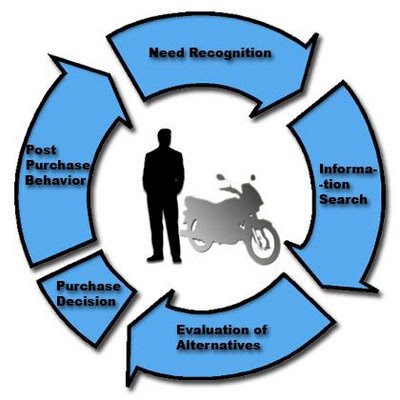
Consumer Decision Process

This is truly fascinating stuff.

I couldn’t dig up the exact image that was shown in class, but it’s generally the same thing.

I should first start off with some background information. I was sitting in class, I think the lecture was about marketing, and a slide comes up with a similar diagram of the consumer decision process stages. Now, because it was quite a long list, my first notion was to ignore it (as I usually ignore a majority of long, complicated slides).

However, since an in-class assignment was involved, I was “forced” to read through it- and was amazed at its accuracy. It got to the point where I was verifying each of my last purchases, ranging from food, to a netbook, to a phone, for about 10 minutes, recounting my so-called psychological processes at the time.

Although the diagram and the analysis of our trains of thought is truly impressive, it scares me to think of how we (as consumers) can be played in the hands of corporate marketing divisions so easily. I don’t consider myself as an impulse buyer at all, but if I adhere so comfortably to the diagram, surely something can be done to tip the scales and entice me to purchase something I normally wouldn’t.

I’ve come to the realization that
1. Marketing is really underestimated sometimes… and
2. I should pay more attention to these complicated diagrams.

Categories
Comm101 Uncategorized

Social Enterprise

Differences between enterprises which were either social or traditional were heavily discussed, and many conclusions were directed toward profits. Further thoughts revolved around the perception of success differing between the two, and I heartily agree with all this. However, this leads me to wonder what the difference between a social enterprise and a charity would be.

Obviously, both types of organizations are geared toward the improving of society. Profit margins probably is not a factor. Therefore, what is the difference between the average soup kitchen and Craig Kielburger’s Free the Children?

My immediate response would be size: Free the Children is a globally recognized enterprise, whereas the soup kitchen is just that: a soup kitchen. Furthermore, although each organization is aiming toward different goals, the duration of the effects are vastly different. Technically speaking, a mere bowl of soup would only help somebody for a few hours, whereas the advocating to improve human rights could rewrite the future.

Perhaps there is no difference between social enterprise and charities; maybe one simply evolves into another. Craig Kielburger formed his organization at age 12 with a couple of classmates- would anybody predict it was a “social enterprise” rather than a simple “charity”, if anything at all.

Categories
Comm101 Uncategorized

Failures over success

We’ve had quite the amount of visitors to our 486 class to both my delight and disappointment. Yes, disappointment. I can recall visits from the librarian, Mahesh, somebody who had restaurant and tech repair companies, and most recently a Sauder grad who works in Hong Kong (Tienne Fung was her name, I believe).

The amount of diversity which Paul and Jeff are bringing in is great. The infusion of real-life experiences into boring class studies is pretty much what this course is all about, anyways. What better way than to reinforce this with real live examples? These guests stress the importance of interpersonal skills, and they bring with them personal examples.

My only qualm is the one thing they all have in common: success. Wouldn’t it be interesting to hear from somebody who is a failure? Of course, the qualifications of this failure must be reasonable; I don’t want to hear from an idiot who flunked out of Sauder.

To be looking down on the speaker instead of always trying to envision oneself in their current enviable situation. To be able to know exactly what NOT to do, instead of following in well-tread footsteps.

To be honest, I actually mentioned this idea to my friend as a joke, but the more I think about it, the more intriguing it gets.

Categories
Comm101 Uncategorized

Social Media

The debate regarding employers “researching” potential candidates for employment using social media can only lead to a fruitless and obvious answer. However, this has not quelled any humanitarians from publicly proclaiming that it is unfair for job applicants to have their background checked up on in such a judgemental, discreet, and guideline-less way.

Personally, I don’t mind employers looking at my Facebook. Then again, I’m not stupid enough to include incriminating and obscene pictures or post inappropriate, sex-oriented slangs.

The whole notion that employers don’t have the legal right to browse through social media is preposterous, unless proven that they have used these tools to hire out of favoritism due to racism, sexism, or just attractiveness. And even then, is this so wrong? It’s simply human nature to try to pick the best, with the limited information available.

If one signs up for Facebook, then he has already made it clear that whatever he wants to share with your friends can be easily assessable by ANYBODY. This includes the cute girl in math class, the pedophile whom haunts childhood memories, and *gasp*, the employer.

Somebody who uploads and TAGS intoxicated pictures of themselves should stop and check to see if they’re currently under the effects of alcohol while uploading and tagging themselves.

Categories
Comm101 Uncategorized

Richard Branson

No doubt the accomplishments of Richard Branson are impressive and inspiring. To be able to create, maintain, and prosper this amount of companies in well-tread industries must make Branson an entrepreneur, no? He certainly encompasses many of the characteristics listed on the Compaping program: Creativity, street-smart, and humble come to mind.

I too was extremely impressed by this man while watching his interview video in OB class, but as I thought and talked about it a bit more, my appreciation for his work dropped.

When I think about the brand Virgin, I don’t think of it as a “whole” company, like I would Nike, or Staples. Sure, I’ve heard Virgin Radio and seen Virgin Mobile phones, but passively, my mind hasn’t acknowledged Virgin as “real”. To put this another way, the fact that Virgin owns so many companies, but with so little market share in each industry, it’s insignificant. How ironic.

Personally, I would hold much higher respect for somebody whom ventures into a market, and steals half of it. Of course, not anybody can duplicate the wonders of Bill Gates or Steve Jobs, and with all due respect to Branson, but is it really that hard, while backed with a mountain of cash, to enter an industry, create a company, and make some small profit?

Categories
Comm101 Uncategorized

Business Ethics

Business ethics: earning profit while following the law and ethical customs. What defines our modern day ethics, and who has the right to define it?

A few weeks ago, the professor of Comm 299 announced the availability of a course package. Here are the facts:

  1. It costs $41
  2. It is mandatory, and inability to gain assess to said  package can result in deduction of participation marks
  3. It is composed of various articles stapled together
  4. All articles were previously posted onto Vista for students to read, at no cost
  5. All articles were subsequently pulled OFF Vista, for students to purchase “for their convenience”

I, along with practical every classmate, were enraged. The mere fact that it is 10 times thinner and 6 times more expensive than the Financial Accounting package was enough for many to formulate plans to photocopy divide up costs.  Needless to say, the reasoning behind the formation of this package itself, instead of having it up on Vista, was “for our convenience”, word for word from our professor.

I don’t want to sound thrifty, but is $41 really worth that stack of articles that were pulled off the web? I understand this is a business school, and faculty want to apply as many profit-earning concepts into our daily life as possible, but is this really necessary?

This is by far the most disgusting maneuver I’ve experienced from an educational institution. Do you think this is ethical?

Spam prevention powered by Akismet