Categories
Marketing Blog

Rationally Irrational.

Consumer behaviour is a very curious subject. All of the concepts and ideas are based around consumer behaviour being rational, meaning the people are well informed and that they make reasonable decisions based on logic. I read a very interesting  blog that I found on an external blog website written by Dan Ariely that talks about the irrationalities. I encourage everyone to read his post before reading on…

Dan speaks about four very common irrationalities concerning consumer behaviour and the decisions that consumers make in dynamic consumption situations. I think the first irrationality is hilarious! It’s funny because I know that I have been guilty of this exact behaviour while making purchasing decisions. For some reason, consumers think that discounts are proportional to the price of a good or service, me included. I don’t know why I would change my behaviour when the discount is low on a high ticket item rather than the same discount on a low ticket item, just that I have intuitively considered this rational behaviour.

The third irrationality I again was guilty of. He uses a volunteering example vs. a paid work position. I’ve done volunteering in the past where I’ve actually been offered money for my services but I’ve declined payment because I would rather know that I was volunteering than be paid because at that point I would  no longer be volunteering but rather doing paid work. On the flip side, when I do paid work, I expect to receive monetary compensation for my efforts. But it is interesting my irrational behaviour to decline the money option in order to receive the gratification of volunteering.

He goes on to talk about two other familiar behavioural irrationalities, both very common in every day situations. The thing that I found interesting about this blog is that it is easy to relate to the topics at hand. The irrationalities are so common that I found myself guilty of said behaviour without even knowing I was doing anything out of the ordinary or something that was no expected. It just highlights how difficult it is to pinpoint consumer behaviour in the real world because everyone acts differently. Every perceives reality different from the next person and many social factors also influence our decisions so to generalize consumer behaviour is in itself…irrational. Marketers must be very observant and detailed when studying the behaviours of consumers in society as each consumer will be different from the next in some way, shape or form.

Categories
Marketing Blog

Hidden Fees Really Grind My Gears…

While looking at my friend Kim’s blog, I came across a very interesting article that she wrote about from an external marketing blog. The article, showing similar ads from Wind Mobile and JetBlue, compares the effectiveness of the two advertisements and Kim expresses the effect that the commercials had on her opinion of the two separate products. I couldn’t have agreed more when reading about Kim’s opinion of the Wind Mobile commercial! I am one of those people that can relate to cell phone companies charging ridiculous fees for little or no benefit to myself. I cannot begin to express my incredible frustration when I find what I think is a good deal turns out to be a bust after all the add on fees, government regulatory fees, cell phone servicing fees, usage fees and excess usage fees. It honestly makes me lose all confidence in cell phone providers. How can I know if what is being marketed to me is the truth. The fact that the Wind Mobile marketing effort is so relatable as Kim states makes this marketing attempt a huge success. It doesn’t hurt that Wind Mobile uses satire and humor to make light of what most would call a very annoying situation.Kudos to Kim for finding this article and kudos to Wind Mobile for making such a simple and witty stab at those cash gouging cell phone companies.

Kim goes on to look at a different marketing ad found in the external marketer’s blog similar to Wind Mobile’s ad (the videos of these ads can be seen on Kim’s blog ) made by a company called JetBlue. Again, using the hidden camera technique, the street vendor delivers a product that is less than what is expected by the consumer, resulting in some comical and expected reactions. On a complete side note, it’s always interesting to witness people’s behavior in particular situations because I believe that it is the only time people tell the truth. When people know people are watching them, they act and react differently. But when no one is watching, people reveal their honest attitudes and behaviors. Just thought that was an interesting little insight. Back to the ad, I think the underlying point is received by the viewer of the video, that JetBlue will not under deliver their product if you choose to purchase.

I think Kim says it best when she says that both companies are using their marketing strategies to try and differentiate themselves from their competitors. Both companies are isolating particular characteristics that their competitors do poorly or have a negative reputation for, and exploiting them by saying they will not do these things, but rather the opposite. It is an effective strategy when thinking about consumer behavior because it is probable that by these companies focusing on what their competitors do poorly (ie Hidden Fees…man they are annoying), they bring up possible negative experiences consumers have had and prompt the consumer to make a change in their purchasing decisions. If the goal is to attract a larger portion of the target market, I believe both ads will have positive results.

Categories
Marketing Blog

But I thought that all water was the same…

Water is the lifeblood of humans, it sustains everything living. Water is what differentiates planet earth from any other planet in our solar system and without water, human life, or any life for that matter, would cease to exist. Water,  a molecule made up of 2 hydrogen atoms and 1 oxygen atom, covers 75% of the earth’s surface and is required by every human being to survive. Naturally, people would think to sell water as demand is limited only by the number of people on earth. But with this entrepreneurial idea comes competition. So how does a company differentiate its product from its competitors when the product is the same in every case? In class we looked at how packaging is used by water companies to distinguish its product from one another. Sure, packaging is an excellent and fairly simple way to differentiate a product from another when the actual product itself is identical. But I want to draw your attention to something that drew my attention, Ethos Water.

Ethos Water has a bottle much like any other water bottle: it has a clear label, cylindrically shaped, a screw on cap, made of plastic and uses an arial font. The packaging itself is very standard. But how Ethos Water differentiates itself from other water bottle merchants is what is written on the label. It reads “The Ethos Story: We began with a simple idea: “Lets create a bottled water and help children around the world get clean water.” We hope you like Ethos Water and that you’ll join us in our efforts to get clean water to those who need it most. Thanks.”

Ethos has effectively differentiated itself from its competitors by appealing to consumers who want to make a difference in the world. Ethos is offering a new unique benefit to consumers, much more than just the benefit of quenching one’s thirst. This benefit is psychological for the consumer, giving them the feeling as if they are helping impoverished nations get clean drinking water by purchasing Ethos water. Consumers are no longer just paying for the benefit of the water itself, but will now pay to experience this feeling of satisfaction on a moral level.

This brilliant marketing plan by Ethos is both effective and moral. It’s really a win-win situation, whereby Ethos benefits by turning a profit and satisfying its mission statement and consumers benefit from the water and the good feeling they get by knowing that a portion of the money spent on Ethos water is going towards helping those who need clean drinking water.

Categories
Marketing Blog

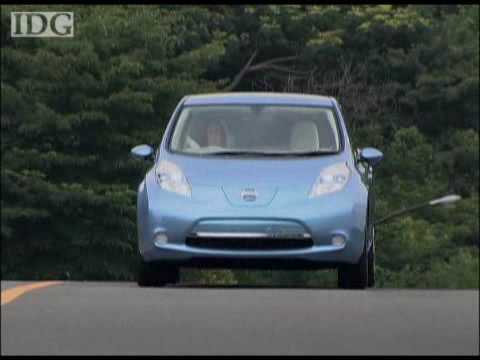
Nissan’s Electric Car: The Nissan Leaf

A product that I am particularly excited about is the release of the Nissan Leaf car in 2011. I am excited for this vehicle because it is 100% electric, running on a bundle of lithium ion batteries. The features of this electric car include its ability to travel 160 kilometers on a fully charged battery, seat 5 people, reach speeds of 140 km/hr and fully charge in 8 hours. Nissan has put a lot of research into electric vehicle technology and has been able to overcome many obstacles so far including safety requirements pertaining to the overheating of the batteries, especially in car accidents.The Nissan Leaf is a zero emission vehicle, which is great for the environment because it doesn’t release harmful CO2 into the atmosphere.

YouTube Preview Image

The entrance of the electric car is a product development and a market development. It is a product development in a sense that it is an entirely new, never before made product being introduced by existing car companies to existing consumer segments. But it is also a market development because electric cars target new consumer segments including environmentally conscious consumers. There is huge market potential for electric cars in today’s society, whether it be marketing to consumers who are hopping on the green social trend wagon or consumers who are tired of paying ridiculous amounts of money for gasoline. Personally, I like the idea of the Nissan Leaf because it will spur competition (hopefully) amongst car makers to create more environmentally friendly cars. I consider myself a little bit of an environmentalist and if oil and gas consumption habits do not take a change for the better, the earth is in some serious trouble.

These earth friendly vehicles with zero emissions will require a lot of marketing to the public to promote themselves as the environmental and economic friendly alternative to gasoline vehicles but I believe that there is tremendous potential in the electric car industry, and automakers and consumers might not be the only winners when all is said and done.

Categories
Marketing Blog

Dove+Men vs. L’Oreal’s Garnier Fructis

My marketing group chose to research Dove for our assignments, and recently we have narrowed down our focus to Dove’s Men+Care products, targeted for males instead of the traditional female market that Dove has marketed to in the past. I myself had little to no knowledge of a Dove brand developed specifically for men, which was surprising to me considering this was a product targeting males. The obvious question to me was how is Dove’s Men+Care line being promoted? Obviously Dove has had some trouble gaining Men+Care some exposure.

On the other hand, a brand of personal products that has done a fantastic job marketing their products to men is L’Oreal’s Garnier Fructis Anti Dandruff Shampoo. This new product has been targeting young males who watch sports and suffer from dry scalps, and has been aired on channels with sports highlights and sporting events. The new anti dandruff shampoo has also targeted insecure males who want to feel confident while being with women without having to worry about a flaky scalp. This is similar to the type of segment that Dove’s Men+Care products have tried to target, yet the new anti-dandruff shampoo is the only one that I have even seen a commercial for.

For those of you who haven’t seen the Garnier Fructis commercial, here it is.

YouTube Preview Image

I think that this commercial is an excellent way to promote this product and I believe that if Dove wants to grow its Men+Care product line, it needs to increase its exposure to this particular target segment. It’s very difficult for men to buy a product when they don’t even realize that it exists.

Spam prevention powered by Akismet