Firms exist to create and sustain competitive advantage
Firms exist to create great products and services. Customers will pay for said product/service, and business owners profit so that they can spend their money on great products and services. And that is how the world goes ’round.
But what, exactly, makes a great product?
A great product is anything that is perceived to be attractive by the target market. That is all. If children love your board game, it’s a great board game. If avid knitters love the texture of your knitting thread, you have great thread. If a scientist is able to advance his work through your series of PCR thermal cycler, you have a great…well, thermal cycler.
But what happens when your product isn’t perceived by *all* of your target market to be as awesome as you’d like it to be?
Artists and indie game designers rarely unanimously agree on their thoughts of an “excellent game” or “beautiful work of art.” Each and every one of us have varying opinions, and it’s only natural that these opinions conflict with others. This basis is the source of my ongoing respect for artists and game designers: the less well-known your product is, the more degrees of freedom you’ll have to work with. You don’t have to cater to the masses’ cravings for explosions and violence if you have a beautiful story. You don’t have to use high-definition graphics to convey the emotions of an 8-bit character. And because you don’t have to cater to the masses, you can do whatever you want. You’re limited only to your ideas, and those are endless.
But, if your idea is beautiful, chances are that someone else will agree with you.
And that idea will explode.
We can look at a huge variety of indie games that have made it big. Let’s focus on FTL: Faster Than Light, a RTS game created by Subset Games.
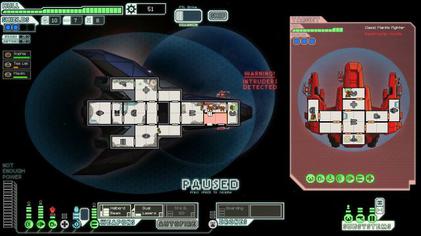
FTL is a wonderful game with hours upon hours of replay value. Replay value is, in my opinion, very indicative of a game’s success. It means that the gamer is willing to spend more time on your game, and that is (almost) always a good sign. Unless a gamer is constantly frustrated going forward, many hours spent on a game is indicative of a flow state of mind, which is basically that feeling you get when you’re completely immersed in completing a task (cleaning a room, dancing at a party, playing games or writing an interesting blog post(hah!)).
Long story short: FTL is a great product and many people recognize that.
Great products don’t mean anything unless people know about it
Back in the day, when you needed to visit a good restaurant you’d have three options to help choose where you’d dine:
1) Which restaurants are close, and how much do they charge?
2) Which restaurant does my foodie friend Fred recommend?
3) Which restaurant’s advertisements seem appealing?
Essentially, your decision is based on convenience, recommendation, and other appealing factors.
In this day and age, you’d probably look up prospective restaurants using Google and read online reviews. Or you’d tweet #hungry and your foodie friends would tweet back #tryChung’sChineseFood. Or you’d receive a groupon for 50% off at a nearby sushi restaurant. The internet, and social media, is essentially supercharging the exposure of great products/services, and damaging the genuinely bad products/services.
So how do indie games fit in?
FTL: Faster Than Light won many awards when it first came out, due to its grueling difficulty and interesting mechanics. But That would appeal to a gamer’s valuation of the game. But the most important factor for indie games is probably the gaming community itself. A positive recommendation, passed on from one user to another, has the potential to go viral and reach insane levels of exposure. This is the concept of a meme: a piece of cultural data that is passed along from person to person until it has gone “viral.”

It was only a matter of time before I talked about viral videos.
Okay, so FTL never went “viral.” But it did get very popular, and its release in Humble Bundle 9 only increased its popularity.
So you have the two parts to a successful product: A great product that appeals to its target market, and the exposure it needs to get out there and rock.
But, there is a missing piece.
And I will discuss that critical piece in my next blog post.
Momentarily signing off,
Chris
