Categories
Uncategorized

Sustaining Greatness in Gaming – Part 2

Once a boxer becomes a champion, he must now defend his title. The fight never ends.

In my last blog post I talked about my thoughts on what defined a successful product. In summary, I thought that a great product needed to be appreciated by its target market, and that the product needed the exposure to reach that market.

This post will define the other half of the battle: sustaining your success.

So you have a great product. Your fans are willing to throw money at you to keep making great things. Your product is being mentioned in online circles, promoted through word-of-mouth, and all is going well. There’s only one problem.

The world never sits still.

Whoever currently enjoys your product will eventually get tired. Newer, cooler things will roll out, and new technologies will render your product obsolete. Your fans will eventually become complacent and you’re bound to need to roll out something new-but what?

This is where paying attention to your customer pays off.

In eMarketing, we discussed the concept of the conversation prism. This convoluted diagram essentially lists all the different mediums where an online community can discuss, or observe, your brand.

In my opinion, diagrams are useless unless they help explain something or suggest new methods of working. This diagram does both. First of all, it explains where your product *could* potentially be talked about. This includes places like Facebook, Twitter, or Reddit. By going around the circle, you can identify all the different sources for ideas from your very own customers.

Remember my definition of a “good product” in part 1 of this post? “A great product is anything that is perceived to be attractive by the target market. That is all.” What does this mean? This means that the customer is king.

A lot of business students I talk to say that it’s in a firm’s best interest to “maintain an ongoing relationship with its customers.” When I ask them about it, they reply “so that they can keep making money off of loyal customers.”

I like to look at it a little differently. A firm keeps a lasting relationship with its customers so that it can, or should, pick up ideas. Oddly enough, I talked about this a year ago in my post “Listen to your consumers!” and I’m reiterating the same message now.

This title of this blog post is “Sustaining Greatness in Gaming” because I believe that great game developers listen to the feedback of its players. I keep tabs on popular trading card games and online MMORPGs/MOBAs, and although the problems differ one thing always stays the same: the players want the developers to listen.

Let’s go back to discussing FTL: Faster Than Light. The developers for the game are currently hosting an AMA (Ask-Me-Anything) on Reddit along with some other awesome dame developers. Here, they directly answer the questions of their players and create hype for new products. In particular, they’re getting feedback on what’s cool (or not) in their games. This is essentially free, painless market research.

These are the top posts in the comment thread. If I were the marketing manager for Subset Games, I’d be taking a lot of notes from this thread. We have people voicing their opinions on the product, creating new ideas for future releases, and doing all of this absolutely free This is a gold mine of information, and it would be foolish to disregard these comments.

However, what’s very interesting is the response of the developers. “While we have some minor stuff in the works […] it’s unlikely that we’ll be jumping on to a sequel.” What does this mean? To me, this simply means that they’re going to release something new. Something different. Rather than staking all of their success on one given product, they’re going to expand their portfolio to include other games as well. This is a great move as far as strategy goes, and there is only one piece of advice I’d give to the developers:

Make sure you listen to the players.

It’ll be hard to live up to FTL, but if you’re great at inspiring joy in consumers (e.g. PopCap Games, creator of Insaniquarium and Plants vs. Zombies) you’ll likely create another fabulous product. And that will sustain your success.

So what is a successful firm? I’d like to define it as an entity that listens to its audience and creates great products again and again, time after time. If you can do that, I’d classify you as successful.

That’s all on success and sustaining greatness from me. See you all next post!

Signing off,

Chris
Categories
Uncategorized

Sustaining Greatness in Gaming – Part 1

Firms exist to create and sustain competitive advantage

Firms exist to create great products and services. Customers will pay for said product/service, and business owners profit so that they can spend their money on great products and services. And that is how the world goes ’round.

But what, exactly, makes a great product?

A great product is anything that is perceived to be attractive by the target market. That is all. If children love your board game, it’s a great board game. If avid knitters love the texture of your knitting thread, you have great thread. If a scientist is able to advance his work through your series of PCR thermal cycler, you have a great…well, thermal cycler.

But what happens when your product isn’t perceived by *all* of your target market to be as awesome as you’d like it to be?

Artists and indie game designers rarely unanimously agree on their thoughts of an “excellent game” or “beautiful work of art.” Each and every one of us have varying opinions, and it’s only natural that these opinions conflict with others. This basis is the source of my ongoing respect for artists and game designers: the less well-known your product is, the more degrees of freedom you’ll have to work with. You don’t have to cater to the masses’ cravings for explosions and violence if you have a beautiful story. You don’t have to use high-definition graphics to convey the emotions of an 8-bit character. And because you don’t have to cater to the masses, you can do whatever you want. You’re limited only to your ideas, and those are endless.

But, if your idea is beautiful, chances are that someone else will agree with you.

And that idea will explode.

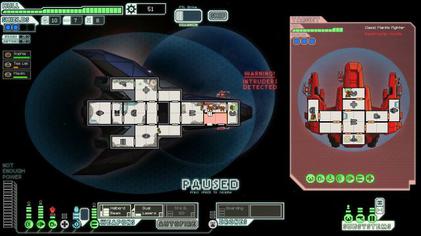
We can look at a huge variety of indie games that have made it big. Let’s focus on FTL: Faster Than Light, a RTS game created by Subset Games.

Source: Wikipedia

FTL is a wonderful game with hours upon hours of replay value. Replay value is, in my opinion, very indicative of a game’s success. It means that the gamer is willing to spend more time on your game, and that is (almost) always a good sign. Unless a gamer is constantly frustrated going forward, many hours spent on a game is indicative of a flow state of mind, which is basically that feeling you get when you’re completely immersed in completing a task (cleaning a room, dancing at a party, playing games or writing an interesting blog post(hah!)).

Long story short: FTL is a great product and many people recognize that.

Great products don’t mean anything unless people know about it

Back in the day, when you needed to visit a good restaurant you’d have three options to help choose where you’d dine:

1) Which restaurants are close, and how much do they charge?

2) Which restaurant does my foodie friend Fred recommend?

3) Which restaurant’s advertisements seem appealing?

Essentially, your decision is based on convenience, recommendation, and other appealing factors.

In this day and age, you’d probably look up prospective restaurants using Google and read online reviews. Or you’d tweet #hungry and your foodie friends would tweet back #tryChung’sChineseFood. Or you’d receive a groupon for 50% off at a nearby sushi restaurant. The internet, and social media, is essentially supercharging the exposure of great products/services, and damaging the genuinely bad products/services.

So how do indie games fit in?

FTL: Faster Than Light won many awards when it first came out, due to its grueling difficulty and interesting mechanics. But That would appeal to a gamer’s valuation of the game. But the most important factor for indie games is probably the gaming community itself. A positive recommendation, passed on from one user to another, has the potential to go viral and reach insane levels of exposure. This is the concept of a meme: a piece of cultural data that is passed along from person to person until it has gone “viral.”

YouTube Preview Image

It was only a matter of time before I talked about viral videos.

Okay, so FTL never went “viral.” But it did get very popular, and its release in Humble Bundle 9 only increased its popularity.

So you have the two parts to a successful product: A great product that appeals to its target market, and the exposure it needs to get out there and rock.

But, there is a missing piece.

And I will discuss that critical piece in my next blog post.

Momentarily signing off,

Chris


Spam prevention powered by Akismet