Categories
Uncategorized

UBC Agricultural Road Walkway Project – Week Five

It is almost the end of the project. The final report and documents hopefully will be done on next week. All our group members are working hard on organizing the data and summarizing the evaluations.  At the meantime, we have a chance to think about the impacts of the Agricultural Road renewal project and our walkway project evaluation.

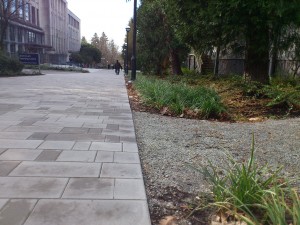
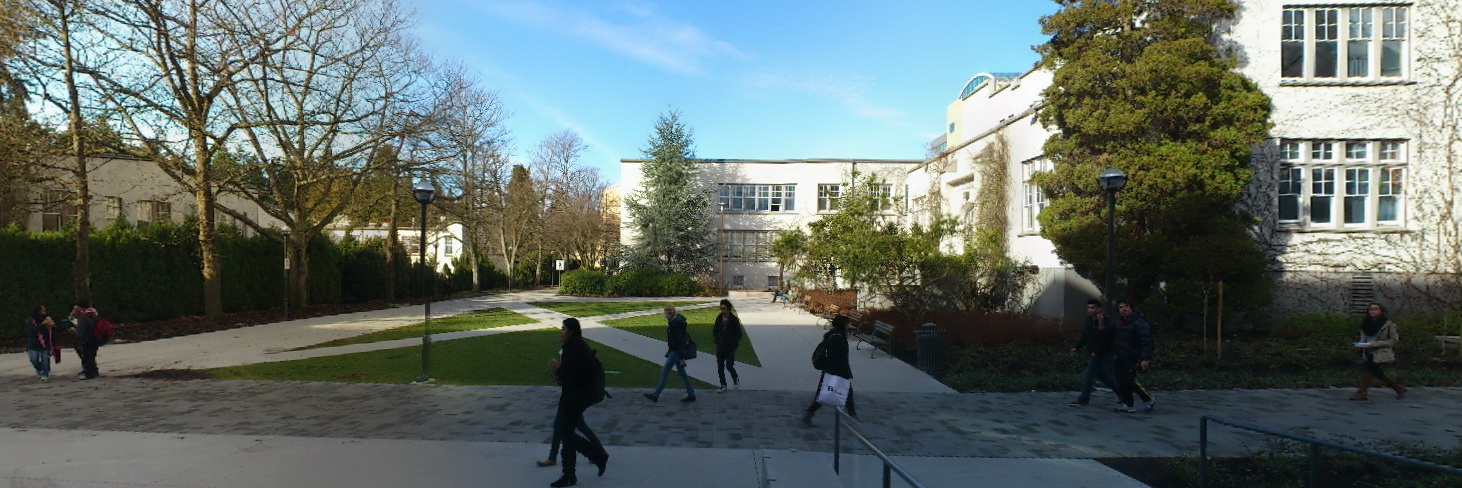
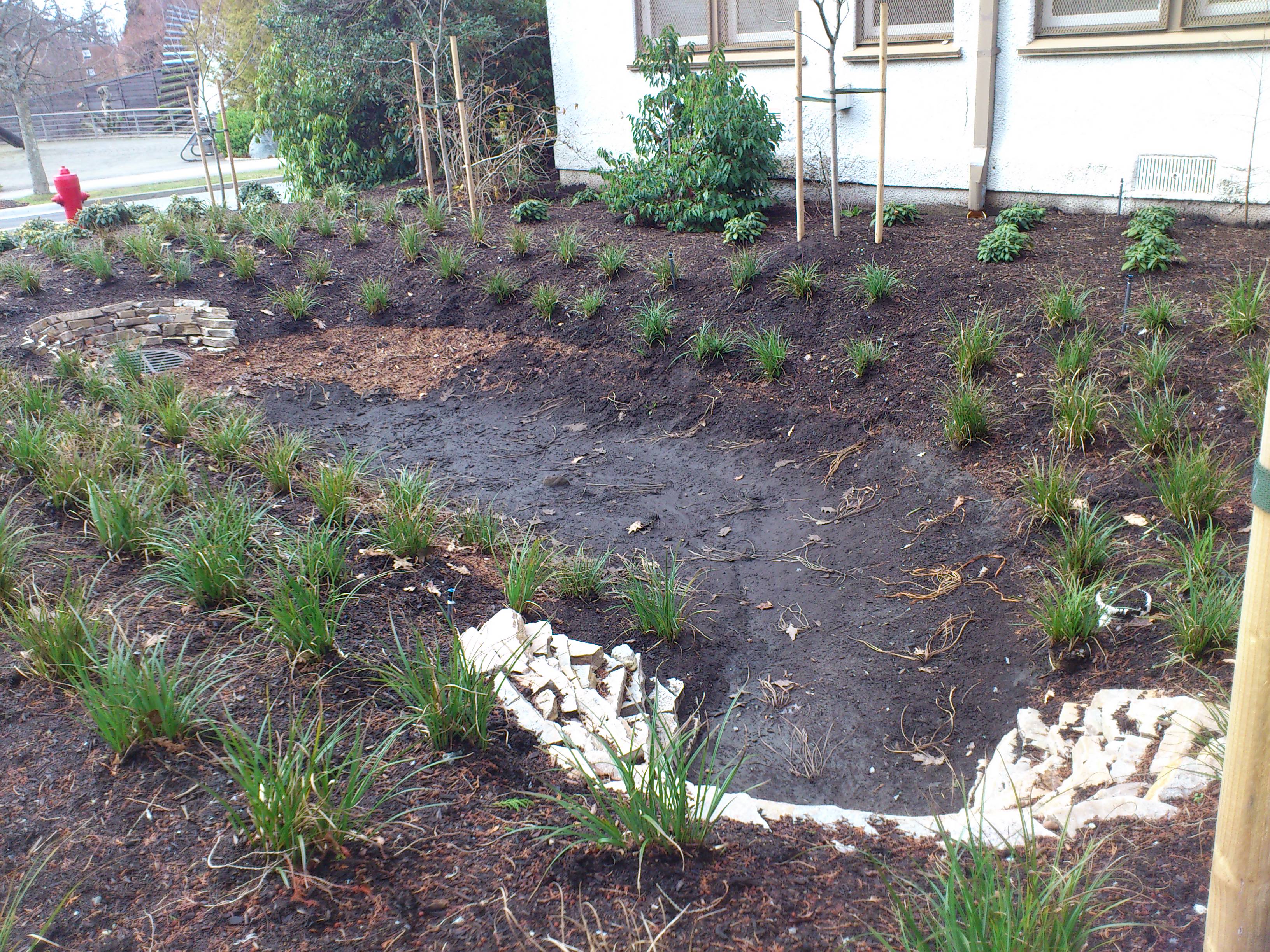
During these few weeks, the renewal project research gave us a lot of  ideas about building and maintaining a  sustainable water system, and brought us experience of being involved in a practical project with a client and organizations. Also, we got to know how our community, UBC Vancouver campus,  is trying to protect and improve the environment. The impacts of the renewal project can be categorized in three aspects:  aesthetic value, environment sustainability, and society value. Here are the pictures of Agricultural Road before and after renewal.
 

Agricultural before renewal
Agricultural Road after renewal

Aesthetic value

Compared the pictures above, a lawn with a nice looking x-cross pavement was implemented in the renewal project.  More trees and shrubs were planted to cover the bioswale and runoff tubes. Also, the reconstructed concrete pavement and new benches outside LSK building create a aesthetic pleasure to users.

Environment Sustainability 

The new water system of Agricultural Road effectively utilizes runoff and stormwater to irrigate plants and save potable water.

– The bioswale stores stormwater and allows stromwater to infiltrate into soil slowly.

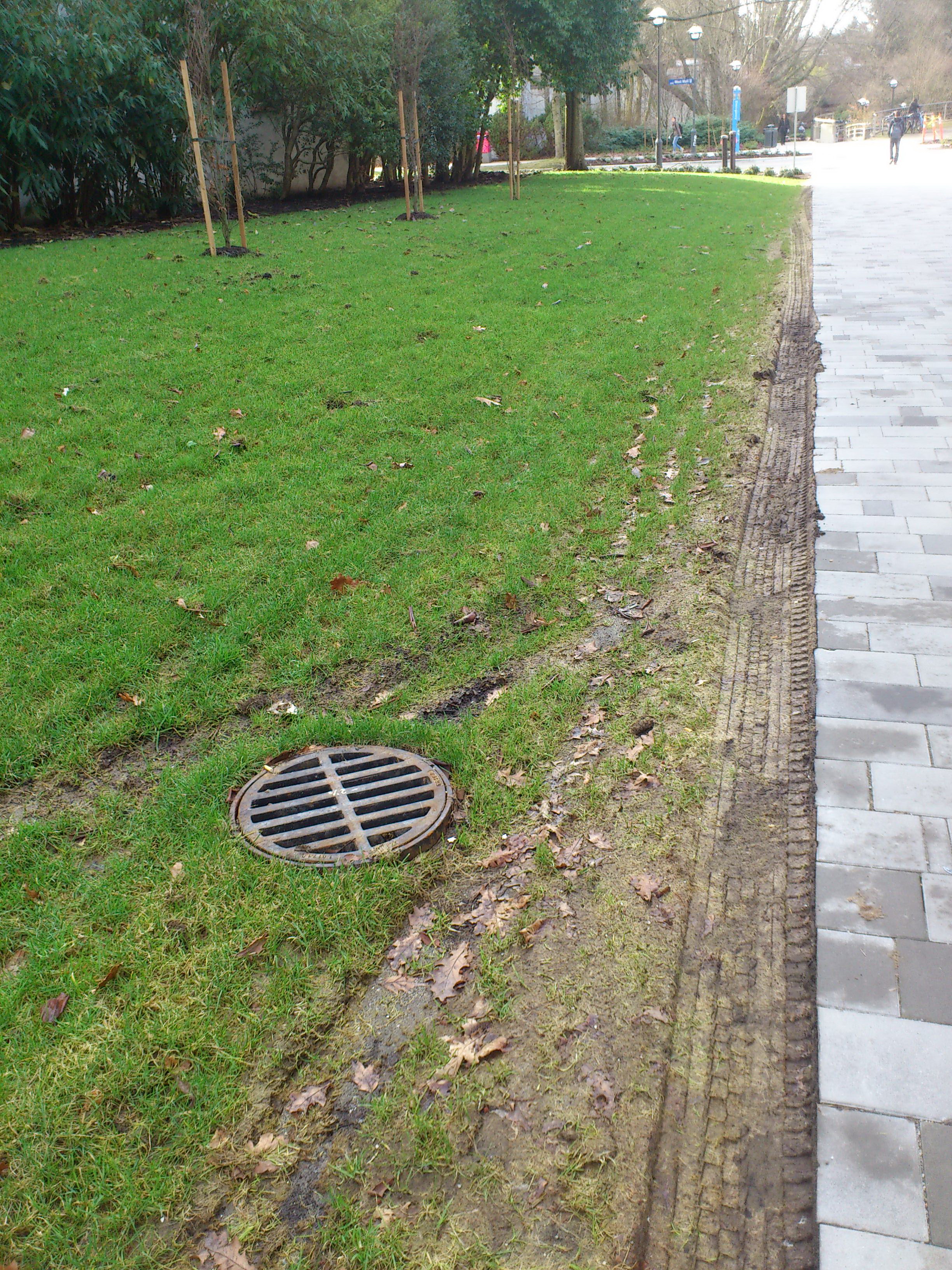
– The large area of lawn absorbs most of the runoff.

– Runoff and stromwater are stored naturally through underground tubing system and reused for irrigation.

– Less energy is used in irrigation.

Since we are using the rainfall intensity data from 1992, the present rainfall intensity might be slightly different due to global warming effects as well as La Nina effect. This is an issue we need to consider in our evaluations. Global warming brings the increase of  atmosphere temperature, which can cause more rain than snow in winter and more evaporation in summer. The extra rainfall during rainy reasons will be a burden to the runoff collection system. And the extra need of water for irrigation in summer will be a problem of the irrigation system as well.

Society Value

The Agricultural Road renewal project affected the society from the beginning to the end. It first caught people’s attention with its construction disturbance, but ended as a pleasant looking renewal. UBC as a leader in imparting knowledge and technologies, should pioneer the green maintenance and sustainability ideas to students. The Agricultural Road project perfectly promotes the water recycling ideas and concerns about global warming to the society.

Feel free to contact us at ssi.agrd.walkway@gmail.com for further inquiries.


UBC Agricultural Roadway Group
Categories
Uncategorized

UBC Agricultural Road Walkway Project – Week Four

According to the project schedule, we finished data collection last week and started the evaluation of  Agricultural Road. The evaluation will take two weeks on the schedule. This week’s blog post will organize the project processes, present the project management outline and the achievements of data collection while we are still working on  evaluating.


Project Management

Based on the three-week research, we have a clear understanding about the project of Agricultural Road Walkway renewal project. Here is the plan about how we are going to finish the final steps of the sustainability evaluation according to the Sustainable Sites Initiative Rating System.


Objective:

To analyze the sustainability of the utilization of water about Agricultural Road Walkway after renewal for presenting the success of the renewal project.


Community:

The Agricultural Road renewal project affects the community of University of British Columbia and is a part of UBC students and staffs’ daily life. Therefore, our client, UBC Planning needs this evaluation to make sure the renewal project is green for the local community and is aesthetic to pedestrians.


Data Collection:

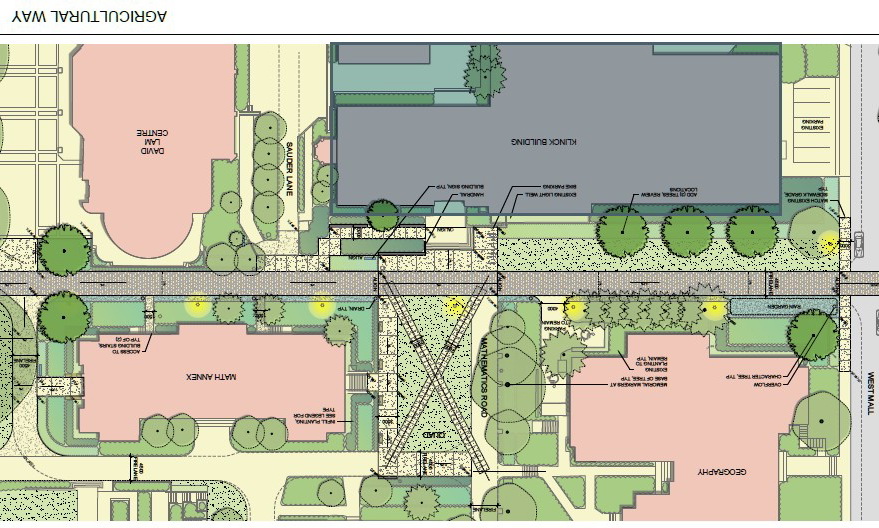
– Site plan drawings were obtained from Karen Kiest Lanscape Architects and our client, Dean Gregory

– Landscape design details and maintenance plan were obtained from UBC Landscape designer, Jeff Nulty

– Rain fall  intensity data and hydrology concepts were provided by the CIVL 202 instructor, Dr. Susan Nesbit


Constraints:

– To get a perfect evaluation of the water utilization for site, there are eight different sections under the SSI-Water that are needed to be evaluated. Two of the criterion are not eligible to analyze based on the project boundaries:

  • 3.3 Protect and restore riparian, wetland and shoreline buffers (worth 3 to 8 credits of the evaluation)
  • 3.4 Rehabilitate lost streams, wetlands and shorelines (worth 2 to 5 credits of the evaluation)
Since Agricultural Road is not near any streams, wetlands or shorelines and the evaluation needs the total credits for all the parts, we will have  to undertake alternative analysis in order to obtain the maximum possible credits. This alternative analysis will include submitting plan documents for approval to the SSI and they will provide credits for these two sections.
Further project information:
  • The precipitation data for the past few years of the region were not available, therefore, Dr. Nesbit provided the group Rainfall Intensity Data of 1992 at Vancouver International Airport as the estimate data to calculate the amount of stormwater that can be used in the irrigation system.
  • The Maintenance Plan of Agricultural Road is not stated on the site plan drawings. Therefore, we had a tour with the landscape designer, Mr Nulty, talking about the significant sustainable system used on Agricultural Road and getting to know the usage of stormwater and pollution situation on the site.


Time Table

Jan 16 – Jan 20      Assign the roles and responsibilities to group members

Jan 23 – Jan 27      Schedule project plan

Jan 30 – Feb 3        Collect data needed for evaluations

Feb 6 – Feb 17        Data calculations including the use of TR55- the software for analyzing water quality on site

Feb 20 – Feb 24     Compile all the sections of water utilization evaluations and finish the final report

Feb 27                        Hand in the report and post the final blog post


Feel free to contact us at ssi.agrd.walkway@gmail.com for further inquiries.


UBC Agricultural Roadway Group
Categories
Uncategorized

UBC Agricultural Road Walkway Project – Week Three

During the past week, we started collecting all the data we need for the calculations and analyses of the site. We found some extra information in addition to the site plans that are needed for evaluating the credits under the Sustainable Sites Initiative.

3.1 & 3.2 Rainfall intensity data and use of stormwater, waste water in irrigation, and some irrigation coefficients

3.5 Stromwater drainage data

3.6 Site maintenance plan, stormwater treatment

3.7 Site maintenance plan

3.8 Site maintenance plan

Since there are no shorelines or wetlands, section 3.3 and 3.4 will not be considered in the evaluation.

We arranged a tour with Jeff Nulty, the landscape designer from the Department of UBC Building Operations, on February 2, 2012. We toured the site again, this time more in depth understanding several interesting features of the new walkway, such as swales, semi-permeable surfaces and vegetation. Jeff explained the site maintenance plan of the west side of Agricultural Road and gave us some very useful information about the sustainability of the site as well.

Several key features were:

Irrigation:

– Collecting stormwater for irrigation instead of  using potable water.

– Bio-swales used at the rain garden can create a small pond to preserve more stormwater helping to moisturize the soil around and provide water resource for plants.

Soil:

– Fertilizing the lawn by adding composted topsoil when necessary.

– Using nutritious and environmental friendly soil obtained by composting a mixture of food waste, leaves and other organic waste at a nearby UBC site.

– Fertilizer used for the soil often comes from compost and mulch formed at UBC’s composting facility; there are no harmful chemicals used.

Stormwater Drainage:

– Elevated storm drains with lower runoff path provide spaces for storing water on the ground and extend the time for stormwater to infiltrate the soil

– Drainage pipes connecting from the roof of buildings to the storm drains collect stormwater from the roofs and transfer to underground

Pollution:

– No significant chemical leaks or car pollution on the road.

– The salt for de-icing the walkway may cause chemical pollution to the lawn by harming the health of the plants and grass, but it is not a major concern.

Pathway:

– Concrete bricked pathway has a low permeability to absorb stormwater.

– The permeable gravel pathway is used on the side of the Agricultural Road to transfer water to the ground.

The walkway has been well designed and it looks like it will meet most, if not all, the criteria under the SSI.


Feel free to contact us at ssi.agrd.walkway@gmail.com for further inquiries.


UBC Agricultural Roadway Group
Spam prevention powered by Akismet