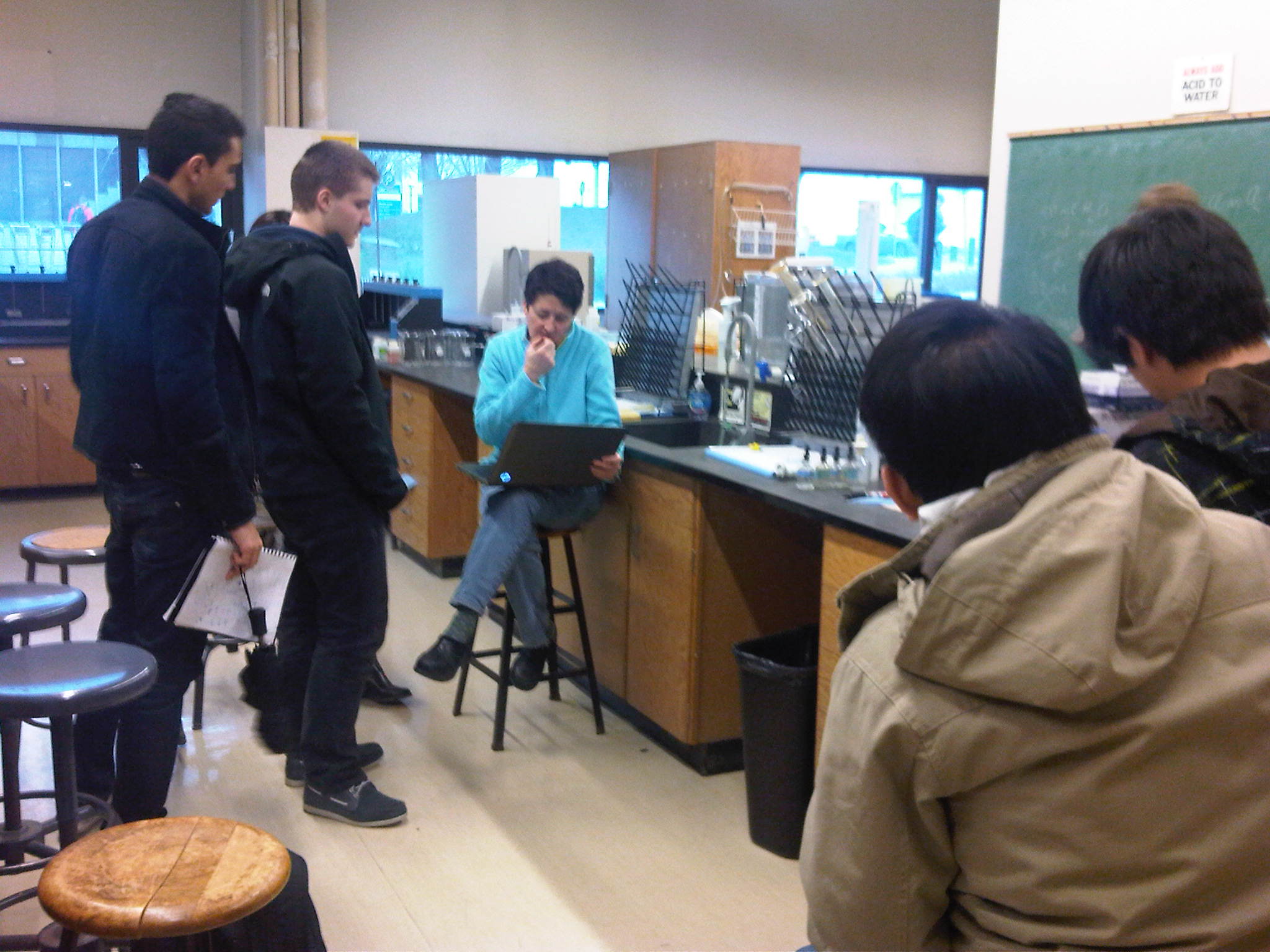
After our meeting with Paula Parkinson, we had an idea of what is possible to test for in our time frame and with our available equipment. The next step on the project agenda was to contact Eco-Tek. It was decided that in order to present ourselves professionally, we should prepare a proposal of possible testing schedules and gain a better understanding of what the tests actually entailed.
Research On Testing
As a group of civil engineers with only a background in basic chemistry, a great deal of research was required. Along with the research, correspondence was done with a group member’s friend who is currently studying Food Nutrition and Health.
We found the following so far:
The first step is to collect the wastewater samples from the Solar Aquatic System (SAS). Sterile containers with a cap/cover would need to be procured, in order not to contaminate the wastewater samples.
The BOD (Biochemical Oxygen Demand) and Salinty tests require only inserting a probe into the wastewater sample to respectively measure the dissolved oxygen content and conductivity. A standardized pH meter with solution of pH 4, 7, and 10 would be needed to test the pH levels of the wastewater.
The process of conducting the Fecal Coliform Count test is much more complex. Before the fecal coliforms can be counted, they must first be grown. The wastewater sample would need to be diluted in order to for the plates to be in a countable range of 25-250 or 30-300 colonies. The two methods of using a spread plate or a pour plate were suggested. Both methods require using a selective agar/gelatin media to ensure that the only bacteria being grown would be coliforms. The spread plate method entails inoculating and spreading a sample of the wastewater onto a prepared agar (petri dish), and then an incubation period of 24 hours at 35 degrees. Care would be needed throughout this process because the coliforms may grow into a blob, making it invalid for counting. The pour plate method entails pouring molten agar into a plate where a sample of wastewater has been inoculated. The dish is then swirled carefully and incubated aerobically at 35 degrees for 48 hours. Care is needed when pouring the molten agar into the plate. Both methods require a positive and negative control that respectively consists of a plate of pure culture of coliforms and one of just the diluent.
With this brief overview on how to execute the laboratory tests, we felt better prepared for the time when were to go back and meet with the Civil Environmental Lab. Being prepared would optimize the training time spent under the mentoring of Sepideh Jankhah and Paula Parkinson. We intended to ask them whether we would be able to use an autoclave to sterilize the containers and consult them on the topics of incubation time, temperature, and conditions for growing coliforms.
Meetings
On Monday, we presented to Dennis our preliminary schedule of collecting wastewater samples at different times of day and store them to be tested. He informed us that due to the SAS using multiple filters, the time of day would not affect our results, while the actual day of the week mattered. In order to get a bulk reading of the wastewater, it would be best to take the samples on Monday, Wednesday, and Friday. This way, we would get a sampling of the water quality during the beginning, middle, and end of the week.
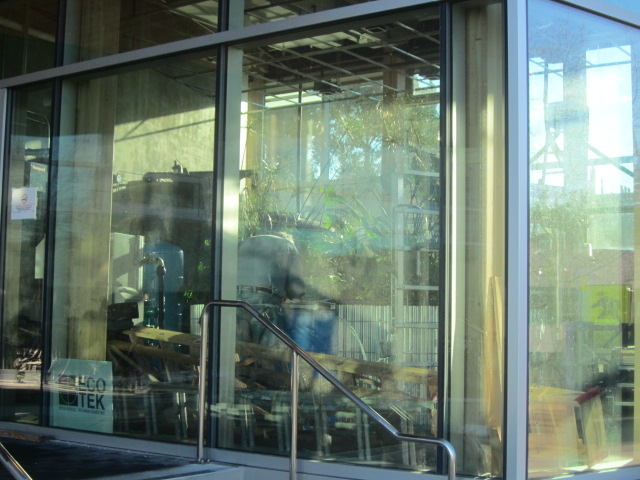
Finally, we were prepared to meet with Eco-Tek. After phoning and leaving messages a couple of times, and emailing them, they finally replied informing us that it would not be possible for us to access the SAS. For more information on the CIRS Building and the Solar Aquatic System, please visit: http://cirs.ubc.ca/building/building-manual/reclaimed-water
This project has hit a dead-end, and no further progress can be made. However, there is a prospect of a new project involving stream remediation in cooperation with Dr. Jim Atwater and the Municipality of Burnaby.