Categories
Marketing

Cavalia Targets Horse Lovers

Anyone who’s taken a bus (or strolled around downtown) in the past month would be hard-pressed to miss the stately white horse gracing banners for Cavalia, the equine version of Cirque du Soleil that’s recently arrived in Vancouver. The show’s venue, mammoth-sized white tents located near the Olympic Village, are equally noticeable. The billboards caught my attention during particularly dull commutes, but I was unsure of what was really being promoted. Apparently the repetitive, if uninformative advertising did it’s job in this case, since my family ended up buying tickets.

The promotional picture shown above perfectly exemplifies the show: the emphasis is on the grace and intelligence of the horse(s), while the human trainers and acrobats are just along for the ride. Cavalia or, to be official, Cavalia: A Magical Encounter Between Human and Horse was a mixture of ethereal horse choreography and fast-paced trick riding. Television host Larry King lauded Cavalia as “the best show [he] has ever seen! Like being in a dream,” which is an apt description of the atmospheric performance and garnered it additional publicity.

The billboards and promotions are clearly aimed at horse enthusiasts, a group I previously wouldn’t have thought very prevalent. I loved the show despite having zero experience interacting with horses, but the couple sitting in front of me waxed poetic about the animals’ “braided forelocks and gleaming flanks.” People even have the option of buying more expensive “horse lover” tickets, which are basically a backstage pass, allowing holders to interact with the horses in their stables after the show. Judging from the success of the award-winning and continent-spanning show, so-called horse lovers have the potential to be a surprisingly profitable target market. Who knew?

Categories
Marketing Music YouTube

Rebecca Black Beats Bieber and Britney

It’s official: Rebecca Black is more popular than both Justin Bieber and Britney Spears. By iTunes’ standards, that is. According to forbes.com, “Friday,” the 13-year-old’s debut single, “amassed a staggering number of downloads, reportedly topping 2 million” only a week after its release. The fun, fun, fun song gained near-instantaneous notoriety for being, well, really bad. As everyone with a computer is probably already aware, “Friday” deals with such prominent issues as choice of breakfast cereal and vehicular seating arrangements – on a Friday, of course. (Re)watch the video below, but be warned that the song is as addictive as it is lyrically uninspired.

YouTube Preview Image

More than anything, this shows the incredible, nebulous potential of interactive video-sharing sites. YouTube is inundated with content, much of it overlooked in favor of videos with the highest view count. But when something grabs viewers’ attention – such as a catchy song of unparalleled mediocrity – it has the potential to explode into prominence due to the social, accessible nature of such sites; parodies of Rebecca Black’s video, one of which was my first exposure to the viral sensation, are everywhere. And YouTube isn’t the only social media site suffering from “Friday”-overload. Twitter is all a chatter with mentions of Rebecca Black, who continues to be a trending topic.

Judging from the content of its website, Ark Music Factory – the company that produced “Friday” – is exactly what the name implies: a mass-marketing manufacturer of indistinguishable, pint-sized pop stars. The record label is currently promoting “Butterflies” by Alana Lee, “the girl who introduced Rebecca Black to Ark Music Factory.” As shown below, her song and video follow the same formula as “Friday:” simple, repetitive lyrics + peppy tween girl + incongruous appearance by older male rapper = viral success in the making.

YouTube Preview Image
Categories
Marketing

Canucks and Co-marketing


Before I jump into the varied and extremely effective (and affective!) components of the Canucks brand, let’s rewind a few years to the first time I watched an NHL game live: excitement was palpable in the sweat- and hot dog-scented air as fans of the opposing teams (Vancouver and Toronto, my hometown) traded insults and brandished their respective paraphernalia. Boring! I promptly took out a book, and, to the horror of my dad and brothers, proceeded to read for the entirety of the tense game.

Cristalle Lau recently wrote a blog post examining the Canucks’ branding benefits, which got me thinking about what makes the Canucks – and sports teams in general, really – such powerful cross-promotional partners. Not long after the Vancouver-Toronto match-up mentioned above, I moved to Vancouver and was bombarded with Canucks advertising – the green and blue logo tacked on shirts and cars, the “Go Canucks Go!” sign that flashes across buses, promotional posters and billboards. It’s difficult not to get caught up in the hype, especially when the team is performing so well (still number 1!).

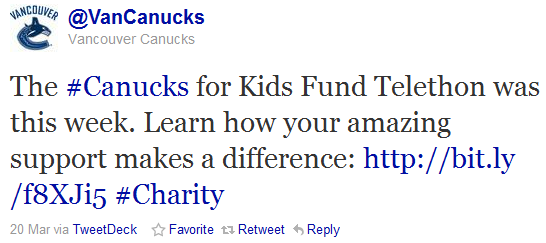
Such promotional activities have allowed the Canucks to succeed in establishing an unbreakable community connection; this relationship with fans is additionally sustained and strengthened through contests and PR initiatives, such as the Kids Fund Telethon recently supported by the team:

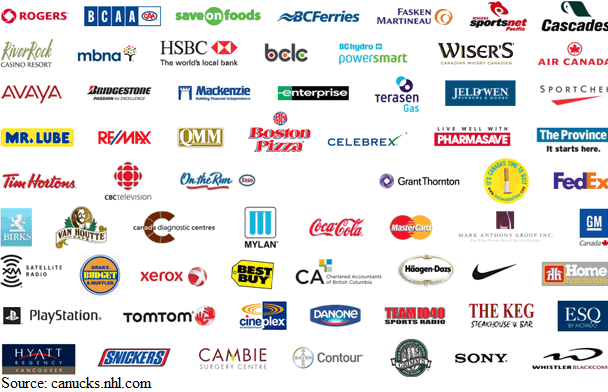
Using sports teams as promotional tools is nothing new. Pubs and restaurants, for example, often offer discounts and special features on game nights. Fans associate positively – often fervently – with their favourite teams, so marketing one’s brand alongside a popular sports team can likely be very lucrative. And judging by the vast array and variety of companies that are included among the Canucks’ promotional associates (shown below), all types of companies can benefit from such partnerships.

Categories
Marketing

Radiohead’s ‘Pick-Your-Own-Price’ Promotion

How much would you pay to download a digital album comprised of the above songs? $1.00? $9.99 plus tax? Nothing, perhaps? These were the questions Radiohead asked fans upon releasing their seventh album, In Rainbows, with the following message splashed across their website: pick your own price. As one of the aforementioned fans, I was thrilled, but also curious about the motivation behind such a surprising decision.

This sales-oriented pricing strategy was likely influenced by the prevalence of free music downloading, which – though illegal – is accessible and socially acceptable. Radiohead’s risk paid off, with critically-acclaimed In Rainbows making $10 million in its first week. And by releasing the album exclusively through their website, rather than an online music store like iTunes, the band actually benefited financially from the increase in sales. Radiohead also profited by foregoing representation by an expensive record label, a partnership that lead singer Thom Yorke notably referred to as a “decaying business model.”

Just as Subway circumvented rivals’ odd pricing strategies with its catchy ‘$5 footlong’ promotion, Radiohead’s ‘pick your own price’ policy differentiated them from the competition due to its being unprecedented in their industry. This is even more significant given that Radiohead is a relatively indie – that is, not mainstream – band, which implies fewer grand-scale advertising opportunities and, consequently, limits the size of their audience. The sales-boosting release of In Rainbows likely attracted new listeners who were able to sample Radiohead’s music with little risk, allowing the band to reach a broader market with future releases.

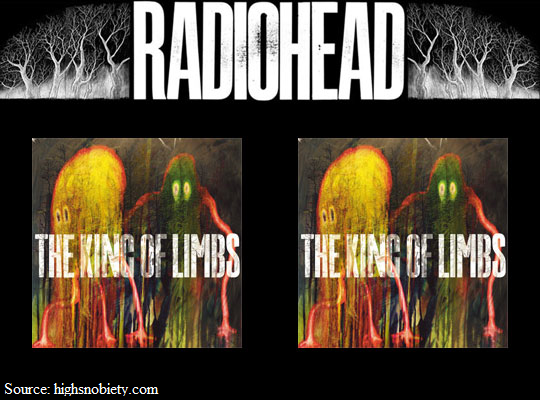
This assumption will soon be tested, as the band’s eighth album, the King of Limbs, hit shelves computer screens just last month. A physical CD version will also be released on March 28, which I’ll definitely be picking up – despite the $8.99 price tag that will accompany it.

Spam prevention powered by Akismet