Image

The Link Between Weight and Puberty

In the 1700’s the average girl got her first period she was 16, 100 years later  girls got their first period at age 14.  Today, most girls start puberty at age 12.5, precocious puberty puts girls at risk for breast cancer, cardiovascular disease and type 2 diabetes later on in life. Additionally, girls who go through puberty earlier are more susceptible to low-self esteem and depression. The timing of puberty is determined by genetics but also mediated by nutritional and metabolic cues. Previous research has pointed to hormones in meat and chemicals in food as endocrine disruptors causing increased levels of estrogen earlier in development.

Estrogen Molecule-Wikimedia Commons

However, this October at Oregon’s Health and Science University, Alejandro Lomniczi explored the link between increased body weight and the early onset of puberty in female rats. The human genome has not changed drastically enough in the past 150 years to cause such a large change in the timing of puberty. Therefore, Lomniczi and his co-workers focused their research on epigenetics, a field of study that explores changes in gene expression rather than changes in the genetic code itself.

Overview of Puberty in Boys and Girls-Wikimedia Commons

In their study they raised overweight, average sized and lean female rats while searching for genes relating to the hypothalamus.  The hypothalamus is found on the lower part of the brain and controls reproductive development and hormone release. Lomniczi found a puberty activating gene within the hypothalamus called Kiss1 that interacts with Sirtuin 1, an enzyme that transmits body weight information to the brain. Sirtuin 1 binds to the promoter of the Kiss1 gene inhibiting transcription and delaying puberty.  In his study, Lomniczi found that overweight rats had less Sirtuin 1 in the hypothalamus which upregulated the Kiss1 gene causing female rats to go through puberty earlier than the lean and average weight rats. Average weight rats had higher levels of Sirtuin 1, delaying the expression of Kiss1 and the onset of puberty.

This epigenetic pathway makes sense evolutionarily, if the body senses extra fat and calories it believes that there is enough nutrient sources to support a baby, triggering reproductive maturation. Consequently, girls who are underweight or even anorexic experience delayed puberty or stop menstruating because of increased levels of Sirtuin 1.

With these established links between weight and precocious puberty the only thing parents can do to prevent this, is ensuring that children are receiving proper nutrition and daily exercise.  Puberty in itself is an emotional time for both boys and girls, going through the process even earlier than their peers can have detrimental effects on on mental health and self-esteem.

-Priya Baichoo

Vaping for Fun

Did you know that 1.4% of people in the United States vape for the sake of vaping? A small percentage of 1.4% is actually close to two million people according to US census data in 2016. Originally, e-cigarettes (e-cigs) were seen as devices that can help people quit smoking “combustible” cigarettes, the ones you need to light with fire, and that can be a healthy alternative to smoking combustible cigarettes. Lately, e-cigs have been pushed to consumers that don’t already smoke combustible cigarettes. This population of “sole e-cig consumers”, people who never smoked before e-cigs, is concerning because a study shows that there is a link between smoking e-cigarettes for fun and taking part in high-risk activities like heavy drinking.

Various e-Cigarettes. (Photo from Wikimedia Commons)

According to a paper in the Annals of Internal Medicine, e-cigs appeal to a large number of people who have never smoked before, and sole e-cigarette users are more frequently taking part in high-risk activities and self-rated their mental and physical health as poorer than nonusers.

The study used something called a Behavioural Risk Factor Surveillance System (BRFSS) to survey smokers and non-smokers, and age-standardized the responses. Data can be compared across populations after age-standardization. For example, cancer death rate is age-standardized, so that an older population doesn’t skew the rate of death by cancer with death by old age with cancer. So the data in the e-cig study is age-standardized in consideration of the fact that approximately 60% of sole e-cig users were between 18 and 24 years of age. The response data were listed as percentages, which I have made graphs of below:

Perceived Health of Smokers and Non-smokers (Image created by Alyssa Hui, with data from study)

Health Behaviours of Smokers and Non-smokers (Image created by Alyssa Hui, with data from study)

From the above graphs, we see that sole e-cig smokers perceive themselves to be fairly healthy, similar to a non-smoker. Yet, the same sole e-cig smokers will more frequently take part in high risk, unhealthy activities, such as heavy drinking and having a “high-risk lifestyle”.

When I see this link between vaping for fun and doing high-risk, unhealthy activities, the function of e-cigs as a healthier alternative to smoking combustible cigarettes is somewhat undermined.

-Alyssa Hui

Plan “Bee”

“If the bee disappeared off the face of the Earth, man would only have four years left to live. No more bees, no more pollination, no more plants, no more animals, no more man.” There is no easy way to take the sting out of Albert Einstein’s words.

Is this really the case? With our advancements in technology, why don’t we simply replace bees with immortalized robotic ones? That’s exactly what scientists did this past September at Delft University of Technology.

The DelFly Nimble, an agile insect-inspired robot from TU Delft by MatejTU. Image from Wikimedia Commons. CC BY-SA 4.0

Through the Delfly project, Karásek et. al created a free-flying robot, the DelFly Nimble, able to mimic the flight maneuvers of flies. This robotic model has a wingspan of 33 cm and weighs 28.2 g, which is 55 times bigger than a fruit fly. Reaching speeds up to 15 mph, the robot can fly a distance of 1 km in 5 minutes on a single battery charge.

Over the past decade, the decline of bees has been a major concern (Graph 1). For every action, there is a consequence. Farming advances, including pesticides and industrial agriculture, have negatively impacted bees. A 2015 UN report stated that 37% of bee populations are declining. Why should we care about this decline? Bees are the chief pollinator of our crops. Our daily diet consists of 40% produce (Graph 2) and 35% of crops produced are dependent on pollination (Graph 3). More importantly, essential crops, that are the primary source of vital nutrients and vitamins, are found within this category.

Graph 1. Number of US Domesticated Honeybee Colonies. Image created by Teresa Howard, the author.

Graph 2. Global Daily Food Consumption per Person in 2011. Image created by Teresa Howard, the author.

Graph 3. Crop Pollination Dependence. Image created by Teresa Howard, the author.

So what could solve this pressing problem? Matěj Karásek presents one possible solution with the DelFly Nimble. “The use we see for this is pollination in greenhouses. The bee is under threat due to our farming methods and we don’t know what their future will be. This is one solution.”

I believe it’s always good to have a Plan “Bee”, like the one Karásek suggests, to combat these problematic situations. However, we shouldn’t give up hope on the bees just yet.

Major contributors to the decline in the bee population include pesticides, industrial agriculture, parasites/pathogens, and climate change. To save the 20,000 species of bees, we can all help in little ways by planting bee-friendly flowers and avoid using pesticides.

YouTube Preview Image

Youtube: TED Talk about why bees are disappearing

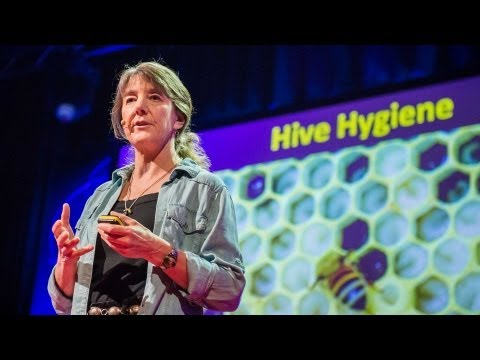
Now, this is all dandy, but will you actually make an effort? Each one of us needs to make a resolution to combat this decline and not rely on someone else. Some simple solutions, like the ones Dr. Spivak stated in her Ted Talk, can make a big impact on the bee population if all of us chip in.  

Bumble Bee on Purple Cone Flower. Attribution: http://www.ForestWander.com. Image from Wikimedia Commons. CC BY-SA 3.0

As of today, the Delfly project is still in development, making adjustments to the robot’s dimensions and battery life. Consequently, it may take awhile before the robotic bee “takes flight” as an effective pollinator. In the meantime, let’s all make an effort to bring back the bees.   

-Teresa Howard

Overcoming “The Wall”

If you’ve ever watched a marathon, you’ve probably seen some runners collapse just short of the finish line. Or you’re out on a run and it suddenly seems like you’ve completely run out of energy, despite your brain raring you to go. It’s almost as if the connection between your brain and your body has been severed. This is known as “Hitting The Wall”, or “Bonking” if you’re a cyclist.

Runners from the Dublin Marathon in 2013 – Photo from flickr

It was thought for a while that using up the body’s glucose reserves was the cause of this. Instead, a new study in Cell Metabolism surprisingly shows that “hitting the wall” actually happens when your brain cannot get access to sufficient glucose. While the muscles in our body can use fat or glucose as fuel, the brain can only use the latter.

When we hear the words “Progressive Training”, we often think of a training plan that increases in intensity and difficulty over time, therefore “improving our fitness” as we get used to longer and tougher bouts of exercise. For example, progressive training for marathon runners would involve increasing the total distance run per week over a period of time leading up to a marathon.

Endurance athletes often use GPS watches to track different aspects of their training such as distance, heart rate, cadence etc. – Photo from flickr

In reality, progressive training actually reprograms our muscles to burn less glucose and more fat while in use, thereby preserving it as an energy source for your brain. Research in the study focused on a transcription factor known as PPARδ (pronounced PPAR-delta). PPARδ triggers muscle composition changes in our body and “teaches” our muscles to consume fat as fuel instead of glucose. Progressive training gradually activates PPARδ.

In the first set of experiments in the study, researches at Lausanne Switzerland’s Ecole Polytechnique Federale genetically knocked out PPARδ in the muscles of mice. The mice were then put on treadmills and the effects of the lack of PPARδ were studied. Dr Michael Downes said “”When we did this and then ran those animals on a treadmill, we found that the genes that are normally induced by exercise failed to be induced.”

With this information, they then fed another group of mice a small molecule drug that activated PPARδ. These mice were able to run for a longer time (160 mins vs 270 mins) compared to the mice that had PPARδ deactivated – despite no progressive training to improv their endurance. By activating PPARδ within the mice, they were able to mimic progressive training.

For endurance athletes like myself, this discovery is revolutionary. No matter how experienced, a marathon runner takes requires approximately 16 weeks of progressive training to achieve a new target time. While the research is still in its preliminary stages, a way to combine the effects of both progressive training and PPARδ could take athletic performance to a whole new level.

However, these findings can be exploited by athletes wanting a competitive edge. An entire new can of worms is opened with regards to the ethics of chemically activating PPARδ in competitive athletic events like the Olympics.

Nonetheless, the best promise lies in being able to improve the endurance in people who are unable to naturally activate PPARδ through training. People who are suffering from Duchenne muscular dystrophy and cystic fibrosis to name a few, are often unable to get the exercise they need. This would eventually result in deterioration of their fitness. Chemically activating PPARδ in these people would allow them to enjoy the benefits of being fit without having to go through an intense training regime.

What are you afraid of? It’s Just a Little Prick.

Flu season is just around the corner, and you know what that means. Coughing people lurking around every corner, just waiting to infect you. If you’re unlucky and unprepared, you’ll get a week of cold sweats, aches, a stuffy nose, and up to a month of coughing, providing there are no complications. If you’re thinking that’s as bad as it gets, you’re dead wrong. According to the Canadian government, influenza kills 3,500 people and hospitalizes 12,200 every year in Canada. That’s horrible, but what can we do?

According to Health Canada, Vaccination is the most effective way to prevent influenza and its complications”. So why aren’t more people getting a flu shot? Some people are lazy and just feel like rolling the dice. Think of the time I’ll save by skipping the vaccine every year! If that describes your attitude, take a second to think about the amount of time you’ll lose by getting the flu just once. You could get over a hundred flu shots in that time, AND you wouldn’t feel terrible. You can get a free flu vaccine at most pharmacies, and many employers offer a free vaccine. It really only takes upward of an hour every year. The alternative is a week feeling miserable. I’d say that’s a no-brainer. So why else are people avoiding the needle?

It turns out some prominent researchers argue that the vaccine isn’t really that effective. Among them is epidemiologist named Tom Jefferson. Jefferson, in a critique of influenza vaccine studies, said “Rubbish is not a scientific term, but I think it’s the term that applies”. His main gripe is that researchers often don’t know the cause of death of study participants who die, so it’s impossible to say whether or not the vaccine is responsible for the difference in mortality observed between groups. His peers, however, point to the simple fact that, year after year, vaccinated people account for a smaller proportion of infected individuals. Every year, the CDC funds a study to determine the efficacy of that year’s vaccine and publishes the results for the public to see. As we can plainly see, the vaccines are doing what they advertise.

Flu Vaccine Efficacy by Year – Data Courtesy of the CDC

The last thing that you should consider is that some people are allergic to flu vaccines, or are unable to receive a vaccine for other reasons. These vulnerable people rely on herd immunity, which is a form of immunity afforded by a population that has high immunity. If most of the population has an immunity,  vulnerable individuals have a reduced chance of coming in to contact with an infectious individual.

Vaccination is your patriotic duty. It’s your selfish duty. It just makes sense.

Meet My Two Biological Moms!

It’s 2018. Same-sex relationships aren’t anything out of the blue. However, if I bring up same-sex mating, then that’s crazy, right? Well, researchers have found a way to make this possible – in mice. Humans will just have to wait, but wouldn’t it be cool if other mammals that only had one sex remaining in their population could reproduce and save their species from going extinct? I’d say that would be pretty cool. 

“Mouse” by Liz Henwood. Image from Flickr.

On October 11, 2018, researchers from the Chinese Academy of Sciences led by scientist Qi Zhou published their groundbreaking work in Cell Stem Cell  showing how they bred healthy mice from two mothers. The baby mice developed normally to adulthood and even had offspring of their own.

I know what you’re thinking, if two female mice could do it, what about the males? Unfortunately, it didn’t work out the same. Baby mice developed from two biological fathers only survived for about 48 hours.

Normally, mammals can only sexually reproduce, so an egg from a mother and a sperm from a father is required. How is it even possible that two mothers were able to make healthy babies then? The answer: Genetic engineering.

“Baby Mice” by Hannah Nicklin. Image from Flickr.

The work required an egg from one female mouse and a special cell from the other female that carries half of the genetic information to make the baby, called the haploid embryonic stem cell. Simply fusing the egg and cell together didn’t cut it, so the scientists cut out several genes from the DNA of the haploid stem cell to make the necessary alterations for successful reproduction, and then fused it with the egg. Through trial-and-error gene-cutting, 210 embryos were developed, but only 29 mice lived.

Figure 1. Percentages of Mice Embryo that Survived being Produced from Two Mothers. Total Number of Embryos = 210. Image created by Sonia Sharma, the author.

As shown above in Figure 1, the numbers clearly indicate that this specific genetic engineering technique needs some work as embryo death rates are well above 80%. However, the work did succeed with impressive results seen in the surviving mice.

If similar techniques could be used to successfully have same-sex mammals reproduce in a population left with only one of the sexes, I’d be happy with that. It would be one step closer to preventing another sad extinction.


  • Sonia Sharma

How does Sleep Affect Me?

Sleep is important to everyone, especially for us university students. Sometimes we can take sleep for granted, partially because of staying up late to do homework and study for exams. Some people function normally with only a couple hours of sleep while others who get the same amount of sleep are zombies. So just how exactly does sleep affect us?

Sleeping In Bed
From: Creative Commons

On June 22, 2018, a research article was published in Frontiers in Psychiatry by Dr. Ciro della Monica, Dr. Sigurd Johnsen, Dr. Giuseppe Atzori, Dr. John Groeger, and Dr. Derk-Jan Dijk. They studied how different aspects of sleep, specifically Rapid Eye Movement sleep and Slow Wave sleep, affect cognition, mood, and sleep quality in 206 healthy men and women, ages 20-84 years old.

Rapid Eye Movement sleep is a phase in the sleep cycle where a person can experience body and brain changes such as rapid movement of the eyes, fast breathing, increased heart rate, and facial or limb twitching. Slow Wave Sleep is a deep sleep state with low brain or body activity.

The researchers found that cognition and mood increased with more SWS and reduced with less REM sleep. During cognitive testing, accuracy reduced in individuals with less REM sleep and response times increased in individuals with SWS. Self-reported sleep quality positively associated with the duration of REM sleep. However, SWS was not significantly associated with self-reported sleep quality.

Kendall’s tau test measured the association between the two types of sleep and the waking activities. This test is a correlation test used in statistics to determine the correlation between two variables.

Figure 1. Correlation of REM sleep to waking activities.

The above graph shows that more REM sleep correlates to an improvement of the accuracy and mood.

Figure 2. Correlation of SW sleep to waking activities.

The above graph shows that more SW sleep correlates to an improvement in mood and visual-perceptual sensitivity (alertness).

Sleep positively affects our every days lives. Fortunately, this gives us a reason to sleep early instead of studying all night long for an exam the next day.

It is important to get enough sleep to have fast responses, increased accuracy, better moods throughout the day, and a refreshed feeling on waking up. With better sleep, us university students won’t be walking zombies on campus.

Gale Ladua

Can We Manufacture “Magic” Rice to Treat HIV at Low Cost?

It appears that we can finally provide cheaper methods of HIV treatment to benefit patients in developing countries, where it is most needed. But is the world ready to accept this magic treatment?

In Rice Field – Photo by zcf428526 on Pixabay

In a study published on July 2018, Dr. Vamvaka and her team of scientists from various countries concluded that using rice grains to produce HIV-neutralizing agents is possible, at a cost much lower than current manufacturing methods allow.

Current methods use mammalian or microbial cells to produce proteins against the virus, however “these are expensive because the products must be extensively purified”, as the study points out. Additionally, the manufacturers must make several different proteins, to ensure treatment even if the virus mutates.

Plants seemingly offer a novel alternative. Cereal grains allow multiple proteins to be produced on the same grain and are safe to use as crude extract without extensive purification.

Sounds easy enough. But does it really work? The answer is yes.

After the study, researchers found that they could yield enough modified grains. The extracts from these grains also successfully neutralized the virus even at very low concentrations.

So, in theory, rice could be our new savior against a deadly virus. The researchers certainly think so. “This groundbreaking strategy is realistically the only way that microbicidal cocktails can be manufactured at a cost low enough for the developing world, where HIV prophylaxis is most in demand.”

But…

This is where things take a turn. Can we really propose that the world should suddenly rely on genetically modified organisms for treatments? As in the widely feared GMOs?

It won’t be easy.

March Against Monsanto Vancouver- by Rosalee Yagihara in Flickr. Monsanto, a company known for manufacturing GMO seeds, received a lot of backlash.

Let’s look at the results of a survey about the public opinion towards GMO’s.  CBC News states that in 2016, 62% of the respondents would prefer non-modified food. Why? Because they believe it is safer.

Forget about surveys. In Turkey, we have TV programs where people show up to claim any genetic process means playing God and is against religion. So, let me ask a simple question. If my country is like that, what is the possibility that other countries share similar opinions? I say it is very possible.

What is one glimmer of hope? The treatment from rice would be produced as medicine rather than a food item. People seem to be more accepting of modifications when the product is a drug.

In essence, yes, scientifically this is the most feasible method that is out there so far. Can we have people accept this treatment? It surely will be a struggle.

Nevertheless, it is a significant step towards combating HIV in the developing world, and I hope that we soon see the treatment in clinical trials.

Climate change, the one to blame for the reduced oceanic oxygen levels due to rising global temperature

Climate change, the one to blame for the reduced oceanic oxygen levels due to rising  global temperature

You may be thinking, “Here we are again, talking about climate change”. Yes, I will be one of those people who will be talking about this issue again, and again, and again, until we all see some actual progress regarding this issue. I am not here to convince you that climate change is real. Climate change is indeed a real problem and it is causing a decrease in oceanic oxygen levels. We need to start talking about this.

Dr. Ralph Keeling and his colleagues at the University of California found that with rising temperature levels, a reduced solubility of oxygen molecules is observed in the ocean. Dr. Keeling and his team’s ocean models predicted that there will be about 1-7% decrease in oceanic oxygen levels in the next century.

How does this affect us and the aquatic life? Most marine organisms use cellular respiration, a process that converts organic molecule and oxygen to a sustainable form of energy and carbon dioxide as a by-product. The equation for cellular respiration is shown below:

This image shows cellular respiration: a process that converts an organic molecule to energy (ATP) (Image by Jolean Endique).

Algae and planktons are the most abundant photosynthetic organisms in the ocean. They need both light energy and nutrients to produce oxygen and capture COin the atmosphere. With decreasing oxygen levels, cellular respirators may be unable to provide a sufficient amount of nutrients for photosynthetic organisms. As you may have thought, yes, our chance of increasing our oxygen levels and decreasing our atmospheric COmay be very slim. In addition, a decrease in marine productivity may also take a toll on fisheries and coastal economies that solely depend on aquatic fauna. As phrased by Dr. Breitberg, a marine ecologist at the Smithsonian Environmental Research Center, about coral reef bleaching as a result of low oceanic oxygen levels, “As seas are losing oxygen, those areas are no longer habitable by many organisms”.

Coral reef bleaching is another consequence of reduced oceanic oxygen levels. The sensation it gives to coral reefs is like “ripping your guts out” as described by Mark Eakin, coordinator of the Coral Reef Watch program for the U.S. National Oceanic and Atmospheric Administration. This occurs as the very crucial microscopic algae living inside the coral reefs are being affected by bleaching the most. Coral bleaching is caused both by ocean acidification and reduced oxygen levels. However, when the temperature rises 2 degrees above the normal highest temperatures of a certain area, coral bleaching then becomes completely caused by warmer waters. This is also the reason why most coral reefs nowadays are not as colorful as they were.

This image is a snapshot from a video showing a comparison of how the same corals used to be a year ago at Iriomote, Southern Japan and how they look now due to coral bleaching (Source: The Hydrous Youtube Channel).

We now know some of the drastic effects of reduced oceanic oxygen levels due to climate change. But, how long will it take for us to take action against climate change? How long do we have until we call Earth inhabitable? We need to stop the factors that contribute to climate change as soon as possible. We need to be better at segregating our wastes, biodegradable from non-biodegradable from plastics. We need to find better alternatives to fossil fuels, some better source of renewable energy, to reduce our carbon emissions. We need to stop hurting our forests and taking the life out of them. All of these will slow down global warming and prevent climate change from ruining our beautiful world. Let’s save our planet from dying. Not only the ocean is affected, each and every one of us is.

Does Smoking Keep Colds Away?

Have you ever found yourself sitting near a sneezing stranger, and wonder if you’re going to fall sick next? Do you feel the urge to pull out that pack of cigarettes in your pocket that has been marketed to be good for your health? No! It’s 2018, and research shows that not smoking will increase your chances of fighting a cold.

Good Smoking Ad

Ad for “Healthy Smoking” from Nesster on Flickr.

Specifically, recent research supports that someone can be exposed to the common cold, such as being sneezed on, and not get sick. This happens when your respiratory system is “free” to react to germs in the air before they make you sick.

While the common cold doesn’t sound dangerous, it can lead to complications. According to researchers, millions of colds per year in the US are caused by the rhinovirus and lead to hospitalization. In a recently published article in Cell Reports, Ellen F. Foxman and her team of scientists used two different airway cells from the outer lining of the nose and lungs to observe their responses to rhinovirus exposure and oxidative stress exposure. Oxidative stress exposure is when your body doesn’t have enough antioxidants (which can be obtained from eating antioxidant-rich foods and supplements) to balance out oxidants. Oxidants are molecules that can interact with cells in a good way or a bad way.

Disease Transmission Through Sneezing - Photo from Wikimedia Commons

Disease transmission through sneezing – photo from Wikimedia Commons

The outer layer of the airway normally provides protection from unhealthy parts in the air that gets into the body, including molecules that cause oxidative stress. Foxman’s team studied the protective functions of these cells and found that exposure to oxidative stress increases the cell vulnerability to rhinovirus infection. The study singled out smokers as the patient group the weakest as smoking causes oxidative stress.

Researchers look forward to finding ways to protect against oxidative stress to better defend against rhinovirus infection.


-Alyssa Hui