How is your brain able to focus on what is important ?

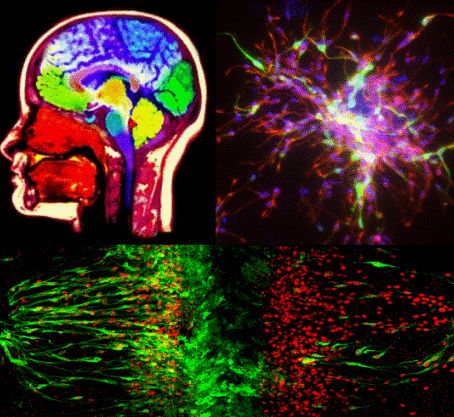
Do you ever wonder how your brain is able to selectively focus on certain things and not on others?  At Carnegie Mellon University, the neuroscientists discovered what drives such process. Through various brain imaging techniques, the researchers were able to see how pariental cortex and visual cortex communicate with each other through white matter by sending neural signals and help the brain certain  visual information. For example, if one was looking for keys in a purse full of stuff, the brain would have to selectively work to locate the specific item.

Neuroscientists conducted two experiments with five adults. In order to first identify brain regions responsible for visual processing and selective attention, they made a couple of different brain scans while the participants were doing selective attention exercises. Then, while the participants were not performing any tasks, the researchers  collected anatomical data of the white matter that serves as a connection between visual cortex and pariental cortex.
The results indicated that there are direct connections in corresponding visual field locations between pariental and visual cortex, while the white matter connections are mapped in systematic, direct way. It is known that training can alter white matter activity. This brings out a new idea, that through careful training, it would be possible to help the brain filter out unwanted information and focus on important one, easier.  This could be helpful for University students, by helping them study more efficiently. Also people having a high stressful job, such as emergency room doctors and surgeons, would have an easier time thinking on how to react in certain situations.

For more information on the big picture of neuroscience, watch this video:


References:

Carnegie Mellon University (2012, February 21). Neuroscientists identify how the brain works to select what we (want to) see. ScienceDaily.

Youtube video: https://www.youtube.com/watch?v=RREoQJUHSYE


Platinum

Platinum is one of the rarest, strongest, and most expensive elements in Earth’s crust [ref2]. At the moment, 80% of the platinum comes from South Africa [ref7]. It naturally occurs in alluvial sands, unconsolidated terrestrial sediment composed of sorted or unsorted sand, gravel, and clay that has been deposited by water [ref4]. Since it occurs naturally in the alluvial sands of various rivers, South American natives used it to produce artifacts.  Platinum also occurs in form of sulfides (PtS), tellurides (PtBiTe), and arsenides (PtAs2), and as alloys with nickel or copper. Platinum arsenide, (PtAs2), is a major source of platinum associated with nickel ores in the Sudbury Basin deposit in Ontario, Canada [ref7].

”]Platinum’s resistance to wear and tarnish makes it an appropriate metal for creating fine jewelry. Also, it has an exceptional resistance to corrosion and high temperature and has stable electrical properties. All of these characteristics have been used for industrial applications [ref7]. In 2006, approximately 240 tons of platinum was sold.  More than 50% of platinum was used in catalytic converters in exhaust systems of most cars. Catalytic converters combine carbon monoxide (CO) and unburned fuel with oxygen from the air, forming (CO2) and water vapor (H2O). Furthermore, 20.5% was used for making jewelry and 5.5% was used in electronics and 4.68% was used in the chemical industry as a catalyst due to its non-reactive nature. The remaining went to various other minor applications, such as electrodes and anticancer drugs [ref3].


Platinum in the form of a compound is also found to be significant to the human society. For instance, cisplatin, a platinum-containing compound, is used to treat various types of cancers because of its ability to kill cells. Cisplatin can be obtained by electrolysis of platinum electrodes [ref6]. In its pure state, platinum is quite soft. Alloying it with other platinum group metals like palladium, ruthenium and iridium can increase its hardness. For example, a combination of 950 platinum with 50 parts per thousand of ruthenium leads to the formation of a hard alloy. This alloy is preferred by the Platinum Guild and is used in wedding bands. Similarly, a combination of 900 platinum with 100 parts per thousand of iridium is an American favorite for hand fabrication of jewelry due to its added hardness [ref1].

”]Although platinum has so many applications, one shouldn’t ignore the problems caused by the continued use of the element. Platinum’s excessive use in the exhaust systems of most cars causes the release of platinum compounds, which become a part of the road dust. Platinum content of road dusts can be soluble. Therefore, it enters the waters, sediments, soil and finally, the food chain [ref5]. Short-term exposure to these platinum compounds may cause irritation of the eyes, nose, and throat, and long-term exposure may cause both respiratory and skin allergies [ref7].


References:

  1. 1Weddingband.com. http://www.1weddingband.com/platinfo.html  (accessed 12/09/02)
  2. Cohen, D.W. New Scientist.   http://www.newscientist.com/article/mg19426051.200-earths-natural-wealth-an-audit.html (accessed 12/09/02)
  3. George M.W.; Platinum-Group Metals, USGS 2007, 57, 1
  4. Geotech.org. http://www.geotech.org/survey/geotech/dictiona.html#sectA (accessed 12/09/02)
  5. Ravindra, K.; Bencs, L.; Van Grieken, R. Platinum group elements in the environment and their health risk. Sci. Total Environ. 2004, 318, 1-43.
  6. Rosenberg, B.; Van Camp, L.; Krigas, T.; Inhibition of Cell Division in Escherichia coli by Electrolysis Products from a Platinum Electrode, Nature 1965, 205, 698-699.
  7. Wikipedia. http://en.wikipedia.org/wiki/Platinum (accessed 12/09/02)


The ozone hole is NOT a hole!

What exactly is the ozone hole? The ozone hole is not actually a hole. It is where the ozone layer is depleted with ozone, O3.  

There are different layers of the atmosphere around the Earth. Troposphere is 0 to about 8 to 18 km in altitude above the surface of the earth. Stratosphere is from troposphere to 50 km in altitude. Stratosphere is the region of high ozone concentration.

Picture from: http://en.wikipedia.org/wiki/File:Atmosphere_layers-en.svg

Where are ozone holes? Ozone holes are at the stratosphere over the Antarctic and the Arctic. The hole is found much bigger over the Antarctic, the region around the South Pole.  Ozone concentrations over these regions are decreasing annually.

File:160658main2 OZONE large 350.png

picture from : http://en.wikipedia.org/wiki/File:160658main2_OZONE_large_350.png

This is a figure of the Earth. The blue part is the ozone hole with low ozone concentation.

How do ozone holes form over the Antarctic and Arctic? Due to very low temperature in these regions, polar vortex forms. This isolates the atmosphere from the rest of the stratosphere and causes no air movement. Polar Stratospheric Clouds or PCS form that amplify ozone depletion by the catalytic cycle of atomic halogen. They do not happen over other area in the stratosphere because the weather is not as cold as the poles.

Why do we care about the zone hole or the ozone layer? Sun emits harmful UV radiation such as UV-B and UV-C which threatens all lives on Earth. The ozone layer absorbs all UV-C and most UV-B and blocking them from reaching the Earth. The ozone hole is getting bigger every year and this means that more UV radiation can reach to all lives on Earth. Two percent increase in UV correlates with 3.5% increase in basal cell cancer (Wheeler 2012).  UV-B causes 90% of human skin cancer (Wheeler 2012).

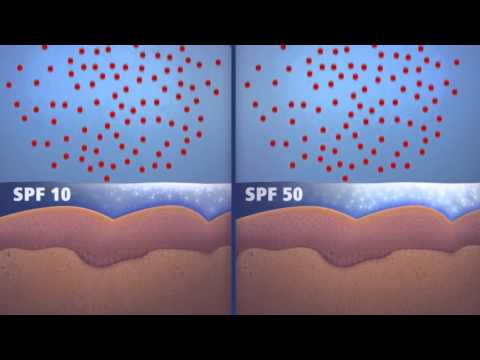
We should use sunscreen every morning! Sunscreen decreases the amount of UV-B that can reach to our skin and blocks out UV-A.

YouTube Preview Image

Sources:

Wheeler, M. 2012. UBC  chemistry 302 notes.

Wikipedia. Ozone Depletion. http://en.wikipedia.org/wiki/Ozone_hole (accessed 2/ 24/ 2012)

Wikipedia. Ultraviolet. http://en.wikipedia.org/wiki/Uv (accessed 2/ 24/ 2012)

Wikipedia. Polar Stratospheric Clouds.  http://en.wikipedia.org/wiki/Polar_stratospheric_clouds(accessed 2/ 24/ 2012)

 Youtube. Sunscreens: SPF50 protects five times better than SPF10. https://www.youtube.com/watch?v=8cc8qRr7oMQ&feature=related (accessed 2/ 24/ 2012)

Who is Our Ancestor?

This is Our Ancestor. Image by Prave.

Scientist belive they have found our oldest ancestor, the creature, Otavia antiqua, was found in 760-million-year-old rock in Nambia. This multicellular being spawned every living organism in this world through billions of mutation, from fish to amphibians to reptiles to birds to animals to you.

 
Otavia was a very small sponge “about the size of a grain” according to Anthony Prave, a geologist at the University of St. Andrews in the U.K. According to Prave, “certain samples would “yie thousands of specimens. Thus, it is possible that the organisms were very abundant.”
 
Based on where the fossils were discovered, Prave and his colleagues claims that it used to live in calm, nice, shallow waters, munching on algae and bacteria through pores and into its small tube body.
A scanning electron microscope view of Otavia antiqua.
A scanning electron microscope view of Otavia antiqua. Image by Prave.

 Our Ancestor is also very reslient. According to the South African Journal of Science, it survived atleast two “snowball Earth”  events, when the entire planet was almsot entirely covered with ice.

Despite the wild enviornmental swings, this creature remained almost unchanged, resisiting along with algae and bacteria for “roughly 200 million years of existence.” Prave suggested.

Paleontologist Dr. Bob Brain – who is an expert in predation- belives that Otavia was the Earth’s first predator. During the early days, it was at the top of the food chain, consuming its food while it had no means to hunt. According to Brain, this was the first evolutionary arms race, which “led to humans dominating the planet.”

References

  1. Oldest Animal – Earliest Ancestor of Us All? http://news.nationalgeographic.com/news/2012/120207-oldest-animals-sponges-earliest-science-evolution/ (accessed 02/12, 2012).
  2. Sponge-like creaure may be oldest animal ever found. http://www.iol.co.za/the-star/sponge-like-creature-may-be-oldest-animal-ever-found-1.1227656  (accessed 02/12, 2012).
  3. The oldest animal fossils. http://www.sajs.co.za/index.php/SAJS/article/view/1064/1048 (accessed 02/12, 2012).
 

A Lovely Indecision

There’s hardly anything as conflicting as tastes, especially subconscious tastes that vary on a monthly cycle and alternate with circumstance. In honour of Valentine’s Day, we shall explore the theme of indecision in female mate selection, featuring the wonders of the pill.

To begin, attraction in females shifts between when she’s ovulating and not.

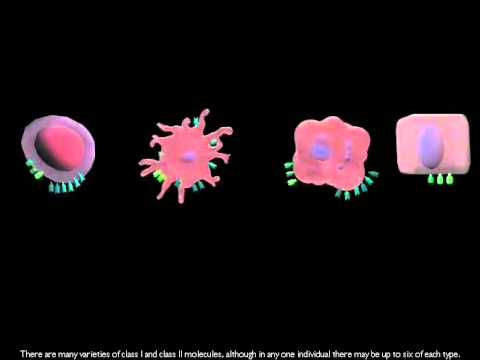
While in the fertile throws of follicle phase, females generally prefer a male with manly features and high testosterone levels, as well as a dissimilar Major Histocompatibility Complex (MHC). MHCs are linked to immunity, so humans naturally seek to diversify for maximum heterozygosity and variation. A fun fact, while fertile, girls in relationships are also known to develop a taste for dominant smelling men.

YouTube Preview Image (A little More on MHC)

Most of the time though, women are not in fertile mode, and in these circumstances tend to fall back on men who have a similar MHC to themselves. They also favour men who are less masculine and more nurturing and supportive, especially if they live in a healthy environment.

Based on these natural cycles, we can see how there might be some conflict of interest depending on what day it is.

"I don't know what I want!" Image:ehow.com

Sometimes, one doesn’t even need cycles to complicate things. While single, girls have an increased preference for MHC similar men, but then have dissimilar MHC preference when they’re already with someone. If that’s not enough, these changing preferences of MHC make a huge impact as scent is much more emphasized in importance with women rather than men. Occasionally, scent can even be at odds in importance with visuals though it varies on the population and culture.

That said, a person’s heterozygosity of their MHC can be sensed through the inspection of facial features. While females favour as much heterozygosity as possible, they seem to be attracted to those with similar MHC as well.

So, visuals conflict with olfactory cues? Awesome.

Now what about the pill? Surely this fabulous contraption of contraception must simplify things no? Well, sort of.

The Pill adds some consistency, whereby everyday is non-fertile day. It’s more or less a fake pregnancy that replaces the possibility of a real one, and this causes women to go into “find a nurturing, similar man phase.” It’s without any surprise then that women on the pill have a marked preference for MHC similar men that totally overrides any ambition for seeking a dissimilar partner.

Consistency? Fabulous! What’s the catch?

Women who find their man on the pill tend to have less sexual attraction to their partners as well as decreasing sexual satisfaction over time. They become very jealous at a rate proportional to estradiol intake, and also have an increased desire to cheat, meanwhile having much more severe “affective responses” to partner infidelity, and having an increased frequency of “mate retention behaviour.” And you put on a few :3

But don’t worry, there are some positives. Those that meet their partner on the pill have more satisfaction with their partner in non-sexual ways, have happier relationships with more emotional satisfaction, and have relationships that last 2 years longer on average.

So really no matter what, it’s a mess of matter of preference. Just have a preference for the mess that you prefer.

"Use Both Instead!" Image:ehow.com

Black Stripes White Body or White Stripes Black Body

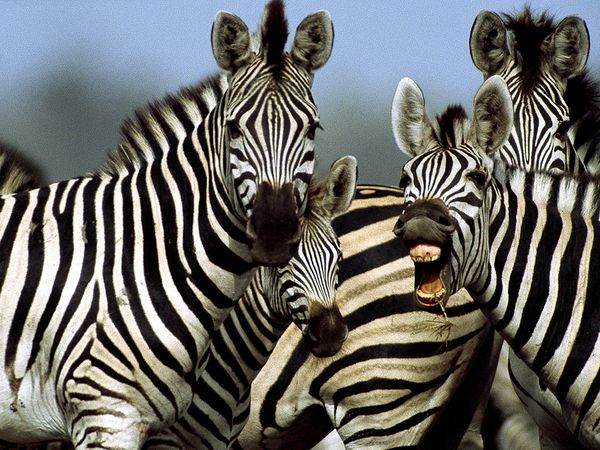
Zebras are the cute animals living on grasslands. Have you been wondering if they have black stripes with white body or white striples with black body? And, what are the stripes for anyway?

Revealing the mystery, zebras have black body and white stripes. According to Wendy Zukerman, the zebras are completely black in their early embryo stages, while the white stripes appear later on.

Also, Lisa Smith has reported that the black color is the pigment activation and the white color is the inhibition, meaning that the color of fur is orginally black while the white fur simply lacks the pigment.

Although scientists are not sure why zebras have the alternating stripes, there are some theories

Having a higher albedo, the alternating pattern of fur can deflect up to seventy percent of heat during daytime. Since a lot of zebras live in high temperature enviroment, the fur can reduce a lot of heat from the sun.

Moreover, one theory says that the alternating pattern can act as a camouflage to confuse the predators. The Stripes can form some kind of illusions to intimidate the predators like lions or hyenas. The illusion is especially effective when the zebras are in a great number, so the pattern may make them look like a giant creasure.

While there is little evidence for camouflage, a new finding Justin Marshall points out is that the pattern can get rid of horseflies becasue it “provides an unattractive surfaces” for horseflies to land on. In africa, there are a lot of horseflies, so a pattern that prevents horseflies would result in less disease and healthier zebras.

A short video about horsefly theroy.

YouTube Preview Image

So the black zebras with white furs stills have their alternating pattern remained mystery. More studies are need to to support the theories such as camouflage and horsefly.

 Source

Buzzle.com.

How Stuff Works.

New Scientists.


IS ASPARTAME SAFE TO CONSUME?

How many of you have heard about aspartame? Aspartame is a type of food additive, a low-calorie sweetener, which gives off 4 calories per gram when it is metabolized. It is extremely sweet and produces the equivalent caloric amount as sucrose. Therefore, Aspartame is put in low-calorie foods, such as soft drinks, desserts, cereals, and chewing gums, in small quantity to enhance the sweetness, being a direct additive. Since 1981, Canada has approved the use of Aspartame in foods and since then, caused controversies regarding the risks it possesses.

Composition of aspartame. Image from NutraSweet company.

Aspartame is created through binding aspartic acid and phenylalanine, forming dipeptide, which is then esterified with methanol. Because our body takes in Aspartame’s constituent components, which are aspartic acid, phenylalanine, and methanol, some question the risk the three components pose to our body. However, Health Canada evaluated that Aspartame poses a very little to no threat to people’s health while it accommodates diverse functions and benefits.

First, people pose that intake of methanol would be dangerous, causing health problems such as lupus, blindness, and sclerosis. However, people have digested methanol through fruits and vegetables even if it is not from Aspartame. For instance, a cup of tomato juice includes methanol six times more than that is contained in a cup of soft drink with Aspartame. Methanol does not build up on our body system but is metabolized to formaldehyde, and then to formic acid, which breaks down to water and carbon dioxide in the end.

Tomato juice. Picture by Elise.

Furthermore, although some identify Aspartame as a toxic substance that can possibly damage those with diabetes, and a causation of cancer, brain tumors, seizures, and allergies, further research done states that they are untrue. Health Canada has done research on safety regarding the possible risk Aspartame present, but the result indicates that it is false.

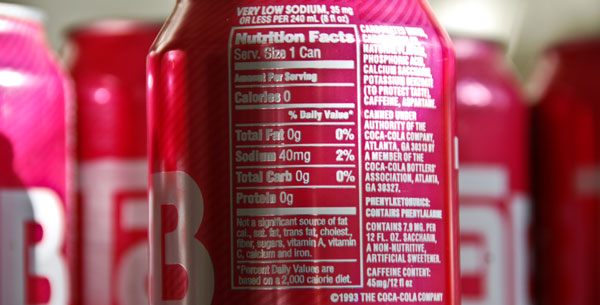
Nevertheless, intake of excessive amount of phenyalanine can be damaging to people with phenylketonuria, which is an inherited metabolic disorder. People diagnosed with phenylketonuria cannot digest or metabolize phenylalanine. Therefore, all products containing Aspartame should always exhibit the existence of phenylalanine. Those with phenylketonuria can be aware of the fact and be careful in what they consume to prevent sickness.

Nutrition facts of Tab. Image by Steve.

Other than this, Aspartame is safe to consume in its acceptable daily intake (ADI), which is 40mg per kilogram of body weight. For me, I weigh 50kg, which translates into that I can take 2000mg (40mg x 50) of Aspartame per day. Since drink in Canada usually contains 49mg Aspartame per 100ml soft drink, my acceptable daily intake of soft drink with Aspartame is 4.1L (2000mg / 490mg Aspartame per L). I even do not drink that much of water in a day, therefore, the acceptable daily intake of Aspartame is set very broadly and most of people would not intake Aspartame over their daily limit.

References

It’s A Bird…It’s A Reptile…It’s A Mammal…It’s A Monotreme???

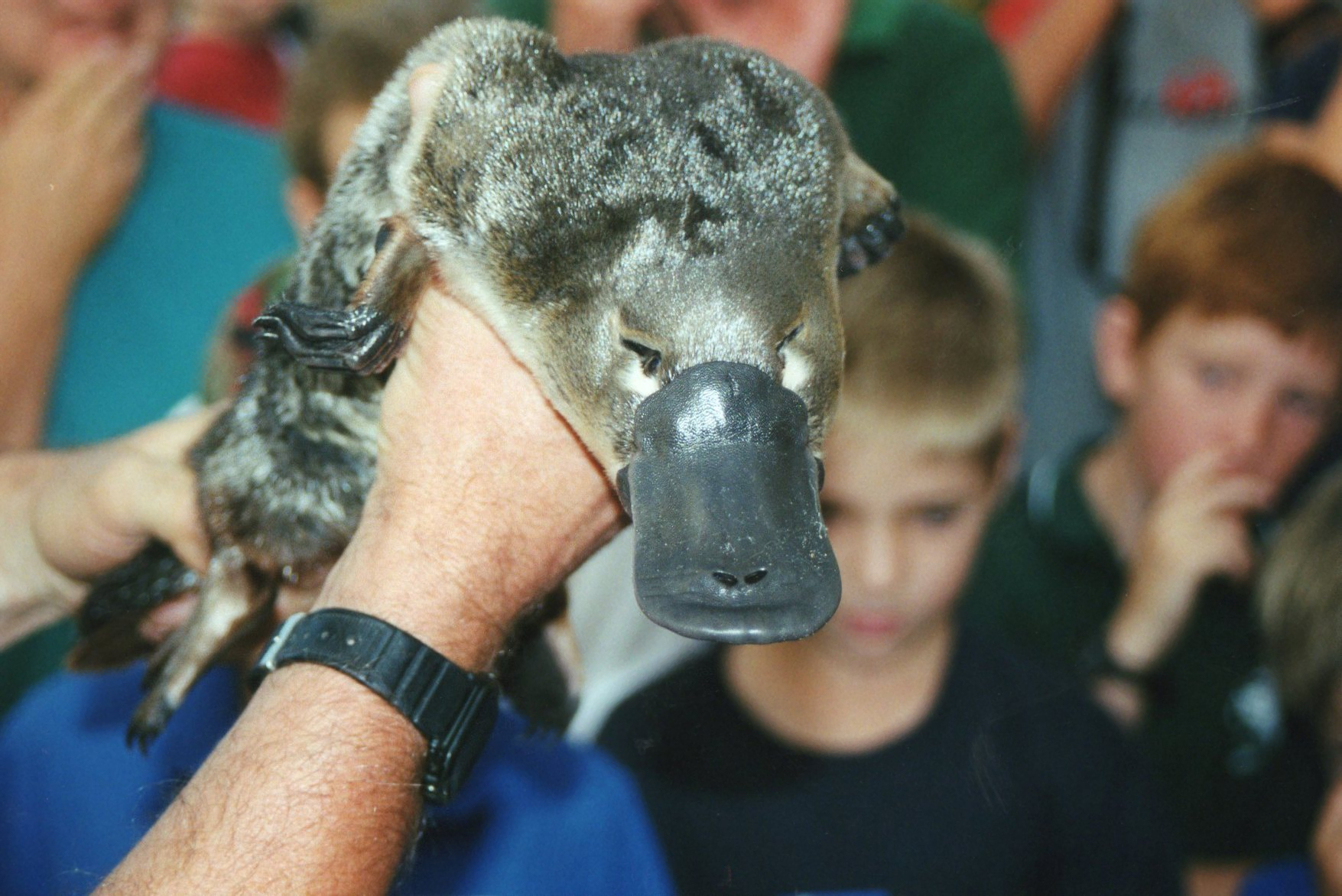
In my head, I am thinking of an animal which lays eggs, has venom and dives in lakes & ponds to catch prey. Oh, it also has fur and mammary glands. If you are a little confused right now, do not worry, you are not alone. When European settlers in Australia first brought back pelts and drawings of this curious creature to England, scientists thought it was a hoax!

Rest assured that this animal is real. I am talking about the platypus, Ornithorhynchus anatinus. Native to the eastern and southern coasts of Australia, this semi-aquatic mammal builds its burrows deep into the banks of the bodies of freshwater in which it spends about 15% of its time. About half a metre long, the platypus has one of the highest fur densities of any animal with up to 90,000 hairs per cm2 (sea otters take the top spot with over 150,000/cm2!).

Platypus on display. Picture by TwoWings.

The three extant (i.e., still living) mammalian groups are the eutherians (e.g., humans), marsupials (e.g., kangaroos), and monotremes. Platypuses, along with echidnas are the only living members of the monotreme order. This group diverged from the last common mammalian ancestor about 166 million years ago, thus explaining the bizarre origins of this seemingly paradoxical egg-laying mammal.

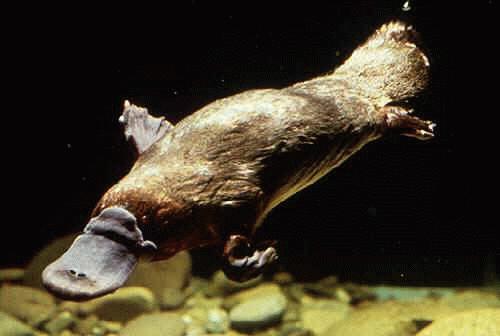
As mentioned earlier, platypuses (or platypodes) forage for aquatic invertebrates on the bottom of lakes and streams. When it dives under water it closes its eyes, plugs its ears and does not use olfaction to detect its prey. You might think that it has run out of ways to find food, but that is definitely not the case here!

Platypus underwater. Image from LearnAnimals.com

The skin on the bill of the platypus is highly specialized, containing at least two cutaneous receptors which aid in the location of prey. There are over 45,000 push-rod mechanoreceptors spread almost uniformly over the four surfaces of the bill. These receptors give the bill skin a sense of touch which is almost as sensitive as that on the tips of human fingers. More interestingly, platypus bill skin has over 38,000 sensory mucous gland electroreceptors. That’s right, electroreceptors!

These electroreceptors are so well-tuned that they can detect electrical signals from the muscle contractions of their invertebrate prey in the water. These electroreceptors are arranged in rostro-caudal stripes along the top and bottom bill surfaces (i.e., from tip to base of bill). It is thought that this striping pattern helps the platypus to pinpoint the exact location of its prey. By feeling the environment with the mechanoreceptors and detecting prey with the electroreceptors the platypus is very good at finding food without the use of sight, sound or taste.

When the platypus comes out of the water it is able to close these electroreceptor glands to prevent desiccation of mucous glands which are crucial to the function of these receptors. Platypuses are one of the few electroreceptive animals which have no specialized sensory cell to receive the incoming electrical stimulus. Instead, the electrical stimuli from prey are conducted through mucous and low resistance cells in an epidermal invagination to a bare nerve terminal.

As you can see, the electroreceptive ability of the platypus enables it to find food, therefore is crucial to the survival of this very bizarre animal.

YouTube Preview Image


Sources:

Grant, T.; Dawson, T. J. Physiol. Zool. 1978, 315-332.

Grant, T.; Temple-Smith, P. Philosophical Transactions of the Royal Society of London Series B-Biological Sciences 1998, 353, 1081-1091.

Klamt, M.; Thompson, R.; Davis, J. Global Change Biol. 2011, 17, 3011-3018.

Manger, P. R.; Pettigrew, J. D. Philosophical Transactions: Biological Sciences 1995, 359-381.

Manger, P.; Pettigrew, J. Brain Behavior and Evolution 1996, 48, 27-54.

Warren, W. C., et al Nature 2008, 453, 175-U1.

Platypus Parts. YouTube video. Accessed 12 February 2012.

Doing It The Old Fashioned Way

It’s a nightmare scenario to modern science students: facing a physics midterm with a dead calculator. We have all used these miniature computers so extensively in learning math that most of us don’t trust ourselves to do it any other way.

We are all aware that there must have been some stygian era before these wonderful devices came into existence. Calculations must all have been carried out manually. This is not the case. Before there were digital computers, there were analog computers.

The first known analog computer was manufactured around 100 BC. This device, known as the Antikythera mechanism, was used by ancient Greek astronomers to predict the movement of celestial bodies.

A fragment of the Antikythera mechanism. Source: computus.org

Analog computers reached their most advanced forms in the 1950s, when they were used in to aim the weapons of naval vessels. This may seem counter-intuitive; artillery problems are used to teach some of the simplest concepts in first-year physics, surely this could be done by hand. Bear in mind, these simple artillery problems have only two dimensions and involve stationary targets and stationary firing platforms all operating in a frictionless vacuum.

The real world is so much more complex than these problems that fire-control computers accepted as many as 25 variables. For comparison, the simplest kinematics problems have 5 variables. A mathematician could do the same calculation in minutes, at best, and only then for one selected instant. Fire-control required continuous output under constantly changing conditions.

While the history of these devices is interesting, how do they work? To illustrate the basic principle, we’ll construct a very simple analog computer.

For illustrative purposes, our goal will be simple, to divide by two. We will call our known, or input, variable y and our unknown, or output, x. The function calculated is:

 y=2x

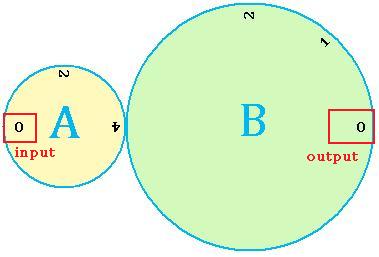
To start we have two wheels, which could just as easily be gears, designated A and B.

Public domain

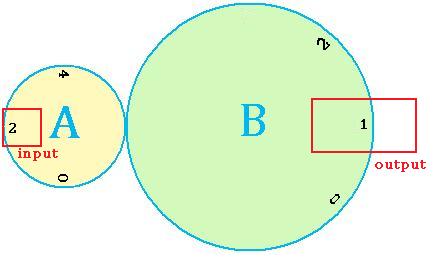
Wheel A has a diameter of 1, wheel B has a diameter of 2. Since circumference is the diameter multiplied by pi, if the outside edge of A were flattened out, it would be half the length of the similarly flattened edge of B. When A turns once, it will roll along half the edge of B, driving a half revolution of B.

Public domain

The revolutions of A represent the input and the revolutions of B represent the output. Six turns of A will produce three turns of B, just as 6/2=3.

To make input and the reading of output easier, we can label the inputs and outputs on the wheels. For simplicity, only a few outputs are labelled, but high resolution can be achieved with the same principle.

Public domain

Here, we see that the input and, consequently, the output, are zero. Rotating A 90 degrees, rotates B 45, so that the input of 2, gives an output of 1.

Public domain

Analog computers have many more complex mechanisms, but the guiding principle is the same; displacement or rotation of components used to model variable values.

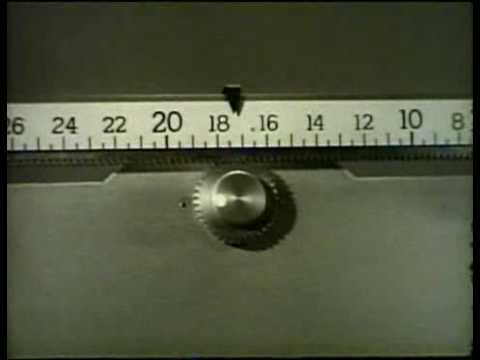
This 6 part training film outlines this and many more mechanisms used in mechanical computers.

YouTube Preview Image

References

(1) The Antikythera Mechanism Project The Antikythera Mechanism Project. http://www.antikythera-mechanism.gr/ (accessed 02/12, 2012).

(2) Navy Dept. Bureau of Ordnance In Basic Fire Control Mechanisms; Ford Instrument Co. Inc.: Long Island City, NY, 1944; , pp 425.