Video creation tutorials

As you start thinking about your video and podcast projects, I thought I would post a couple tutorials about making videos from the Vimeo Video School. There are a lot more to be found if you follow the link, but here are a couple embedded right here on the blog that I think I particularly important. The first one includes some shooting basics and the second one discusses general video editing.

Video 101: Editing Basics from Vimeo Staff on Vimeo.

Depending on which piece of software you are using for the editing, you can watch a more detailed video about using Microsoft Movie Maker (on a PC) or iMovie (on a Mac).

It seems to be a little more advanced, but Lifehacker also has a series of tutorials about video editing.

Finally, there is also a page on the UBC Wiki about video production that includes tutorials and a whole bunch of links to other resources.

Happy shooting!

SCIE 300 Scientific Investigation Project: The value of good taste

Rachel Lee, Bryant Rathbone, Colin Todd

PowerPoint slides (link)

References

(1) Brentari, E.; Levaggi, E. Food Quality and Preference 2011, 22, 725-732.

(2) Brochet, F.; Dubourdieu, D. Brain and Language 2001, 77, 187-196.

(3) Gawel, R. Journal of Sensory Studies 1997, 12, 267-284.

(4) Goldstein, R.; Almenberg, J.; Dreber, A.; Emerson, J. W.; Herschkowitsch, A.; Katz, J. Journal of Wine Economics 2008, 3, 1-9.

(5) Harris, L. C.; Cai, K. Y. Journal of Market-Focused Management 2002, 5, 171.

(6) Hughson, A.; Ashman, H.; De La Huerga, V.; Moskowitz, H. JOURNAL OF SENSORY STUDIES 2004, 19, 85-105.

(7) Kumar, N.; Scheer, L.; Kotler, P. European Management Journal 2000, 18, 129.

(8) Laoro, M.; Delahunty, C.; Cox, D. Food Research International , 44, 3235.

(9) LaTour, K. A.; LaTour M.S.; Feinstein A.H. Cornell Hospitality Quarterly 2011, 52, 445.

(10) Lawless, H. Journal of Food Science 1984, 49, 120-123.

(11) Lehrer, J. The Subjectivity of Wine. http://scienceblogs.com/cortex/2007/11/the_subjectivity_of_wine.php (accessed 01/17, 2012).

(12) MacQueen, K. MacLeans 2011, .

(13) Mckinnon, M. The Globe and Mail 2011, .

(14) Morrot, G.; Brochet, F.; Dubourdieu, D. Brain and Language 2001, 79, 309-320.

(15) Solomon, G. American Journal of Psychology 1990, 105, 495-517.


Psychology in Magic: Cognition and Misdirection

Hello SCIE 300 students and readers of science, this is Bruce Wayne, multimillionaire industrialist and hobbyist magician.

I enjoy magic. I enjoy the study and the practicing of it. But what I enjoy the most about magic is the science behind it. The history behind the techniques and the methodology behind what creates “magic” for people.

Image by Asrar Makrani

To understand magic, we must first break magic down to “What is magic?”

In the real world where there are no dragons or wizards, magic can be broken up into two parts: the method (how the trick works) and the effect (what the spectator sees).

For magic to be successful, the audience must see the effect clearly without being aware of the method.

So why does magic work?  Why does it fool so much of the population?

The answer is because of how the human mind works. The human mind likes to make a lot of assumptions of the real world, which for most people is learned at a young age through experience. For example, object permanence, the assumption that an object continues to exist even when it is no longer visible. Try it. Put a sock in your drawer and close it. Look away for five seconds and open your drawer. The sock should still be there. Of course, we would already know that because we learned that from experience growing up. We learned at a young age that even if mom covered her face with her hands, she would still be there.

Now these assumptions are often correct. However, magicians use methods to take advantage these assumptions to create a result that is rather inconsistent to what is supposed to happen. In the video below, a coin is placed into a hand and seemingly disappears.

YouTube Preview Image


The magician’s most well-used tool is misdirection, used to divert attention away from the method. In a general term, misdirection is the control of the audience’s attention and perception. Magicians have known for centuries now that out of the information that enters the eyes, only a small amount of it enters attentional awareness. This limitation of attention allows the magician to operate in an covert manner while looking ordinary.

Image by Blog De Magia

The most known form of misdirection is physical misdirection. The control of attention using the body. There are certain actions that automatically capture attention, such as speaking, using hand gestures, rolling up the sleeves. The objective is to create high areas of interest to capture the audience’s attention so that the method may be carried out in a low area of interest. One’s own gaze is a powerful tool as well as there has been recent work that show eye gaze can lead to automatic shift of attention.

So now that you know why magic works, I am confident to say that you are now a professional magician. Armed with the knowledge of human cognition and misdirection to fool the eyes, you are ready to perform. Good luck and may you look handsome doing it.


Entire Universe Is Just An Illusion

Recently, I’ve developed a keen interest in fields like epigenetics and quantum physics, exploring alternative perspectives on existence.

Among the intriguing arguments I’ve encountered in various readings is the notion that the universe emerges from movement. This argument, though simple, carries a profound and perhaps even controversial implication.

This is how the author of meta-therapy, Mohammad Ali Taheri, explained his theory in one of his books:

“Imagine I am holding a piece of long and narrow wood. If I ask you to describe what you see in my hand you would say it is a long narrow piece of wood. however if  I make a circular motion with it fast enough, depending  upon the angle of your vision or how fast I am moving the piece of wood or where is the center of my motion you will see a circle or perhaps a cylinder. So here is another question, is this cylinder real?

Of course, it is real you might respond, you can see it, and also you might even feel the air that is moving because of its motion . Therefore it is real.

However, does the cylinder exist?

Perhaps it does not. The reason is that in the instant I stop moving the piece of wood the cylinder changes back into being a long and narrow piece of wood.

Well, you might ask how this is related to life and living things.

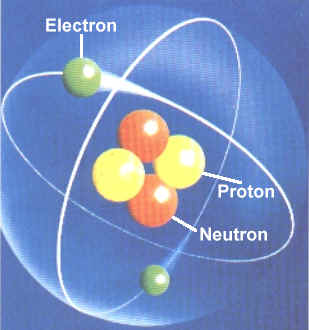
We all know that everything in this world is made of atoms and atoms are made of electrons which evolve around their nucleus. Additionally, electrons and nuclei themselves are made of subatomic particles which move around each other and furthermore most of an atom is just an empty space (which is greatly discussed in scientific articles specifically regarding quantum physics).  How atoms can with most of them being empty space give rise to solid objects. If we look at an atom from a distance, we will see spheres that are the consequence of electron clouds being formed by moving around their nucleus in specific orbits. Eventually, we perceive an atom as a solid matter.

Now let’s expand our atomic discussion by considering the human body. Knowing our body is made of millions of cells and every single cell in our body is made of electrons and protons. If we could stop electrons’ movement, the nuclei that will be left from a human can be gathered on a needle’s tip. Let’s get even closer and look at a collection of the nuclei. Each nuclei is made from protons and neutrons that move in certain directions. If we stop protons and neutrons movement, what will be left will be much less than 1 nanometer which consists of quarks and positrons, etc. .”

from http://e04.courseblock.com/?p=68

here is a musical twist of what I just said with more information YouTube Preview Image

let us expand our discussion even more to outer space. Most of the outer space is also empty space, just like an atom. Planets and stars revolve around each other.  It is worth noting that we see planets and stars around us the way they are because we are positioned on planet Earth which happens to have a certain speed and position around the sun. This question comes to mind would we see galaxy and outer space the way we see it now if we were living on for example planet Neptune or planet Venus. If we were moving faster or slower than what we are moving now, the “reality” of outer space would be much different than what we have definitions for in books and scientific articles at the current time.

Conclusions:

  1. the whole universe is made of atoms and therefore from movement.
  2. we see things and based on our 6 senses we understand our surroundings. In fact, the entire universe is a consequence of the movements of electrons and we are seeing just an illusion.

Bizarre yet fascinating.

complementary to my conclusion>>>The illusion of reality YouTube Preview Image

Can the first year of your life determine your ability to love as an adult?

According to Jeffry A. Simpson, the amount of love and support you get from your the mother can predict your future endeavors in relationships with other people in adulthood. But how do first 12 to 18 month’s of your life can predict your romantic relationships when you’re 25?

In University of Minnesota, researches  investigated whether mother infant relationship can later influence love partnerships by assessing 75 subjects from birth into their early 30’s.To help researchers rate how tightly the mother and the infant were bonded, children were put into stressful situations with their mothers and evaluated by their behavior. As adults, subjects regularly returned for evaluation of their personal lives such as relationships with friends, family and romantic partners.

Although there was evidence confirming this psychological theory, there is still some ambiguity in this issue. The researchers  found that even though the child may not have experienced great connections with his or her mother, having a loving and trustworthy romantic partner will protect one from showing dysfunctional behavior.

Also, there can be other factors influencing child’s ability to communicate in the future. For example, an infant’s personality, genetics, neighborhood environment could be the factors influencing him or her in the future. This means there is no clear cut to predicting one’s future romantic relationships.

On the other hand it is still very important that a mother does understand that infant neglect can create problems in child’s personality. By  nurturing, showing attention, cuddling and talking to the baby, a mother helps the child develop trust, sense of security and feelings of love.

For more information on why it is  important to establish warm and trusting contact with your own child, watch this video:

https://www.youtube.com/watch?v=C6fY6RchNk4&feature=BFa&list=PL23E3015A4B0AAAB6&lf=results_video


Resources:

Association for Psychological Science (2011, December 14). Ability to love takes root in earliest infancy. ScienceDaily. Retrieved January 30, 2012, from http://www.sciencedaily.com­ /releases/2011/12/111214125904.htm

Youtube Video: Why is bonding with baby important?  https://www.youtube.com/watch?v=C6fY6RchNk4&feature=BFa&list=PL23E3015A4B0AAAB6&lf=results_video


Fighting Global Warming with Global Cooling

A recent news article explains a potential reason as to why our past “little” ice age occurred. The National Center for Atmospheric Research (NCAR) suggests that “an unusual 50-year-long episode of four massive tropical volcanic eruptions triggered the Little Ice Age between 1275 and 1300 A.D.” (1) These eruptions released sulfates and other aerosols that increased the reflectivity of the atmosphere, reducing incoming solar radiation thus cooling the earth. However, this sparked interest in terms of current possible solutions toward the opposite effect: that is, global warming; a highly debated topic in today’s society.

There is much concern over the increase of the earth’s average surface temperature due to greenhouse gases; to the point where geoengineering is becoming a very important field. In fact, some fairly recent farfetched ideas to cool the earth have been discussed, some of which include increasing the number of trees to remove carbon dioxide, or releasing aerosols such as sulfates into the atmosphere using blimps, mimicking what a volcanic eruption would do but on an evenly distributed and global scale. Some even believe that releasing millions of mirrors into our orbit to reflect sunlight may be a solution to cool the earth!

To illustrate a brief idea behind geoengineering, consider this YouTube video:

YouTube Preview Image

What really needs to be considered though is if we were to proceed with some of these proposed ideas within the geoengineering field, will we cause more harm than good? Can we use previous data from events such as the volcanic eruptions mentioned earlier to predict how a large input of aerosols can affect industries? Of course, these questions and many more are all under investigation using very powerful computer climate models, as climate is a very difficult phenomenon to predict and understand.


Reference:

1. Was the Little Ice Age Triggered by Massive Volcanic Eruptions?” Science Daily: News & Articles in Science, Health, Environment & Technology. Web. 30 Jan. 2012. http://www.sciencedaily.com/releases/2012/01/120130131509.htm>.

Does Acupuncture Work?

Acupuncture was a complementary and alternative medicine (CAM) which introduced into Europe in the 17th century. It is very popular in Asia nowadays, especially in China. However, the use of acupuncture still remains controversial and is not widely accepted.

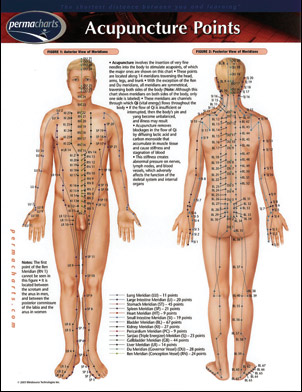
The procedure of acupuncture is to insert a fine, sterile needle into acupuncture points. Acupuncturists believe we, human bodies, have 360 acupuncture points from head to toe.

    Many doctors and scientists do not truly understand the anatomy and physiology of the acupuncture point. Hundreds of research tried to prove and expand the knowledge of acupuncture. Some were successful but a lot did not.


One of the scientific research on acupuncture indicated that this alternative medicine managed to provide pain relief of patients with pain cancer. The use of acupuncture helped them relax their muscles which then improved the pain.  The use of acupuncture also helped treat disease such as obstructive pulmonary disease. Another article by Thomas, M. and Lundberg, T. had an experiment on acupuncture and claimed that it was a good treatment for chronic low back pain.

YouTube Preview Image

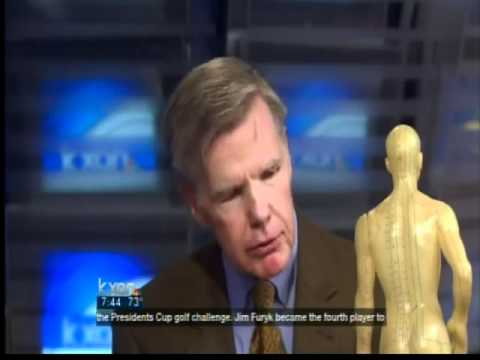
According to this video, Dr. Everett Heinze is a neurologist and suggests that putting a needle into acupuncture points causes a reflex relaxation in the muscle and endorphin release in order to provide pain relief.

Although there are many successful cases on this alternative medicine, many people do not accept it and think that is only a placebo effect. Acupuncture needs further investigations.  We hope this one day acupuncture will be proven all around the world and treat diseases alternatively.


Sources:

THOMAS, M., & LUNDBERG, T. (1994). Importance of modes of acupuncture in the treatment of chronic nociceptive low-back-pain. Acta Anaesthesiologica Scandinavica, 38(1), 63-69.

Pan, C., Morrison, R., Ness, J., Fugh-Berman, A., & Leipzig, R. (2000). Complementary and alternative medicine in the management of pain, dyspnea, and nausea and vomiting near the end of life: A systematic review. Journal of Pain and Symptom Management, 20(5), 374-387.

youtube video : https://www.youtube.com/watch?v=QM8Of_hpHwQ

images: http://www.indiatalkies.com/images/acupuncture17754e.jpg  ,  http://anaturalday.net/wp-content/uploads/2010/05/acupuncture.jpg


What You Did Not Know About THC In Marijuana:

What is Marijuana?

Marijuana is a green, brown, or gray mixture of dried, shredded leaves, stems, seeds, and flowers of the cannabis plant. You may hear marijuana called by street names such as pot, herb, weed, grass, boom, Mary Jane, gangster, or chronic. It is used as a psychoactive drug or as medicine.

Marijuana

What is THC?

THC, short for tetrahydrocannabinol, is the major psychoactive chemical component of marijuana. When used, either through ingestion or inhalation, THC binds to specific receptors in the brain called cannabinoid receptors. In low doses, THC causes some pain reduction, may reduce aggression, can stimulate appetite, and help reduce nausea. Higher doses may cause the “high” associated with marijuana, leading to altered perception of time and space, feelings of happiness, or feelings of fatigue.

I knew that ^. What other role does THC play?

THC is self defense mechanism that the cannabis plant has developed through evolution.

 What? Really?

Yes! Most of the THC is concentrated in stalked trichomes. Trichomes are outgrowths that resemble thorns on a rose plant.

Trichomes


They have the ability to deter predators by irritating their mouths when attacked. Moreover, small insects, who do not have as big a mouth as other predators but still try to feed on the cannabis plant, end up rupturing the trichomes. The rupturing of trichomes causes the release of sticky resins that capture the insects. Thereby, preventing them from damaging the plant.

Another stress to which plants are subjected results from their daily exposure to sunlight. While it is necessary to sustain photosynthesis, natural light contains biologically destructive ultraviolet radiation. A preliminary investigation indicated that, THC had the property of adsorbing the UV-B (280-315 nm) rays.

In this manner, THC protects the cannabis plant from the harmful UV rays, predators and insects.