Human’s natural defence!

It have been unknown to many why our eyes, the most fragile system of our body are so resistant to bacterial infection. Tears are shed daily in our everyday life but beside lubricating our eyes, it has a eve more important function.

Bacteriologist Alexander Fleming discovered in human tears a germ-fighting enzyme which he named lysozome in 1922. He collected his own tears, then demonstrated its extraordinary power to exterminate bacteria infront of contemporaries at Britain’s Royal Society.

tears contain an enzyme that gobbles up bateria

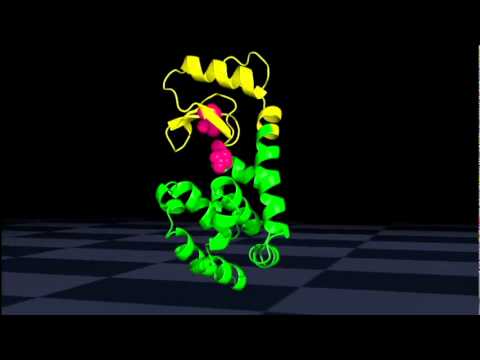
How is this possible? According to Philip Collins, a physics professor at University of California, Irvine, each molecule is essentially a set of rapacious jaws that latches onto microbial invaders, starts chomping and does not let go.

This motion allows enzyme to open huge holes in the bacteria, which cause the bacteria to explode.

Each tear you shed contains an armada of these enzymes, ready to gobble up germs before they infect the sensitive tissue around your eye. However to study these enzymes, the researchers must keep one of the molecules still. To do this they  relied on a tiny technology: carbon nanotubes.

A lysozyme molecule was tethered by an amino acid to a nanotube. Then passed an electric current along the tube, turning the molecules into little transistor. When lysozyme sprang into action each bite of its jaws produce an electrical activity.

This signal was like “a microphone that allows us to listen in on the enzyme’s activity,” according to Collins.

This newly found technique was also used to study many other molecules. For further understanding on the processes used :

YouTube Preview Image

Resources:


The Mournful Fate of Laika

As with other experiments, the role of laboratory animals was absolutely  crucial in the early exploration of the universe. Many animals took part in giving information as to what happens in gravity-free status before astronauts went to the universe. The most notable animal must have been Laika, who was the first animal to orbit the Earth.


Laika. The image at the top of the page is a model on display at the Polytechnical Museum in Russia. Image courtesy of Alexander Chernov and the Virtual Space Museum


On October 4th, 1957, the Soviet Union launched the first artificial satellite to orbit the earth, named Sputnik 1, and accelerated space development competition among many countries. About a month later, on November 3rd, 1957, second artificial satellite to orbit the earth was launched again. Not only Sputnik 2 was important in its bigger size but it had more surprise to it; the first space animal Laika was on board.


Laika was a Siberian husky, who was discovered by laboratory scientists when she was wondering in the city of Moscow. His original name was Kudryavka, but it was changed to Laika since the pronunciation was long and difficult. Before launching Sputnik 2, the Soviet Union elevated the ambience by recording Laika’s voice and playing it through televisions and radios.


Stamp art; Albanian; 1958; Russian Sputnik Dog Laika.


Inside of Sputnik 2, there were many types of equipment such as oxygen generator, carbon dioxide remover, and temperature regulator along with ample food and water supply for Laika’s survival. In addition, electrodes connected with Laika transmitted his pulse rate, breathing measurements as well as body temperature to the control tower.


Laika was shot into the universe tied tightly inside of Spunik 2. A week later, the Soviet Union announced that Laika was euthanatized and therefore had a pleasant death. However, this statement was proved to be wrong in 2002. Dimitri Malashenkov, one of the Soviet scientists, exposed hidden data of Laika in the World Space Congress in Houston, Texas, US. He showed how Laika could not handle excessive acceleration and unexpected high temperature that she died from overheating within hours of departure.


Although the truth was revealed after all and although Laika paved our way for improved technology, we should not forget the fact she was sacrificed for our selfishness. Space experiments will be continued in the future where laboratory animals will be essential. Let us not forget about the sacrifices made by them and appreciate their contribution.


References and further reading

Laika

Sputnik 1

Sputnik 2


Natural vectors of supernatural bugs, seem to be from humans, naturally.

There seems to be a rising fear of sickness around the world. With ever increasing populations in regions of poor hygiene, international access to transportation, and an abundance of antibiotic resistant outbreaks, its no wonder movies like Contagion can find an audience.

CC by SilentFrenzy

While people realize that restricting access to medical treatment or travel would be inconvenient, most promote awareness of proper antibiotic use and limiting the use of antibacterial soaps. Despite these interventions, the rise of the superbug still remains a problem on our horizon. It would seem pathogens are still developing immunity to our arsenal and that the vast majority are appearing out of nature. Or are they?

While Antibiotic Resistant Genes (ARG) have been evolving in an arms race with toxins and biocides for millenia, there is evidence that human activity may be partially responsible for selective pressures even when these ARGs seem to appear out of nature. Here are two human induced sources that have been until recently overlooked:

CC, by Karen V Bryan

Domestic rearing of animals has long had implications of giving rise to ARGs in bacteria, however the relationship between these pathogens and their aquatic vector to us remains largely unstudied. While practices like composting manure can help eliminate ARG carrying pathogens, bacteria can still survive through animal production wastewater and seep into surface and ground water. Such wastewater derived ARGs have been found making their way through sewage and treatment plants and to our local tap. If this is not enough to worry about, bacteriophages can transmit ARGs to bacteria without selective pressures, and they are even more robust than their hosts in aqueous environments.

NRCS photo gallery (Sarah Minor)

A way to diminish this vector may lie with riparian buffer zones and grassed waterways which reduce the turbidity of water, significantly reducing the viability of bacteria in treatment plants.


CC by Maria S


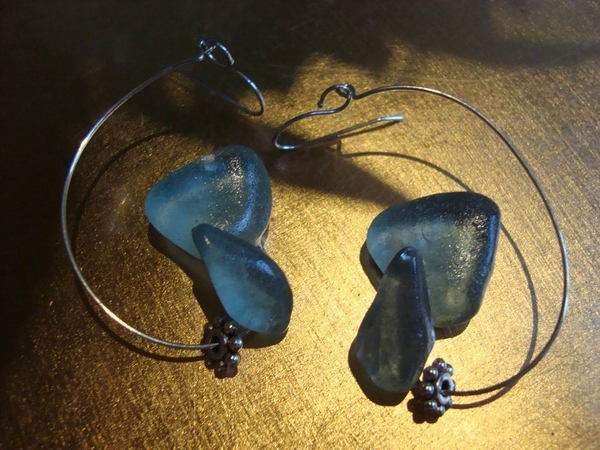
Another potential vector is metal. People have long known of the biocidic effects of various metals due to jewellery. The reaction, colloquially called metal allergy, can influence a person’s choice of earrings as much the look itself.

While many have taken advantage of this, think hospitals and plumbing, recent experiments suggest that metal concentration may have an impact on ARGs. Areas of past mining or industrial application have been cited as having higher ARG levels correlated with various metal concentrations. While some researchers maintain that metal resistance does not correlate with antibiotic resistance, proponents of metal derived resistance maintain that it is not the metal itself that creates the resistance but that it increases the frequency of gene transfer which may increase the incidence of ARGs over time. To add credence to their argument, a strong correlation of copper with ampicilin resistance was found in the wild, and further examination is currently underway.

Altogether, we are finding more vectors of ARGs everyday, and that they often have simple causes and occasionally practical solutions. And while we may still fear what we don’t know, it is science that enlightens us with what we do. There is no doubt that with time and the application of science, the rising fears of sickness will dissipate, and some thriller films will be a little less infectious.

Great Bowerbirds and Great Illusions

Are you having a difficult time finding the right girl for you? Have you ever been excessively concerned that she will not approve of how you organize all of your belongings? Well, maybe it is time you took a page out of the courting-book of a pro!

Greater Bowerbird. Image by Laura Kelley.

Bowerbirds belong to the genus Ptilonorhynchidae, which consists of 8 genera and 20 species found in different parts of Indonesia, Papua New Guinea and Australia. What sets these birds apart are the elaborate courtship displays of the male. Just check out this video of the Vogelkop Bowerbird from the BBC nature documentary series, Life.

YouTube Preview Image

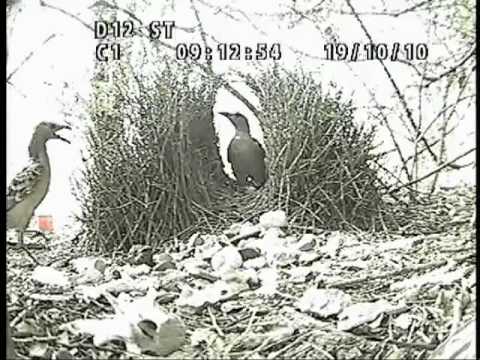
If you thought that was remarkable, just wait until you hear about the Greater Bowerbird of northern Australia! The male creates two parallel walls of sticks which form a bower with an avenue between the walls. The avenue opens up to a collection of grey stones, shells and bones called the court or gesso. This extravagant structure has no use but to attract potential mates. Using elaborate vocal mimicry, a male entices females to inspect his bower. Upon the arrival of a female in the centre of the bower avenue, the male stands in the court just out of the female’s field of view. The male then displays to her a variety of colourful objects and the colourful patch of feathers on the crest of his head. If the female is sufficiently impressed, mating occurs shortly thereafter.

Bower with avenue opening into the court. Image by Laura Kelley.

The Greater Bowerbird stands apart from its bowerbird relatives because of how it arranges objects in its court. In 2010, researchers at Deakin University looked at the geometry of the Greater Bowerbird court. They discovered that males are very particular with the selection and location of objects in the court. Males create a size gradient of objects in the court by placing smaller objects close to the female’s location in the avenue and increasing the size of the objects placed further away. From the female’s position in the avenue an illusion called forced perspective is created where the pattern in the court appears to be more even than it otherwise would appear.

Measuring the characteristics of the court. Note the progression in size of the objects, small to large from right to left. Image by Laura Kelley.

On January 20th another study was published which found that this illusion impacts mating success! Males who create a court with a higher quality gradient gain more mates than males who make a poorer quality gradient. When observed from the female’s perspective, males with the most evenly patterned courts have the greatest number of mates.

YouTube Preview Image

The authors suggest several reasons to explain this phenomenon, but what I find most interesting are the implications. Many animals, especially birds, are very perceptive. There are countless species which perform elaborate courtship rituals. It is very possible that similar forced perspective illusions are used by other species. We may have barely scratched the surface on this one!

Sources:

Anderson, B. L. Bird-Brained Illusionists. Science 335, 292-293 (2012).

Davies, E. Male bowerbirds ‘benefit from optical illusions’. BBC Nature online. Accessed January 20, 2012.

Endler, J. A., Endler, L. C. & Doerr, N. R. Great bowerbirds create theaters with forced perspective when seen by their audience. Current biology 20, 1679-1684 (2010).

Kelley, L. A. & Endler, J. A. Illusions Promote Mating Success in Great Bowerbirds. Science 335, 335-338 (2012).

Visual illusion the key to Bowerbirds mating success. Youtube video. Accessed January 20, 2012.

Super Action Iron Man Time: Fiction becoming reality

Hello SCIE 300 bloggers and interested readers of Science.

My name is Bruce Wayne, winged crusader of the nigh—American billionaire, playboy, industrialist, and philanthropist. Let me just say that I am very excited that I can finally refer myself as Bruce Wayne from this day forward. Very cool.


Jumping right into the blog, remember the movie “Iron Man” in 2008? It is my favourite movie of 2008. It has action, special effects, Gwyneth Paltrow, terrorists, futuristic robot suits and explosions. Lots of big explosions. Very satisfying.


Fast forward to last Friday to when I am re-watching “Iron Man” and thinking to myself about the things I could do with a nuclear reaction-powered, plasma-blasting suit of battle armour in Camaro red with gold highlights. If only I had an Iron Man suit. How hard could it be to build one?

Tony Stark building the Iron Man suit

Image from thisischris.com

Of course I knew that it would be highly unlikely to build an exact working replica of what I saw in that film (reality can be disheartening). But after researching and googling (yes that is a word) different sources around the web, I was actually very surprised to see the amount of researching and development that has already gone into this field of research. To begin, the closest iteration of the “Iron Man” suit currently is what is called a human exoskeleton suit, which is essentially a wearable robot. The first exoskeleton suit was also built in the 1960’s by the US military. Nicknamed Hardiman it could amplify the user’s strength so that to emulate super-strength. However this suit was deemed a failure due to the fact that it could not be operated safely with a person inside of the suit because of its dangerously violent movements.

Hardiman with user inside

Image from David Szondy


Since Hardiman, a number of different companies and universities have produced their own version of the exoskeleton suit. Take for instance HAL (Hybrid Assistive Limb). Created by Yoshiyuki Sankai of the University of Tsukuba, HAL is an exoskeleton suit capable of enhancing a user’s arm and leg strength by tenfold similar to Hardiman. Instead of being designed for military use however, it was designed for the more civilian function in mind. It is able to be used in rehabilitating disabled patients to move such as those with spinal cord injury. HAL can be also used in jobs that are physically demanding, for example construction work. The suit can be used in rescue missions as well where heavy lifting is required, but having heavy machinery is not practical such as working on a building with weak structural support.

Cyberdine's HAL

Image from Cyberdine


And remember automotive company Honda’s Asimo? Now you too can walk and possibly dance like him with Honda’s Exoskeleton Legs which is a partial exoskeleton built only along the hips and legs. The design of the suit, particularly the saddle-like seat, allows for the transfer of the user’s weight to the exoskeleton to relieve the joints in the legs. It runs approximately for 3 hours; but that is only if the suit is not moving faster than about 4.5 kilometres an hour.

Video from youtube user: wiredautopia


There are a number of design issues and limitations that come with the current models of suits such as finding suitable power source. The source powering the exoskeleton must be able to sustain the suit for longer periods of time without overheating and must be small enough fit within the exoskeleton. Currently longest running time is only a few hours, which is why present-day research models are usually designed to be powered by an external power source. Another notable challenge the issue of joint flexibility. Several joints in the human body are termed “ball and socket joints” which are essentially joints that are capable of moving in several directions such as the hip or shoulder. For an exoskeleton to perfectly mimic those movements has proved to be quite difficult because of the nature of how exoskeletons fitted onto the user.


There are a lot of good that this area of research can bring. Aside from the idea of creating an “Iron Man” suit, this technology could essentially make life easier to live for those who are disabled or are elderly and those who work in areas heavy-lifting is prevalent, or perhaps those who want to enter the world of professional exoskeleton arm wrestling. Or possibly become Robocop?

Robocop doing his thing

Image from Kate Raynes-Goldie


If you want to read further here are some resources that you can check out:


Oh I forgot I was Bruce Wayne, so I probably have an Iron Man suit hiding somewhere in the bat ca-.

SCIE 300 Course Blog

Welcome to the SCIE 300 course blog!

Here are few things to make note of before you get started with your posts. First of all, you should read the blogging resources page under the Create menu. This will help you out a lot if you are brand new to using WordPress. On this page you will find video tutorials about writing posts on this blog, adding media to your posts, tagging, and categorizing. You will also find a link to the rubric we’ll use to grade your blog posts.

Next, check out the blogging guidelines. Here you will find the answer to the question: “What are we supposed to blog about?” You can also check out last term’s blog for some additional inspiration.

There are a few important things to keep in mind when blogging. Please do not assume that just because something is online, it is OK for you to use it. For example, unless it is explicitly stated, an image on the internet can not just be copied, saved, and used in your own post without permission to do so. We’ve provided you with a lot more detail about properly using online content, but if you have questions, let us know.

This blog also contains a lot of resources for you. For example, still under the Create menu, there is a list of equipment available for you to borrow and a list of suggested software to use for your projects. We’ve also collected some writing and presentation resources.

Under the Explore menu, you will find some sample podcasts and videos, links that may be of interest or assistance, a list of groups and associations related to communicating science as well as a list of local museums and science centres. The Explore menu also contains a library resources page, which you should definitely have a look at. Finally, there is a bookshelf that lists relevant books that are on reserve for you in Woodward Library or available for borrowing from Eric’s office (BioSci 3532).

Let us know if you have any questions about the blog or would like to see any other resources made available. Or, if you find something that you think would be useful to the rest of the class, tell us, and we can add it to the resources. Better yet — write a post about it!

Happy blogging!

Eric