Author Archives: leukocyte

Discovery of new materials resistant to bacterial attachment

A new class of polymers resistant to bacterial attachment discovered by a team of scientists at The University of Nottingham could lead to reduction in medical device failures and hospital infections.
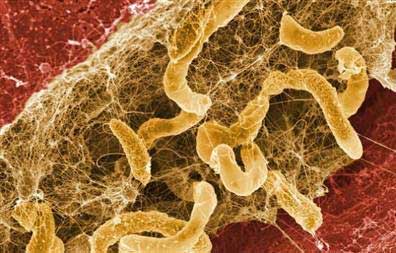
Bacteria form communities, called biofilms, on many commonly used medical devices such as urinary and venous catheters. Because biofilms are formed by a very large number of bacteria, they are resistant to bodies’ immune defenses and antibiotics. This can lead to systemic infections or device failures (devices like catheters, heart valves and prosthetic joints).

Researchers from the University of Nottingham have found that when the novel material, made of new class of polymers, was applied to the surface of medical device, it repelled bacteria.
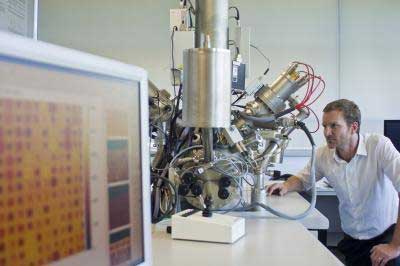
The study was lead by Dr. Morgan Alexander and Dr. Martyn Davies in the School of Pharmacy together with Dr. Paul Williams in the School of Molecular Medical Sciences.  The researchers believed there were new materials that could resist bacteria, but they had to find them. They needed to screen thousands of different chemistries and test their reaction to bacteria. This was not possible using conventional methods and so they were helped by experts from the Massachusetts Institute of Technology (MIT), who developed a technology to screen hundreds of material simultaneously, looking for new structure-property relationship. This approach led to identification of novel materials which were resistant to bacterial attachment and to biofilm formation.

The new materials work by preventing infection at the earliest possible stage, when the bacteria first attempt to attach themselves to the device. This means that biofilm formation is stopped. In the laboratory setting, scientists were able to reduce the numbers of bacteria by up to 96.7% when compared with a silver-containing catheter that is available commercially. Moreover, the polymers were effective at resisting bacterial attachment in a mouse implant infection model.

Infections caused by biofilms on the surface of implants are resistant to body’s natural defenses and they often cannot be treated with conventional antibiotics. By using the new polymers, bacterial attachment would be inhibited, and the body’s own immune system would be able kill the bacteria before they would have time to generate biofilms.

To hear about this exciting discovery from the scientists themselves, watch the video below:

YouTube Preview Image
Source: http://bit.ly/W4vkJ8

The research has been published in August 2012 in the journal Nature Biotechnology.

Submitted by: Nesim Lichy
Multivitamins for health?

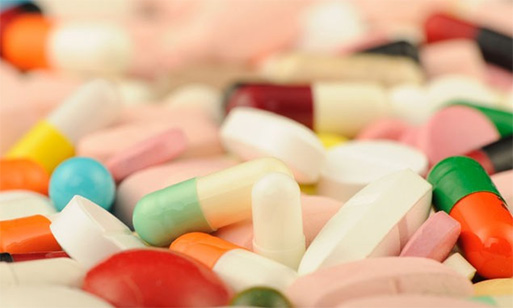
Many of us take daily multivitamin or mineral pill. It is convenient and we feel that by doing so, we are getting all the vitamins and minerals our body needs. But is it really beneficial? And is it safe? Let’s take a closer look.


Health benefits of multivitamins:

Vitamin and mineral supplements cannot act as a complete food substitute because they can’t provide us with all the benefits that whole foods, such as vegetables, fruits, dairy and whole grains, do. However, many people don’t eat well-balanced diet because they don’t like some type of food, don’t have time or are on a special diet. Therefore, multivitamin and mineral supplements can be used as a way to fill in the gaps in our diet. This can ensure an adequate intake of micronutrients  so our body stays healthy.

According to Dr. Jane Higdon of the Linus Pauling Institute, multivitamin supplements may play a role in prevention of chronic diseases such as heart disease, osteoporosis and cancer. For example, folic acid can decrease risk of cardiovascular diseases and Alzheimer disease and vitamin D and calcium intake promotes healthy bones. Inadequate intake of many vitamins and minerals can cause health issues such as anemia (low red blood cell count) due to iron deficiency or rickets (softening and weakening of the bones) due to vitamin D deficiency.


Possible risks and things to watch for:

The most common risk associated with an intake of vitamin and mineral supplements is that of overdosing. Taking too much of some vitamins and minerals can be harmful to your health. For example iron overdosing can cause organ failure and too much of vitamin A can lead to nervous system damage and osteoporosis. Therefore avoid megadoses; don’t take multivitamin and mineral supplements which contain more than 100 percent of the Daily Value of any of the micronutrients. Also, some type of foods, such as cereals or beverages, might be fortified with vitamins so check the labels. You don’t want to get more vitamins than you need.

Always take the vitamin pills with food so that the vitamins can be properly absorbed. For instance, fat-soluble vitamins, such as vitamin A or E, need to be taken with fatty foods, otherwise your body won’t absorb them.
Check the label. Never buy supplements with no expiration dates on them and don’t take vitamins or minerals which are past their expiration date.

Here you can watch an episode from BBC Horizon TV series. It examines if multivitamins are really beneficial to us and if there might be “too much of a good thing” when taking vitamin supplements.

YouTube Preview Image


A few words at the end:

If you need to take multivitamin or mineral supplements because you don’t get enough micronutrients in your diet, choose carefully before you buy. Look at the content as well as the quality verification and when in doubt, consult with your doctor.

Nesim Lichy

Biomarkers in transplantation

A way to predict and diagnose organ rejection without the need for invasive biopsies

Source: http://bit.ly/PTa5tl

For patients with end stage organ failure, transplantation is often the only possible treatment. It involves the replacement of a failing organ with a healthy one from a donor. Although the surgery itself may go smoothly, the patient’s immune system may react to the new organ and reject it.

Biopsy needle.

Biopsy needle.
Source: http://bit.ly/hHKPJP

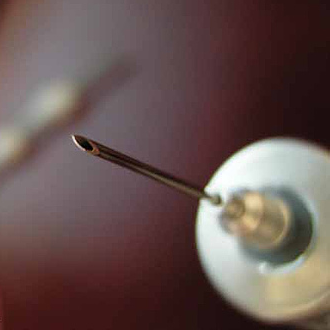
At present, when doctors want to detect if the recipient’s immune system is attacking the transplanted organ, they take a small sample from the tissue in a procedure called biopsy. Tissue biopsies are costly, painful procedures and in the first year post-transplant, patient would typically undergo around 14 of them. The use of blood biomarkers could decrease or completely eliminate the need for biopsies. The biomarkers would diagnose organ rejection using a simple blood test. This would be a simple and non-invasive method.

Biomarkers explained

In the context of graft rejection, a biomarker is a molecule produced by the action of genes. It can be messenger RNA, a protein or a metabolite, which is produced as a result of body’s immune response. Because people with organ failure express different types and/or quantities of these molecules than healthy people, they can be used as a reliable measure of body’s reaction to the transplanted organ. Their presence can be detected in a blood sample and used as an indicator of the impending organ rejection.

The development of biomarkers is currently underway by the PROOF Centre research team as a part of ongoing movement towards a personalized medicine approach – a patient-centered care providing treatment that is “particularly suited to that patient at that particular time”.

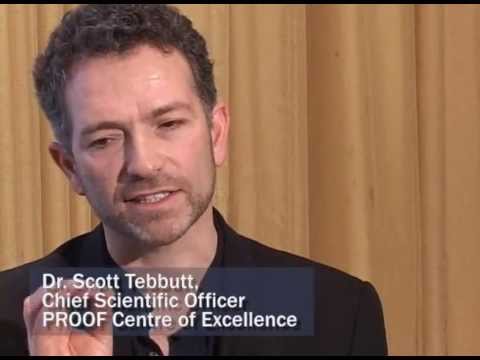
Dr. Scott Tebbutt, Chief Scientific Officer for the PROOF Centre of Excellence, talks about biomarkers:

YouTube Preview Image
Source: http://www.proofcentre.ca/what-is-a-biomarker/


For more information about the PROOF Centre and biomarkers, please read here.

Hopes for the future

Laboratory tests currently being used for graft monitoring do not provide a clear measure of immunological risk or accommodation between graft and host. Tissue biopsy thus still remains the primary diagnostic tool for monitoring graft status despite its many limitations. By implementing the use of biomarkers in post-transplant care, researchers hope to completely eliminate or decrease the frequency of biopsies in transplant recipients. Replacing biopsies with a simple blood test would not only reduce patient’s emotional and physical discomfort but would also decrease healthcare costs by preventing disease and improving health.

Submitted by: Nesim Lichy


References

1. Biomarkers: A new way to predict and diagnose organ rejection. Transplant Research Foundation of British Columbia Web site. http://www.trfbc.org/site/PageServer?pagename=News_Biomarkers. Accessed 09/20, 2012.

2. Keown PA, McMaster WR, McManus BM. Tools to identify organ rejection and immune quiescence for biological understanding and personalized medical care. Biomarkers in medicine. 2010;4(1):115-121.