Category Archives: Biological Sciences

UBC Researcher Develops a Game Changing Drug

Image courtesy of:
http://www.orkin.com/flies/sand-flies/

Dr. Kishor Wasan is an independent researcher currently working at the University of British Columbia. His research team at the UBC Faculty of Pharmaceutical Sciences is dedicated to developing a treatment for Visceral Leishmaniasis (VL) VL is a parasitic disease spread by infected sand flies that targets the liver, spleen, and bone marrow and can lead to symptoms such as fever, weight loss and fatigue. Once infected with VL, the individual is unable to fight off the disease and will ultimately die if left untreated.

People living in developing nations and third world countries are at high risk for this disease, and an estimated 60,000 deaths occur annually due to VL in these areas. It is common in areas with high population density and climates that frequently experience droughts and famines. Many North Americans are unfamiliar with VL, even though it is a lot more relevant to us than we may realise. India, Brasil, and Africa have become popular sites for tourists which has resulted in an increase in North American exposure to this disease. Therefore, the number of VL cases are rising because people that visit these countries are contracting the parasite.

Image courtesy of:
http://bit.ly/Y82rCn

Unfortunately, there are only a few treatment options available that eliminate the deadly effects of VL. Currently, the most effective treatment being used is an antibiotic called Amphotericin B, or AmB. The version of AmB being used for the initial treatment is Liposomal AmB, and it is composed of AmB along with several other chemical compounds that form a lipid vesicle around the molecule.  Liposomal AmB has proven to be less toxic to the patient which allows for increased dosages. However, Liposomal AmB must be given by IV to the patient, requiring the need for a sterile hospital setting and trained personnel. As a result, the high cost and complex methods of administering the drug makes it unattainable for most infected patients in developing countries. People are dying every day because they don’t have access to medication.

Dr. Kishor Wasan and his team of researchers set out on a study to solve the barriers caused by Liposomal AmB. They aimed to develop an oral version of AmB that would be stable at tropical climate temperatures (30-43°C) while effectively treating VL. They developed and tested four new oral AmB drugs on mice subjects. Out of these four drugs, they discovered that one in particular was quite successful in treating the disease. This new oral AmB, which is known as iCo-010,  showed results of VL inhibition as high as 99%.  iCo-010 is the first oral AmB that has successfully shown to have such an impact on eradicating VL from an infected host.

As advancements in developing an effective drug to treat VL progress in the Wasan lab, the future of this disease seems brighter. Dr. Wasan refers to his development of the oral form of AmB as a “game changer” in the playing field of this infectious disease. The success of iCo-010 functioning as a stable and effective drug in treating VL may overcome the limitations set by the current treatment options. Combined with prevention techniques and Dr. Wasan’s new oral treatment, thousands of lives can be saved and the eradication of Visceral Leishmaniasis has become a possibility in the near future.

A descriptive look on biological processes behind the contraction of Visceral Leishmaniasis:

A discussion with Dr. Kishor Wasan about Visceral Leishmaniasis:

Audio clip: Adobe Flash Player (version 9 or above) is required to play this audio clip. Download the latest version here. You also need to have JavaScript enabled in your browser.


By: Nadia Kari, Mokhan Kim, Deborah Lo & Alexandra Warren

Discovery of new materials resistant to bacterial attachment

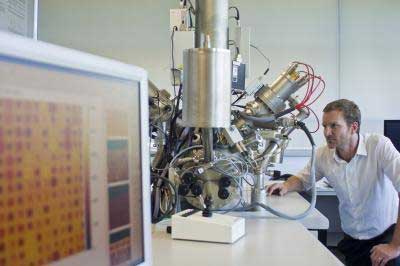
A new class of polymers resistant to bacterial attachment discovered by a team of scientists at The University of Nottingham could lead to reduction in medical device failures and hospital infections.

Bacteria form communities, called biofilms, on many commonly used medical devices such as urinary and venous catheters. Because biofilms are formed by a very large number of bacteria, they are resistant to bodies’ immune defenses and antibiotics. This can lead to systemic infections or device failures (devices like catheters, heart valves and prosthetic joints).

Researchers from the University of Nottingham have found that when the novel material, made of new class of polymers, was applied to the surface of medical device, it repelled bacteria.

The study was lead by Dr. Morgan Alexander and Dr. Martyn Davies in the School of Pharmacy together with Dr. Paul Williams in the School of Molecular Medical Sciences.  The researchers believed there were new materials that could resist bacteria, but they had to find them. They needed to screen thousands of different chemistries and test their reaction to bacteria. This was not possible using conventional methods and so they were helped by experts from the Massachusetts Institute of Technology (MIT), who developed a technology to screen hundreds of material simultaneously, looking for new structure-property relationship. This approach led to identification of novel materials which were resistant to bacterial attachment and to biofilm formation.

The new materials work by preventing infection at the earliest possible stage, when the bacteria first attempt to attach themselves to the device. This means that biofilm formation is stopped. In the laboratory setting, scientists were able to reduce the numbers of bacteria by up to 96.7% when compared with a silver-containing catheter that is available commercially. Moreover, the polymers were effective at resisting bacterial attachment in a mouse implant infection model.

Infections caused by biofilms on the surface of implants are resistant to body’s natural defenses and they often cannot be treated with conventional antibiotics. By using the new polymers, bacterial attachment would be inhibited, and the body’s own immune system would be able kill the bacteria before they would have time to generate biofilms.

To hear about this exciting discovery from the scientists themselves, watch the video below:

YouTube Preview Image
Source: http://bit.ly/W4vkJ8

The research has been published in August 2012 in the journal Nature Biotechnology.

Submitted by: Nesim Lichy

Fish Oil: Possible Solution for Brain Recovery

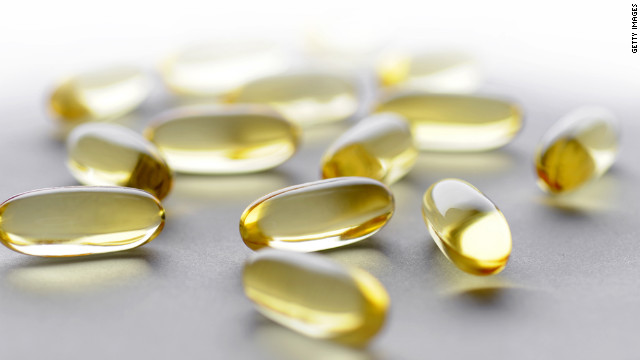
Brain is like central command post that controls and commands our body. Without the command post (brain) every part of the body will be nonfunctional. For example, severe brain injury like, traumatic brain injury, is lethal and barely recoverable. However, there seems to be a solution for treating traumatic brain injury. The solution is Omega-3 fish oil.

Image from: http://www.cnn.com/2012/10/19/health/fish-oil-brain-injuries/index.html?iref=allsearch
Courtesy: Ghassemi Family

In March 2010, Bobby Ghassemi 17-year-old student got sever traumatic brain injury due to a car accident. He was diagnosed with Glasgow Coma Score of 3, meaning dead (a brick of wood is diagnosed with Glasgow Coma Score of 3). Bobby had so much bleeding within the brain that pressure has to be released by taking portion of his skull. Doctors believed that full brain recovery was unlikely or rather impossible. But Bobby’s father, Peter Ghassemi, was looking for a way out and found out that fish oil could help his son.

Fish Oil and Traumatic Brain Injury (video)

Michael Lewis, Army colonel and a doctor, suggested to Ghassemi that fish oil could help recovering damaged brains. Lewis claimed that 30% of the brain is composed of Omega-3 and by saturating the brain with Omega-3 could help to reconstruct the brain.  Problem with this theory is that there was no research that support it is a good treatment except the case of Randal McCloy. McCloy was only survivor of mine disaster in West Virginia in 2006. McCloy’s brain was severely damaged due to high intake of carbon monoxide and methane. McCloy’s neurosurgeon, Dr. Julian Bailes, injected large doses of Omega-3 into McCloy resulting almost full recovery of the brain.

Image from: http://www.cnn.com/2012/09/11/health/health-fish-oil/index.html?iref=allsearch
Courtesy: Getty Images

So what does Omega-3 does to the brain? Hee-Young Kim et al. claims that Omega-3 fats helps to accumulate fatty acids around the neurons to prevent cell death and further help to reconnect damaged neurons. In addition, based on the animal testing, the fish oil can help to reduce neural inflammation from concussions. Animals that received fish oils after concussion showed 98% recovery.

Drawback from this treatment is that there are little human testing done so far and recovery of Ghassemi and McCloy is just only two cases to prove or to say Omega-3 is effective in treating patients with traumatic brain injury. However, there are no  clear treatments or drugs that can cure traumatic brain injury like Omega-3 did. Therefore, Omega-3 might be the best solution for treating the patients with brain injury at the moment. Further research on Omega-3 effectiveness on brain injury could explain why miracle recovery of both Ghassemi and McCloy has happened.

By: Young Ryu

Worrying about math literally hurts

Image Source: Cliff Mass Weather Blog

Math. Image Source: Cliff Mass Weather Blog

A lot of us grimace at the thought of doing math. Some people’s heart start to beat faster, while others start to feel nauseated from just worrying about the math homework that is still calling out their name. With this math anxiety  problem happening not only in kids but adults as well, it leads us to wonder whether math is really that painful to do.

Math phobias are usually developed in schools. It typically arises from poor teaching or bad experiences in math. This leads to limited understanding on the subject which makes the person want to avoid it even more. Unfortunately, further avoidance causes less exposure to math practice, enhancing the anxiety.

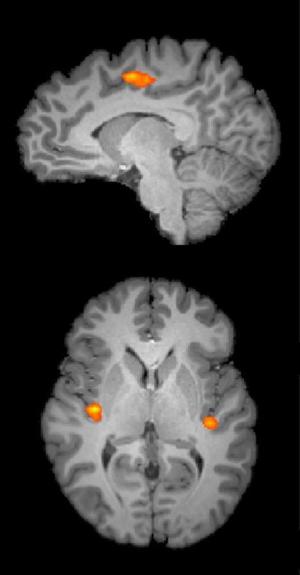
Region of Posterior Insula activated in brain from math anxiety. Image Source: Science Daily.

Region of Posterior Insula activated in brain from math anxiety. Image Source: Science Daily.

Recent research gives a possible explanation on why people with math anxiety have such a hard time overcoming this fear and jumping straight into math problems. Researchers found that the anticipation of doing math and threats of bodily harm activates  the same region of the brain. Using fMRI scans, they tested adults who were shown to have math anxiety and examined their brain activity when given mathematical equations to verify. The scans show that the anticipation of doing math, not doing math itself, caused a response in brain similar to physical pain. It activates the posterior insula in the brain that registers direct threats to the body as well as the experience of pain. As a matter of fact, increase of math anxiety activates more of the posterior insula. This suggests that people with math anxiety experiences painful dread before they even start the problems which makes them want to avoid it even more. It indicates that the anxiety from the  prospect of doing math may arise from negative psychological reactions and not just because the person have poor math ability.

There are several solutions on how to overcome math anxiety. Perhaps most people have already heard of these tips. One way to overcome this anxiety is to not dread over the mistakes that you make from doing math problems but be persistent. One of the most effective way of learning is to learn from your mistakes. Another way is to is do lots of practice, especially when you are having difficulties.

So the next time you feel anxious about tackling your math homework and procrastinate by going on facebook, tumbler, twitter or even just staring into space, think about how the longer you put it off, the more pain your brain actually feels. Doing math doesn’t hurt but thinking about it does!

Here is a video on the symptoms of math anxiety and how it prevents math learning:

YouTube Preview Image

Post Submitted by: Celine Hsin


Energy Drinks Contain More Caffeine Than Advertised

I’m pretty sure we all know what energy drinks are, and most of us probably drink it for that energy boost to stay awake at night to study for a midterm, final or to write a paper that was left till last minute to do. Everyone needs to be careful about how much caffeine they are consuming, but this is hard to do when the amount of caffeine aren’t even shown correctly on energy drinks. The reason why some companies don’t list caffeine levels is because there is no requirement to do so.

Researchers at Consumer Reports bought 27 top-selling energy drinks and shots and measured the amount of caffeine in each of them. They found that caffeine levels per serving ranged from about 6 mg to 242 mg per serving, some containing more than one serving. 5-hour Energy Extra Strength contained the highest amount, whereas 5-hour Energy decaf contained the lowest amount. They measured that Arizona Energy, Clif Shot Turbo Energy Gel, Nestle Jamba, Sambazon Organiz Amazon Energy and Venom Energy had about 20% more caffeine in it than advertised. Whereas Archer Farms Energy Drink Juice Infused was 70% below the amount of caffeine advertised. For most drinks though, numbers were within 20% of what was listed.

According to an article on Live Science, doses between 200 to 300 mg of caffeine aren’t harmful for adults, but exceeding 500 mg can lead to fast heartbeat, insomnia, and muscle tremors. Pregnant women should consume less than 200 mg daily, and children should not even drink energy drinks, and keep their caffeine consumption to about 100 mg daily. But the amount of caffeine a person can consume before it becomes harmful varies widely.

Even though it is quite scary to think of the outcome of drinking too many cans of energy drinks, it doesn’t mean you should stop drinking them completely. There are still benefits of drinking energy drinks, such as alleviating fatigue and increasing mental alertness which can improve a person’s concentration and focus. But just remember that energy drinks actually contain 20% more caffeine in it than shown on the can, so drink wisely!

Post Submitted By Mandy Choi

Vampire Bats Inspiring New Treatments

Close up shot of a Vampire Bat
Source

As Halloween happened just last week, I wanted to write about one last spooky creature, vampire bats! While some vampire bats can cause disturbance to humans by attacking their livestock, researchers have discovered that vampire bats may actually be able to provide something useful in return.

Stroke: Journal of the American Heart Association published an article written by Liberatore et al.. The article discusses an enzyme found in the vampire bat’s saliva which can help stroke patients. According to research, when a vampire bat feeds, their saliva contains an enzyme called desmoteplase and other anticoagulants that stops blood from clotting. This allows the blood to flow continuously so the bat can feed easily and quickly.

How can this help us?

What happens during an Isochemic Stroke
Source

When a person experiences a stroke, it is because blood flow to a part of the brain is stopped. If the brain does not receive any blood, it cannot get any oxygen which will then lead to brain cell damage. The specific type of strokes that researchers are hoping to utilize desmoteplase for are known as ischemic strokes. Desmoteplase  can be used to dissolve the blood clot at the blocked artery allowing blood flow to resume.

Currently, the approved FDA-approved drug for treating blood clots contains tissue plasminogen activator (tPA).  However, tPA can cause injury to the brain by damaging or killing nerve cells or by restricting blood flow. After countless experiments by Liberatore and Reddrop, results show that desmoteplase does not promote these injuries.

Which developmental stage is desmoteplase in?

Desmoteplase is being tested as two trials, DIAS-3 and DIAS-4 in phase III. They are determining if desmoteplase is a safe treatment for patients with acute ischaemic strokes by issuing the drug within 3-9 hours after experiencing stroke symptoms.  So far, 400 participants per trial are being tested with doses of 90 μg/kg. Final collection results are expected to be taken in December 2012 for DIAS-3 and December 2013 for DIAS-4.  More information can be read upon in these two links:

Hopefully, the results from these two trials will advance the field of stroke treatment and verify desmoteplase as safe for usage in the near future. Lastly, this is a video that briefly talks about the process of modifying desmoteplase to the updated version of the drug.

YouTube Preview Image

Note: The last portion of the clip talks about having the results by 2011, however this has been changed as seen by the data from the two links above.

Post by: Tiffany Ho