Category Archives: Biological Sciences

Eat Tomatoes!

New research suggests that foods such as tomatoes which contain the antioxidant lycopene may reduce men’s risk of stroke. Lycopene is an antioxidant compound that gives yellow, red, and orange vegetables and fruits their colour because they contain the pigment carotenoid. Papaya, watermelon, guava and apricots are also significant sources of lycopene. Lycopene decrease the formation of plaques in arteries leading to heart attacks and strokes. They also decrease stroke risk by preventing blood clots, blood platelets from clumping together and also inhibiting the production of cholesterol.

Jouni Karppi of the Univeristy of Eastern Finland published an article in the journal of Neurology showing that men who had higher levels of lycopene in their blood were 55% less likely to have a stroke when compared to those with lower levels of lycopene. 1031 men in Finland between the ages 46 and 65 took part in his study. Over the 12-year period of the study, only 67 men suffered a stroke. Most of the men who suffered from a stroke had low levels of lycopene in their blood. Although the study did show that people with higher levels of lycopene have fewer strokes, it did not prove that eating tomatoes reduced the risk of stroke. Karppi said that he will continue to do further research of the role lycopene play in decreasing the risk of chromic vascular disease.

Men should really consider eating more tomatoes. Not only do they have a chance of reducing men’s risk of stroke, but they may also lower the risk of certain type of cancer such as prostate, lung and stomach cancer. So to all the men out there, start to include more tomatoes in your diet! Your body will thank you in the future.

Posted by Mandy Choi

 

Honey in Colours of the Rainbow?

Halloween is around the corner and candy factories are in full blast. This is great news for the candy business but for a town in France, the bees are creating honey that can match any colour of candy out there.

The unnatural shades of honey compared to the original appearance.
Source: http://www.reuters.com/article/slideshow/idUSBRE8930MQ20121005#a=1

In the town of Ribeauville, beekeepers found that the bees were making honey in shades of blue and green. Although the honey still tastes normal, beekeepers are unable to sell the honey due to their unnatural shade.  They noticed in August that the bees were bringing back colourful substances that were the cause of the honey being different colours.   After some investigation, they discovered a company called Agrivalor that owns a biogas plant 4 km away from the town. This company had been processing waste from a Mars plant which created colourful M&M candies. It turns out that they were leaving the waste in open containers which then allowed the bees to take the residues back to their hive.

Anatomy of a Bee, note where the “honey stomach” is located.                      Source: http://www.bees-online.com/beexray.gif

Bees begin their honey process by gathering nectar from flowers and storing them in a separate stomach that’s considered to be the “nectar backpack” or honey stomach. Since the biogas plant left the waste in the open, this was the easiest sugar source for the bees to gather instead of taking nectar from flowers.

This turn of events troubles the beekeepers as they are unable to profit from honey sales which were already suffering from a decline of the bee population.  This decline may be attributable to a couple of factors like habitation loss, pesticides or the colony collapse disorder. Just in the United States, an average of 33% of bee colonies has been lost during the winter months these past years according to the USDA.

The improper disposal of waste has already affected many businesses and the lives of the town residents. Taking shortcuts and using quick fix procedures may help a company in a short run but it may have serious ramifications in the future. Bees are one of the essential organisms that help the world flourish and plants to grow. With bee populations on the decline, they do not need any more human mistakes to add to the growing list of factors affecting their livelihood.

Blog post submitted by: Tiffany Ho


Why are some sounds so displeasing to hear?

New study ranks nails run along a chalkboard as one of the most unpleasant sounds to the human ear.

The Amygdala- Active in processing negative emotions

Why is it that certain sounds are so displeasing to the human ear?  For example, the sound of nails running along a chalkboard is synonymous with shivers down the spine.  A new paper published in The Journal of Neuroscience examines the interaction between the emotional and auditory parts of your brain while hearing a variety of sounds.  Scientists at Newcastle University have found that while hearing some sounds, a heightened activity and interaction occurs between the Amygdala part of the brain, which is active in processing negative emotions, and the auditory parts of the brain.  Researchers believe this interaction could explain why some sounds are perceived as unpleasant.

Researchers at the Wellcome Trust Centre for Neuroimaging and Newcastle University used functional magnetic resonance imaging (fMRI) to examine how the brains of sixteen volunteers responded to a variety of sounds.  The sixteen participants (seven females) ranged in age from 22-35 years old and had no prior history of neurological or psychiatric disorders.  The participants were asked to listen to 74 different sounds while in the scanner.  The participants then ranked each sound they heard on a scale from 1 (least unpleasant) to 5 (highly unpleasant).  Here is an example of how some sounds stacked up.

Most Unpleasant Sounds

  • Knife on bottle
  • Fork on glass
  • Chalk on blackboard
  • Ruler on bottle
  • Nails on chalkboard

Least Unpleasant Sounds

  • Applause
  • Baby laughing
  • Thunder
  • Water flowing

Spectrotemporal Representations

Researchers then studied the relationship between the rankings of unpleasantness and the spectrotemporal features obtained from imaging from the fMRI.  Analysis of both the rankings of unpleasantness and the acoustic features of the sounds themselves, found that any sounds within the frequency range of 2,000 to 5,000 Hz were found to be perceived as unpleasant.  The figure to the left shows examples of the spectrotemporal representations for six sounds (the mean unpleasantness is featured in the top right corner of each plot).  These images suggest that sounds with high spectral frequencies and low temporal modulation frequencies are correlated to sounds ranked with high unpleasantness.  It was found that activity in both the auditory complex and the Amygdala were directly proportional to the ratings of perceived unpleasantness.  From this study, it was concluded that the Amygdala is in charge and regulates the activity of the auditory part of the brain, therefore provoking a negative response to some sounds.

Want to see if you agree that the sound of nails running along a chalkboard is highly unpleasant? Take a listen.

YouTube Preview Image


To read the full journal article click here


This blog was written by Layla Vera


Toxic Algae Blooms

Water, which is a key necessity, is facing a global threat as environmental problems are causing estuaries and freshwater aquatic systems to be full of harmful substances. Not only does pollution of water by human and chemical waste itself contaminate the water sources, but also encourages the growth of algal blooms. Not all algal blooms are harmful, but some blooms containing cyanobacteria, like blue-green algae are extremely harmful, and can release many harmful chemicals such as hepatotoxins, dermatoxins, and neurotoxins. Limiting nutrients in water sources are causing these algae to flourish and they are currently destroying much useable and drinkable water for humans on a global scale. Recently this summer, toxic algal blooms were found in Loughbrickland Lake in County Down and Moor Lough in County Tyrone in Northern Ireland. Although they were not used for drinking water for the locals, they were popular for fishing and leisure activities, which can be devastating since these lethal toxins could be ingested by fish, and then consumed by those who caught them. Not only them but also people could have easily drank water while engaging in leisure activities.

Blue-green algal bloom
Image from Wikipedia

Scientists from University of Ulster are working to develop clean technology to clear the pollutants by titanium dioxide, which is a common chemical found in sunscreen. When applied to skin and under light intensity of sunlight, it protects the skin by refracting the light and efficiently transforming the UV light into heat. When under high intensity of UV light, however, “it turns into a very strong catalyst, capable of destroying pollutants in the water,” says Tony Byrne, a leading scientist of the research team. By doing so, Tony and his team are promoting clean technology, using little energy for good results, allowing this excited titanium dioxide to efficiently clean the water.

Using titanium dioxide and UV light to destroy the pollutants in the water seemed to be a very good idea. Many water sources including metro Vancouver’s tap water, which the majority of the people drink, is also disinfected with UV light before being transferred to each household; therefore, using this new technology and method sounds like a great way to prevent any pollutant and algae-bloom matters.

YouTube Preview Image

Mokhan Kim


Breast cancer screening breakthrough

Couresty of yourobserver.com

The winner of the 2012 Google science fair was announced this summer, topping very stiff competition from around the world. Brittany Wenger, of Lakewood Ranch, USA was awarded first prize for her submission, which is expected to make a big impact in breast cancer screening.

Ever since a project in elementary school which introduced her to the world of computer programming, Brittany has chosen to preoccupy herself with textbooks on the how-to’s of programming neural networks. As a result, she has developed a program which is not only able to assess a tissue sample for malignancies, but is also able to learn from previous trials and improve its efficiency at doing so. A type of artificial intelligence if you will.

Picture courtesy of www.beliefnet.com

Despite the fact that there are many accurate ways to detect cancer in a patient, the importance of this development lays in the fact that it can be used to analyze tissue samples from a process called fine-needle aspiration, which is one of the least invasive procedures for detecting breast cancer. Previously, the questionable accuracy of fine-needle aspiration prevented it from being a truly reliable means of screening, but now with this neural network available, it should become a confident alternative to more invasive procedures.

The slideshow presentation for her submission can be viewed here.
I recommend watching this video to hear her own explanation of the project:
YouTube Preview Image

She was awarded $50,000 in scholarship money, an internship with a fair sponsor and a 10-day trip to the Galapagos Islands for her submission, which can only be described as an amazing accomplishment for a 17-year-old girl. Her plans to expand this program to work with other forms of cancer and diagnoses, reducing the requirement for invasive procedures, is just one more thing we can all be thankful for as we slowly move toward old age.

Cameron Tough

17-year-old girl builds artificial ‘brain’ to detect breast cancer – FutureTech on NBCNews.com Retrieved 10/13/2012, 2012, from http://www.nbcnews.com/technology/futureoftech/17-year-old-girl-builds-artificial-brain-detect-breast-cancer-908308

Don’t Let the Turkey “Gobble” Up Your Energy!

Happy Thanksgiving Everyone!

http://blogs.wyomingnews.com/blogs/everyonegives/files/
2008/11/turkey_dinner.jpg

This weekend is a for family gatherings, giving thanks, and of course, enormous meals.  The tradition is the same every year; everyone is having a great time talking and eating, but somewhere between giving thanks and getting a second helping of pumpkin pie, it suddenly hits- the food coma.  This is not an uncommon event, but if food is supposed to give energy, why do we feel more tired after eating?

In medical terms, food coma is known as postprandial somnolence and it is a phenomenon where people feel a lack of mental energy after a large meal.   This is caused by several factors. For starters, holiday meals are usually filled with high-calorie and high-fat content foods.  As the helpings pile up, so does our blood flow to the digestive system to help with dilation and expansion of our intestines.  As a result, less blood is being sent to the rest of the body’s system, making the rest of the system feel a slowdown.

At the same time that blood is flowing to the digestive system, the small intestine is signalling activity in the parasympathetic nervous system, which tells the body to slow down and digest.  Thus, the more food we eat, the harder the small intestine is working, resulting in a large concentration of the body’s activities around the digestive region.

http://i-cdn.apartmenttherapy.com/uimages/kitchen/2009-11-11-Desserts.jpg

Finally, the food itself can make us sleepy as well. The main culprit is sugar because as sugar breaks down into glucose, our body secretes the hormone insulin.  Insulin helps maintain and counter the increase of glucose level by mopping up the excess glucose in the blood.  As the level of insulin increases, it also produces serotonin and melatonin- two chemicals that can leave us feel drowsy and sleepy.

With this much activity going on in our bodies, no wonder we feel like taking a nap after our turkey dinner! Just make sure you complete all of your assignments and finish all of your studying before the big feast, because once that coma hits, you won’t be hitting the books for at least another hour!

http://www.createwritenow.com/Portals/1520/images/
Thanksgiving%20Journal%20Prompts-resized-600.jpg

Post published by: Deborah Lo


References:

Greatist: “What Am I Tired After Eating a Big Meal?” – http://greatist.com/health/why-am-i-tired-after-eating-a-big-meal/ (accessed October 6, 2012)

Indiana Public Media: “The Science of the Siesta” – http://indianapublicmedia.org/amomentofscience/the-science-of-the-siesta-2/  (accessed October 6, 2012)

Scientific American: “Why do I get a slump in mental energy after eating a meal?” –  http://www.scientificamerican.com/article.cfm?id=why-do-i-get-a-slump-in-mental-energy (accessed October 6, 2012)


Stem Cells? What’s That?

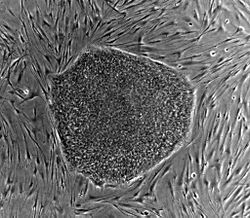
Human Embryonic Stem Cell http://upload.wikimedia.org/wikipedia/commons/  thumb/3/3e/Human_embryonic_stem_cell_colo  ny_phase.jpg/687px-Human_embryonic_stem_cell_colony_phase.jpg

For the past decade, an area of science that has been rapidly expanding is the topic of stem cell research. Stem cells have been helpful with understanding cancer,  treatments for deafness, birth defects, and organ transplants. We have heard about the profound discoveries involving stem cells in every area of medicine so it would be appropriate to briefly discuss what these mysterious cells are and why scientists are so excited about it.

Stem cells are living cells that can be found in all multicellular organisms. There are 2 types: embryonic stem cells and adult stem cells. Embryonic stem cells  are are found inside a blastocyst and the procedure used to extract the cell requires the destruction of a human embryo; the stem cell is capable of differentiating into 220 cell types in our body. Adult stem cells are also undifferentiated but they differ from the embryonic stem cells in that they exist in the body after development and multiply where there is damaged tissue.

The reason behind the excitement of scientists over stem cells is because stem cells play a large role in explaining why certain diseases or conditions arise in individuals. Scientists are able to study how the stem cells transform into the different kinds of specialized cells that make up a human being. Access to stem cells gives scientists a better understanding of how a normal cell is supposed to work.

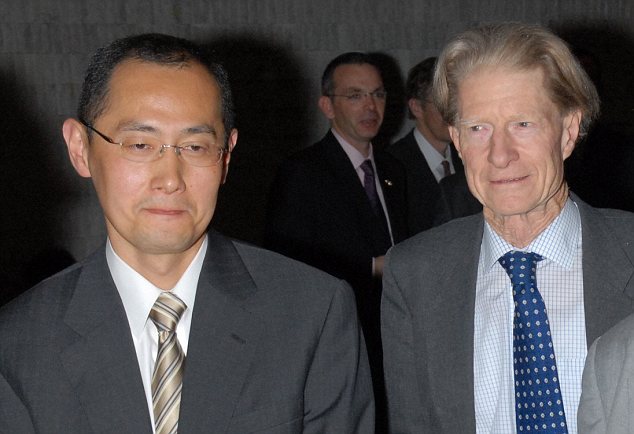
Recently, a Nobel Prize was awarded to two scientists who made the incredible discovery  of the procedure that can transform adult cells back into embryonic stem cells that can eventually grow into healthy tissue in damaged brains, hearts, or other organs. This means that a patient with Alzheimer could

Nobel Prize winners Shinya Yamanaka (left) and Joseph Gurdon (right) http://i.dailymail.co.uk/i/pix/2012/10/08/article-2214605-15689030000005DC-778_634x434.jpg

potentially regrow the damaged brain tissue and recover. This discovery, although is a great step forward for stem cell research, is still under revision because scientists are still unsure of the stem cell’s multiplying behavior if they were to implant this new kind of tissue into a person’s brain or heart. It could potentially multiply with no control and cause the growth of a tumor.

Of course, with any kind of new scientific discovery, comes debate and controversy over the ethics of the scientific advance. Due to the fact that stem cell research, namely embryonic stem cell research, involves destruction of a human embryo during the stem cell extraction, similar issues that revolve around abortions exist.

On a more political note, here is a video of President Obama supporting embryonic stem cell research by reversing the limits that President Bush placed on it:

YouTube Preview Image

Submitted by: Elsie Ng