Category Archives: Biological Sciences

Biomarkers in transplantation

A way to predict and diagnose organ rejection without the need for invasive biopsies
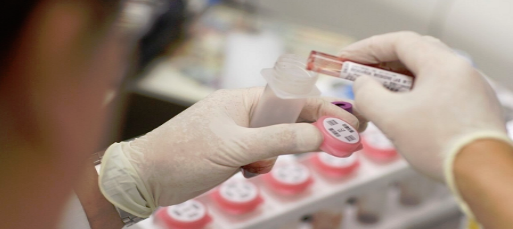
Source: http://bit.ly/PTa5tl

For patients with end stage organ failure, transplantation is often the only possible treatment. It involves the replacement of a failing organ with a healthy one from a donor. Although the surgery itself may go smoothly, the patient’s immune system may react to the new organ and reject it.
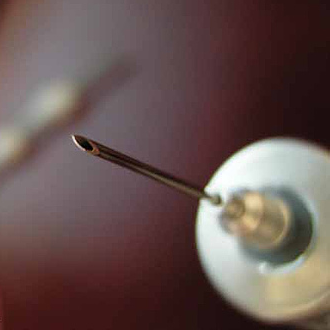
Biopsy needle.

Biopsy needle.
Source: http://bit.ly/hHKPJP

At present, when doctors want to detect if the recipient’s immune system is attacking the transplanted organ, they take a small sample from the tissue in a procedure called biopsy. Tissue biopsies are costly, painful procedures and in the first year post-transplant, patient would typically undergo around 14 of them. The use of blood biomarkers could decrease or completely eliminate the need for biopsies. The biomarkers would diagnose organ rejection using a simple blood test. This would be a simple and non-invasive method.

Biomarkers explained

In the context of graft rejection, a biomarker is a molecule produced by the action of genes. It can be messenger RNA, a protein or a metabolite, which is produced as a result of body’s immune response. Because people with organ failure express different types and/or quantities of these molecules than healthy people, they can be used as a reliable measure of body’s reaction to the transplanted organ. Their presence can be detected in a blood sample and used as an indicator of the impending organ rejection.

The development of biomarkers is currently underway by the PROOF Centre research team as a part of ongoing movement towards a personalized medicine approach – a patient-centered care providing treatment that is “particularly suited to that patient at that particular time”.

Dr. Scott Tebbutt, Chief Scientific Officer for the PROOF Centre of Excellence, talks about biomarkers:
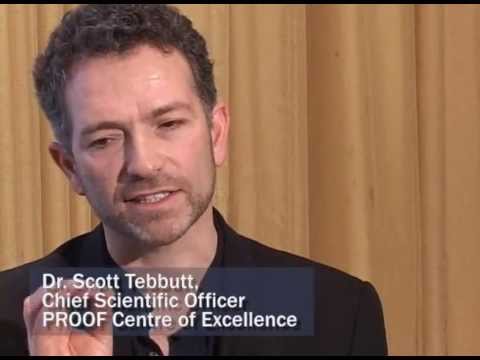
YouTube Preview Image
Source: http://www.proofcentre.ca/what-is-a-biomarker/


For more information about the PROOF Centre and biomarkers, please read here.

Hopes for the future

Laboratory tests currently being used for graft monitoring do not provide a clear measure of immunological risk or accommodation between graft and host. Tissue biopsy thus still remains the primary diagnostic tool for monitoring graft status despite its many limitations. By implementing the use of biomarkers in post-transplant care, researchers hope to completely eliminate or decrease the frequency of biopsies in transplant recipients. Replacing biopsies with a simple blood test would not only reduce patient’s emotional and physical discomfort but would also decrease healthcare costs by preventing disease and improving health.

Submitted by: Nesim Lichy


References

1. Biomarkers: A new way to predict and diagnose organ rejection. Transplant Research Foundation of British Columbia Web site. http://www.trfbc.org/site/PageServer?pagename=News_Biomarkers. Accessed 09/20, 2012.

2. Keown PA, McMaster WR, McManus BM. Tools to identify organ rejection and immune quiescence for biological understanding and personalized medical care. Biomarkers in medicine. 2010;4(1):115-121.



Another Pyschological War Trobules Veterans

Early this year, tragic event happened in Kandahar, Afghanistan. The United State army Staff Sgt. Robert Bales stormed a small town at night and slaughtered 17 men, women, and children. Speculation swilled that post-traumatic stress disorder (PTSD), a psychological sickness that is caused by traumatic events, triggered Bales to execute such violent behavior. However, there are controversy arguments that not all PTSD patients show such extreme violent behavior as Bales. Therefore, this blog is created to assess how stress disorder affects daily lives of combat experienced veterans.

Under attack in Afghanistan

Picture from: GORAN TOMASEVIC/REUTERS
http://www2.macleans.ca/?attachment_id=25231

Concern is raised within U.S. military that soldiers who served in Iraq and Afghanistan may suffer from extreme stress like PTSD. This is because these soldiers are exposed to life-threatening events like terrorist attack and improvised explosive device (IED) that provokes development of PTSD. To understand the severity of mental health of the returning veterans from Iraq and Afghanistan, four U.S. combat infantry units (three Army unit and one Marine Corps unit) were studied. Sample of 2,530 armies were survey before deployment to Iraq and completely different sample of 3,671 military personnel was surveyed after their duty. The study showed that soldiers from Iraq were diagnosed more with PTSD than those from Afghanistan. About 15.6-17.1% of  veterans from Iraq were diagnosed with PTSD; meanwhile only 11.2% of veterans from Afghanistan were diagnosed. Reason for such difference can be explained by looking at the casualties of U.S. troops in these two countries. Statistic shows that in year 2004, U.S. had 849 casualties in Iraq while only 52 casualties were reported in Afghanistan. Such difference in casualty numbers explains the relationship between combat experience and the development of PTSD. Therefore, we can claim that soldiers with more combat experience would develop more PTSD.

Image from: CNN
http://www.cnn.com/2012/09/29/health/delayed-veterans-benefits/index.html?hpt=hp_c1

To what extend the stress affect a person’s life can be understood by looking at the life of veteran Mike Rioux. Rioux was deployed to Afghanistan in 2010 and faced numerous life-threatening combat situations that led him to develop PTSD. Due to PTSD, Rioux suffers from headaches, insomnia and nightmares and he have extreme anxiousness that makes him difficult to comprehending questions. So based on Rioux’s case stress could make one’s life very miserable.

Recent research by Guido van Wingen states that human has the ability to recover from extensive stresses under sufficient amount of time. Wingen studied 33 Netherland soldiers who were deployed to Afghanistan and found that these soldiers had impairment in cognitive functions. But after 1.5 years under non-combat situation their cognitive function fully recovered. The drawback from this study is that sample size was relatively small to represent the true population. In addition, the study was based on Netherland soldiers so it cannot represent other NATO forces in Afghanistan.

In conclusion, many soldiers who served in Afghanistan or Iraq suffer from extreme stresses after their deployment. Such stresses promote PTSD or other psychological diseases that ruins veteran’s lives. However, human are capable of overcoming stresses when given sufficient time for recover.

By Young Ryu


Beavers: Friend or Enemy

Source: http://animals.nationalgeographic.com/animals/mammals/beaver/

Source: http://animals.nationalgeographic.com/animals/mammals/beaver/

Throughout history, humans have a love-hate relationship with beavers. Farmers despise them because beaver dams flood their precious cropland. Hudson’s bay company thank beavers for their pelts. Some of us might even find beavers kind of cute, with their big flat tails and giant guinea pig like figures. So, are beavers our friend or enemy? Here are the pros and cons that can better help you make your decision.

Beavers: The cons

Beavers are notorious for their destruction. With their teeth, beavers can cut trees up to 3 feet in diameter.  Beavers use these trees to build dams on rivers and streams . These dams cause flooding which affects crops, pastures, and drowns stands of trees. This flooding can endanger public safety by saturating the soil and making bridges, and roads unstable. In addition, beavers can chew through valuable, rare and important trees. For example, they took out some of Washington D.C’s world famous cherry blossom trees.  Also, fallen trees can pose as a hazard to utility lines and buildings.

What benefits do beavers provide?

Source: http://www.skipmackey.com/fishstories.html

Source: http://www.skipmackey.com/fishstories.html

Beavers provide several environmental benefits. One of the greatest benefit that beavers provide is the prevention of drought. An experiment  done by Hood et al. show that beavers have a dramatic influence on the maintenance of wetlands during extreme drought.  Due to their ability to create and maintain open areas of wetland, removal of beavers is equivalent to a wetland disturbance such as groundwater withdrawal. Another importance of beaver dams is the self purification of water in beaver ponds. Fine sediments and organic substances settle at the bottom which creates a perfect substratum for aquatic vegetation development. This creates a eutrophic  pond  and the pollutants flowing into the pond can be decomposed by micro-organisms. The dams  also serve as macro-filters that stops the contaminants carried by the water current. For example, herbicides and pesticides that flow into streams are decomposed by bacteria in the beaver dams. Finally, wetlands formed from creation of beaver dams make wonderful habit for creatures such as fish, insects, amphibians, reptiles, and several types of aquatic plants.

So are beavers really all that bad?

In conclusion, other than physical and agricultural damage caused by flooding,  beaver dams create lots of benefits such as drought prevention, purification of waters, and creating new habitats. Personally, I think the advantages beavers provide outweighs the disadvantages. Especially from an ecological point of view, the presence and activity of beavers positively influence the environment.  Whether or not you feel the same is up to you.

Here is a video on how beavers build their dams to help better understand their impact on the environment:

YouTube Preview Image

Blog post submitted by: Celine Hsin


Triclosan: Harmful Chemical Found in Soap

If you take a look at the bottle of soap in your bathroom, triclosan might just be listed as one of the ingredients.  Recent studies have shown that the chemical triclosan may impair muscle function. It is also commonly found in supplies that we use on a daily basis, such as deodorants and toothpastes. First developed in the 1960s, triclosan was used in hospitals to prevent bacterial infections. It was then included into other products such as kitchen utensils, trash bags and bedding once manufacturers were certain that triclosan was able to kill harmful bacteria.

Researchers from the University of California did a study and found that triclosan does impair muscle function in both humans and animals. In their study, they isolated human muscle cells from the heart and skeletal muscles and exposed them to triclosan. They also tested how mice and fathead minnows would react to triclosan. Results showed that in the isolated human muscle cells, triclosan interrupted two proteins, important for proper muscle functioning from communicating. In the mice, the function of the heart muscle was reduced by 25% and there was also an 18% reduction in grip strength. The fathead minnows exposed to triclosan were found to be worse swimmers when compared to fathead minnows that weren’t exposed to triclosan. These results definitely show that exposure to triclosan can impair muscle function, especially cardiac function. According to the U.S. Food and Drug Administration, triclosan is not known to be any more hazardous than just washing with non-antibacterial soap, but further studies will be done and reviewed to the public in winter 2012.

There are certainly strong evidences provided to show how we should be concerned about triclosan being used in products. Experts are concerned that a resistant bacteria strain will develop with prolong use of this chemical. Although triclosan isn’t regulated as a drug, it should still be a concern to human health and the environment. Hospitals should continue using antibacterial soap that contains triclosan because it is important in preventing the spread of bacteria from one patient to another. But antibacterial soap that contains triclosan really isn’t needed for household hang washing. According to Dr. Peter N. Wenger, the most effective way of getting rid of bacteria on your hands is to wash thoroughly, making sure to also wash between the fingers. So try to buy triclosan free soap and remember to wash your hands thoroughly to prevent the spread of bacteria!

References:
Pakalert Press
– Smithsonian
–  Live Science

Post Submitted by Mandy Choi

Do “Smart Drugs” Make Us Smarter?

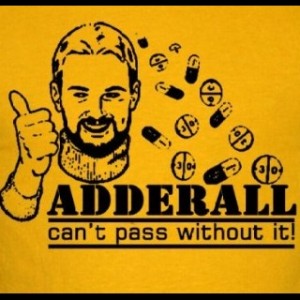
Picture from www.iamrogue.com/limitless

Have you seen the movie “Limitless”? Eddie Morra is an unsuccessful writer whose life is transformed by a top-secret “smart drug” NZT. It allows him to use 100% of his brain and he can remember everything he has ever read, seen or heard.

Do you know that the made-up plot in the movie, in fact, happens in real life? A number of people, including students in universities, keep using “smart drugs”, like Adderall, Ritalin, and modafinil, and they say that it has given them the boost to work non-stop for 10 hours a day and made them more concentrated and more intelligent. Originally, Adderall and Ritalin are prescribed for patients with attention deficit disorder (ADD) or attention deficit hyperactivity disorder (ADHD); modafinil is generally taken as the treatment of narcolepsy. However, some university students are taking the drugs, because they hope to be smarter in order to get higher grades.

NBC News reported this kind of issues on TODAY: “I figured if everyone else is doing it, why shouldn’t I get the advantage?”

A surprising number of students take the drugs without thinking of the risks of the drugs. An American study, cited in the journal Nature, estimated that up to 25% of students at some campuses had taken neuroenhancing drugs in the past year. They think they are doing something that their body can tolerate, but they do not realize these drugs are highly addictive

Picture from bioethics.net

substances. For example, a freshman honor student named Aly said that she took only one week to become dependent on Adderall. Besides addiction, there are numerous side effects. Ritalin, as an example, can cause nervous system side effects (such as, dizziness, headache, nervousness, trouble sleeping), gastrointestinal side effects (such as, nausea, vomiting, and abdominal pain), and cardiovascular side effects (such as, changes in blood pressure and pulse rate).


Continue the story in “Limitless” mentioned at the beginning, Eddie Morra suddenly experiences financial and social success, but soon realizes that he has to keep taking the drug, which has lethal and lasting side effects, in order to keep the ability. Does he really become smarter? The same questions apply to these drugs like Adederall. Do people who take “smart drugs” really gain IQ? Dr. Greely published her paper about Cognitive-Enhancing Drugs on Nature, and stated that these drug typically improve concentration and a few areas of cognitive performance, but only while the drug is still in the blood. Therefore, it may be more accurately to refer to these drugs as productivity enhancers instead of intelligence enhancers. Seriously, an overdose of Ritalin can be fatal. Moreover, these drugs are recently developed, thus lacking long-term observations of future physiological effects.


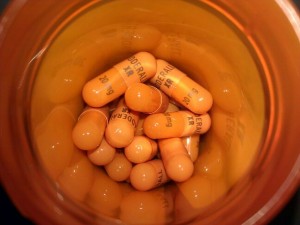
Adderall XR 20mg capsules by Patrick Mallahan III

At the end, I wish people would stop using these “smart drug”, because they do not make people actually become more intelligent, but can cause addiction and ruin people’s lives.


A Step Towards Finding Stuart Little?

Unfortunately, scientists have not discovered a rodent that can talk and dresses up as a human. However, they have discovered that rats can experience humanistic emotions and exhibit human characteristics.

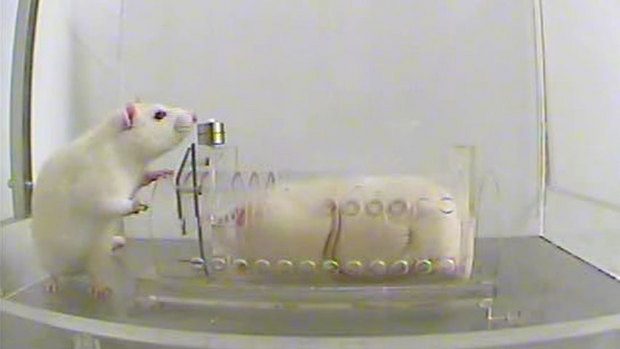
The test rat in the process of freeing the imprisoned rat.
Source: http://www.cbc.ca/news/offbeat/story/2011/12/09/rats-empathy-chicago.html

Inbal Ben-Ami Bartal et al. at the University of Chicago have found that rats have the ability to show empathy towards other rats. The research team’s experiment was designed to test whether a rat would open a cage to free another comrade inside. The results showed that the tested rat would free their distressed companion when it hears its calls, regardless of rewards. In order to further test this empathetic behaviour, the researchers performed trials where they placed chocolate in another container nearby to see if the test rat will head to the food instead of the imprisoned rodent. Surprisingly, instead of the anticipated results, the test rat chose to free the restrained rat. Furthermore, instead of hoarding the chocolate, the test rat went as far as to share it with the other.  As such, not only have rats shown empathy in this experiment, they also appear to retain a pro-social behavior towards other rats which is reminiscent of behavior recognized in our culture.

Source: http://rosieheffernan.com/MISC-1

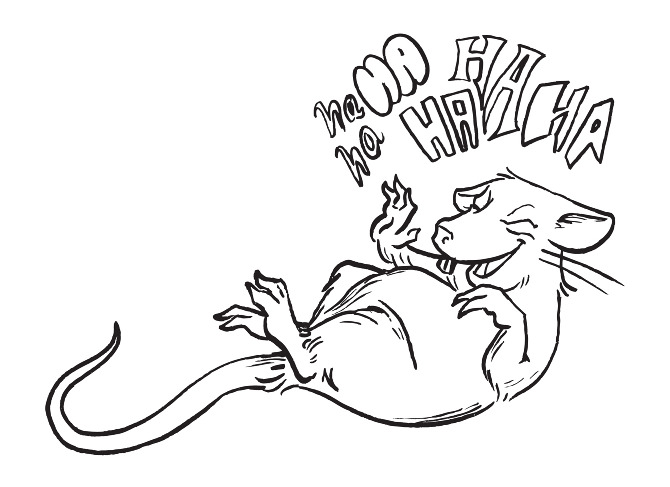
Another finding that exhibits human characteristics found in rats was conducted by Jaak Panksepp, a neuroscientist at Washington State University. He discovered that when tickled, rats emit chirps that are akin to laughter heard through Bat Detectors, a device that can bring high frequencies to our auditory range. These 50 kHz chirps were found to be related to positive affective state in rats (Burgdorf 2011) and can also be heard when the rodents play and chase each other.

YouTube Preview Image

So why should people care whether rats can show empathy or laugh when tickled? These discoveries allow scientists to understand how the brain of specific animal works and its subsequent effect on behavior. Although these studies are focused on rats, the same experimental research may be applicable to other animals as well. This may in turn resolve some of the mysteries of the animal kingdom, from the process that fuels their keen instincts to the impulse that drives certain behaviours.

If further discoveries are made, perhaps we may one day see a genuine Stuart Little that can communicate with us. On the other hand, we might find a duo Pinky and the Brain  and stop them from taking over the world.

Blog post submitted by: Tiffany Ho

References:

Burgdorf, Jeffrey, Jaak Panksepp, and Joseph R. Moskal. “Frequency-Modulated 50 kHz Ultrasonic Vocalizations: A Tool for Uncovering the Molecular Substrates of Positive Affect.” Neuroscience and biobehavioral reviews 35.9 (2011): 1831-6. Print.


Hearing Loss is No Clowning Matter


http://julieamarxhausen.files.wordpress.com/
2011/03/finding-nemo.jpg

Everyone’s favourite clownfish is back, but this time, he’s in 3D!  With the beloved movie Finding Nemo returning to theatres this weekend, I thought it would be fun to do a little research on our friend, Nemo.

Everyone who has watched the movie knows that Dory is a forgetful fish, but few people know that Nemo, the clownfish, can potentially be a deaf fish. Recent studies have shown that clownfish are quickly losing their hearing due to ocean acidification caused by fuel emission. In fact, over half the CO2 emission is absorbed by the ocean, thus lowering its pH.  In this experiment, scientists performed a series of tests by increasing the amount of CO2 to what is predicted to be present in years 2050 and 2100, and then recorded the clown fish’s response to various predator-rich coral reef sounds.

Graph of CO2 consumption and pH levels of oceans as a function of time http://centerforoceansolutions.org/climate/wp-content/uploads/2009/12/Acid_pH_graph.jpg

Lead researcher Dr Steve Simpson from the University of Bristol explains: ‘We kept some of the baby clownfish in today’s conditions, bubbling in air, and then had three other treatments where we added extra CO2 based on the predictions from the Intergovernmental Panel on Climate Change for 2050 and 2100. We designed a totally new kind of experimental choice chamber that allowed us to play reef noise through an underwater speaker to fish in the lab, and watch how they responded. Fish reared in today’s conditions swam away from the predator noise, but those reared in the CO2 conditions of 2050 and 2100 showed no response.’

For baby clownfish such as Nemo, their ability to hear is one of their most important assets in ocean survival; with this component slowly being stripped from them, they are becoming increasingly vulnerable to predators. Not only is hearing a sense of protection, clownfish and other coral reef species also rely on their hearing to return home. To make matters worse, ocean acidification does not only affect external matters, it can damage the inside of the fish as well.

http://images.cdn.fotopedia.com/flickr-9201132-hd.jpg

The future of these clownfish’s hearing may be bleak , but scientists have yet to find out if they will adapt to the change in water pH. At the moment, this research is done one way; therefore there is a chance that clownfish can evolve and maintain their hearing.

Blog post submitted by:  Deborah Lo

References:

Daily Mail: “Finding deaf Nemos: Clownfish are growing up with impaired hearing ’caused by fossil fuel emissions.'” –  http://www.dailymail.co.uk/sciencetech/article-1393045/Finding-deaf-Nemos-Clownfish-growing-impaired-hearing-caused-fossil-fuel-emissions.html (accessed September 13, 2012)

University of Bristol: “Ocean acidification makes clownfish hard of hearing.” – http://cordis.europa.eu/fetch?CALLER=EN_NEWS&ACTION=D&RCN=33485  (accessed September 14, 2012)


Could coconut oil be the solution to creating an all natural toothpaste?

Image source: http://www.cbc.ca/news/technology/story/2012/09/03/sci-coconut-oil-tooth-decay.html

Oral hygiene affects everyone and with the increasing number of children and adults affected by dental caries, more commonly known as tooth decay, has some dentists suggesting we are undergoing an epidemic.  Tooth decay is caused by specific bacteria that erode the hard tissues of the teeth through the production of acid by hydrolysis of food debris.  When left untreated, this infection can spread and possibly lead to serious health complications such as Ludwig’s Angina.

Research done at the Athlone Institute of Technology’s Bioscience Research Institute in Ireland, suggests that coconut oil inhibits the growth of tooth decay causing bacteria and is comparable to the current toothpastes being used.  The research team led by Dr. Damien Brady tested the antibacterial action of coconut oil in both its natural state and when treated with enzymes.  Testing was performed on various strains of Streptococcus bacteria, the most commonly found bacteria in the mouth.  Dr. Brady and his team of researchers found that the enzyme-modified coconut oil substantially inhibited the growth of several strains of Streptococcus.  One of the acid producing, decay causing bacterium, Streptococcus mutans, was found to be strongly inhibited by the modified oil.  An earlier study demonstrating the effects of enzyme-modified milk and its reduction on the binding of Streptococcus mutans to tooth enamel encouraged Dr. Brady’s study on coconut oil.

Dental Caries
http://en.wikipedia.org/wiki/Dental_caries


Dr. Brady’s team presented their work at the Society for General Microbiology’s autumn conference at the University of Warwick on September 3, 2012.  Further work will be done on the molecular level interaction between coconut oil and Streptococcus bacteria.  The team will also be testing the modified-oil’s effect against yeast Candida albicans that can cause thrush.


Why do we care?

With the increase of dental caries being reported today, oral hygiene has become the center of public concern.  Excellent oral hygiene and fresh breath demands that we brush our teeth multiple times a day.  Although the frequency of tooth brushing has become the main focus, attention is lacking as to what ingredients in tooth paste are essential.  Tooth brushing has become a part of our daily routine, but have you ever wondered what your tooth paste is made from?  With ingredients like Sodium Hexametaphosphate, glycerin, hydrated silica and propylene glycol it’s no wonder we don’t question it more.  The public has demanded an increase in organic and health food products yet toothpaste seems to be overlooked.  The research being performed by Dr. Brady and his team could have potential benefits for the oral health care industry.  With the results from their research, there is the potential to reduce the amount of chemical additives in toothpaste and substitute modified coconut oil and other natural ingredients.

This blog post was submitted by: Layla Vera