Category Archives: Science Communication

Public vs. Private Schools in University Preparation

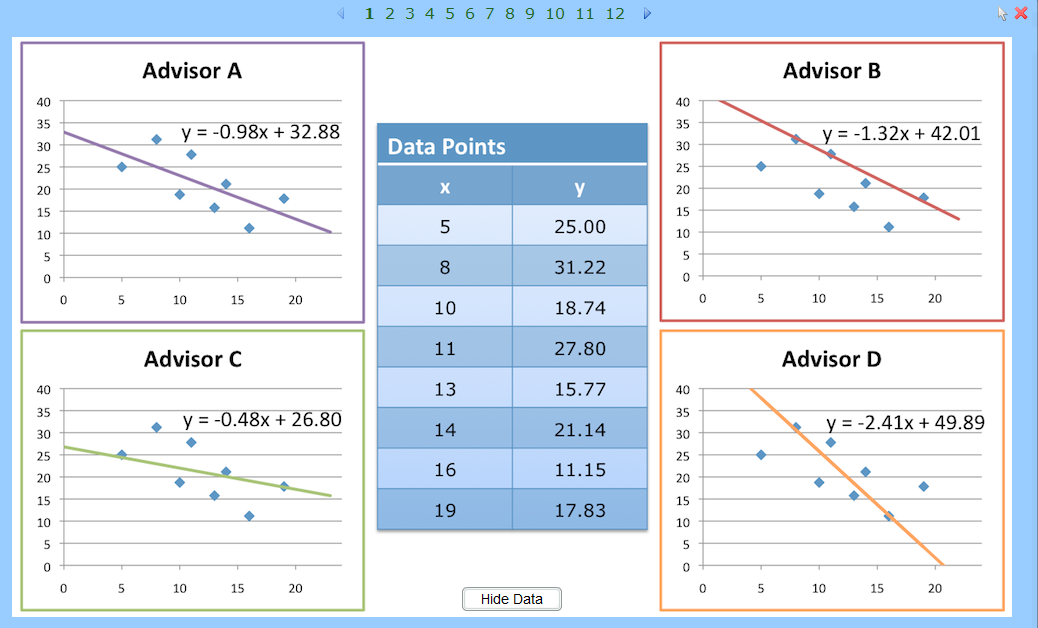
The adjustment to first-year university can be overwhelming for any high school graduates. Apprehension runs high while students question what this new chapter of their life will bring… Will you fit in and make new friends? Will you find the course load too academically challenging? It is important that students be well prepared for the transition from high school to university, but are they aware that the high school sector they attended may have already played a large role in this preparation?

Photo from: http://www.telegraph.co.uk/education/universityeducation/9204603/Fines-for-universities-slammed-by-admissions-don-Professor-Steven-Schwartz.html

Professor George Bluman, a mathematics professor at the University of British Columbia, has performed research on this topic. In his research paper, Bluman uses a two-level statistical model to determine the relationship between student performance in first-year physics courses and student variables such as high-school grades and gender. He then determines how this relationship is affected by high-school factors such as school type and location.

Check out the video below where Professor Bluman discusses the results of his study, that Vancouver public school students outperform private school students in first-year university.

YouTube Preview Image


Of course it is important to note that there are many academic differences between high school and university.

Firstly, high school students attend 7-8 hours worth of classes each weekday, of which attendance is mandatory. In university, however, the amount of time spent in class differs depending on the day, and whether the students attend class is their own prerogative. In addition, in high school, teachers are proactive in taking on the responsibility to ensure all students meet deadlines, complete homework assignments, and fully understand concepts. In university, however, if students struggle with course material, they must take personal initiative to refer to textbooks or attend office hours for additional help.

Ultimately, there is a larger sense of personal freedom in university when compared to high school. Students must possess a mature attitude toward their new-found independence. University can take a toll on students if they are inadequately prepared for this freedom.

If public school graduates are more academically successful in university than their private school counterparts, as Bluman’s research suggests, then it is assumed that public schools do a better job of preparing their students for University life.

Check out the podcast below where the pros and cons of public and private schools are outlined, and Professor Bluman’s view on them is expressed.

Audio clip: Adobe Flash Player (version 9 or above) is required to play this audio clip. Download the latest version here. You also need to have JavaScript enabled in your browser.


Professor George Bluman
Photo from: http://www.straight.com/article-215506/getting-students-snuff

After all, it is a personal choice as to whether to attend public or private schools, and there are many factors that must be considered in this decision-making process. However, the take-home message from this study is that contrary to the BC Fraser Institute Report and popular beliefs, students who have attended public schools can academically perform as well, if not better, than their private school counterparts.

Blog submitted by: Jackie Romeyn, Hayoung Nam, Mervin Wong, and Lydia Fan

Discovery of new materials resistant to bacterial attachment

A new class of polymers resistant to bacterial attachment discovered by a team of scientists at The University of Nottingham could lead to reduction in medical device failures and hospital infections.

Bacteria form communities, called biofilms, on many commonly used medical devices such as urinary and venous catheters. Because biofilms are formed by a very large number of bacteria, they are resistant to bodies’ immune defenses and antibiotics. This can lead to systemic infections or device failures (devices like catheters, heart valves and prosthetic joints).

Researchers from the University of Nottingham have found that when the novel material, made of new class of polymers, was applied to the surface of medical device, it repelled bacteria.

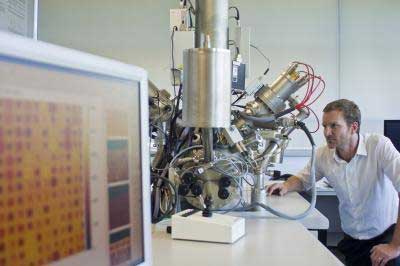
The study was lead by Dr. Morgan Alexander and Dr. Martyn Davies in the School of Pharmacy together with Dr. Paul Williams in the School of Molecular Medical Sciences.  The researchers believed there were new materials that could resist bacteria, but they had to find them. They needed to screen thousands of different chemistries and test their reaction to bacteria. This was not possible using conventional methods and so they were helped by experts from the Massachusetts Institute of Technology (MIT), who developed a technology to screen hundreds of material simultaneously, looking for new structure-property relationship. This approach led to identification of novel materials which were resistant to bacterial attachment and to biofilm formation.

The new materials work by preventing infection at the earliest possible stage, when the bacteria first attempt to attach themselves to the device. This means that biofilm formation is stopped. In the laboratory setting, scientists were able to reduce the numbers of bacteria by up to 96.7% when compared with a silver-containing catheter that is available commercially. Moreover, the polymers were effective at resisting bacterial attachment in a mouse implant infection model.

Infections caused by biofilms on the surface of implants are resistant to body’s natural defenses and they often cannot be treated with conventional antibiotics. By using the new polymers, bacterial attachment would be inhibited, and the body’s own immune system would be able kill the bacteria before they would have time to generate biofilms.

To hear about this exciting discovery from the scientists themselves, watch the video below:

YouTube Preview Image
Source: http://bit.ly/W4vkJ8

The research has been published in August 2012 in the journal Nature Biotechnology.

Submitted by: Nesim Lichy

Snakes on a plane! (The good kind).

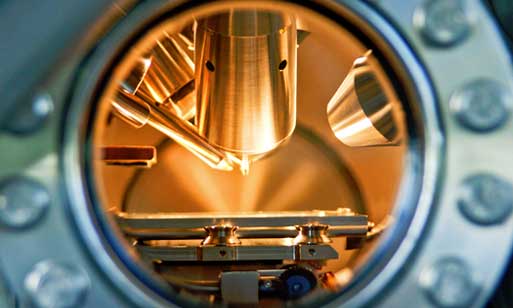
No need to call Samuel L. Jackson about this one! British jet engine manufacturer, Rolls-Royce, is developing robots with a snake-like appearance for use in the detection and repair of damage to aircraft engines.

A typical jet plane engine consists of a vast number of sensors to monitor engine conditions such as pressure, temperature, and vibrations. These sensors are monitored by ground-based machines that use intelligent algorithm technology. However, what if a bird were to hit a fan, or debris damage a compressor blade? For issues such as these, engine inspection is required.

Engine inspection is currently the job of a fibre-optic device called a borescope, which can be manually placed into a jet engine port by a borescope specialist. Unfortunately, there are far too few of these specialists available to operate borescopes within the 14,000 Rolls-Royce engines, flown by 500 airlines on 4000 aircraft worldwide.

“We don’t have enough specialists to go around so we need to automate this capability,” says Rolls-Royce senior vice-president Pat Emmott.

Another problem with the borescope is that once it detects an engine issue, the plane must be entirely taken out of commission in order to disassemble and repair the engine. This process is a setback that costs airlines millions of dollars.

Rolls-Royce aims to mitigate these challenges through the use of robotic snakes. This initiative is part of a €4 million European research project called “MIRoR”, which aims to be completed by July 2014. The hope is that these robots will potentially save significant time and money when airlines run into engine problems.

Wondering how they work? The snake robots enter an engine and are remotely controlled to relay images to an expert. Keep in mind that a running aircraft engine can reach up to 3,000-degree Fahrenheit temperatures. “These cameras won’t have to operate at engine temperatures — just survive them,” says Emmott. “So we’re going to need some interesting ways to keep them cool.” In addition to a camera, the snakes will also exhibit a UV laser to detect blade fractures, and an apparatus to sand down damaged compressor blades.

The snake will have to be of a substantial length in order to be effective for use in a jet engine. Rob Bukingham, director of OC Robotics in the UK, sees battling gravity as the biggest issue in this innovation, since the longer the snake, the more difficult it will be to control. According to Buckingham “the more joints you add, the more difficult it becomes to maintain the curviness.”

Interested to see these cool snakes in action? Take a look at this video to see a similarly designed robot snake designed by OC robots. This particular snake is able to cut metal and concrete!

YouTube Preview Image
Post submitted by Jackie Romeyn (group C).

Energy Drinks Contain More Caffeine Than Advertised

I’m pretty sure we all know what energy drinks are, and most of us probably drink it for that energy boost to stay awake at night to study for a midterm, final or to write a paper that was left till last minute to do. Everyone needs to be careful about how much caffeine they are consuming, but this is hard to do when the amount of caffeine aren’t even shown correctly on energy drinks. The reason why some companies don’t list caffeine levels is because there is no requirement to do so.

Researchers at Consumer Reports bought 27 top-selling energy drinks and shots and measured the amount of caffeine in each of them. They found that caffeine levels per serving ranged from about 6 mg to 242 mg per serving, some containing more than one serving. 5-hour Energy Extra Strength contained the highest amount, whereas 5-hour Energy decaf contained the lowest amount. They measured that Arizona Energy, Clif Shot Turbo Energy Gel, Nestle Jamba, Sambazon Organiz Amazon Energy and Venom Energy had about 20% more caffeine in it than advertised. Whereas Archer Farms Energy Drink Juice Infused was 70% below the amount of caffeine advertised. For most drinks though, numbers were within 20% of what was listed.

According to an article on Live Science, doses between 200 to 300 mg of caffeine aren’t harmful for adults, but exceeding 500 mg can lead to fast heartbeat, insomnia, and muscle tremors. Pregnant women should consume less than 200 mg daily, and children should not even drink energy drinks, and keep their caffeine consumption to about 100 mg daily. But the amount of caffeine a person can consume before it becomes harmful varies widely.

Even though it is quite scary to think of the outcome of drinking too many cans of energy drinks, it doesn’t mean you should stop drinking them completely. There are still benefits of drinking energy drinks, such as alleviating fatigue and increasing mental alertness which can improve a person’s concentration and focus. But just remember that energy drinks actually contain 20% more caffeine in it than shown on the can, so drink wisely!

Post Submitted By Mandy Choi