Category Archives: Science Communication

Talking Elephant

Most people have heard a parrot imitate human language, but other than that, has anyone even imagined a talking elephant? Neither did the elephant trainer in Everland, an amusement park in Seoul, Korea when he first heard someone talking in an elephant cage, where no one was inside… Except Koshik, a 16-year-old elephant. This asian elephant was first heard “talking” in Korean words in 2006, but only recently has the research begun to find out why and how human words are produced from this unusual source. The researchers believe that Koshik was able to mimic the sound of Korean language by close interaction with the trainer throughout his juvenile days, when he was the only elephant in Everland. The team say that the juvenile ages for elephants are crucial for the their social behaviour and development, but since all he got to bond with was his trainer, he ended up with this fascinating trait.

Koshik’s vocabulary consists of five Korean words, “annyong,” “anja,” “nuo,” “choa” and “aniya”, meaning “hello,” “sit,” “lie down,” “good” and “no.” These words Koshik was able to produce were the most common words said by the elephant trainer, backing up the evidence that Koshik was able to make these sounds due to very close human interaction. He wasn’t the only elephant claimed to produce human speech, as there was an elephant that apparently could produce Russian words, but it was never scientifically investigated.

What is really interesting about Koshik is that, elephants, can not morphologically “say” those words that he is producing. Elephants have trunks, instead of lips, so they can not produce any pronunciation. They also have long larynx, only able to create a low-pitch noise. Koshik, however puts trunk in his mouth to produce this sound. Angela Stoeger, a head researcher says that it is very surprising to see that Koshik is able match both pitch and timbre of human voice, which are the two most important aspects. The accuracy of the pronunciation was confirmed by native Korean speakers writing down what they heard on the recorded playback.

Koshik’s new language skill, not yet used by any other elephants lead to a very important insight as Stoeger and her researchers dig deeper as how exactly this elephant is able to make this sound, why this elephant decided to do so, and his remarkable intelligence.

YouTube Preview Image

Mokhan Kim

The Terrifying Facts about Hurricanes

Image of a news advisory for a hurricane

We have all seen images on the news depicting the devastating impact a Hurricane can have, Irene, Katrina and most recently hurricane Sandy.   Hurricane Sandy has been described as a “super storm” causing nearly 90 deaths, leaving more than 8.2 million households without power in 17 states and causing more than $20 billion in damages.  Hurricane Sandy began in the Atlantic then hit the Caribbean and subsequently made its way up the southeastern coast of the United States.  With all the attention on the destructive effects a hurricane can have, do we really know what a hurricane is and how it occurs?

What is a hurricane?

A hurricane is a powerful, rotating weather system that forms and intensifies over tropical oceanic regions.  Although they are most commonly referred to as hurricanes their technical name is tropical cyclone; tropical cyclones that form over the Atlantic Ocean or eastern Pacific Ocean are called hurricanes.  These storm systems are characterized by having a low pressure center and surrounding thunderstorms that create strong winds and heavy rains.  A unique characteristic of tropical cyclones that distinguish them from other cyclonic systems is that the center or “eye of the storm” remains warmer than its surroundings regardless of height in the atmosphere.

Hurricane Sandy is seen on the East Coast of the United States in this NASA satellite image taken at 3:55 a.m. ET Tuesday

How do hurricanes occur?

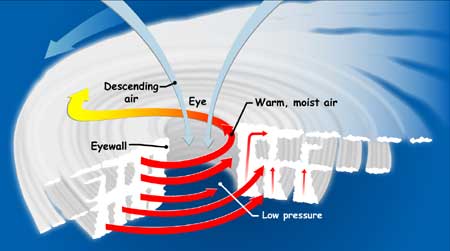
Hurricanes occur only over warm ocean waters because they use warm, moist air to increase its energy.   When the layer of warm, moist air above the ocean’s surface rises this creates an area of lower pressure below it.  The surrounding higher pressure air begins to move into this lower pressure region and as it does it begins to warm and it too rises.  As this air rises more high pressure air moves in to replace it.  The moist, warmed air is cooled as it rises and as this occurs the water in the air forms clouds.  This process is repeated continuously until an entire system of clouds and cyclonic winds is created.

Anatomy of a Hurricane

What are the effects of a hurricane?

With the heavy winds and rains associated with hurricanes, there are several devastating consequences of a hurricane.  As the hurricane approaches the coastline the extremely forceful winds push water towards the coast creating what is better known as a storm surge.  This abnormal rise of water is able to infiltrate inland causing flooding and destruction due to its force along its path.   Another source of flooding during a hurricane comes from the heavy rainfall.  Anywhere from 15-24cm of rain can fall in a very short time.  Arguably the source of the most damage caused by hurricanes comes as a result of the high and powerful winds.  The shear forces involved in these winds can alone cause damage to homes, street lights, roads, vehicles, trees and power lines.  The most damaging effect of these high winds comes from falling trees and power lines.  As trees and power lines are knocked down, they may land in any direction, causing harm to property, a loss of power or even worse, causing a loss of life.  In the case of hurricane Sandy, 18 people were killed in New York City, including 2 drowning deaths, 1 death caused by a fallen tree and 1 death caused by a live electrical wire landing in a puddle. 

To  see the latest update on the damage caused by Hurricane Sandy watch here. YouTube Preview Image

Gang Robbery by Terrestrial Hermit Crabs

Shell shortage of terrestrial hermit crabs leads to vicious social situations, whereby hermit crabs will gang up to take over shells inhabited by other hermit crabs. This causes some crabs to lose their shell, and often these crabs must resort to an unpractical shell which does not give sufficient protection.

Hermit Crab with an unusual and unpractical shell
Image from http://www.divematrix.com/showthread.php?9520-hehehehe-Hermit-Crab-movin-on-up!

Hermit crabs live in shells that were abandoned by other creatures such as snails. Unfortunately for terrestrial hermit crabs, abandoned shells are extremely rare in their habitat. This creates an issue for the terrestrial hermit crabs as they need to continue to find new shells to inhabit as they grow. Terrestrial hermit crabs can hollow out shells that they inhabit so that there is more room to grow, more room for eggs, and so that the shell is light to carry around. However, hollowing out shells takes time and energy for hermit crabs, and so the crabs would prefer to inhabit a shell which has already been hollowed out. As well, only the smallest of hermit crabs can fit into a shell which has not previously been hollowed out.

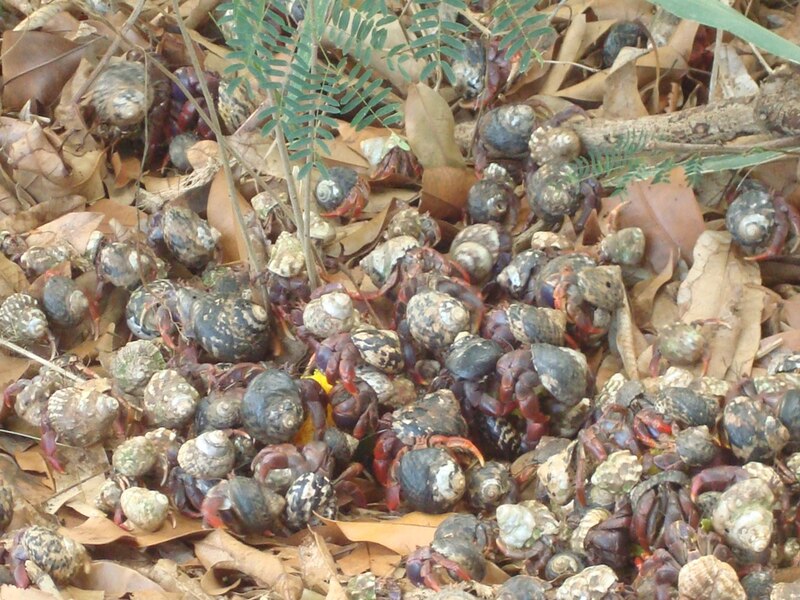
Mark Laidre, from the University of California, Berkeley, explains an unusual social routine of terrestrial hermit crabs. Dozens of terrestrial hermit crabs will gather and form a line when a group of three or more hermit crabs are initially together. This line is ordered from smallest to largest, with each crab holding onto the crab with the larger shell ahead of them in line. Crabs will try to pull other crabs out of their shells, and if successful all crabs will move up in line at the same time to inhabit a larger shell. Usually, only the smallest shell remains for the unlucky terrestrial hermit crab that was pulled out of its shell. This shell is not large enough for the crab to fully protect itself.

Terrestrial hermit crabs begin to gather and ‘fight’:YouTube Preview Image

This social behaviour is significant as it illustrates the evolution of hermit crabs in order to survive in their specific habitat. There is a shortage of shells for terrestrial hermit crabs, but not so much for marine hermit crabs. Because terrestrial hermit crabs need to ‘fight’ for appropriate shells throughout their life, they utilize this social behaviour to make it easier for smaller crabs to take over larger shells. Conversely, marine hermit crabs do not demonstrate this behaviour, since finding new shells is not a large issue.

To us humans, this social behaviour may seem ridiculous. In our terms, the terrestrial crabs’ routine is almost the equivalent of a gang of humans kicking someone out of a renovated mansion into the smallest and most dangerous of homes. But, for the terrestrial hermit crab it is a way of life. As of yet, there are no hermit crab laws to stop this from happening!

Submitted by: Angela Johnston

Lower Grades Caused by CO2?

http://www.creativeeducation.co.uk/blog/wp-content/uploads/2011/06/exam_1356851c-300x187.jpg

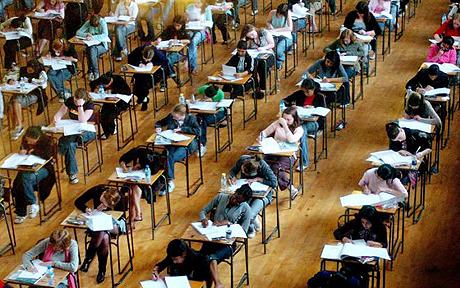
Students Taking an Exam
http://www.creativeeducation.co.uk/blog/wp-content/uploads/2011/06/exam_1356851c-300×187.jpg

Did you know that when you are in a room full of people taking an exam, their exhaling of CO­2 could actually be inhibiting your cognitive function and causing you to get a lower grade? CO­has long been a topic of interest and debate in the world of climate change but new findings suggest that CO­is also to blame for the inability to think!

According to a recent study published in Environmental Health Perspectives (EHP), every room should be ventilated such that the CO­levels are kept at the optimal level of 600 ppm. When CO­2  concentrations exceed this level, people are at risk of suffering reduced cognitive function. They found that high levels of CO­2 in classrooms is often associated with students cutting class and doing poorly on school related activities. The evidence that was provided for their findings was found through an experiment conducted by William Fisk  where the research team exposed a group of 22 college students to three different levels of CO­2: 600 ppm, 1000 ppm, and 2500 ppm. It was found that with increasing levels of  CO­resulted in decreased level of decision making abilities.

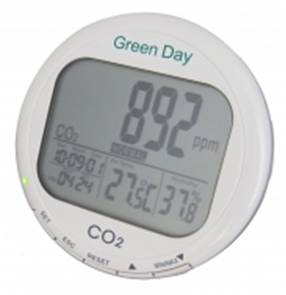
CO2 Monitor
http://homeharvest.com/homeharvest2000pics/TIM10CO2Monitor350.jpg

As a preventative  measure, classrooms can install a CO­monitor that gives readings of the CO­2 levels and make ventilation changes accordingly. However, with larger scale modifications such as ventilation changes, further research and experimentation needs to be done in order for the results of the experiment to be replicated.

The good news is that the mechanical engineers at UBC keep the  CO­2  levels in classrooms and lecture halls  at the very acceptable levels of less than 1000 ppm. So we don’t need to worry about  CO­preventing us from doing well on our exams. If you do want to do well on your exams, this short clip of brain exercises that might be helpful:

YouTube Preview Image

Blog Submitted by Elsie Ng

Turning tables: a male birth control pill on the horizon.

This is a newsworthy topic I came across earlier this year and thought would be interesting to share…

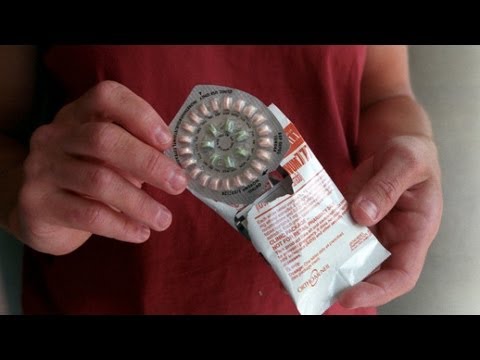
For years the birth control burden has been placed mainly on women. Female protection for unwanted pregnancy is available in the form of patches, pills, rings, coils, implanted devices… the list goes on! Male contraception, however, is limited and consists of finicky condoms or the permanency of a vasectomy, two methods which have been around since the 1950s.

Despite strong demand, the successful creation of a male contraceptive pill has yet to be realized. While female contraceptives can affect hormones such as estrogen, drug companies have avoided tampering with the male hormone, testosterone, since it can result in a number of unwanted side effects including increased risk of prostate cancer, or breast enlargement (never a good look!).

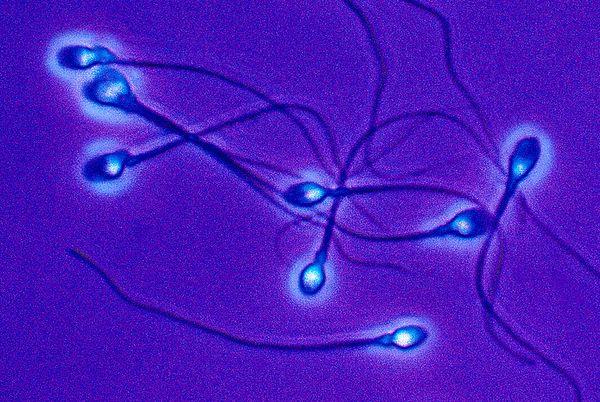
Recently, a group of researchers led by Martin Matzuk at Baylor College of Medicine and James Bradner at Dana-Farber Cancer Institute, accidentally came across a drug called JQ1 that can inhibit a gene necessary for sperm production, causing testicles to “forget” how to create sperm. This drug has yet to be tested on humans, but showed positive results on mice, with those tested returning to complete fertility once the drug use was fully stopped. Qinglei Li, a member of the research team, states, “it stopped the sperm production very dramatically. More good news is that there appear to be no side effects whatsoever. Once the JQ1 was no longer given to the mice, they were back to their normal reproduction rates, and it did not affect mating behaviour or the health of the offspring.”

According to a study by the Centers for Disease Control and Prevention, in 2006 approximately 49 percent of births in the U.S. were unplanned, despite the birth control options available for women. The introduction of a male birth control pill to the market could potentially lower this rate. Dr. Matzuk and his research team intend to continue their testing and adjust the structure of the drug in order to minimize the chance of any undesirable side effects. Dr. Matzuk believes that the drug will hopefully be available for human use within the next decade.

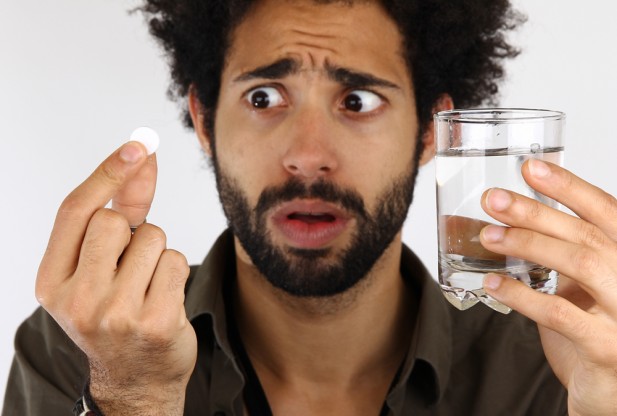
Although it is an exciting idea for women and men to be able to share the birth control responsibility, the question to consider is whether men would be willing to take such a pill if it were available to them?

Check out this interview with gynaecologist Dr. Sujatha Reddy on how the male birth control pill would work.

YouTube Preview Image


Posted by Jackie Romeyn.


Peanut butter diamonds

Image from http://fashionbride.wordpress.com/2008/10/25/love-is-in-the-diamonds/

Wish that you had some magic ingredients that would enable you to create a diamond that you could afford? Well, you probably already do! Diamonds have been created using only peanut butter as an ingredient. But don’t go running to your pantry too fast- it’s not as simple as that. Although, the majority of us can easily afford our favourite jar of peanut butter, turning this spread into diamond requires a process that is very costly.


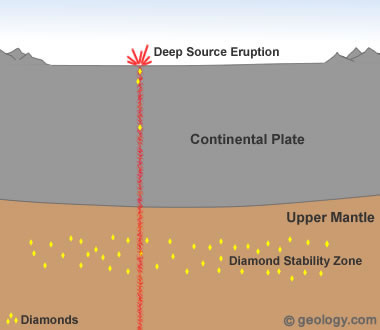
Diamond formation in mantle
Image from http://geology.com/articles/diamonds-from-coal/

Diamond is an allotrope of carbon, meaning that it is one form in which pure carbon can be found; it is the hardest naturally occurring material found on Earth. Naturally, diamonds are formed under specific conditions. According to Dr. Hobart King, most commercial diamonds are formed in specific areas of the Earth’s mantle. Located just below the Earth’s crust, the mantle is a high-density section of the earth’s interior upon which tectonic plates of the crust flow. The mantle is a very thick layer of the earth (spanning from about 30km to 2900km below the surface); thus, it has a large temperature range of about 870°C to 2200°C. Under these high temperature and pressure conditions, diamonds are formed from carbon sources in the mantle. However, diamond will only form at very specific conditions within the mantle: at temperatures over 1050°C and at depths of approximately 150km below the Earth’s surface. At these depths, humans are unable to obtain the diamond. But, when rare deep-source volcanic eruptions occur, material from the mantle is brought up the surface of the Earth where it can be obtained by us humans. From this, we get diamonds.


Discoloured diamond
Image from http://multichrome.blogspot.ca/2012/06/diamonds-from-peanut-butter.html

Professor Malcolm McMahon, of Edinburgh University, has been able to create conditions that mimic the high temperature and pressure conditions of the Earth’s mantle.  McMahon explains that he created these conditions with the ‘stiletto heel effect,’ where in this case, peanut butter was squeezed in between the tips of two diamonds. Using this method, pressures of approximately 45 to 60 kilobars with temperatures of 900 to 1300°C were generated. Peanut butter, being made from primarily roasted peanuts, is a good source of carbon. So under these conditions, McMahon was able to transform peanut butter into diamonds. These diamonds are not perfect, however, as many impurities from the peanut butter cause the diamond to be discoloured. Nevertheless, the diamonds created have previously been on display as they could be a step in the direction of creating cheaper, synthetic diamonds from easily-accessible materials.


So, we have been able to create synthetic diamonds in the laboratory; but, currently it would not be economical to create diamonds from peanut butter as creating the conditions required to do this is very expensive. Who knows, maybe one day a cheaper alternative will enable us to do this for less. So appreciate your peanut butter, like the dog in the video below, knowing that it alone can be used to create diamonds!

YouTube Preview Image

Posted by: Angela Johnston