Category Archives: Science Communication

Another Pyschological War Trobules Veterans

Early this year, tragic event happened in Kandahar, Afghanistan. The United State army Staff Sgt. Robert Bales stormed a small town at night and slaughtered 17 men, women, and children. Speculation swilled that post-traumatic stress disorder (PTSD), a psychological sickness that is caused by traumatic events, triggered Bales to execute such violent behavior. However, there are controversy arguments that not all PTSD patients show such extreme violent behavior as Bales. Therefore, this blog is created to assess how stress disorder affects daily lives of combat experienced veterans.

Under attack in Afghanistan

Picture from: GORAN TOMASEVIC/REUTERS
http://www2.macleans.ca/?attachment_id=25231

Concern is raised within U.S. military that soldiers who served in Iraq and Afghanistan may suffer from extreme stress like PTSD. This is because these soldiers are exposed to life-threatening events like terrorist attack and improvised explosive device (IED) that provokes development of PTSD. To understand the severity of mental health of the returning veterans from Iraq and Afghanistan, four U.S. combat infantry units (three Army unit and one Marine Corps unit) were studied. Sample of 2,530 armies were survey before deployment to Iraq and completely different sample of 3,671 military personnel was surveyed after their duty. The study showed that soldiers from Iraq were diagnosed more with PTSD than those from Afghanistan. About 15.6-17.1% of  veterans from Iraq were diagnosed with PTSD; meanwhile only 11.2% of veterans from Afghanistan were diagnosed. Reason for such difference can be explained by looking at the casualties of U.S. troops in these two countries. Statistic shows that in year 2004, U.S. had 849 casualties in Iraq while only 52 casualties were reported in Afghanistan. Such difference in casualty numbers explains the relationship between combat experience and the development of PTSD. Therefore, we can claim that soldiers with more combat experience would develop more PTSD.

Image from: CNN
http://www.cnn.com/2012/09/29/health/delayed-veterans-benefits/index.html?hpt=hp_c1

To what extend the stress affect a person’s life can be understood by looking at the life of veteran Mike Rioux. Rioux was deployed to Afghanistan in 2010 and faced numerous life-threatening combat situations that led him to develop PTSD. Due to PTSD, Rioux suffers from headaches, insomnia and nightmares and he have extreme anxiousness that makes him difficult to comprehending questions. So based on Rioux’s case stress could make one’s life very miserable.

Recent research by Guido van Wingen states that human has the ability to recover from extensive stresses under sufficient amount of time. Wingen studied 33 Netherland soldiers who were deployed to Afghanistan and found that these soldiers had impairment in cognitive functions. But after 1.5 years under non-combat situation their cognitive function fully recovered. The drawback from this study is that sample size was relatively small to represent the true population. In addition, the study was based on Netherland soldiers so it cannot represent other NATO forces in Afghanistan.

In conclusion, many soldiers who served in Afghanistan or Iraq suffer from extreme stresses after their deployment. Such stresses promote PTSD or other psychological diseases that ruins veteran’s lives. However, human are capable of overcoming stresses when given sufficient time for recover.

By Young Ryu



Beavers: Friend or Enemy

Source: http://animals.nationalgeographic.com/animals/mammals/beaver/

Source: http://animals.nationalgeographic.com/animals/mammals/beaver/

Throughout history, humans have a love-hate relationship with beavers. Farmers despise them because beaver dams flood their precious cropland. Hudson’s bay company thank beavers for their pelts. Some of us might even find beavers kind of cute, with their big flat tails and giant guinea pig like figures. So, are beavers our friend or enemy? Here are the pros and cons that can better help you make your decision.

Beavers: The cons

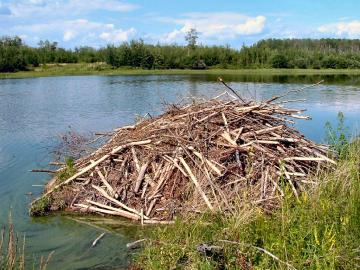
Beavers are notorious for their destruction. With their teeth, beavers can cut trees up to 3 feet in diameter.  Beavers use these trees to build dams on rivers and streams . These dams cause flooding which affects crops, pastures, and drowns stands of trees. This flooding can endanger public safety by saturating the soil and making bridges, and roads unstable. In addition, beavers can chew through valuable, rare and important trees. For example, they took out some of Washington D.C’s world famous cherry blossom trees.  Also, fallen trees can pose as a hazard to utility lines and buildings.

What benefits do beavers provide?

Source: http://www.skipmackey.com/fishstories.html

Source: http://www.skipmackey.com/fishstories.html

Beavers provide several environmental benefits. One of the greatest benefit that beavers provide is the prevention of drought. An experiment  done by Hood et al. show that beavers have a dramatic influence on the maintenance of wetlands during extreme drought.  Due to their ability to create and maintain open areas of wetland, removal of beavers is equivalent to a wetland disturbance such as groundwater withdrawal. Another importance of beaver dams is the self purification of water in beaver ponds. Fine sediments and organic substances settle at the bottom which creates a perfect substratum for aquatic vegetation development. This creates a eutrophic  pond  and the pollutants flowing into the pond can be decomposed by micro-organisms. The dams  also serve as macro-filters that stops the contaminants carried by the water current. For example, herbicides and pesticides that flow into streams are decomposed by bacteria in the beaver dams. Finally, wetlands formed from creation of beaver dams make wonderful habit for creatures such as fish, insects, amphibians, reptiles, and several types of aquatic plants.

So are beavers really all that bad?

In conclusion, other than physical and agricultural damage caused by flooding,  beaver dams create lots of benefits such as drought prevention, purification of waters, and creating new habitats. Personally, I think the advantages beavers provide outweighs the disadvantages. Especially from an ecological point of view, the presence and activity of beavers positively influence the environment.  Whether or not you feel the same is up to you.

Here is a video on how beavers build their dams to help better understand their impact on the environment:

YouTube Preview Image

Blog post submitted by: Celine Hsin


A bitter pill? Illegal narcotics to treat PTSD.

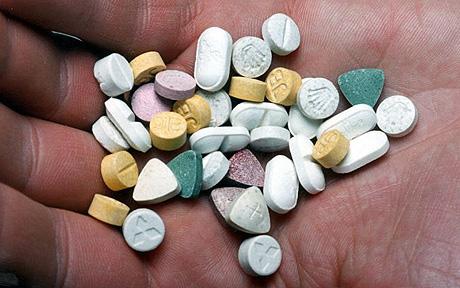
While it is known as a popular (but illegal) club drug, MDMA – which also goes by the street name, Ecstasy – is being clinically studied for use in the treatment of Post-Traumatic Stress Disorder (PTSD).

PTSD is a severe anxiety disorder that can develop after experiencing a psychologically traumatic event such as war, rape, childhood abuse, or a serious accident. Treatment of this condition can take a number of years, yet at least one-third of PTSD sufferers will never fully recover.

MDMA has the ability to stimulate a sense of happiness, promote closeness to others, and reduce anxiety. Researchers concerned with the underlying psychology of PTSD are discovering that MDMA, when taken by individuals who have the condition, demonstrate therapeutic benefits. MDMA appears to assist with the process of coming to terms with personal experiences, and controlling intrusive and traumatic memories.

Professor David Nutt, a psychiatrist and former drug advisor for the UK government, is a leading researcher on the therapeutic effects of MDMA. His view is that while MDMA has been made illegal in order to prevent youth from drug abuse, its therapeutic value has been overlooked. It must be added, however, that this is the same David Nutt who was asked to resign after he claimed that ecstasy and LSD were less dangerous than alcohol.

In a recent interview with BBC Radio 4, Professor Nutt discusses why the drug is being studied in clinical research and how it could be useful for treating the condition of PTSD. Click here to listen to a short segment of this interview.

Professor Nutt recently undertook a research study to test the benefits of MDMA for individuals experiencing PTSD, of which the results were promising. In this study, 12 treatment group subjects were given MDMA pills, while 8 control group subjects were given placebo pills. Both treatments were taken alongside therapy sessions. Results showed that ten subjects in the treatment group showed an improvement after two therapy sessions.

Even here in Vancouver, Psychologist Andrew Feldmar, Ph.D., is about to begin a similar study alongside Health Canada. Check out the video below where he talks about the importance of MDMA-assisted psychotherapy research for PTSD.

YouTube Preview Image
All in all, the use of illegal drugs as medicine is not a new occurrence. For example, medical marijuana has long been recommended as a treatment for pain, and is increasingly used in mainstream medicine. Ingredients from magic mushrooms have demonstrated calming effects on patients entering a late stage of cancer. There are other examples of the use of illegal drugs to address medical conditions. Will MDMA follow the same path?


Blog post submitted by Jackie Romeyn.

MIT researchers announce a possible solution to oil spills

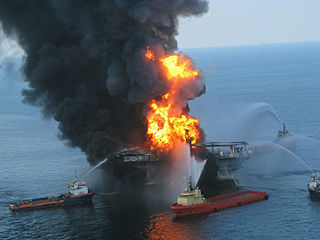
Picture courtesy of wikipedia

In 2010, a massive oil spill devastated the Gulf of Mexico, leaving much of its coast in a seemingly hopeless environmental disaster. As a result, some important questions were raised, such as what the most effective method of removing oil from the water would be. The world really demonstrated its lack of preparedness in light of this incident, as the solutions involved extremely inefficient measures, such as setting fire to the oil on the surface of the ocean. However, this incident sparked a significant interest in researching new methods which separate oil and water as a precaution against future spills.

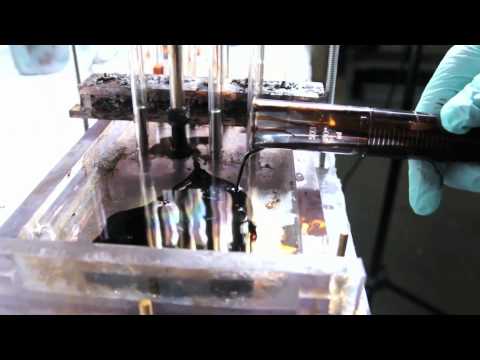
Recently, one of the most intriguing ideas driving research has been the use of magnetic nanoparticles with an affinity for oil. As a result, researchers at MIT have recently announced their progress on a ferrous nanoparticle which first binds to oil in water and can then be drawn out of the water by way of a magnet, taking the oil out with it. Furthermore, this technique is expected to be a vast improvement on the efficiency of previous techniques used to recover oil, because once the oil has been separated from the water, the nanoparticles can be recovered, which leaves the uncontaminated oil behind for sale or usage. Listen to MIT researchers Shahriar Khushrushahi and Markus Zahn explain their project here: YouTube Preview Image

The concept is there, but the question of how practical such a method will be when dealing with vast bodies of water is still uncertain. Also, the nanoparticles themselves could be seen as an environmental contaminant, so recovery of the oil and then recollection of the particles should probably be done in a controlled manner. Hopefully some resolutions to all the issues surrounding this idea come to fruition soon, because even British Columbia could stand to benefit from the security this method of cleanup might offer, in light of the recently proposed pipeline.

Cameron Tough


The Great Pacific Garbage Patch-a future vacation destination?

When you picture yourself on vacation, do you think of palm trees, sandy beaches, and clear blue waters? Ramon Knoester, an architect and designer from Holland has proposed an idea that may change future vacation destinations. He has plans to create an island made entirely from plastic waste collected from the oceans. He calls his creation “Recycled Island” and it would have the ability to sustain agriculture and a community. The idea is a creative solution to clean up the great garbage patch in the Northern Pacific Subtropical gyre. Would you vacation on a giant island made from recycled plastic?

Why does the patch need to be cleaned up?

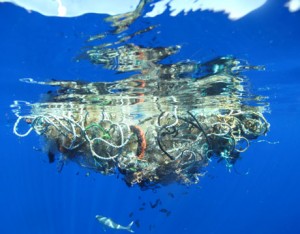
The existence of an oceanic garbage patch that has been increasing tenfold every decade since the 1950s has some consequences that are of immediate concern. For example, plastic pollution has direct damage on marine organisms and seabirds. These animals are dying from ingesting the material, or suffocating from entanglement. Over 100,000 marine mammals and 1 million seabirds die from plastic each year. Eliminating plastic debris is of great importance and transforming the great patch into a self-sustaining island could be a possible solution.

Can this dream become reality?

“Recycled Island” may seem like a far-fetched idea, but there is a chance that it will be created.   After presenting his vision at the Fifth International Marine Debris Conference in Hawaii,  Ramon Knoester was given a grant from the Netherlands Architecture Fund to design a prototype for the 10,000 square kilometer habitat. He admits that it is a daunting task that will take years to complete,  but it is possible and something needs to be done about plastic waste.  This island will not only reduce marine pollution, but it will provide a welcoming and sustainable environment for climate refugees. Who knows, maybe you will be vacationing to “Recycled Island” instead of Hawaii sometime in the future.

References:

  • Berton, Justin. “Continent-size toxic stew of plastic trash fouling swath of Pacific Ocean.” San Francisco Chronicle 110 (2007): 8
  • Dore, J., et al. “Ecosystem changes in the North Pacific subtropical gyre attributed to the 1991-92 El Nino.” Nature 373 (1995): 230-231.

How to choose the best butter or margarine product for you

“Help, too many choices!” – This could quite likely be the thought going through your head while standing in front of the butter and margarine section of the grocery store. It seems through the years that an increasing number of brands and products have appeared on the shelves. So, how do you begin to make a well informed decision of which to buy? It may initially take some time to look at the labels, but you are likely to continue to buy this product as a household staple for years to come. Here are some things to consider when deciding upon which butter or margarine product to choose.


Margarine – The major issue with margarine is the presence of trans fats. Health Canada notes that trans fats raise levels of LDL-cholesterol while lowering levels of HDL-cholesterol in the blood. This is not a good thing as LDL-cholesterol increases the risk of heart disease, while HDL-cholesterol helps to prevent heart disease. Dr. Kristie Leong explains that, in general, the more the liquid the margarine the less trans fat the margarine contains. Be sure to read the Nutrition Facts on the label as well as the ingredients list. Sometimes the label will say that there is 0 grams of trans fats, even though some is present in the product. Keep an eye out for hydrogenated and fractionated oils on the ingredients list to indicate the presence of trans fats.

Butter – The major issue with butter is the high content of saturated fats. According to Health Canada, saturated fats increase levels of both LDL-cholesterol and HDL-cholesterol in the blood; thus, saturated fats have both positive and negative effects. Consumption of saturated fats have previously been thought to increase the risk of coronary heart disease, cardiovascular disease, and stroke. However, a study by Siri-Tarino et al. (2010) suggests that there is no link between saturated fats and heart disease. Nevertheless, to be on the safe side try to consume butters with lower amounts of saturated fats.  On a positive note, butter is less processed than margarine, and, as Dr. Kristie Leong explains, butter is a source of other beneficial nutrients, of which margarine is not.

Overall, try to limit the amount of butter and/or margarine you consume on a daily basis. Eating it in similar quantities as the people in the video shown below is not advised.  I would opt for a butter that is low in saturated fat. If you prefer margarine, then choose one that does not contain trans fat. But, in the end, the product you buy is up to you!

YouTube Preview Image

References:

Siri-Tarino, Patty W, Sun, Qi, Hu, Frank B, and Krauss, Ronald M. (2010). “Meta-analysis of prospective cohort studies evaluating the association of saturated fat with cardiovascular disease.” The American Journal of Clinical Nutrition 91(3): 535-546.

Submitted by: Angela Johnston

The curiosity about Curiosity!

Curiosity is exactly what lead to the creation of Curiosity. That may sound strange if you haven’t been following NASA’s latest venture onto Mars!

Planet Mars
from: http://www.flickr.com/photos/47738026@N05/6859874535/in/set-72157624037672337/


NASA and the Curiosity Rover:

Curiosity Rover
from: http://www.flickr.com/photos/nasahqphoto/6332896370/in/set-72157627974209237/

NASA created the Curiosity Rover, a six-wheeled spacecraft that’s powered by a radioisotope power source and is equipped with mobile ability, computers, cameras, a robotic arm, and more. It was sent to determine if there’s places on Mars where the evolution of microbial organisms may have been possible. It will be looking out for water footprints that may be present on Mars. If these, or any other organic compounds are found, it could lead to conclusions that Mars has supporting factors for life.

Feeding our curiosity about the Curiosity Rover:

All around the world curiosity has risen about the $2.5 billion Rover and it’s activity on the fourth planet from the sun. People worldwide have been following the updates of the Rover since its landing.

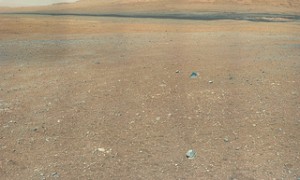
An image taken by Curiosity Rover of Mars
from: http://www.flickr.com/photos/30974264@N02/7795559728/

Since it’s landing on Aug. of 2012, Curiosity has been undergoing tests, such as checking the Robotic Arm and cameras. Up to now, the Rover has performed functions such as driving 82 metres on the planet and firing lasers. Notably, it has provided us with many images.

The Curiosity continues:

There’s been lots of discourse regarding whether the money spent on this mission was worth it. The internet, newsroom & media outlets have been buzzing with information, updates, and many debates. Much has scrutinized about the expenditures of the mission, however it’s undeniable that Curiosity’s journey is fascinating, and may lead to ground-breaking findings. NASA has gone under criticism for the budgeting of the project. However, NASA has been a front runner in developing much of the technology we use, and that makes me confident that the mission will ultimately prove useful.

It’s undeniable that an extremely large sum of money went towards funding this project, however scientists agree that if humanity wishes to continue to exist, space exploration could prove to be necessity. Furthermore, NASA’s come under fire for what some critics call careless spending on their missions. In NASA’s defence, through their space exploration and space programs, they’ve been able to enhance the technology that we use. For example, I’d like to point out to the critics the ever-useful creation of Solar Power Panels, which are indebted to the space program. Additionally, money funding Curiosity isn’t money that’s being taken away from any other programs.

Overall, NASA’s missions, including Curiosity, are all working towards advancing our technology and knowledge about things we know, as well as the things we do not yet know. And seeking out knowledge is never something that can be criticised.

The goals of Curiosity have been set and as it does it’s job, it will continually expand our knowledge about the spacecraft as well as Mars. Once it’s discovered soil that can be examined on the onboard chemistry lab, the mission will be accomplished. The world continues to curiously watch as Curiosity uncovers uncharted grounds!

References:

http://www.space.com/16385-curiosity-rover-mars-science-laboratory.html

Blog submitted by: Nadia Kari