Tag Archives: embryonic stem cells

Stem Cells? What’s That?

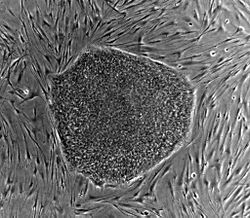
Human Embryonic Stem Cell http://upload.wikimedia.org/wikipedia/commons/  thumb/3/3e/Human_embryonic_stem_cell_colo  ny_phase.jpg/687px-Human_embryonic_stem_cell_colony_phase.jpg

For the past decade, an area of science that has been rapidly expanding is the topic of stem cell research. Stem cells have been helpful with understanding cancer,  treatments for deafness, birth defects, and organ transplants. We have heard about the profound discoveries involving stem cells in every area of medicine so it would be appropriate to briefly discuss what these mysterious cells are and why scientists are so excited about it.

Stem cells are living cells that can be found in all multicellular organisms. There are 2 types: embryonic stem cells and adult stem cells. Embryonic stem cells  are are found inside a blastocyst and the procedure used to extract the cell requires the destruction of a human embryo; the stem cell is capable of differentiating into 220 cell types in our body. Adult stem cells are also undifferentiated but they differ from the embryonic stem cells in that they exist in the body after development and multiply where there is damaged tissue.

The reason behind the excitement of scientists over stem cells is because stem cells play a large role in explaining why certain diseases or conditions arise in individuals. Scientists are able to study how the stem cells transform into the different kinds of specialized cells that make up a human being. Access to stem cells gives scientists a better understanding of how a normal cell is supposed to work.

Recently, a Nobel Prize was awarded to two scientists who made the incredible discovery  of the procedure that can transform adult cells back into embryonic stem cells that can eventually grow into healthy tissue in damaged brains, hearts, or other organs. This means that a patient with Alzheimer could
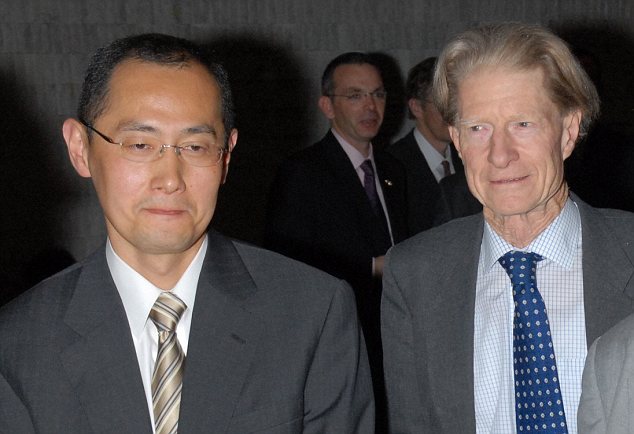
Nobel Prize winners Shinya Yamanaka (left) and Joseph Gurdon (right) http://i.dailymail.co.uk/i/pix/2012/10/08/article-2214605-15689030000005DC-778_634x434.jpg

potentially regrow the damaged brain tissue and recover. This discovery, although is a great step forward for stem cell research, is still under revision because scientists are still unsure of the stem cell’s multiplying behavior if they were to implant this new kind of tissue into a person’s brain or heart. It could potentially multiply with no control and cause the growth of a tumor.

Of course, with any kind of new scientific discovery, comes debate and controversy over the ethics of the scientific advance. Due to the fact that stem cell research, namely embryonic stem cell research, involves destruction of a human embryo during the stem cell extraction, similar issues that revolve around abortions exist.

On a more political note, here is a video of President Obama supporting embryonic stem cell research by reversing the limits that President Bush placed on it:

YouTube Preview Image

Submitted by: Elsie Ng

Scientific Advances in Treatments for Deafness

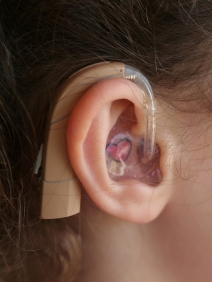
Behind the Ear Hearing Aid
http://www.hearing-aids-wizard.com/image-files/behind-the-ear-hearing-aid-decorated.jpg

One important characteristic of being human is our complexly developed senses; our senses are what place us at the top of the food chain. However, one in twenty five people in Canada are unable to experience one of the most fundamental senses for survival: hearing. Scientists have aimed to develop technology to improve the quality of life for those who are hearing impaired. There are already methods that are successful in improving hearing: the hearing aid and the cochlear implant. Furthermore, recent research  suggests that embryonic stem cells could also be of great help when treating the hearing impaired.

The hearing aid is the most common type of treatment that doctors recommend for hearing loss. It is an electronic device consisting of a battery and some form of a miniature loudspeaker that amplifies sounds that the user is unable to detect. Moreover, the device is customized to the ear shape of the user and fits comfortably inside the ear. An advantage of the hearing aid is that it is cost effective; no matter the financial state of the patient, it is possible to find an affordable device. A second advantage to the hearing aid is that it comes in different styles so finding the right one depends solely on the user’s preference. Its many advantages have widely popularized the use of it for people who are hearing impaired.

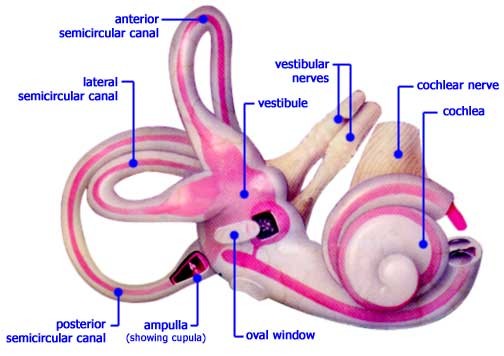
The Inner Ear http://drharris.ucsd.edu/Portals/0/inner%20ear%20detail.jpg

Another method of improving hearing is the surgical implantation of an artificial cochlea, also known as the bionic ear. The cochlea implant functions through skipping the component of the patient’s inner ear where the fully functional hair cells  used to be, and stimulating the cochlear nerves directly using electrical impulses sent by the implant.  This would allow the brain to be able to receive nerve impulses the same way hair cells would send nerve impulses.  The downside of the cochlear implant include risk of infection from the surgical procedure, and the high cost of the implant itself.

The last method that will be discussed was found recently by the University of Sheffield in England and involves an area of science that has been on the rise for the past twenty years: stem cell research.  This new discovery suggests embryonic stem cells can be modified such that it mimics the function of a hair cell, thus, allowing the ear to hear normally. Further research must be done to implement this method but researchers at the University believe this method, when paired with the cochlear implant, possesses the ability to treat people with  hearing impairment.

To demonstrate how life changing advances in science can be, here is a short video of a girl hearing herself for the first time after a cochlear implant.

YouTube Preview Image

The methods described are only a few ways science has advanced to treat those who are hearing impaired. Science still strives to discover new and innovative ways to give the same opportunities to the people who are hearing impaired as people who are not.

Submitted by: Elsie Ng