Tag Archives: medicine

The versatility of the little blue pills

A recent Canada Supreme Court decision on Nov.09 has ruled against pharmaceutical giant Pfizer, the holding company of the medicine Viagra, to renew its patent due to disclosed ingredients. This decision would allow other companies to produce cheaper generic versions of the drug. Viagra is a very profitable drug, as Viagra Canada alone made over 80 million dollars last year. However, Viagra is also a very versatile drug as scientists around the world find it useful for different purposes.

Viagra is a world well known drug specialized to cure erectile dysfunction for men. Sildenafil, the main ingredient of Viagra, can produce nitric oxide (NO) that increases blood flow by enlarging the blood vessels.

Researchers in the U.S. have found that Viagra could increase the effectiveness of cancer drugs when the two are used together. They discovered that applying Viagra and cancer treatment drugs at the same time could kill prostate cancer cells effectively in mice. Even though some experts are still debating the role of Viagra on cancer, it is still  a very positive sign for further cancer research.

There has also been  success with treating plants with Viagra pills by English scientists. Sildenafil produces nitric oxide (NO), and the chemical can also provide a boost for plant growth as well since humans and plants share genetic similarities in some ways.  The Viagra treated plants usually can stay fresh a week longer, and it works especially well for cut plants as their lifetime almost doubled with Viagra treatment. Thus, researchers even anticipated a gardener’s type of Viagra in the future.

Regardless of the price, Viagra seems like a very versatile and effective drug, and the unsuccessful patent renewal could lead to future competition among sildenafil drugs in Canada.
Biomarkers in transplantation

A way to predict and diagnose organ rejection without the need for invasive biopsies

Source: http://bit.ly/PTa5tl

For patients with end stage organ failure, transplantation is often the only possible treatment. It involves the replacement of a failing organ with a healthy one from a donor. Although the surgery itself may go smoothly, the patient’s immune system may react to the new organ and reject it.

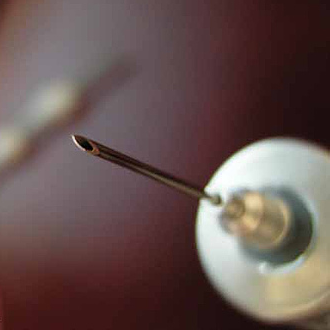
Biopsy needle.

Biopsy needle.
Source: http://bit.ly/hHKPJP

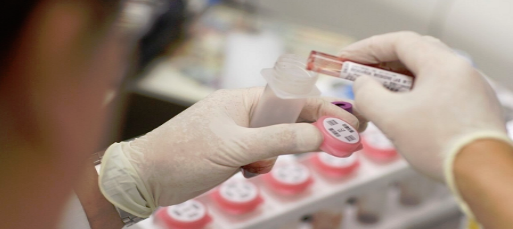
At present, when doctors want to detect if the recipient’s immune system is attacking the transplanted organ, they take a small sample from the tissue in a procedure called biopsy. Tissue biopsies are costly, painful procedures and in the first year post-transplant, patient would typically undergo around 14 of them. The use of blood biomarkers could decrease or completely eliminate the need for biopsies. The biomarkers would diagnose organ rejection using a simple blood test. This would be a simple and non-invasive method.

Biomarkers explained

In the context of graft rejection, a biomarker is a molecule produced by the action of genes. It can be messenger RNA, a protein or a metabolite, which is produced as a result of body’s immune response. Because people with organ failure express different types and/or quantities of these molecules than healthy people, they can be used as a reliable measure of body’s reaction to the transplanted organ. Their presence can be detected in a blood sample and used as an indicator of the impending organ rejection.

The development of biomarkers is currently underway by the PROOF Centre research team as a part of ongoing movement towards a personalized medicine approach – a patient-centered care providing treatment that is “particularly suited to that patient at that particular time”.

Dr. Scott Tebbutt, Chief Scientific Officer for the PROOF Centre of Excellence, talks about biomarkers:

YouTube Preview Image
Source: http://www.proofcentre.ca/what-is-a-biomarker/


For more information about the PROOF Centre and biomarkers, please read here.

Hopes for the future

Laboratory tests currently being used for graft monitoring do not provide a clear measure of immunological risk or accommodation between graft and host. Tissue biopsy thus still remains the primary diagnostic tool for monitoring graft status despite its many limitations. By implementing the use of biomarkers in post-transplant care, researchers hope to completely eliminate or decrease the frequency of biopsies in transplant recipients. Replacing biopsies with a simple blood test would not only reduce patient’s emotional and physical discomfort but would also decrease healthcare costs by preventing disease and improving health.

Submitted by: Nesim Lichy


References

1. Biomarkers: A new way to predict and diagnose organ rejection. Transplant Research Foundation of British Columbia Web site. http://www.trfbc.org/site/PageServer?pagename=News_Biomarkers. Accessed 09/20, 2012.

2. Keown PA, McMaster WR, McManus BM. Tools to identify organ rejection and immune quiescence for biological understanding and personalized medical care. Biomarkers in medicine. 2010;4(1):115-121.