Author Archives: SASHA PASSAGLIA

M4. P5

In the last of my blog posts, I wanted to share the process of self-inquiry. Throughout this course, I have begun to explore who I am as well as recognizing and acknowledging the damaging and lasting effects of colonialism in our Education System. I know that we must begin to embed Indigenous ways of knowing, being, and doing in every aspect of our Education and that there are no longer “one-offs” or “single activities” to check off a box. I know that I am responsible for sharing the knowledge I have gained so Indigenous Education can become Education one day. That we are all working towards acknowledging the colonialism that still resides in our classrooms and schools, and doing everything we can to change it.

Kelly Hansen, a Doctorate student from UBC wrote the paper;  The First Peoples Principles of Learning: An Opportunity for Settler Teacher Self-Inquiry which speaks about her experiences with embodying the First Peoples approaches to learning. In her writing, she notes the following questions for daily practice:

  1. How is what I am teaching related to nurturing well-being for myself, my students, our
    community, and the greater world?
  2. Where am I learning, and what is my relationship to this land? How do these
    relationships represent the consequences of our actions?
  3. How am I considering multiple generations in my learning?
  4. To what extent am I considering and appreciating Indigenous knowledge in my
    teaching and learning?
  5. What stories am I learning from, sharing, and creating?
  6. What is my relationship to time? Am I acting with patience?
  7. Who am I at this moment and who do I want to be?

It is this type of self-inquiry that allows us to be the Educators that our students and this world needs. To come from a place of understanding, compassion, and respect of language, land, and culture. To build relationships, listen to stories, and reflect on who you want to be so that you can help guide others in the same inquiry. These questions will become a part of my daily practice not only with my students but with my children as well.

M4. P4

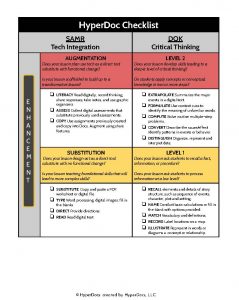
As part of my MET program, specifically in ETEC 510, we focused a lot on the purpose of technology in learning environments – basically – why we choose what we choose. One of the tools that have really made a positive impact on my learning, along with that of my colleagues in my school is Ruben Puentedura’s, SAMR model, which is seen below from The Scholarly Teacher.

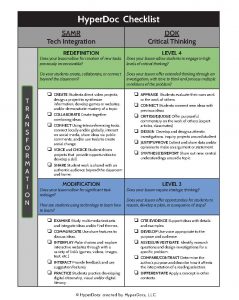
As I’m developing a digitally based Unit, it is crucial for me to engage in reflection of the type of technologies I’m going to use or have my students use and ensure that we are not just substituting for something else. Below is a checklist I plan on using to do just this – reflect on the choices I make to allow my students to create, connect, and collaborate beyond the classroom. You can CLICK the images to be taken to a Google Doc of this checklist.

M4. P3

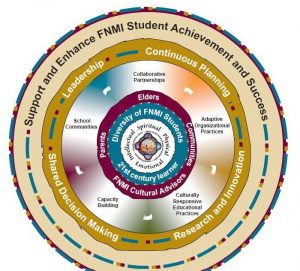
When creating a Unit that focuses on FPPL I wanted to ensure that I had a framework from which I could follow – a guide you might say – that I could refer back to throughout my planning. The Alberta Government developed a collaborative framework building relationships companion resource which speaks to teaching the whole child which is located at the center of the framework and is represented by the physical, emotional, intellectual and spiritual dimensions. Within an Aboriginal understanding of knowledge, education and learning, there is no separation of mind, emotions, body and spirit. Learning is understood to engage all four realms and is integrated into one’s daily activities at every stage of life. Therefore, the needs of the whole child must be addressed in order for the child to experience success, both academically and in life overall.

Although this particular framework focuses on First Nations, Metis, and Inuit Education, I believe it can be used to teach all students as we should always be focussing on our students and who they are first.

I’ve attached the guide – collaborative-frameworks-building-relationships – for your reference.

M4. P2

When the topic of Identity comes up in conversation, usually the first question people get is, “What are you?” or, “Where are you from?” Usually, I respond with something witty such as, “I’m a human, from Earth.” But, as you can imagine, I get a lot of eye rolls and will eventually tell people my incredibly elaborate racial and ethnic background.

As I continue to create my Unit, I keep coming back to Identity and how the importance of Place is in regard to Indigenous ways of knowing, being, and doing. In order to authentically develop a sense of our identity, I believe that the place(s) in which we have lived and/or have had lived experiences is crucial to our story.

Below is one option for Mapping our Identity.

  1. Using Google Maps or MapMe you can create your Identity Story by dropping pins in places that have helped you develop or create your Identity. Click HERE for a PDF on how to do this.

M4. P1

Jo-Anne Chrona said it best when speaking about the FFPL and what needs to happen first:

“a deep understanding of the FPPL is first necessary, and this understanding can then be used to guide educators’ choices about what is important to learn, and what kinds of learning experiences to create for, and with, learners in the contexts the learners and educators are in. This will vary from place to place, and community of learners to community of learners” (2014).

As I was researching the worldviews, I came across this incredible video resource from Focused Education Resources. You can find the link HERE. Of note for me, was the video below which goes through connectedness and relationships. Through this course I have developed a deep understanding for the importance of these particular principles and how we must “look for ways to relate learning to students’ selves, to their families and communities.”

References

Chrona, J.First peoples principles of learning. Retrieved from https://firstpeoplesprinciplesoflearning.wordpress.com/

Focused Education Resources. (2021). Retrieved from https://focusedresources.ca/en/supports-tutorialsvideosguides

M3. P5

Before we can explore Identity, we need to learn about how Identity was taken, stolen, and lost. As part of my professional development this year in school I wanted to find a way to connect with my students in a way that would be engaging for them but also authentic to Indigenous culture and tradition while at the same time amplifying Indigenous voices. I came across a Graphic Novel called This Place which explores the last 150 years of Canadian History retold by Indigenous writers and comics artists.

There are 10 stories throughout the novel, each one telling the story of the true, painful history that Canada has been so quick to hide and silence. The stories talk about Residential Schools, The 60’s scoop, land and water rights and highlights Indigenous people throughout history. It’s been one of the most incredible novels I have read to my class.

Watch below for the Book Trailer or Click HERE to read an excerpt.

M3. P4

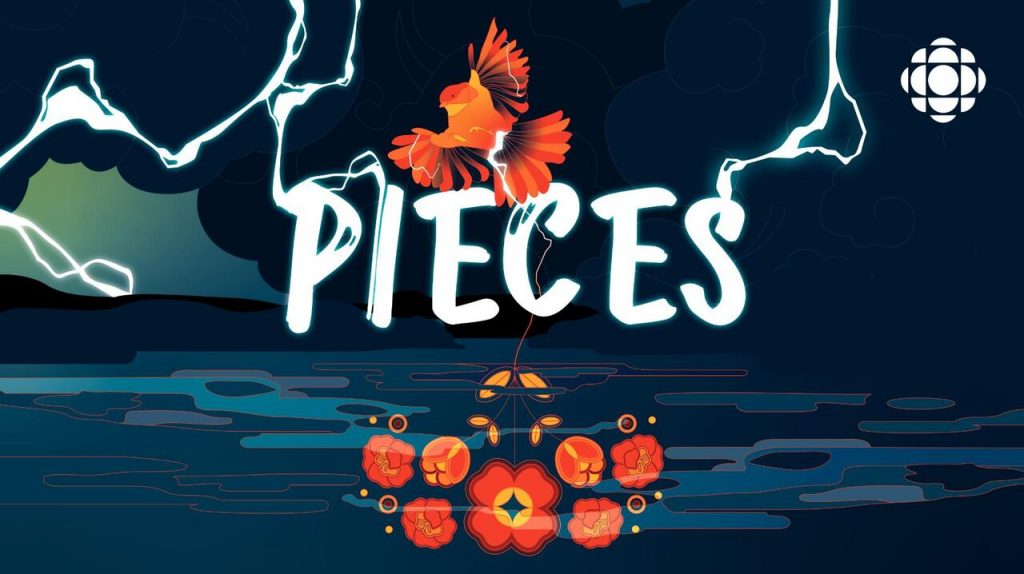
Jeremy Ratt is a half-indigenous half-caucasion 19-year-old. He created a podcast earlier this year in which he  “discovers his Indigenous roots and explores what it means to be Indigenous. Ratt finds strength in his Indigenous identity, leading to conversations with new faces in unfamiliar places, gaining wisdom and finding the missing pieces to his past and present along the way” (CBC, 2021.)

As someone who can relate to Jeremy’s experiences, I have found the first few episodes of his podcast to be both enlightening and emotional. He talks about how his lived experiences have influenced his identity and connection to land and his people.

You can listen to his podcast on CBC ListenApple PodcastsGoogle Podcasts and Spotify. You can also read more about him on CBC

M3. P3


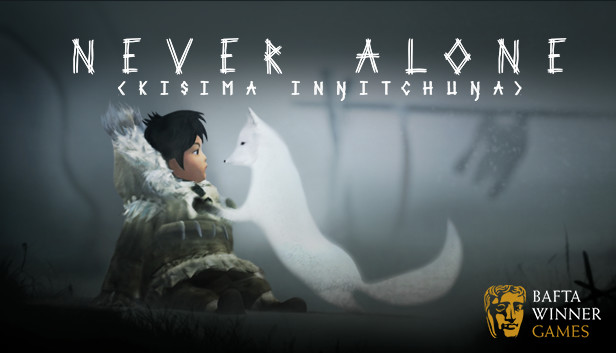
I had the pleasure of being introduced to this Video Game which was developed in collaboration with the Inupiat, an Alaskan Native People. We’ve spoken a lot about the themes of identity, culture, language, and tradition and the importance of ensuring that Indigenous peoples are given the opportunity to decide what is shared, how it is shared, and to whom it is shared. The link below will give you an idea of what this game entails and if you can, I would invite you to play. All the images were done in collaboration with Alaskan Elders and artists, which adds to the authenticity of this game.

Never Alone leverages the power of videogames to share, celebrate and extend culture. These World Games will empower indigenous communities around the world to share their stories in an authentic, engaging, and entertaining way.”

Never Alone Website

Never Alone –

Game Trailer from Never Alone on Vimeo.

M3. P2

Below is a link to a 20-minute video from a project called What I Learned In Class, which is “comprised of clips from videotaped interviews in which several UBC students, both Aboriginal and non-Aboriginal, share their most memorable classroom experiences where the discussion of Aboriginal issues became difficult, as well as share their reflections on the dynamics underpinning these situations. Candid, touching, and provocative, their interviews highlight not only the problems themselves but also the repercussions that these experiences can have, as well as potential ways to move forward.” 

20-minute Video

When developing a Unit on Identity, it is important that I continue to recognize that many issues will be difficult to discuss for many of our students and it’s important that I am understanding of this and do my best to learn how to approach these topics with care and compassion, knowing that there will be feelings of trauma that could arise.


M3. P1

I came across this article from the University of Kansas on the Impacts of Hyperdocs on Education. What I was most intrigued with was the connection between the impacts mentioned and the themes of the course so far. Most of the educators talked about how they were able to spend more one-on-one time with their students, building relationships and learning alongside one another, or, how the use of Hyperdocs allowed them to meet the individual needs of each student and provided the opportunity for students to reflect on their learning. As I am focussing on how learning requires exploration of one’s identity, I found this article very helpful in forming a foundation for using this format in my final project.

Hyperdoc Impacts on Education

Also, if you aren’t sure what a Hyperdoc is, I’ve attached an example of one for the Novel “Amal Unbound.” You can click the link below to view it – feel free to use with your students!

Amal Unbound Novel Study Hyperdoc