Author Archives: TanyaGroetchen

Mod 4 P. 5

 https://native-land.ca/resources/territory-acknowledgement/
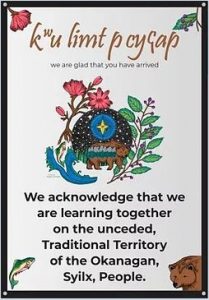
In working to implement Indigenous ways into my classroom and learning experiences, I wanted to take a deeper look into the territory acknowledgements and find out more about why they happen and how to do so appropriately. There is a standard acknowledgement used in my school district, but it can feel impersonal to me. This resource gave me some great background information about why the acknowledgements are done as well as how to do so, including if you are unable to pronounce a nation’s name. There is also information about how to create an acknowledgement that is more intentional or detailed. Another part of this resource that I thought was valuable was the ability to search for a location in order to find the territory acknowledgement information. While it is important to know the information from the lands on which you live, learn, work and play, you may not have the information for other areas you visit and this resources helps you obtain the information. 


Mod 4 P.4

https://www.openschool.bc.ca/indigenoused/

Continuing our Learning Journey: Indigenous Education in BC is a fantastic resource. It is designed as a “professional learning experience for educators on how to include authentic Indigenous knowledge, perspectives, and content in BC’s curriculum.” It is a series of videos and discussion prompts that ideally would be done with a group of educators, however I found that the discussion prompts also allowed for self-reflection. There are 3 modules: Module 1 BC Context and Assumptions, Module 2: Using the First Peoples Principles of Learning, and Module 3: Authentic Resources and Frequently Asked Questions, as well as Final Messages and Next Steps. As I work through my learning journey, the reflection allowed me to reframe my thinking and see things in a new light. I also appreciated the frequently asked questions as some of the questions, such as the fear of making a mistake, were questions that run through my mind. To hear that others have similar questions, and to hear and reflect on the responses, helps to move my practice forward as an educator.

Mod 4 P. 3

https://learn.sd61.bc.ca/wp-content/uploads/sites/96/2017/09/First-Peoples-Principles-of-Learning-for-Teachers.pdf

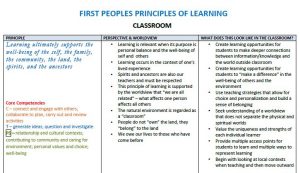
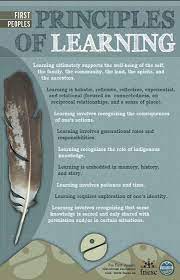
If you are looking for a direct connection between the First People’s Principles of Learning, the BC curriculum, and the classroom, this is a document for you! This document was produced by the Aboriginal Nations Education Division (ANED), Greater Victoria School District #61. The document breaks down each of the First Peoples Principles of Learning and makes direct connections to the BC Curriculum core competencies. The document also breaks down and explains the perspective and worldview related to each of the principles. Lastly, the document also shares what each of the principles looks like in the classroom. The practicality of this document really drew me in. In learning about the First Peoples Principles of Learning, it is so helpful to see what they look like in a classroom and how they relate to the curriculum. It allows educators that are unsure of their next steps to see what it looks like. I think often educators feel they need to change everything they do and by being about to read about what the First Peoples Principles of Learning looks like in the classroom, educators can see that there may be many things they already do in the classroom that connect to the First Peoples Principles of Learning and the First Peoples Principles of Learning doesn’t mean starting from scratch, rather it is change the structure through which the classroom and learning happens.

Mod 4 P.2

https://learningconference-fppl.trubox.ca/origins-and-importance/

I have started narrowing my research and while I had previously looked at resources about the First Peoples Principles of Learning, I have now started to now look at different ways educators have implemented the First Peoples Principles of Learning into their classrooms and into learning experiences for students. I came across the website First Peoples Principles of Learning – Bridging the Gap with Technology and discovered it is a website that was created by a MET student(s) in ETEC 512. This resource not only discusses what the First Peoples Principles of Learning are and why they are important, but include examples of how they can be implemented with place-based learning, digital storytelling, art, and science. Another valuable part of this resource are the Padlets embedded into the website where others can also discuss how they implement the FPPL and share with other educators. These practical examples and discussion boards demonstrate how the FPPL can be implemented and give educators the opportunity to connected with other educators and ask questions.

Mod 4 P.1

https://www.learninglandscapes.ca/index.php/learnland/article/view/983/995

In looking into the First Peoples Principles of Learning, I came across this article written by Kelly Hanson, a former colleague of mine. The paper, The First People Principles of Learning: An Opportunity for Settler Teacher Self-Inquiry is written in first-person perspective as she “describes her emerging self-awareness as opening to a deeper understanding of her Euro-American worldview, cultural narratives that maintain gaps between settler teachers and First Peoples perspectives, and how ongoing self-inquiry is a way to improve as an educator.” I really connected with the article and with Hanson’s journey. I feel that I am on a similar journey myself and to be able to read about Hanson’s questions and learning experiences gave me lots to reflect on as I work towards understanding why the First Peoples Principles are important, how I can implement them into my classroom and learning experiences, and how my mindset and outlook has changed.

Mod 3 P.5

WHAT MATTERS IN INDIGENOUS EDUCATION: Implementing a Vision Committed to Holism, Diversity and Engagement

This resource provides information that broadened my understanding of Indigenous learners. Not only is Indigenous pedagogy and various terminology discussed and defined, but factors that affect Indigenous learners are also shared. These factors are broken into classroom features, teacher communities, schools and climate, and external environment, and as an educator, allowed me to see Indigenous learners from a new perspective. 

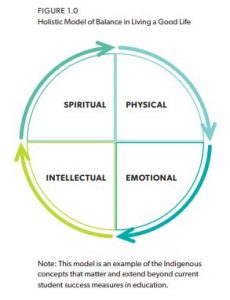
I know a little bit about the medicine wheel, but what I appreciated about this resource is that it broke down the domains of the medicine wheel and connected it to competencies and skills in schools. It was so interesting to learn about each of the domains with an education perspective in mind. Each of the 4 domains – physical, emotional, intellectual and spiritual – are discussed at length and connected to competencies and skills. I know that learning is more than just competencies, more than just subjects, but I appreciated reading this perspective of learning. It really showed how important it is that learning takes place in a holistic environment and is more than just the curriculum.

Mod 3 P.4

First Peoples Principles of Learning

Part of my goal for the final assignment is to understand the First People’s Principles of Learning beyond just surface level. This website is a great resource for understanding who developed the principles and what they are about. There is also a deep dive into each of the Principles of Learning, including connecting the principle to other education theories, the implications of the principle for the classroom and the school, and the relevance of the principle to the core competencies. 

As an educator, I want to be able to apply the First People’s Principles of Learning in my classroom and I appreciate that this resource give me the theoretical and background knowledge, as well as practical applications on how to do so. Seeing the connections with the curriculum and core competencies is also a valuable way to see the importance of the principles, and how they are connected.

Another great part of this website is the page about authentic resources and appropriation. I am often worried about using stories that I have heard, as they are not mine to tell. I appreciate learning about what resources are appropriate to use and share as a non-Indigenous educator.

Mod 3 P. 3

Aboriginal Worldviews and Perspectives in the Classroom: Moving Forward 

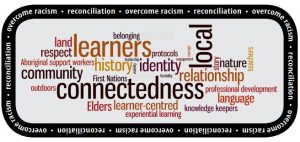
This guidebook, “Indigenous Worldviews and Perspectives” is a powerful resource. The guidebook starts by discussing two central themes that are key to Indigenous education for all learners. Firstly, strengths-based learner-centered practice that involves educators knowing their students – their interests and strengths. And secondly, overcoming racism that involves decolonizing our thinking, which in part can be done though educator modelling. The guidebook also overviews characteristics of Aboriginal worldviews and perspectives and the implications on teaching practice:

  • Connectedness and Relationship
  • Awareness and History
  • Local Focus
  • Engagement with the Land, Nature, the Outdoors
  • Emphasis on Identity
  • Community Involvement: Process and Protocols
  • The Power of Story
  • Traditional Teaching
  • Language and Culture
  • Experiential Learning
  • Role of the Teacher

Possible next steps are also included. When looking into Indigenous worldviews and perspectives, why they are important and how to use them in the classroom, this is an excellent resource. One of the most valuable parts of this resources is the quotes from Indigenous peoples who shared their perspectives.

Mod 3 P.2

Ontario College of Teachers video – Voices of Wisdom: Learning from Elders

https://www.youtube.com/watch?v=AbxCtmteQ-U

Even though this video was posted in 2010, it is so profound to listen first hand to the experiences and wisdom from the First Nations elders, an Inuit elder and a Métis senator. They share their experiences and the importance of understanding Indigenous students and their history. 

One speaker spoke of connections to the content at school and how Old MacDonald’s farm discusses sheep and pigs. Animals that some students wouldn’t know about, whereas if it has been moose and beavers, the students would have connected and engaged with the content. This video really allowed to reflect on the curriculum in the classroom and how something as simple as discussing different animals can make the classroom more inclusive. 

Mod 3 P. 1

Integrating Provincial Standards and Indigenous Ways of Knowing

Learning Bird is an organization that offers so much for educators. They work with “Indigenous schools and communities across Canada to create culturally-relevant educational content that benefits all students.” Educators can contact the team for support, or sign up to be a pilot school. 

The article I linked above was one I came across in researching Indigenous ways of knowing. I found it helpful that the article talked about why schools are including Indigenous ways of knowing, as well as how teachers from non-Indigenous backgrounds can integrate Indigenous knowledge respectfully. Integrating Indigenous knowledge and perspectives can be challenging when you don’t know where to start. Learning Bird explains the why and how, as well as provides some examples in language arts and math.