Author Archives: WhitneyLafleur

Module 2- Post 5- Reconciliation Through Indigenous Education MOOC

IndEdu200x: Reconciliation Through Indigenous Education

This YouTube channel contains the videos created for a MOOC (massive open online course) called Reconciliation Through indigenous Education.  Dr. Jan Hare, in her introductory video to the course, describes why it’s important to Indigenize our education.  As educators we have a responsibility to our indigenous students to value their way of learning and make efforts to incorporate that into our classroom. There are 6 topics in this course, each containing 10-20min videos that explore strategies and resources that support the teaching and learning of Indigenous ways of knowing.  The topics include:

  1. Reconciliation through education
  2. History of Indigenous education
  3. Learning from Indigenous worldviews
  4. Learning from story
  5. Learning from the land
  6. Engaging in respectful relations

Each of these topics give a good introduction to ideas and ways of learning that can be incorporated into your classroom. I have not had a chance to watch all videos but am excited for the idea of what they will help me learn.

Module 2- Post 4- Multiculturalism is not Indigenization

https://opentextbc.ca/indigenizationcurriculumdevelopers/chapter/the-need-to-indigenize/

This article truly opened  my eyes and clarified the difference between multiculturalism and Indigenization. This quote might incapsulate the ideas represented in this resource: “While multiculturalism presents a valuable approach to honoring diversity, Indigenization is a distinct process that needs to be practiced in its own right, and the two should not be merged together in policy or practice.”. I feel ashamed to have thought in the past that perhaps these two ideas came from the same premise.  They are similar and distinctly different at the same time.  This article does a great job explaining the difference and WHY they are different.  It also provides a valuable resource Two-Eyed Seeing – Elder Albert Marshall’s guiding principle for inter-cultural collaboration [PDF][1]. This resource bring perspective to how to bring multiple perspectives together.

Module 2- Post 3- Indigenous Story about Multiple Perspectives

https://www.learnalberta.ca/content/aswt/worldviews/#connections-two-worldviews-video

While beginning to explore the Learn Alberta resource website for information on Indigenous, Metis and Inuit people, I started to explore the “worldviews” section.  This resources includes 5 videos from various Indigenous people and Elders that discuss respecting the wisdom of Elders.  As well, there was a video by Randy Risto, that was on a story that taught about world views.  I love learning through story and this story Randy Risto was given permission from his Elders to share with teachers. I highly recommend listening to the story as it provides a context in understanding multiple worldviews.

Module 2- Post 2- Siwal Si’wes Digital Library

https://swswlibrary.com/

This has to be one of my most favorite resources I have come across yet. I by all means haven’t gotten to look at very much of the website as there is so much information here.  I spent most of my time looking under “meaningful contributions” and then “learning models”.  This website outlines the first peoples principles of learning including a link to 19 page document that outlines how the principles, educational research and theory, activities in the classroom relate to the principles. What I enjoyed the most was a resource video of Laura Tait, Nanaimo Ladysmith District Principle, describing each of the principles and how they relate to her personally with relation to how her kids learn. I love learning through listening to others stories and experiences and this website does a good job of that.  There are several more videos and links in the “learning models” section of this website including another video of Dr.Jo-Ann Archibald discussing “Indigenizing the curriculum” and Elder Elize Hartley talking about the seven grandfather teachings.

Module 2- Post 1- SET BC

https://www.setbc.org/2018/07/classroom-technologies-and-first-peoples-principles-of-learning/

SET BC (a ministry of education outreach program) in combination with a vast number of Indigenous community members developed an online resource that contains what looks to be an online course with 8 modules of learning.  THere is so much to unpack from this resource.  I have worked my way through the first module which outlines the first peoples principles of learning.  They have links to each principle that outlines and explains what the principles mean from this website. Furthermore, each module has an audio and video component. In module 1, the audio describes the details of the first peoples principles and the video has a Indigenous person describing the reasons behind asking permission to tell a story. On top of all that each module provides links to even more resources and websites that can be accessed to do with the modules topic.

Module 1- Blog Posts

  1. Learning First Peoples classroom resources- https://www.fnesc.ca/learningfirstpeoples/

This website aims to describe the increased inclusion of First Peoples perspective in the bc curriculum. The First Nations Education Steering Committee, First Nations Schools Association, and teachers developed some teacher resources that  follow Learning First Peoples. One of the calls to cation of the Truth and Reconciliation Commissions was that indigenous knowledge and teaching methods into classrooms.

Resources available: 

BC First Nations Land, Title, and Governance Teacher Resource Guide

FNESC/FNSA Secondary Science First Peoples Teacher Resource Guide

Science First Peoples,

Authentic First Peoples Resources Guide, for K to Gr. 9 (2016) 

First People’s Principles of Learning,

  1. “Importance of Indigenous Education” https://www.un.org/press/en/2003/hr4674.doc.htm

This website, found on the United Nations website, outlines the importance of including indigenous education into westernized or modern education systems.  They discuss the importance of educating youth in their own cultures and languages.  This document stresses that education is the key to self-determination. There are many comments from various leaders around the world, including indigenous leaders, that reiterate the importance of indigenous ways of knowing being incorporated into our education system.

  1. “What matters in Indigenous Education: Implementing a Vision Committed to Holism, Diversity, and Engagement”- https://peopleforeducation.ca/report/what-matters-in-indigenous-education/
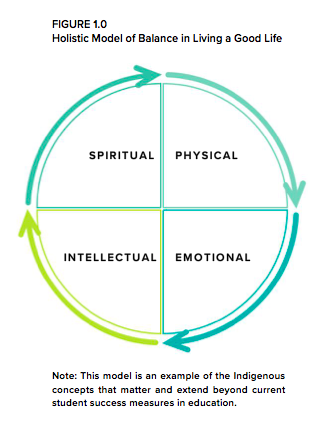
This paper, written by Dr.Pamela Toulouse discusses how an Indigenous approach to learning and what the important concepts and themes are that will align with Indigenous educational success. Concepts discussed include what a quality learning environment looks like, how indigenous worldviews reflect learning environments, and what components make us this teaching/learning setting.

  1. Sylix Okanagan Nation https://www.syilx.org/about-us/syilx-nation/

Okanagan Nation Alliance

This website gives a brief overview of the indigenous nation that I, and my school, reside on.  It describes the geographical space that makes up the nation. The website describes the history of colonization of its territory. It explains that a treaty was never negotiated and therefore the land still belongs to the Sylix people. This land is known as the traditional unceded territory of the Sylix.

Resources: Okanagan Nation Declaration: https://www.syilx.org/wp/wp-content/uploads/2017/01/ON_Declaration.pdf

  1. Westbank First Nation- https://www.wfn.ca/docs/our_people__our_communityreduced.pdf

Guiding Documents and Principles - Westbank First Nation

This powerpoint contains a ton of information about the Sylix People. It contains a brief history of the Westbank First Nation, which is apart of the Syilx Territory.  It also describe many aspects of the Sylix culture including the Four Food Chiefs which is a story that connects to the beliefs and traditions of the Sylix. This website also includes common Sylix phrases. The website then goes into a brief history of Residential schools and the formations of the Westbank First Nation Government.