Category Archives: MODULE 2

Mod 2 P. 5

WEAVING WAYS

“Learn to see from your one eye with the best or the strengths in the Indigenous knowledges and ways of knowing … and learn to see from your other eye with the best or the strengths in the (Western) knowledges and ways of knowing … but most importantly, learn to see with both these eyes together, for the benefit of all”. –Albert Marshall

Weaving Ways is an Albertan resource that was developed through a grant from Alberta Education. It is organized into four quadrants – Cultures of Belonging, Instructional Design, Sharing Through Story, and Pedagogy. As an educator, I really appreciated how the resource was organized. I found so many amazing quotes and pieces of information and it just made sense in the order and way the information was presented. I can’t sum it up any better than they already did:

“The structure supports teachers in designing meaningful teaching and learning opportunities that weave together Indigenous ways of knowing with Western pedagogical practices for the benefit of all students and our collective journey towards reconciliation. The four quadrants are interconnected and encourage teachers to consider how Indigenous knowledge systems can support a rich experience for students in their classrooms. Effective education that includes Indigenous knowledge systems does not exclude or discredit other cultures, but instead ensures that both non-Indigenous students and Indigenous students alike are given the opportunity to see Indigenous perspectives, and the strengths and gifts of the First Peoples reflected in the schools they attend. The weaving together of Indigenous knowledge with Western pedagogical practices is coined by scholars as trans-systemic synthesis. (Battiste, M. & Henderson 2000)”

Mod 2 P.4

https://docs.google.com/presentation/d/12tqwl1ASDEaotz5DNcqriiwiQCAGobLgjzXbZwXBJX4/edit?usp=sharing

This is a slide deck titled “Ethnobotany – Indigenous Plants in the Central Okanagan” that was created by the Instructional Leadership Team in my school district. It has a ton of information on indigenous plants, including the characteristics, cultural uses, other information, as well as videos and images. The presentation also includes ways to use the plant species, such as for dye, making rope, or to make jam, tea, or even ice cream! There are so many ways that students could learn about indigenous plants in the Central Okanagan and how they were used. You could even take students on a hike in the area and have them locate many of these plants. Lastly, the slide deck also contains a ton of links to resources, videos, books, and local workshops!

M2, P2: Raven Trust Podcast

Raven (De)Briefs: A Podcast

These podcasts are fantastic. The content is interesting; they feature Indigenous musicians; and the speakers are brilliant.

I was searching for some more information on Nikki Iyolo and Nancy Turner and both were interviewed for the Raven (De)Briefs podcast. It’s a really fascinating mix of law, the environment, contemporary issues, and Indigenous perspectives. In the Season 2, episode 7 podcast, they speak with Judge John Reilly, an Alberta judge who advocates for Indigenous legal frameworks and restorative justice circles. He’s the author of Bad Law: Rethinking Justice for a Postcolonial Canada, and in the podcast they talk about criminalized Indigenous peoples and the Indigenous populations in Canadian prisons. According to the Podcast, Indigenous peoples represent 5% of the overall population in Canada but 30% of the incarcerated peoples in Canada. Reilly talks about the deep flaws of the Canadian legal system, systemic discrimination, and the value of restorative circles. He committed to learning about the community with whom he worked, and engaging with his local Indigenous community (Treaty 7, Canmore), changed his perception of the Canadian legal system. He talks about how the legal system ignores emotions and systematically discriminates against Indigenous people and resolutions that might be more effective. One quote that really stuck out to me was: “we sacrifice human lives on the alter of deterrence,” (Reilly, 19:07).

In some ways, I think Western education has many of the same problems. Curriculum often values the colonialist worldview and we push punishment over restorative practices. We penalize people for not following the rules or laws, and don’t often offer opportunities to demonstrate learning afterwards (e.g., hand in a paper for a MET class and that’s it– no chances to revise and resubmit). I’ve been wondering lately how many adult learners leave my institution because they don’t get those opportunities. That practice doesn’t reflect our realities. If I make a mistake or miss something at work, that’s a learning opportunity. Shouldn’t education operate the same way?

Reilly, J. (2019). Bad Law: Rethinking Justice for a Postcolonial Canada. Rocky Mountain Books Ltd.


M2, P1: Decolonizing is for everyone

In this Ted Talk, Nikki Sanchez talks about our collective responsibility to decolonize our present and work toward a better, equitable future. She talks about the historic and social reasons for decolonizing; why it’s so essential; and what decolonization looks like. In her talk she says:

“This history is not your fault, but it is absolutely your responsibility.”

This really resonated with me and is going to form the basis of my library decolonization action plan.

Module 2- Post 5- Reconciliation Through Indigenous Education MOOC

IndEdu200x: Reconciliation Through Indigenous Education

This YouTube channel contains the videos created for a MOOC (massive open online course) called Reconciliation Through indigenous Education.  Dr. Jan Hare, in her introductory video to the course, describes why it’s important to Indigenize our education.  As educators we have a responsibility to our indigenous students to value their way of learning and make efforts to incorporate that into our classroom. There are 6 topics in this course, each containing 10-20min videos that explore strategies and resources that support the teaching and learning of Indigenous ways of knowing.  The topics include:

  1. Reconciliation through education
  2. History of Indigenous education
  3. Learning from Indigenous worldviews
  4. Learning from story
  5. Learning from the land
  6. Engaging in respectful relations

Each of these topics give a good introduction to ideas and ways of learning that can be incorporated into your classroom. I have not had a chance to watch all videos but am excited for the idea of what they will help me learn.

Module 2- Post 4- Multiculturalism is not Indigenization

https://opentextbc.ca/indigenizationcurriculumdevelopers/chapter/the-need-to-indigenize/

This article truly opened  my eyes and clarified the difference between multiculturalism and Indigenization. This quote might incapsulate the ideas represented in this resource: “While multiculturalism presents a valuable approach to honoring diversity, Indigenization is a distinct process that needs to be practiced in its own right, and the two should not be merged together in policy or practice.”. I feel ashamed to have thought in the past that perhaps these two ideas came from the same premise.  They are similar and distinctly different at the same time.  This article does a great job explaining the difference and WHY they are different.  It also provides a valuable resource Two-Eyed Seeing – Elder Albert Marshall’s guiding principle for inter-cultural collaboration [PDF][1]. This resource bring perspective to how to bring multiple perspectives together.

Module 2- Post 3- Indigenous Story about Multiple Perspectives

https://www.learnalberta.ca/content/aswt/worldviews/#connections-two-worldviews-video

While beginning to explore the Learn Alberta resource website for information on Indigenous, Metis and Inuit people, I started to explore the “worldviews” section.  This resources includes 5 videos from various Indigenous people and Elders that discuss respecting the wisdom of Elders.  As well, there was a video by Randy Risto, that was on a story that taught about world views.  I love learning through story and this story Randy Risto was given permission from his Elders to share with teachers. I highly recommend listening to the story as it provides a context in understanding multiple worldviews.

Module 2- Post 2- Siwal Si’wes Digital Library

https://swswlibrary.com/

This has to be one of my most favorite resources I have come across yet. I by all means haven’t gotten to look at very much of the website as there is so much information here.  I spent most of my time looking under “meaningful contributions” and then “learning models”.  This website outlines the first peoples principles of learning including a link to 19 page document that outlines how the principles, educational research and theory, activities in the classroom relate to the principles. What I enjoyed the most was a resource video of Laura Tait, Nanaimo Ladysmith District Principle, describing each of the principles and how they relate to her personally with relation to how her kids learn. I love learning through listening to others stories and experiences and this website does a good job of that.  There are several more videos and links in the “learning models” section of this website including another video of Dr.Jo-Ann Archibald discussing “Indigenizing the curriculum” and Elder Elize Hartley talking about the seven grandfather teachings.

Module 2- Post 1- SET BC

https://www.setbc.org/2018/07/classroom-technologies-and-first-peoples-principles-of-learning/

SET BC (a ministry of education outreach program) in combination with a vast number of Indigenous community members developed an online resource that contains what looks to be an online course with 8 modules of learning.  THere is so much to unpack from this resource.  I have worked my way through the first module which outlines the first peoples principles of learning.  They have links to each principle that outlines and explains what the principles mean from this website. Furthermore, each module has an audio and video component. In module 1, the audio describes the details of the first peoples principles and the video has a Indigenous person describing the reasons behind asking permission to tell a story. On top of all that each module provides links to even more resources and websites that can be accessed to do with the modules topic.

Mod 2 P.3

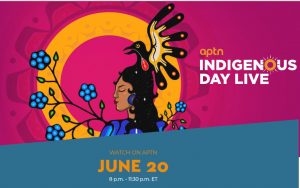
https://www.indigenousdaylive.ca/

Next week is National Indigenous Peoples Day. With different provinces and territories under different restrictions due to the pandemic, this years celebration is being held online so that everyone can safely attend. While this isn’t directly tied to my project research, I do see this opportunity as a way to celebrate the “unique heritage, diverse cultures, and outstanding achievements and contributions of First Nations, Inuit and Métis Peoples.” 

APTN Indigenous Day Live will take place on Sunday June 20th 8:00-11:30 pm ET and an encore presentation on Monday June 21st 2:30-6:00 pm ET.

The APTN (Aboriginal Peoples Television Network) website is also a great resource full of shows and programs!