Category Archives: MODULE 2

M.2 P.3 Indigenous Rights and STEM Education

The STEM teaching tools website has resources, tools, PD modules, news, and newsletters to help teach science, technology, engineering, and mathematics.

I was particularly drawn to this website for the resources found under the TOOLS dropdown menu that highlight ways of working on specific issues that come up during STEM teaching called “Practice Briefs”. Each brief highlights the issue, why it matters, things to consider, reflection questions, equity, and actions you can take in an organized, concise, and effective way to easily access. Below are some briefs that I found particularly useful to my research on TEK and STEM.

#10 Teaching STEM In Ways that Respect and Build Upon Indigenous Peoples’ Rights: It is vital that educators incorporate Indigenous knowledge and rights into their teaching and lessons.
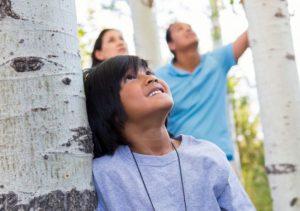
Teachers should understand and leverage Indigenous students’ ways of knowing and values.

#11 Implementing Meaningful STEM Education with Indigenous Students & Families: Integrating traditional ecological knowledge and western science is important if students are going to connect meaning to experiences.
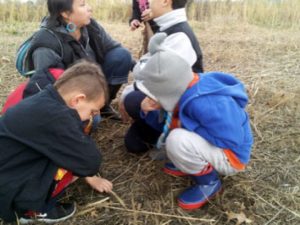
Teachers should focus on Indigenous ways of knowing & encourage Indigenous students to navigate between Indigenous & Western STEM.

#55 Why it is crucial to make cultural diversity visible in STEM education: Students need to see themselves represented in STEM careers that collaborate and integrate Indigenous knowledge.

Teachers should carefully weave subject matter with activities and images within relevant contexts that validate the contributions of individuals from diverse cultural backgrounds.

#57 How place-based science education strategies can support equity for students, teachers, and communities: Place holds significance to Indigenous ways of knowing and learning. Knowledge rooted in land is at the heart of many Indigenous cultures, this needs to be at the forefront of education.
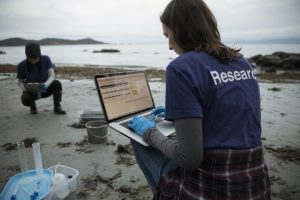
Teachers should connect science learning experiences in and out of the classroom to students’ sense of place, cultural perspectives, and community assets and issues

References

STEM Teaching Tools. (n.d.). Teaching Tools for Science, Technology, Engineering and Math (STEM) Education. http://stemteachingtools.org/

Mod 2 P.2

https://www.setbc.org/2018/07/classroom-technologies-and-first-peoples-principles-of-learning/#1532551113031-acdec398-0100

Part of my project goal is to look into how I can incorporate Indigenous ways of knowing/learning and worldviews into my own teaching and classroom. This website: Classroom Technologies and First Peoples Principles of Learning – SET-BC provides information on just that. It is a course that allows teachers to gain background knowledge about the First People’s Principles of Learning and then provides examples that show how Indigenous perspectives can be integrated into the classroom and with the curriculum. A bonus is that many of the suggestions include technology-based projects that align with with First People’s Principles of Learning!

Mod 2 P.1

https://curriculum.gov.bc.ca/curriculum/indigenous-education-resources

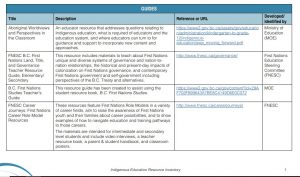
Just as we are gathering and compiling resources, the BC Ministry of Education also gathered together a list of Indigenous education resources. The resource inventory includes guides, books, e-books, articles, websites, videos, and other materials. I think part of the value in this particular inventory of resources is that the resources were compiled in collaboration with the British Columbia Teacher’s Federation, the First Nations Education Steering Committee, and Métis Nation British Columbia. This allowed many voices to be heard in the gathering of these resources.

Module 2- Post 5: Reconciliation: A Starting Point APP

This is a bit unrelated to my project focus, but I happened to come across this learning tool as I was browsing for ideas for this blog.

Reconciliation: A Starting Point is a mobile app for federal public servants in Canada to learn about the Metis, Inuits, and the First Nations through key historical events and reconciliation initiative for the Indigenous Peoples in Canada. The app is currently only available on Androids or Apple iOS.

I think it’s essential for all public service workers to be informed about the work that needs to be carried out for reconciliation and learn about the truth from historical timelines of when indigenous communities lost their right to land and more from settlers.

https://www.csps-efpc.gc.ca/Tools/apps/ils/index-eng.aspx

Indigenous Peoples: Learning at your fingertips

Module 2: Post 4- Indigenous Annual Camp led by Actua

Every June is National Indigenous History Month in Canada. Many schools and organizations advocate to take actions for reconciliation and meaningful change for the indigenous communities. We recognize that we have a role to play in reconciliation, continue to learn about the perspectives, cultures and histories of Indigenous peoples in Canada, and create inclusive relationships and spaces for all to thrive. Every year, Actua (one of the largest STEM outreach programs) delivers programs to youth across Canada to learn essential STEM skills so that they can gain valuable work experience and develop employable skills. It is important to note that STEM is not something new with the advance of technology, but rather “indigenous peoples have always know about STEM”, according to Doug Dokis, director of the Indigenous Youth in STEM Program in Actua.

Last year was no different. Despite the pandemic by COVID, they connected youth to indigenous land-based learning by collaborating with elders in communities to understand local knowledge such as fish cycles. Then they utilize their understanding of the place and build meaningful and authentic hands-on models such as a fish monitor. Very cool!It has become a community learning rather than individual learning.

Module 2- Post 3: IndigiSTEAM

Currently, indigenous people in STEM occupations are underrepresented. Many indigenous communities don’t see STEM in their future path as western sciences often contradict the traditional way of living in the indigenous perspectives.

https://www.indigesteam.ca/IndigeSTEAM | Supporting Indigenous Youth in STEM/STEAM

IndigiSTEAM is an initiative that provides and supports STEM/STEAM learning for indigenous youth through the approach of 2-eyed seeing by Mi’kmaq Elder from Eskasoni First Nation, Albert Marshall.

They added the “A” for Arts, Architecture and Agriculture – all areas that Indigenous peoples have been innovators in for thousands of years. It is a type of outreach program that also incorporate indigenous knowledges, include the community (elders and parents) and indigenous role models in STEM field so that youth can see the importance. It is also a way for non-indigenous people to learn about the traditional way of living, too.

Module 2- Post 2: Elders in Schools

A culture centred on “All My Relations” is the foundation of all First Nations teaching and learning. The inclusion of Elders in the process can be described as the ‘heart’ of First Nations Pedagogy. Since Pre-Colonial times, Elders have been the Gatekeepers of First Nations wisdom, knowledge, and history. Elders traditionally hold crucial roles in supporting both formal and informal education in First Nations communities. They impart tradition, knowledge, culture, values, and lessons using orality and role modeling traditional practices.They are important knowledge keepers, and they also help to ensure cultural continuity.

In 2013, The Elders in Schools Program provides an opportunity for Elders to be teachers within the school setting. The program was developed to ensure every school has an elder. The main purpose is for students and staff to learn from the elders about the the wisdom, knowledge and experiences, as well as their language and traditional skills of the local people in the aboriginal communities in NWT.

https://www.ece.gov.nt.ca/en/services/renouveau-en-education-aux-tno/elders-schools-program

A similar pilot project was developedled by the Tlicho Community Services Agency in 2019.

https://www.cbc.ca/news/canada/north/pilot-program-tlicho-language-program-1.5082117

Module 2- Post 1: Two Eyed Seeing Approach

Two Eyed Seeing is an approach that takes Indigenous way of knowing and living and integrate that with Western ideals. As discussed in the video, Mi’kmaq Elder Albert Marshall from Eskasoni First Nation in Atlantic Canada has described that one eye is responsible to recognize the strengths of the indigenous knowledges while the other eye learns to see the strengths of the mainstream sciences. Marshall has added that is important to see with BOTH eyes as they are very valuable and both can be achieved for the benefits of mankind and the earth.

“Two-Eyed Seeing, in that it speaks directly to the setting of collaborative, cross-cultural work, intentionally seeks to avoid the situation becoming a clash between knowledges, domination by one worldview, or assimilation by one worldview of the knowledge of another”

http://www.integrativescience.ca/Principles/TwoEyedSeeing/

M.2 P.2 Indigenous and Western Approaches to Environmental Science

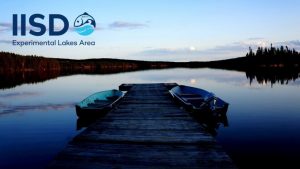
IISD Experimental Lakes Area is a collection of 58 lakes in Northwestern Ontario set aside for scientific research. IISD is working together with Indigenous groups to discuss freshwater science, climate change, and environmental policies.

“In Canada, Western and Indigenous approaches to science are often considered incompatible. We explore how they can and should be working in tandem to further our understanding and protection of fresh water and the environment.”

IISD discusses that there are two ways of knowing, Western and Indigenous approaches. Western approaches focus on the evidence-based science of existing environmental problems to create solutions. Indigenous approaches or TEK is rooted in experience and skill gained over thousands of years for practical ecological sustainability. This resource will provide insight on TEK as well as western science through the website and exploring science and data. The video below can be found on the IISD website, it is currently being translated into Ojibwe, so that the communities can best benefit from research findings. It resonates deeply with me as the community I live in has been affected by the mercury content in the fish in the reservoir the community is built on. IISD studies the effects humans have on the environment and is working closely with Indigenous communities to integrate TEK and western science.

References

IISD Experiemental Lakes Area. (2019, January 10). Indigenous and Western Approaches to Environmental Science: What integration means to us. https://www.iisd.org/ela/blog/commentary/indigenous-western-approaches-environmental-science-integration-means-us/

Module 2 – Post 5

This being National Indigenous History Month here in Canada, where we recognize the “history, heritage and diversity” of the First Nations, Metis and Inuit people in Canada, I thought I would take a closer look at just what is being offered and shared for resources. One website that is very easy to locate is under the Government of Canada. Although not specifically connected to resources for the classroom, there are quite a number of resources and links for information on First Nations, Metis and Inuit peoples. The website resource does break down the resources into four categories. One is on Read, where you can find ebooks and resources pertaining to culture, language, the land and history. I did notice right away the Indigenous Peoples Atlas of Canada, that we have in our own school library. The next section is on Listen, where you can find lots of podcasts on a variety of topics such as storytelling, languages and on reconciliation. The third section is Watch, and here you can view videos and films on Indigenous people and arts. Finally, the fourth section is on Try, and in this section you can try out some interactive resources as well as some other creative activities. 


Government of Canada. (n.d). National Indigenous History Month. Url: https://www.rcaanc-cirnac.gc.ca/eng/1466616436543/1534874922512