Category Archives: MODULE 4

Module 4 – Post 1

Our Words, Our Ways: Teaching First Nations, Metis and Inuit learners is a resource guide put out by Alberta Education. It is a bit dated (2005) but one of the main things that drew me to this resource was that it was created to support how Aboriginal students learn as well as a variety of strategies to help with lesson planning. As I am looking for ways to support bringing in western and traditional ways together through place based learning, I thought this resource would be helpful. Within the resource you can find information about Aboriginal cultures, history, perspectives, strategies such as rubrics and ideas to help support teachers in meeting the needs of Aboriginal students when they are planning for their lessons. Aboriginal Elders, teachers and psychologists as well as other members of Alberta’s Aboriginal communities helped to contribute to the making of this resource guide and it is aimed to support administrators, teachers, school staff, counselors and even liaison workers. 

Access to the pdf document: https://education.alberta.ca/media/3615876/our-words-our-ways.pdf

Alberta Education. (2005). Our Words, Our Ways: Teaching First Nations, Metis and Inuit learners. Alberta Education. Aboriginal Services Branch and Learning and Teaching Resources Branch. 

Mod#4-post5: “Reimagine STEM” Podcast Episodes

Reimagine STEM is a four episodes podcast series discussing inter-disciplinary education and practice in engineering and computer science. It was created by a group of creative producers at the CoDesign Culture Lab, an event hosted by the ANU College of Engineering and Computer Science (CECS) in November 2019 as part of the CECS agenda to Reimagine how engineering and computer science serve the emerging needs of the middle of the next century. The episodes focus on four main themes:

  • Educational innovation
  • Computer science and engineering for social benefit
  • The need for diversity
  • Indigenous knowledge contributions

As I listened to the podcast episodes, particularly, episodes three and four, I realized more than ever the need to work collaboratively with Indigenous communities to widen our toolbox and integrate new knowledge as well as our need to develop with an eye on their local concerns. Below is the list of episodes and few notes on each. On the same page, you will find other podcasts interviewing each guest; some discuss work on the ground relevant to our coursework.

Episodes Key Highlights
Episode [01]: Engineering education for the future

-“Equity is we want to make sure that all different student populations are welcome, rigour as we want to teach something that has real content, scale is we want to make sure that we remove impediments that make us work at very large scales. “- Shriram Krishnamurthi

  • Discusses how to support the next generation of engineers and computer scientists and help them shape a better future.
  • Recommends educational approaches such as developing micro-credentials and using role playing games to tackle ethical issues in technology solutions.
Episode [02]: Engineering for social benefit

-“We don’t want to approach problems as engineering problems. We need to approach them as human problems.”  Cameron Tonkinwise-

  • Highlights that social benefit is at the heart of engineering and computer science.
  • Emphasizes the importance of understanding context, community needs, and actively consult and take a local direction in development processes.
Episode [03]: From diversity STEMs brilliance

-“There is a wealth of lived experiences and creativity that is either not invited in [the] fold in the first place or get squeezed out of the fold.” Cathy Ayres-

  • Explores the systemic barriers and stereotypes that stop minority groups including indigenous communities in computer science & engineering fields and how inclusion is key to creating a future we all want to live in.
Episode [04]: First Nations, first knowledge

– We need to start working together, in that two-way learning where Indigenous knowledges and knowledge systems and Western ways of engineering and computer science is an incredibly valuable collaboration.” Angie Abdilla-

  • Discusses how an effective, a holistic view, can cover a whole lifecycle of an intervention.
  • Provides a deep dive into Indigenous Knowledges and frameworks
  • Sheds the light on how society should learn to acknowledge and connect with some of the world earliest innovators, the Australian Indigenous people, to approach contemporary problems.

Reference:

M.4 P.4 Learning in Places

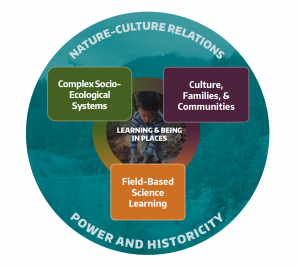
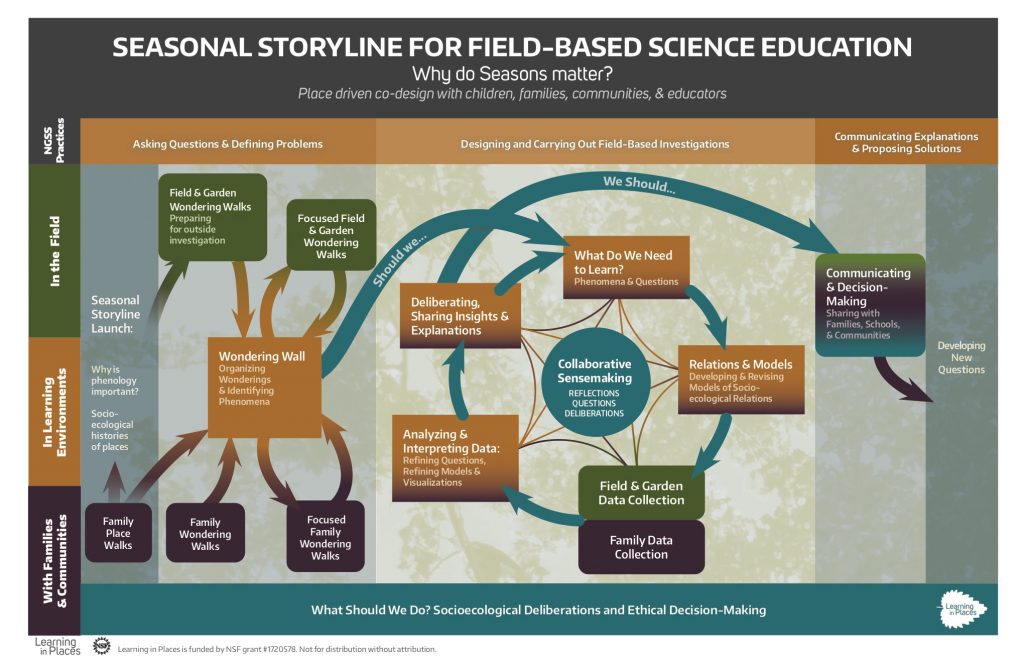
Universities and schools have partnered to create more culturally and community-relevant, field-based learning opportunities to “engage students in complex ecological reasoning and decision-making”. This resource contains detailed lesson plans to work through a storyline that is “intentionally designed to support learners to engage in wonderings and science that matters in the places they live – from their own homes to neighborhood blocks, to schoolyards, parks, and beyond.”

We co-design innovative research and practice with educators, families, and community partners that cultivates equitable, culturally based, socio-ecological systems learning and sustainable decision-making utilizing “field-based” science education in outdoor places, including gardens, for children in Kindergarten to 3rd grade and their families.

“Learning Engagements” aka Lesson Plans are provided to work through this storyline. Lesson plans can be downloaded that include planning guides and learning tools, as well as data collection protocols. I believe this resource is useful to dissect and make connections with land-based learning, a fundamental principle in traditional ecological knowledge. The importance of PLACE in these lessons is apparent, a theme that has been continually present over the duration of this course. I think these lessons are not only tangible resources for educators to use to promote place-based AND land-based learning.

“…immersing students in outdoor, field-based science learning is a critical and under-utilized strategy for preparing students to wrestle with issues of socio-ecological justice such as food sustainability and water usage.”

References

Seasonal Storyline. (2021). Learning in Places. Retrieved July 13, 2021. http://learninginplaces.org/seasonal-storyline/classroom-storyline/

M.4 P.3 Traditional Ecological Knowledge Defined

This straightforward, simple, and short PowerPoint presentation gives a brief, but informative, overview of what traditional ecological knowledge is.

“Traditional knowledge is complementary to western science, not a replacement for it” – David Suzuki

There is no universal definition for Traditional Ecological Knowledge (TEK), however, they provide one possible definition;

As a cumulative body of knowledge, practice, and belief, evolving by adaptive processes and handed down through generations by cultural transmission, about the relationship of living beings (including humans) with one another and with the environment.

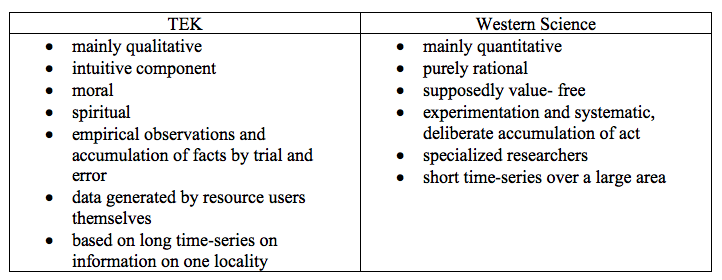
Some differences that I have pulled out for comparison between traditional ecological knowledge and western science are below;

Cultural barriers and misunderstandings sometimes prevent both Western scientists and Indigenous peoples from fully acknowledging the value of each other’s knowledge system. Limitations to the systematic use of TEK in resource management can be further examined from both a scientific and an Indigenous point of view.

References

Traditional ecological knowledge [PowerPoint slides]. SlidePlayer. https://slideplayer.com/slide/4834812/

Mod#4-Post4: The “Old Ways, New”

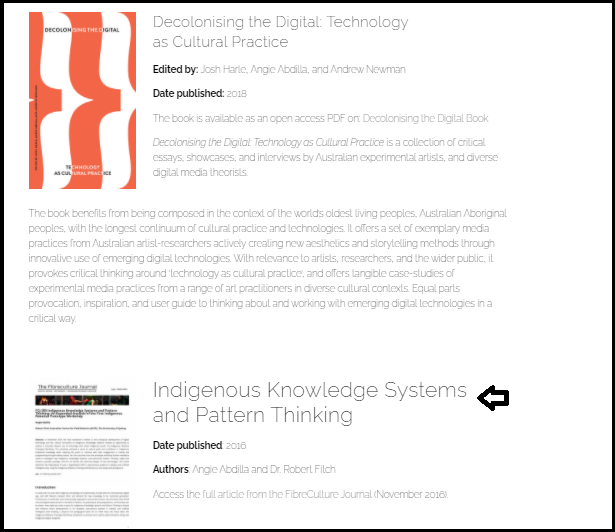
The “Old Ways, New” is a website for an Indigenous-owned and led social enterprise with a new vision and commitment to working with Indigenous cultural knowledge elders and communities to develop different ways of doing technologies. They are trying to find answers for: What can Indigenous Knowledge Systems teach us, and how can Indigenous and Western methods of knowing collaborate to shape how we adapt to and optimize technology solutions, particularly in robotics and artificial intelligence (AI)? Their work is informed by what they call the “country-based design” as well as the Indigenous pattern thinking. These concepts aren’t explained thoroughly on the site pages, but you can learn about them from the resources in their “publications and media” section. I found good resources for my final project such as “Indigenous Knowledge Systems and Pattern Thinking,” introducing Aboriginal youth to robotics using an Indigenous perspective and explaining “pattern thinking” as a possible paradigm for designing new technologies (See figure below). 

A Screen Capture of the “publications & media” resources in the “Old Ways, New” website

To get you more closer to the “Old Ways, New” vision, its goals, and their approach towards informing technological solutions. I am embedding an episode of the Social Lights Podcast (available also in the publications & media section), where Kate Vandervoort interviewed Angie Abdilla, the founder and CEO of the “Old Ways, New” about bringing indigenous wisdom into artificial intelligence. 

The following quote was exceptionally impactful for me as a technologist because I know how our work is inferior to such a prospect:“[The company] is not interested in sustainability in the Western sense, but from a very different perspective. From an indigenous perspective, it is the inherent interconnection of both social and environmental sustainability. [This belief] extends into how the company runs, in every decision made. If the relationships aren’t there, or aren’t strong in the first place, then nothing moves. [Ultimately], it always comes back to relationships. That’s really tricky because formulas and processing dominate [the technology] sector” (Social Mediology Pty Ltd, 2019, November 1st, 19:21).

References:

  • Social Mediology Pty Ltd.( 2019, November 1st). Indigenous Wisdom in Artificial Intelligence – Episode 4. Retrieved from https://www.youtube.com/watch?v=H7tJsFSBACg.

M.4 P.2 Valuing Traditional Ecological Knowledge and Indigenous Wisdom

This article provides insights as well as raises important questions pertaining to Traditional Ecological Knowledge. Two of the questions I found particularly interesting are below.

How can we combine the best of modern technology, science, and cultural expression with the guiding wisdom of traditional, Indigenous cultures?

This is a pertinent question that I am asking myself as I work through my research process. As can be seen in the quotes to follow, the importance of place is not only evident to Indigenous cultures and ways of knowing and being, but cultural diversity is related to biological diversity. Relationships with the land are important for the healing of the earth.

We have to learn from both the successes and failures of modern technologies, and we have to pay more attention to the indigenous wisdom of local culture adapted to place. TEK is a place-based knowledge-belief-practice complex of ancient lineage. Locally adapted cultural diversity goes hand in hand with biological diversity. Together they constitute ecocultural diversity. What we are really restoring is our relationship with the places we live in and depend on as we learn, once again, how to be native to these places: to be caregivers to the land; to participate with our elder brothers and sisters, the plants and animals, in the spiritual and physical renewal of the earth and of ourselves.

How can we innovate and transform our culture with one eye on the past (learning from traditional wisdom and practice), and the other on the future (social, ecological, economic, and technological innovation)?

Indigenous human cultures are an expression of generations of co-evolution of humans within the ecosystems they inhabited.

Again, braiding both traditional ecological knowledge and western science can be a necessary relationship for the future prosperity of ecological habitats and to tackle environmental issues such as climate change. It is vital not to dismiss knowledge that has been passed for generations, that is holistic in nature, and not compartmentalized and time-sensitive which is often characteristics of western science.

Cultures that have managed to survive for millennia within their bioregions have a lot to teach us. Over the last few hundred years, we have developed the unfortunate habit of dismissing such knowledge as antiquated and calling such cultures ‘primitive’. Hypnotized by the apparent benefits of scientific and technological progress we made the mistake of dismissing traditional ecological knowledge that underpinned human survival for most of prehistory.

References

Wahl, D.C. (2017, April 23). Valuing traditional ecological knowledge and Indigenous wisdom. Age of Awareness. https://medium.com/age-of-awareness/valuing-traditional-ecological-knowledge-and-indigenous-wisdom-d26ebdd9e141
M.4 P.1 Managing Wildfire through Cultural Burning

I thought this post befitting for those of you in B.C. and either experiencing a close fire or experiencing the smoke from the fires.

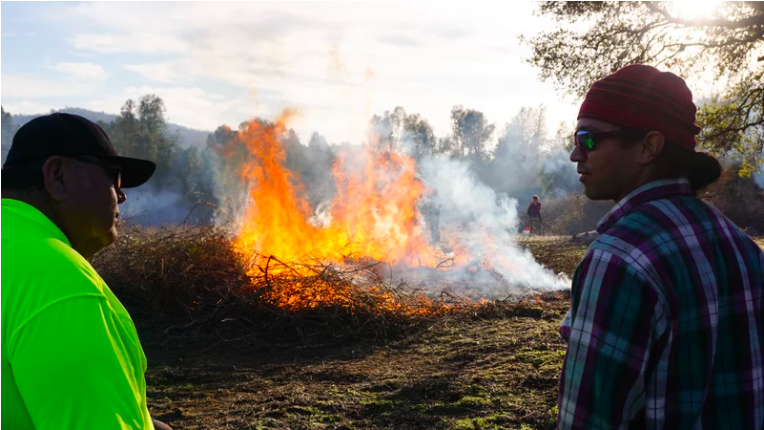
Fire has always been part of California’s landscape. But long before the vast blazes of recent years, Native American tribes held controlled burns that cleared out underbrush, encouraged new plant growth, and helped manage wildfires. It’s a tradition that disappeared with the arrival of Western settlers.

This short podcast explains how tribal leaders are working with government officials to restore cultural burns, a practice that can minimize and control extreme wildfires in California. These controlled fires clean up the vegetation and brush that would be fuel for the extreme wildfires, they also do it to encourage new plant growth, and helped manage wildfires. It’s a tradition that disappeared with the arrival of Western settlers. 

“I think it’s really important that we don’t think about traditional burning as what information can we learn from Native people about how they care for the land and then exclude people and move on with non-Natives managing the land, but that Native people are at the forefront and are leading.”

This is an important quote. One that highlights the importance of traditional ecological knowledge (TEK) and not only interweaving Western science but having TEK at the forefront. Managing the lands as how it was done for centuries by First Peoples before campaigns like “Smokey the Bear” and an era of unhealthy fire suppression.

References

Baughman, B. (2020). Managing wildfire through cultural burning [Audio podcast]. Short wave. https://www.npr.org/transcripts/904600242

Mod#4-Post#3: Developing a native digital voice: Technology and Inclusivity in Museums

Link to the article: Developing a native digital voice: Technology and Inclusivity in Museums

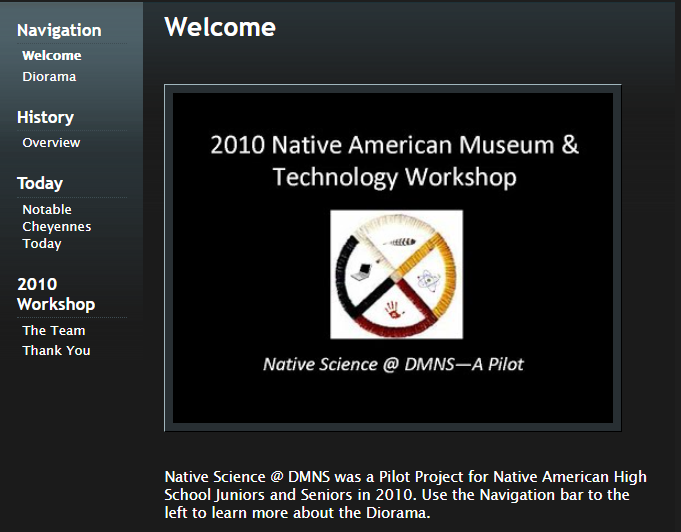
In 2010, at the Denver Museum of Nature and Science (DMNS), Pohawpatchoko, Colwell, Powell, and Lassos developed a two-week intensive workshop that brought 10 Native American high school students to create a working model for an interactive web interface to complement a diorama of a Cheyenne family in the early 1860s (Pohawpatchoko et al., 2017). At the end of the two weeks, the students created a working model, which they presented to their families and community members. Standing in front of their community was an act of bravery for many students and ultimately empowered them (Pohawpatchoko et al., 2017). Below is a capture of the student’s Google site (notice the students had no prior experience in web-based CS before the workshop). Even though the museum did not use the students’ digital model, still, the authors think that the experience was successful (Pohawpatchoko et al., 2017). They mentioned that the real point was that the project served Native community members: the project wasn’t about the museum; it was about the community. It provided “interns” with exposure to technical web skills, connectedness with their past towards their future goals, and a starting point for inclusivity to museum display approaches (Pohawpatchoko et al., 2017). Moreover, the workshop had positive outcomes on the educators who were learning along with their students. While reading about the educators’ experience, I thought it is connected the “Axe Handle Academy Model” expecting educators to become “the model of teaching and learning that the student studies” (Scollon & Scollon, 1986, p.92).

Screen Capture of Student’s Digital Model created in @DMNS Pilot workshop

For me, three significant aspects made the learning experience culturally responsive. Firstly,  the students were involved in “a real computing experience” (Pohawpatchoko et al., 2017, p.54) relevant to their lives; the project can be regarded as “a part of museum decolonization and reformation in the twenty-first century” (Pohawpatchoko et al., 2017, p.53). Secondly, the program features the importance of community connections. It was run by, for, and with Native American community members and involved elders, artists, scholars, and other knowledgeable tribal members. It also included cultural practices, such as talking circles, allowing the students and staff to share their experiences about living their Native American identities in today’s complex world. Thirdly, the program was grounded by cultural constructionism, which provides a framework for developing customized digital tools or curricula enabling marginalized groups to participate in technology. In the study, “Indigenous culture, museum studies, and computer science [were merged] under one umbrella” (Pohawpatchoko et al., 2017, p. 54). For my project work, I regard the article as an excellent example of  applying ethnocomputing. It also illustrates how the community connections are essential when applying culturally responsive approaches to broaden Indigenous youth participation in computing.

Reference:

  • Pohawpatchoko, C., Colwell, C., Powell, J., & Lassos, J. (2017). Developing a native digital voice: Technology and inclusivity in museums. Museum Anthropology, 40(1), 52-64. https://doi.org/10.1111/muan.12130
  • Scollon R.& Scollon, S.(1986). The Axe Handle Academy: A proposal for a bioreginal, thematic humanities education. Retrieved from https://www.uaf.edu/ankn/publications/index.php

Mod#4-Post 2: ancestral knowledge meets computer science education

Link to the e-book: Ancestral Knowledge Meets Computer Science Education | SpringerLink

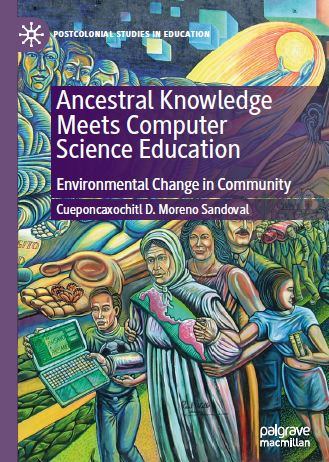
I found about this book from our colleague Laura Ulrich. Thank you, Laura, for this outstanding resource. Sandoval (2019) presents a three-year research journey in which she worked closely with “Mr. Adams”, a teacher of European-descent, to explore intersections between computer science (CS) and ancestral knowledge across the school and non-school contexts. The introductory chapter introduces a new conception, “Ancestral Computing,” that investigates how to solve complex problems using socio-cultural and historical ecosystem approaches; thus, the connection was grounded in a robust and non-trivial community orientation. Sandoval (2019) argues thoroughly that computer science is one of the most segregated fields in education towards the experiences of Indigenous Peoples. She urges that Indigenous struggles must be at the center of knowledge production in computer science in order to create a sustainable and just world of producers and consumers. It key to note that Sandoval (2019) doesn’t reject technology in its totality; instead, she nurtures the interweaving of the two seemingly disparate worlds through Ancestral Computing. The formula is presented as follows:
Ancestral Praxis + Critical Computer Science Education Social Transformation” (Sandoval, 2019, p.61)

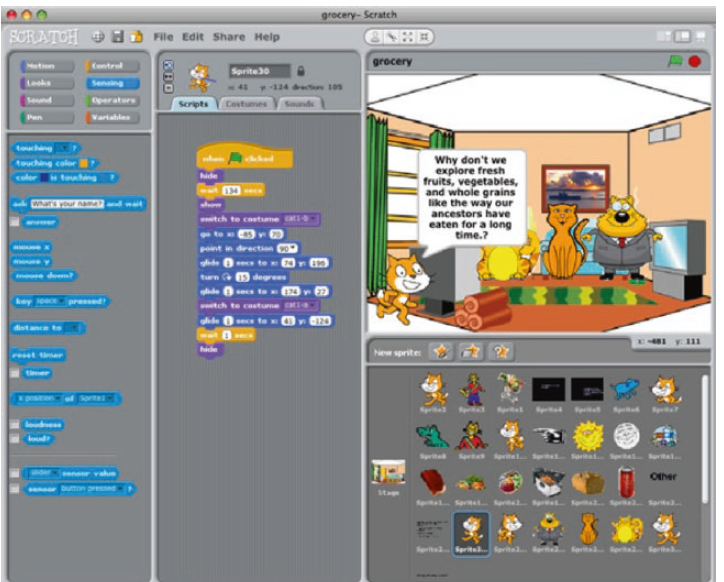
I was highly drawn to the learning journey of a high school student of Mesoamerican descent, Itzel, as she travels through the two worlds within the schooling spatial context of El Seren.  Chapter five details throughout Itzel’s participation how a student-led initiative can bring ancestral praxis with computing for social change (see the artifact that Izel and her partner Audrey did throughout the learning process). The journey continues as Itzel enrolled at the University of California and declares Communications as her major and Computer Science as her minor area of focus. When Itzel returned home, she decided to give back to her community and support Mr. Adams and his students to understand programming more (i.e., using the pre-existing cultural capital that exists within her local communities) (Sandoval, 2019).

A Screen capture of  the “Scratch final project, Itzel and her partner Audrey, ancestral foodways, DietSens, 2011” (Sandoval, 2019, p.144).

I will definitely employ this “healing” journey so -called in my final project as a space for resistance and hope; it successfully resists colonialism and bridges the persistent divide between ancestral knowledge systems and Eurocentric epistemologies towards dignity and imagining an equitable educational world in and for Indigenous communities (Sandoval, 2019).

Reference:

  • Sandoval, C. D. M., SpringerLink (Online service), & Springer Education eBooks 2019 English/International. (2019). Ancestral knowledge meets computer science education: Environmental change in community (1st 2019. ed.). Palgrave Macmillan US.

Mod#4-Post #1: Computing for all?: Examining critical biases in computational tools for learning

Article Link: Computing for all?: Examining critical biases in computational tools for learning

In the study, Litts et al. (2021) examined the affordances and constraints of a novice programming platform called Augmented Reality and Interactive Storytelling (ARIS) for community storytelling in a summer workshop with forty-seven Native American youth (38 fully consented to participate in the research). The indigenous youth built their place-based stories on a storyboard and then developed their games using ARIS. The researchers reported three cases underlying different narrative structures that youth used in their storyboards and the design process while using ARIS:

1- Branching narrative: In this structure, the students follow the linear flow where the player is guided from one element to the next. They were able to execute their game with ease as their structure aligned well with the logic embedded in the platform.

Screen capture of “Figure 2: group students work using the existing branching logic in the ARIS editor” ( Litts et al., 2021, p.850).

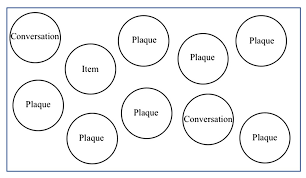
2- Sandbox narrative: In this narrative structure, the students desired to give the player a big open world populated with opportunities for exciting interactions. The player isn’t constrained to a rail-like linear plot but can interact with the world in any order that he/she chooses. While the idea is doable, however, it requires a certain level of familiarity with ARIS and computer science principles that the students lack. Thus, the students couldn’t work out their idea on the platform, and the result was a narrative that they didn’t initially intend.

Screen capture of “Figure 3: Visual representation of sandbox narrative structure” (Litts et al., 2021, p.851).

3- Hub-and-spoke narrative: it is a non-linear narrative tightly connected to the Indigenous culture. Also, here, the group of students couldn’t execute the game as desired (only completed one spoke) as the structure of the tool didn’t support the form of their narratives (Litts et al.,2021).

Screen capture of “Figure 4: Visual representation of hub-and-spoke narrative structure” (Litts et al., 2021, p.852).

The latter two cases explicate the epistemological tensions in this computational tool (its Western orientation), which negatively impacted these groups’ participation in computing. The message that stood out for me in the article is that “it is not enough just to broaden who participates in computing; we must also broaden the epistemologies and cultural practices that are valued within computing. As such, we must expand who designs tools in the first place” (Litts et al., 2021, p.853). The article is significant to my research project as it considers the design of learning tools as a core pillar in broadening the participation of Indigenous students in the computing field and reveals that more efforts are needed to design culturally responsive computational tools.

Reference:

  • Litts, B. K., Searle, K. A., Brayboy, B. M. J., & Kafai, Y. B. (2021). Computing for all?: Examining critical biases in computational tools for learning. British Journal of Educational Technology, 52(2), 842-857. https://doi.org/10.1111/bjet.13059