Category Archives: MODULE 4

Decolonizing Reflexive Practice Through Photo Essay (M4P5)

The coming school year will be the first time I teach Photography 11/12, and I am hoping this resource will help me prepare for that. The paper, Decolonizing Reflexive Practice Through Photo Essay Aisinai’pi Storying Place (Walsh et al., 2018) outlines a photo essay project that situates the students’ identities with place. A photo essay is “a series of images evoking stories of original peoples and settlers on this land and fuels important questions about identity and belongingness” (p. 103).
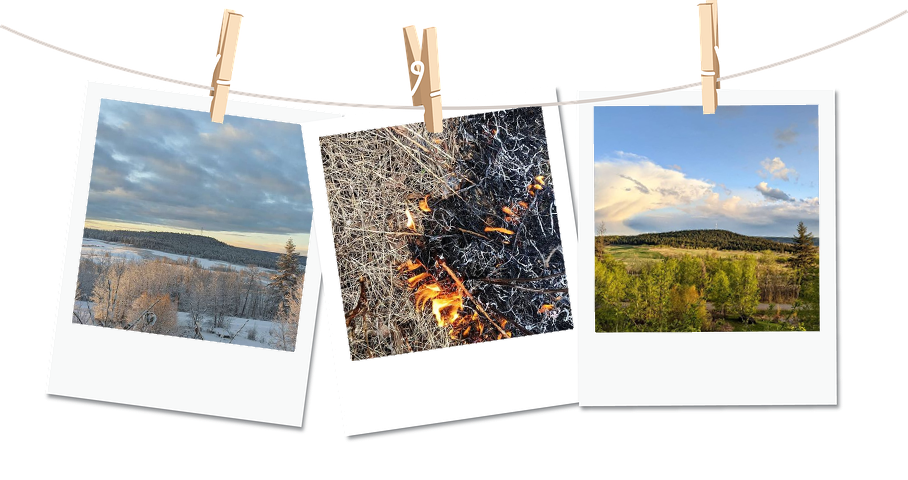
Photo essay example

An example of a photo essay, representing the importance of (controlled) burns for healthy ecosystems.

In the paper, the authors describe using a photo essay of the City of Calgary to orient students with Indigenous worldviews and a sense of place. Each photo has a theme, and many interconnect. For each photo, they asked students key questions, such as:

  • Who originally occupied this land?
  • How do Eurocentric societies and Indigenous societies understand Mother Earth?
  • What are your beliefs about live-giving forces?
  • What promotes health and wellness?
  • How do you understand the notion of all entities to be interconnected and interdependent?
  • etc.

I think this could be a valuable way to introduce students to both photo essays and to local history. You could extend the learning by having students create their own place-based photo essays.


Reference:

Walsh, C. A., St-Denis, N., & Eagle Bear, A. (2018). Decolonizing Reflexive Practice Through Photo Essay Aisinai’pi Storying Place. Cultural and Pedagogical Inquiry, 10(1). https://doi.org/10.18733/cpi29376
Using Visual Arts to Explore Local Community (M4P4)

Teachers for Social Justice published a lesson that facilitates students connecting with their local community. This is important for students to explore their own identities, their relations to others, and a sense of place. The lesson uses Bryan Collier’s book Uptown as a visual example of the art project (video of the book below).

https://youtu.be/7eJFJjQsTy4

This lesson is geared towards younger elementary students (grades 2 and 3), but I see the potential for this to be adapted for older students in digital media and photography classes. To begin, you could start by learning about media literacy through an anti-bias, anti-racist lens. The Association for Media Literacy has a useful framework for this. This would set the foundation for a “Reading the Street” activity during the community exploration, where students would experientially learn that media includes the environments around them, conveying ideologies and implications. The project can culminate with a digital collage project using computer programs such as Photoshop or Krita (free). To go even further, students could animate their collages using a program like After Effects, or make it interactive (such as clicking certain parts triggering an audio clip) using Adobe Animate (click here for an example, from ETEC 540’s “What’s in Your Bag?” assignment)

Other lessons on Teachers for Social Justice website that look promising:

Art for Social Advocacy (M4P3)

The Art of Education University has a short but valuable guide on using art education to facilitate students engaging with social justice. In a nutshell:

  1. Start by inspiring students with a compelling example.
  2. Ask them to brainstorm issues that are important to them.
  3. Do some inquiry into their causes on Social Media.
  4. Send your students off to make their own art to represent/support their cause.
  5. Have your share their work on social media (the article has advice for negativity/privacy issues) and watch your students witness their impact.

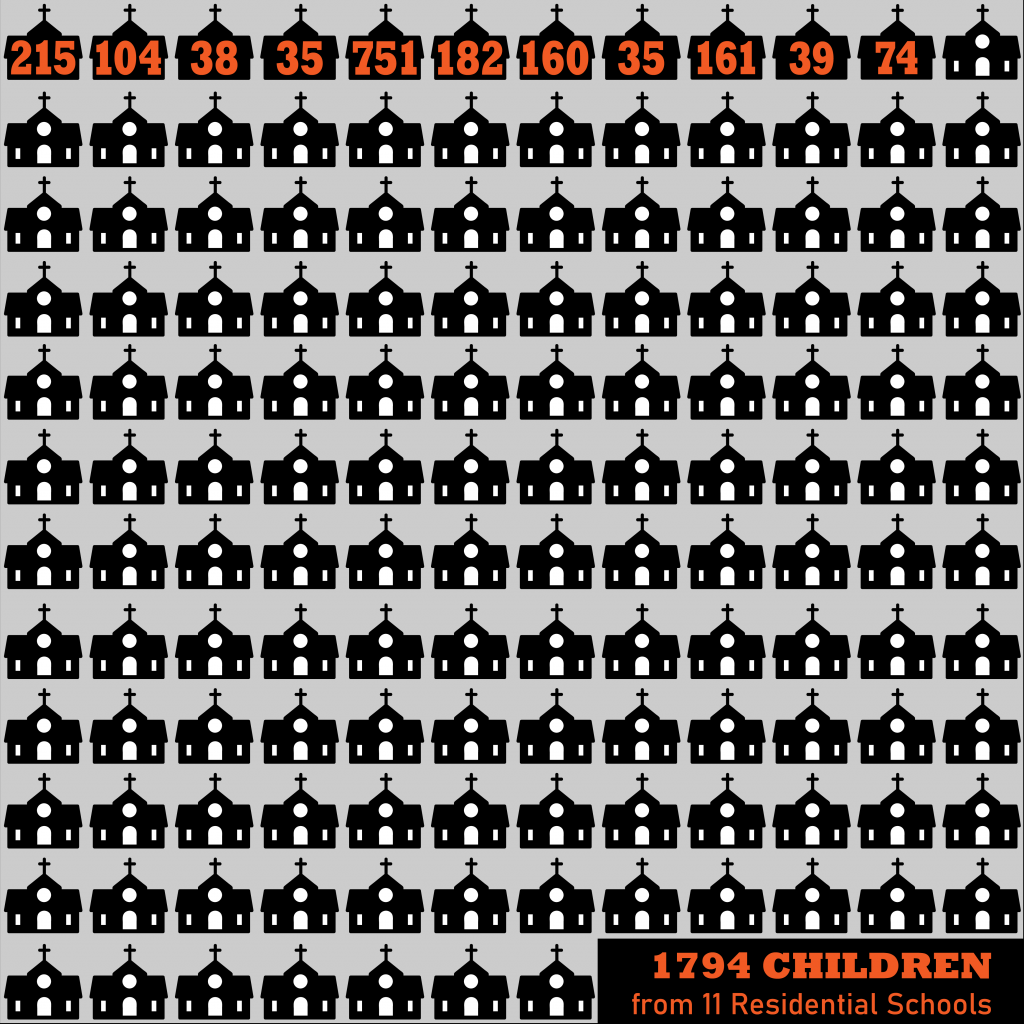
I believe its important learn alongside my students and to lead by example. Below is an infographic that I recently made and shared on social media. The project was inspired by a conversation that happened during the last class of the Anti-Racism Summer Institute.  We had been discussing how considering the numbers of bodies found at Residential Schools, in relation to the number still to search, drastically changed one’s perspective. The online response to this infographic has been unexpected and overwhelming(ly positive).

example of art for social advocacy that went viral on social media

See it on Instagram. See it on Facebook.

References:

Hoeve, L. T. (2021, June 28). Teach Your Students to Use Art as a Tool for Social Advocacy. The Art of Education University. https://theartofeducation.edu/2016/06/20/june-art-tool-social-advocacy/.

Ulrich, L. (2021). Residential School Project [Infographic]. Instagram. https://www.instagram.com/p/CRpzfAzrhax

M4, P5: Engaging with Indigenous Learners (PD)

In my search for more PD… CALP offers a few different PD opportunities on supporting Indigenous learners that are all worth taking.  In 2018, the Community Adult Learning Program (CALP) piloted a program called Engaging with Indigenous Learners, and it has been offered regularly due to it’s success. The next one is in August 2021, and because there is an online component, it opens up the learning opportunities for those of us who can’t travel for PD. This workshop is will help those who work with adult Indigenous learners and help us create a supportive and welcoming learning environment.

Engaging with Indigenous Learners

University nuhelot’įne thaiyots’į nistameyimâkanak Blue Quills

This professional development workshop arose out of the recognition that success in an adult learning environment inclusive of Indigenous learners is best accomplished through understanding. It is unique in the sense that it engages participation from the variety of Indigenous peoples who live in the Treaty 6, 7, and 8 areas of Alberta, as well as with the Indigenous Postsecondary Educational Institutions. There is no ‘one’ singular specialization of Indigenous knowledge. Each Nation and tribe is unique, and the collaborative nature of this professional development opportunity allows you to hear the Indigenous voices in your local area.

This training is for CALP practitioners who work with or would like to work with adult Indigenous learners, but who may not have had previous opportunities to learn about Indigenous people, knowledge, issues, and culture, or who have had limited exposure to the Indigenous experience.

Learn about local, regional, and national issues of relevance to adult Indigenous learners to help you create a supportive and welcoming learning experience for Indigenous learners in your community. Connect with and build relationships with community members from your local First Nations Colleges/University.

For more info click here!!


M4, P4: Professional Development Collection

For one part of my final project, I want to focus on professional development and staff training, and this amazing flipcard collection PD opportunities. There’s a huge range of learning opportunities here– from microlearning or multi-day workshops. There are labels for Indigenous, Indigenous Information, and Indigenous Language. A few of the courses I flagged to explore (many have passed but could be offered again, and the materials might be available for review):

  • Outreach and Engaging with Indigenous Communities
  • Oral History and Social Justice
  • Indigitization Program
  • Decolonization workshop
  • How to create an oral history collection

It looks like it’ll be a great resource for professional development opportunities for educators in many contexts.


M4, P3: Library Services to Indigenous Populations: Case Studies

In 2013, the International Federation of Library Associations (IFLA) sponsored the publication of a ebook of . The global collection of case studies cover resources, library programs and collections. Although not an exhaustive collection of case studies, it provides an excellent snapshot of initiatives from around the world. There are lots of inspiring examples within the book, and working in an online university with students from around the world, it’s worth exploring local-to-the-students library initiatives and consider how they could inform some of our library outreach.
Roy, L. & Frydman, A.  (2013). Library services to Indigenous populations: Case studies. https://www.ifla.org/files/assets/indigenous-matters/publications/indigenous-librarianship-2013.pdf

M4, P2: Supporting Transitions from Secondary to Post-Secondary

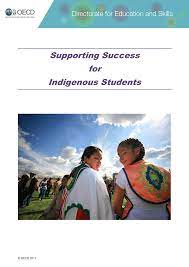
In working on support Indigenous learners in a post-secondary environment, I think it’s beneficial to explore successful programs or current initiatives in secondary education. Facilitating the transition to higher education, would increased student retention and satisfaction with their learning experiences. The OECD’s Supporting Success for Indigenous Students (2017) paper briefly summarizes supports for Indigenous K-12 students including the student, family, school, and leadership elements to consider.

There is a decent and recent pool of research on supporting Indigenous learners in higher education (e.g., Restoule et al., 2013; Shah & Widin, 2010), specifically during the transition period. I’ll be exploring this research stream further to evaluate how academic libraries can support Indigenous students during this period.

—–

Organisation for Economic Co-operation and Development. (2017). Supporting success for Indigenous students. https://www.oecd.org/education/Supporting-Success-for-Indigenous-Students.pdf

Restoule, J. P., Mashford-Pringle, A., Chacaby, M., Smillie, C., Brunette, C., & Russel, G. (2013). Supporting successful transitions to post-secondary education for Indigenous students: Lessons from an institutional ethnography in Ontario, Canada. International Indigenous Policy Journal4(4).

Shah, M., & Widin, J. (2010). Indigenous Students’ Voices: Monitoring Indigenous Student Satisfaction and Retention in a Large Australian University. Journal of Institutional Research15(1), 28-41.


Little Stones: Art for Positive Change (M4P2)

Little Stones is an award-winning documentary following four women making positive changes in their communities through art. The documentary’s team also joined up with the University of Michigan School of Education to create a Take Action! toolkit to help educators bring social justice to their own classrooms. This includes lessons surrounding the documentary itself (focused on Gender-based violence), as well as two workshops on Graphic Design (p. 119) and Spoken-Word Poetry (p. 126). The toolkit has many valuable media literacy activities, such as an analysis of infographics (Lesson 3, p. 45-48) and lyrics (Lesson 7, 95-108). Overall, this is a solid resource on its own, but also has the potential of being used as a reference for developing Anti-Racist and Indigenous art and media lessons.

Project of Heart (M4P1)

Project of Heart is an artistic inquiry into the history of Indigenous people in Canada and the legacies of the Indian Residential Schools (IRS). Though open to all Canadians, it is geared towards schools and students. The website is organized by Province to help provide local context and resources. 

The project’s framework includes 6 steps:

  1. Investigate the History and Legacy of Residential Schools in Canada
  2. Look closer at a specific IRS in your local area, including whose territory it is located on and the children taken to the school
  3. Create a gesture of Reconciliation
  4. Survivor Visit
  5. Social Justice Action
  6. Finishing Up Project of the Heart

For Step 3, the website gives several suggestions for projects, from their traditional commemorative wooden tiles to crafting feather wreaths or writing a song. The provincial pages also provide blog-rolls with examples from schools. An approach that I think would be interesting is a collaborative mosaic. Ideally, this would be done in collaboration with a local Indigenous artist who would create the overall design and perhaps teach the students some art lessons. For examples of Collaborative Mosaics, check out Jen Jolliff‘s school ones, and the Global Roots Project.

Photograph Source: Alec Perkins – CC BY 2.0

M4, P1: Decolonizing Knowledge Production

One of the most challenging aspects of my decolonizing the library action plan is challenging the theoretically underpinnings that established libraries. They are largely organized in a falsely subjective classification schemes and the conversation around decolonization needs serious focus on knowledge production. One of my colleagues shared some work by Louis Yako, and I found it very compelling. Yako (2021) challenges the “long-held Western claims to objectivity, and the assumption that knowledge produced by the West about the rest is independent, unbiased, and unaffected by power relations and inequalities.”

Decolonizing Knowledge Production: a Practical Guide

This has implications both for our classification of resources– how we label them, how we rank them in knowledge system hierarchies–, how we teach about source evaluation, and how we provide public service. There is an gatekeeper element to librarianship that implies that we hold the keys to the secure and “best” information, that we are arbiters of what makes reliable information, and our field has historically aligned itself with Western knowledge systems at the exclusion of other sources. In order to move forward, we need to examine our systems of knowledge production, reflectively assess ourselves, our values, and our biases, so we can move forward in a more inclusive direction.

Yako, L. (2021, April 19). Decolonizing knowledge production: A practical guide. CounterPunch.https://www.counterpunch.org/2021/04/09/decolonizing-knowledge-production-a-practical-guide/