Category Archives: MODULE 4

M.4 P.5 The Contribution of Traditional Knowledge and Technology to Climate Solutions

The Climate Investment Funds funded a study showcasing traditional approaches to addressing climate change, helping chart the way forward for integrating these tested approaches, lessons, and experiences into climate action. I think this report is especially useful because it discusses tangible solutions using traditional knowledge and technologies, rooted in local ecosystems, that have shown to be beneficial to ecological preservation.
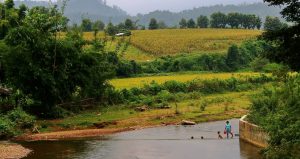
Some examples of TKT (traditional knowledge and technology) include; traditional housing and architecture, food systems, navigational and resource charts, taro pits, water harvesting techniques, and land extension processes. Broadly, TKT encompasses three elements: knowledge about the environment, knowledge about the use and management of the environment, and values about the environment. The report which is found below, is written specifically for a climate change initiative, however, broadly discusses TKT and its useful applications to other environmental concerns.

Some differences between Traditional knowledge and Western (conventional) technologies;

• Traditional knowledge systems were developed by trial and error over long periods, while conventional technologies are largely rooted in science and engineering.

• Changes in traditional knowledge are intergenerational in scope as they have evolved slowly, whereas conventional knowledge is generational as it changes rapidly.

• Traditional knowledge is mainly tacit in nature and tends to be relatively localized, while conventional knowledge is more conducive to codification and transmission by modern means, making it universally available.

• In traditional systems, there are no clearly defined innovation systems, whereas conventional innovation systems are more clearly identifiable and defined.

Indigenous ways of managing landscapes have often been framed as the antithesis to progress. But most Indigenous communities hold intimate place-based knowledge, gained across generations, which is an ideal starting point for addressing contemporary challenges such as biodiversity loss, land degradation, and climate change.
Here are seven ways that Indigenous knowledge is translated into vital inventions for conserving and restoring landscapes around the world. In fact, this ancient know-how might just be some of the modern technology we have.

  1. Seed-saving methods preserve native plant species in the face of new disease threats
  2. Ancient controlled-burning practices ‘fight fire with fire’ to maintain biodiversity and keep humans safe
  3. Rotational cropping restores soil, builds biodiversity, and boosts crop yields
  4. Three Sisters’ intercropping method ups yield and provides balanced diets to gardeners across the globe
  5. Traditional drought-resistant planting techniques combat desertification
  6. Non-linear conceptions of time help adapt to climate change
  7. Ancient drainage canals improve Lima’s water supply

References

Climate Investment Funds, (March 5th, 2020). The contribution of traditional knowledge and technology to climate solutions. https://www.climateinvestmentfunds.org/knowledge-documents/contribution-traditional-knowledge-and-technology-climate-solutions

Evans, M. (August 7, 2019). 7 Indigenous technologies changing landscapes. Landscape News. https://news.globallandscapesforum.org/37693/7-ways-indigenous-knowledge-is-changing-landscapes/
M4P5: Youth who inspire

These five First Nations youth are being highlighted for their action in restoring language and culture and ultimately hope in their communities. They are also an example to students of action: it is personal, it takes different forms, and it is in response to a personal connection. As the final project considers using technology to inspire activism in the classroom, all of these youth use technology for their purpose. Exploring who they are, their message, and their delivery offers students a rich experience of activism in action.

M4P4: Burnaby Village Museum, a step toward reconciliation

Over the past few years, Burnaby Village Museum has taken steps to undo “the part it has played in erasing Indigenous history from the place we now call Burnaby (Vancouver is awesome, 2019). This is an important step toward reconciliation and an example that can be discussed in class.

Out of this process has come the Indigenous History in Burnaby Resource Guide. This guide is an excellent resource for grade 5 and beyond, providing local context and story to the areas in which my school is found and where the kids play and live. This guide also serves another purpose though, and that is to open up conversation about how history is written. Who funded this book? Who consulted in this book? Who received credit for this book?

Naylor, C. (2019, November 1). Burnaby museum works to undo erasure of local Indigenous history. Vancouver Is Awesome. https://www.vancouverisawesome.com/history/indigenous-history-burnaby-village-museum-1946638.

M4P3: The Transmountain Pipeline


One area of focus for my final project is exploring activism with my class, with this classroom learning module adapted as the final project. The proximity of our school to Burnaby Mountain offers an opportunity for rich discussion and personal connection regarding the TransMountain Pipeline. It also offers us a chance to explore some of the messaging that is available online, both through the site Coast Protectors and the Transmountain site. Both sites discussion environmental issues at play, but in very different ways. What information is provided and what information is missing? Helping students evaluate the messaging is an important piece of decolonizing technology use.

This CBC Kids news video is a good introduction to the topic, providing background on both sides.

http://https://youtu.be/Hv5RBMVpGTc

M4P2: SFU Museum of Archeology and Ethnology

My focus for the final module has been on local sources that can enhance my students’ understanding of the area around them. Given my school’s proximity to Simon Fraser University (SFU), there are many resources that directly relate to this subject. SFU’s Museum of Archeology and Ethnology is primarily designed to be enjoyed in person. With COVID, however, the museum has shifted to creating online content for educators, the majority of which relates to First Nations culture (though not all). While the site offers many resources, of particular note is the Tse’K’wa history of project that raises some interesting discussion around archeology and who owns what.

M4P1: The Bill Reid Centre

The Bill Reid Centre is located at Simon Fraser University, a forty-minute hike from my school, but I did not realize its website was so rich in resources. It uses digital technologies such as photographs, drawings, videos, and other visual media to highlight the depth and vibrancy of Northwest Coast culture. Each section is so plentiful in resources that an entire year of curriculum could be developed with the website as a starting point. Its stated mandated is to (1) encourage community and academic conversations regarding the visual culture of Northwest Coast First Nations, and (2) promote public understanding and respect for the First Nations of the Northwest Coast past and present. The digital village project, in particular, could be of particular value in my class when using Minecraft to showcase knowledge.

Module 4- Post 5- IMPulse, Indigenous Mentorship Program

IMPulse is a mentorship program that connects indigenous youth to university mentors in the field of STEM. This service provides 1-on-1 or group sessions which allow both mentors and mentees to develop strong relationship and build discussions around STEM. This program is FREE to join and will give youth an opportunity to get advice from the mentors to help make key decisions about their future or from choosing a university to moving away from home.

https://stemfellowship.org/impulse/

Module 4- Post 4- Equipping Indigenous Youth for STEM Careers

As there is a lack of Indigenous participants in STEM careers, fixing this problem requires changes at all levels of the education system. In order to better equip youth for future careers in STEM, high school must provide targeted services including financial aid, financial guidance, social and cultural activities, and designated spaces.

Supporting access and retention programs for Indigenous students at Canadian colleges and universities is equally important. The Engineering Access Program at the University of Manitoba, for example, has helped 134 Indigenous student engineers graduate over the past two decades. The Aboriginal Access to Engineering Initiative at Queen’s University has increased the number of Indigenous student engineers from four in 2011 to more than 50 in 2020.

These inclusive programs help improve the experience for all indigenous students to help them succeed in the long run.

https://financialpost.com/pmn/press-releases-pmn/globe-newswire-releases/high-schools-can-do-a-better-job-preparing-indigenous-students-for-stem-studies-access-and-retention-programs-for-indigenous-learners-need-to-be-supported-and-expanded

Module 4- Post 3: Success in STEM Careers

Less than 2% of the people in STEM occupations are Indigenous. The Conference Board of Canada is researching leading practices in STEM education for Indigenous learners in Canada. The Board:

  • examines the inequalities between Indigenous people and mainstream populations in STEM fields, including Indigenous perspectives on defining and measuring success
  • identifies the strategies that reflect Indigenous cultures and realities in STEM education and employment that have the potential to reach the most learners
  • explores which strategies are contributing to effective outcomes for learners, particularly from the perspective of employers, Indigenous communities, and governments
  • develops recommendations for STEM educators and funders on best practices to bridge mainstream and Indigenous world views—inside and outside the science classroom

https://www.conferenceboard.ca/research/how-can-more-indigenous-people-access-stem-careers


Module 4- Post 2: Successful Indigenous People in STEM

The disparity of post-secondary education (PSE) completion between Indigenous and non-Indigenous Canadians (40% vs. 55.3%) continues to persist (Statistics Canada, 2016). However, there are several notable indigenous individuals who have been making waves in the STEM field in Canada!

https://www.sfu.ca/wwest/WWEST_blog/7-indigenous-people-in-stem-you-should-know.html