Category Archives: MODULE 4

Module 4, Post 1


Holley, L. C., & Steiner, S. (2005). Safe Space: Student perspectives on classroom environment. Journal of Social Work Education, 41(1), 49-64. https://doi.org/10.5175/JSWE.2005.200300343

This article highlights the importance of creating a space where students feel empowered and safe. Often referred to as “safe spaces,” this article extends this thinking to describe how important it is to make students feel ‘safe(r) and brave(r)’ spaces (2005). Holly & Steiner explain that ‘safer and braver’ spaces can be created when there are clear ground rules for discussion, modelled respect for others’ opinions, and participants behaved in a non judgmental way (2005). Building a ‘safer and braver’ classroom helps students become empowered learners. Ideas and frameworks from this article will be helpful for my final project as my partner and I look at ways to foster teacher confidence in the classroom. By creating safer and braver spaces, both learners and educators will feel more comfortable sharing their learning journeys.
Coyote Science – Indigenous Science videos M4 P5

Coyote Science is a Canadian production on the APTN (Aboriginal People’s Television Network).  Instead of throwing on Bill Nye (I might be aging myself here, but the kids still love it!) or Brain pop, using these videos to show science through another lens would be awesome. The episode list has a plethora of topics which would be great for students of elementary or middle school ages.


Using Anchor texts for perspective M4 P4

While this is not an Indigenous story, the idea of using anchor texts to start conversations can be very powerful. They All Saw A Cat could be a fantastic simple story that could be used at even middle school or higher levels with the right structure around it as a starting point to looking at perspectives.  It would be a great time to talk with students about the perspectives that are taught in Canada now and historically (Euro-centric) and how we are attempting to honour and learn through other perspectives as well.  Following a discussion about this book followed by a book or story from your local Indigenous nation and seeing how the perspectives might be different would be powerful and a safe entry point for teachers.

https://youtu.be/-N9TU20EJus


A lesson planning framework M4 P3

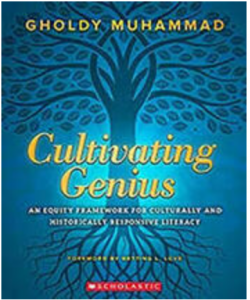
In 565-T Perspectives in Anti-racist education we looked at this book on Anti-racism that provides as fantastic framework for teachers who want to be more than just multi-cultural, but wants to bring anti-racist approaches into their classroom.  This certainly connects to any lesson planning that would incorporate Indigenous ways of knowing, learning, perspectives or culture into their classroom in more than a multi-cultural light. Dr Muhammad focuses on 5 pillars that help guide teachers:

  • identity: helping students develop a sense of who they are and want to be
  • skills: proficiencies in academic content and literacy skills
  • intellect: gaining new and authentic knowledge about the world
  • criticality: understanding the relations between literacy, power, and oppression
  • joy: not just focusing on negative aspects, but letting the students see the joy

These 5 pillars are something that Sarah and I hope to use as a framework to not just incorporate Indigenous ways of knowing as a “one off” for the students, but use the criticality sections to ensure that we are educating our learners about WHY it’s important that we’re looking at other perspectives.  For a teacher who isn’t yet comfortable, having simpler things that they ARE comfortable with and go deeper as they get more experience and confidence.


Module 4- Post 5- Looking at the myth Why Aboriginal Peoples Can’t Just “Get Over It”

https://www.aptnnews.ca/featured/understanding-inter-generational-trauma-and-how-to-stop-it-infocus/

This video on APTN’s show “In Focus” describes what intergenerational trauma is and how Indigenous Peoples in Canada are affected.  A speaker on the show, Dr.Gabor Mate shares his research where he found how childhood traumatic experiences can result in addictions which can become normalized responses. I feel as though this concept is important for students to understand in terms of learning why the trauma of Indigenous Peoples still exists today.  The closing of the last residential school in 1997 was not that long ago. However, for the students going through our school system today, it might seem like a long time ago. It is essential that students understand that the trauma does not go away and it is going to take several generations before the trauma goes away.  As I read this article I reflected back on how well understanding this concept fits into my science 10 lesson on Epigenetics.  This is the study of how genetic markers, created from environmental conditions, can be passed on from generation to generation. This is a great connection I can make in my lessons.

Extra resources:

If I were to try and explain this to my class the following is a Youtube video I also found that brings some light to intergeneration trauma.  https://www.youtube.com/watch?v=IWeH_SDhEYU&t=97s

As well, a recent news clip I found also has John Langan discuss a first hand account about how his parents attending residential schools impacts him.

https://globalnews.ca/video/8030529/residential-schools-source-of-intergenerational-trauma-for-indigenous-people

Module 4- Post 4- Pan-Indigenous Views or the the myth that ” All Indigenous People are the same”

https://livelearn.ca/article/about-canada/5-facts-about-the-diversity-of-indigenous-peoples/

As an educator I think it is important, when possible, to use local Indigenous knowledge. When providing students with local contexts I believe they will better connect with the content being taught.  On my journey to find research to help educate about the diversity of Indigenous peoples I found this website by livelearn.ca that describes the differences in Indigenous territories and even provides a description of the seven bands or tribes that make up the territory that I live on. The 5 facts about the diversity of Indigenous Peoples include:

  1. Indigenous cultural traditions in Canada existed as far back as 400 years ago

  2. There are more than 634 First Nations communities all over Canada living in traditional territories and in urban centres

  3. There are more than 60 Indigenous languages

  4. 10 Indigenous cultural areas in North America, six are in Canada

  5. Residential schools contributed much to the decline of Indigenous language and culture

It’s important that students understand that even if we explore Indigenous worldviews in our class, these views or traditions come from a specific territory. All Indigenous cultures and territories  differ from nation to nation across Canada.

Module 4- Post 3- Colorblindness

https://www.ted.com/talks/mellody_hobson_color_blind_or_color_brave?language=en


Racial issues can be difficult to talk about in class.  If we are to discuss Indigenous ways of knowing and their importance and value in the education system it will be important to be able to address comments made surrounding the idea that “we are all the same”. “Lets treat everyone the same”.  Colorblindess is the idea that one does not see race, color, ethnicity. We are all uniquely different and need to celebrate that diversity (not pretend it doesn’t exist). We need to seek to understand the historical past of minority groups and how each person’s history or differences, specifically oppressive differences, impacts people’s lives today. The TED talk I posted is a good resource to use to explain this concept to students.  In the video, Mellody Hobson describes the need to start talking about race and ethnicity and not hide from it. As an educator, I need to do this.


Module 4- Post 2- Debunking the myth “Indigenous Peoples get a free ride”

https://www.ryerson.ca/news-events/news/2021/05/how-much-does-canada-owe-indigenous-communities-for-stolen-land/


This article references how the Yellowhead Institute addresses, in its second Red Paper – Cash Back, where money that was given to the Indian Trust fund previously went and where it is now. (This article follows Yellowhead Institutes first paper- Land back).  The review of the article also looks to clarify the myth of Indigenous Peoples getting “free money”. A quote from the article states “[t]he systemic underfunding of First Nations is one of the most central and violent forms of colonization in Canada today, yet it is rarely historicized or explained”.  This website also includes a link to a YouTube video that describes the historical context of the Indian Trust Fund. For those students who question (or believe in the myth of free money for First Nations Peoples), this would be a good start to explain the history of why the settlers of Canada, and their governments, are actually the ones in debt due to the theft of Indigenous lands and resources. 


Further resources: https://cashback.yellowheadinstitute.org/ (the original “Cash Back report)

Module 4- Post 1- Definition and explanation of Genocide of Indigenous Peoples

https://www.thecanadianencyclopedia.ca/en/article/genocide-and-indigenous-peoples-in-canada

For my last set of module posts I plan to explore developing knowledge surrounding the racist Canadian colonial history. The reason for this is in order to authentically incorporate Indigenous ways of knowing into my classroom, I think I must explain to students the reasons why I think it is important. Discussing the racist historical past of Indigenous Peoples and the path to truth and reconciliation helps bring to light why it is important and why we should value incorporating Indigenous perspectives in education. We are all connected to Indigenous Peoples, as we live on their land, and it is important to understand, respect, and value that worldview.

The above being mentioned, I set out on a search to find a solid explanation to explain the genocide of Indigenous Peoples of Canada.  I wanted to ensure I found an explanation that defined genocide and provided evidence to support the idea. I found the Canadian Encyclopedia website describes the Canadian Genocide quite clearly.

Practical, easy to use First People’s math lessons M4P2


This resource is detailed and long with a large amount of content covered though the perspective of Indigenous peoples.  It was written and shared by the First Nations Education Steering Committee.  I found a great connection between the Forest Math book in my previous post and the mapping lesson.  Its a great way to blend both ways of approaching a similar end goal, all while looking at math through the lens of Indigenous ways of knowing.  This resource is a fantastic resource for teachers who may not yet be comfortable incorporating Indigenous ways on their own as it’s clearly scripted and connected to the curriculum.