Trying to incorporate Indigenous ways of knowing into the classroom doesn’t have to be fancy, or resource heavy. It can really be around the APPROACH (as we see in the First People’s Principles of Learning). Talking about the Syilx people’s connection to the land that we see through their stories (like the 4 Food Chiefs) and then taking students outside to look for math (and science) in the forest takes the Euro-centric silos of these subjects out into the blend of the real world. This digital book was a resource sent out by my district’s Indigenous Advocates as a great set of questions to help teachers see the possibilities of non-siloed teachings possible outside (and of course there are way more). By having specific examples of what you can do outside, the questions you can ask the students and the extension questions as well makes it an approachable task for any teacher!
These are the stories of survivors. There is a disclaimer to look at. Warning: These videos contain subject matter that may be disturbing to some visitors, particularly Survivors of the Residential School System. Please call the Health Canada 24-Hour National Survivors Crisis Line at 1-866-925-4419 if you need assistance.
The following is a selection of Survivor stories drawn from the Our Stories…Our Strength video collection. We are grateful to the men and women who have shared their personal and often painful accounts of their experiences of residential school and its legacy. It is by sharing these truths that we can all continue to work toward understanding and healing.
Please contact us info@legacyofhope.ca if you are a Survivor who participated in the Our Stories…Our Strength project and would like to have your video posted on this site. If your story appears here and you would like it removed from the site or the collection, please do not hesitate to contact us at info@legacyofhope.ca
I was able to watch a few of the stories but I have not watched all of them. They are a powerful testament to the gift that the survivors have given us. How interesting.
National Centre for Truth and Reconciliation – September 29, 2020.
Below are my notes on this Act Two on Reconciliation. It is quite powerful and very important.
Foods disappearing and lands were stolen meant the people were starving. They were forced to attend the schools and by then generations had attended. We are still here. These are our stories and we share them with you, and the path that lay ahead.
These are our stories
Can we Talk?
Words become agreements, alliances and talking define our obligation. Because words matter. Words become ideas and ideals. Because talking tells us who we might become.
Can we Talk? So, Can we Talk? We are all in this together.
Senator Murray Sinclair – doing away with languages and harmful abuse to the kids from 5-18 years old. You have one simple challenge. We want you to treat every child and person in your school like they are your friend. Being friends and treating others well and respectfully. Every Child Matters.
“Where the Spirit Live” – first movie about residential schools. They all knew how bad it was and they didn’t stop it.
Reconciliation is a journey and not a destination.
Best hope for reconciliation are in your hands and in the hands of children yet to come. The students selected the animals, and carving the totem. Something that led to the project was for orange shirt day. They go to their daughter’s class to talk about residential schools. The inspiration that comes from talking about students and the future of the children. It fills with hope.
Wear an orange shirt, make art, be a witness and share the stories
Thank you for your help and support – we wear orange to remember the children. Pert of changing the future. Wearing an orange shirt means you’re making an effort and sparking a conversation.
Autumn Pelletier – Water Warrior for the people and protection of the water. Water keeper. Pray for the water and the water is sick and contaminated. Hope that one day the water’s clean. Inspired her to do her work doing today. I will protect the water. Award me by helping find solutions and helping me make change. No community should not have to live without clean drinking water.
What can you do?
This is an invitation to everyone across the country to take steps for Reconciliation. Mamawi together – answering the calls. What can you do? Start with one thing and challenge yourself and others around you. It doesn’t matter where it begins we can always learn more.
Step into and commit to the Calls to Action. Take the Challenge!
“I Am Me” short film about Jazmine Smith – two spirited – transgender indigenous woman. Being transgender is beautiful and I am not a stereotype. I am a Cree First Nations woman. Found a sense of self. I want to encourage people to never give up, find your passion and love yourself.
Every Child Matters – very powerful words and for a long time it wasn’t the case in this country. Indigenous and Metis children were treated differently.
There were hundreds of day schools, savages and bastard children. There remains a long road for the Metis, First Nations and Inuit children. Lots of exploration of what it means to be Metis.
Rose Darling – Metis and Pride – Wookey Films – 5-year-old child.
Hi I’m Rose and I’m Metis. And she tells us what it means to be Metis. 18:20 – this is adorable and something that you should see it for yourself. Metis means “mixed”. Seven generations leading to “me”. She talks about the rollercoaster ride. Proud generation and Louis Reil and the Metis were defeated. Then the Defeated generation and were quiet about it. Then there was the Shamed generation. Mean things were said. Then came the Hidden Generation got good at hiding. They didn’t even tell there babies who they were and then those babies were the Lost Generation and thankfully Rose’s mom’s generation were Found Generation “thanks mom”. I love to play in the snow, do the jig. What’s the lesson here? Knowing who we are makes us happy people and when we are nice to each other. – SOOO CUTE! Worth a watch.
Spirit Bear – going back to court. The government doesn’t want to pay the money. It’s your job to stand up and help them have a proper childhood. Cindy Blackstock from the Caring Society. Addresses the unequal funding for families. Read Spirit Bear’s plan. @spiritbear.
We Can’t Make the Same Mistake Twice – A movie by Alanis Obomsawin
Award making film director who has made so many films of worth. Including ones about Jordan’s Principle. 52 years making films. Another world and nothing was easy and fight a lot and the documentaries. To witness the hate in the province and 270 years of resistance. You have to know why you are making the film and to ask them to respect our people. “Our People will be Healed” and imagine that and how clever and beautiful the people are. What a gift she says.
It’s more than hope and much more profound. All around the country and people are changing and are kind. There are young people are doing things.
Justin Trudeau – knowledge keepers remind us about how Indigenous people are have been here for generations. It’s Canadian history and everyone should know what took place. Racist ideas and systemic racism and discrimination challenge us today. It us up to us to show Every Child Matters.
Notorious Cree – traditional hoop dance – made a choice at 16 years old and really wanted to explore the artists life and make him feel empowered. Dancing to channel the energy to become a dancer. Good things just started happening to him. Great mentors.
You are the future. Be the best versions of yourself.
“Traditional Healing”
Raymond Caplin – film about traditional healing. In the same way as Chanie Wenjack flim (my observations). The images are about the land being polluted. Then the character starts dancing and the land starts to blossom and heal. Colour starts to appear. There appears to be growth with flowers, trees and grass dancing. The character looks around and then walks off screen.
Next is the Chanie Wenjack and an exerpt from “The Secret Path”. Very powerful.
Representation matters – and Tonto was a lousy role model and Indians created by white people. This is the stereotypes of Indigenous people. Lots of kids think the Tomahawk chop is something that indigenous people do. Nope. The journalist who wants to tell the stories. Told many stories about the abuse, and how hockey saved lives. Survival due to hockey. News media is full of stereotypes about Indigenous people. Call to Action 86 – fair and respectful way of telling stories. You have a responsibility to tell the stories well. Learn more about the past and present and take care with your stories.
The United Nations Declaration – survival and the wellbeing for Indigenous Peoples. A solution to reconciliation. The violation of treaties took the Indigenous peoples to the UN. Recognition, respect and Justice and after 27 years of debate it was published.
Kiawentiio – 14 year old singer and songwriter, actor from Akwesasne, Ontario – Great singing and powerful song. Surrounded by family and community and a Mohauk Community School. And did it all in the language and a full immersion school.
Filming “Beans” and a story following a 12 year old girl going through the Oka Crisis. Emotional journey. This song is going through difficult times and is inspiring and empowering.
The ending is thanking the creator for bringing everyone together for Orange Shirt Day. Joyful that the month is over, and because of being torn away from their families. September 30 means that it is gone and we can all move on.
Hug your family and tell them you love them. Because you have no idea going through a childhood not being told you are loved.
September 29, 2020. National Centre for Truth and Reconciliation
Below are the notes that I took while watching Act one – Truth posted September 29, 2020. A very powerful video that is about 45 minutes long and looks all over Canada and talks to many survivors, commissioners for the TRC and powerful members of communities.
To show the survival, the resilience, the courage, and the love that our communities have for our children. Reconciliation cannot happen without the TRUTH.
Phyllis Webstad – Orange Shirt Day
RECONCILIATION – LEARN portion.
Throat singing – great imagery – great message
Metis nation acknowledgement.
The reconciliation we talk about healing, empowerment and leaving a legacy for children and grandchildren. The creator to live within the hearts and minds of the Metis.
The video goes through Canada or Turtle Island and June 16, 2020, was a fire of respect and Reconciliation starts with respect. This fire marked the start of the TRC commission and shared their pain, their hope and their dreams. They asked the TRC to share their stories with the young people of Canada and they want you to know the history and never repeat it.
It will require a deep commitment – Chief Fontaine.
The LEGACY of the RESIDENTIAL SCHOOL SYSTEM – 150,000 First Nations, Inuit and Metis children were separated from their families. Residential boarding schools 1830’s and closed late 1990’s. Suffer abuse and malnutrition. Discrimination, hardship, neglect and abuse. Isolated from communities, culture, punished. Thousands died while attending residential schools. Some people won’t go into the building and some of the elders won’t go into the building.
Many of the scars of abuse have been passed down. The survivors have fought hard to reclaim their traditions. Residential school experiences matter because we Matter.
14:00 – 18:16
Looking at the artists now and the witness blanket made from documents, photos and to record the truth of what happened to them. Over 880 different objects and each one tells a story and each one si part of the truth. The idea of being caught between two cultures. Through the art, the pieces and stories are being put together as a blanket. This blanket was made to witness and a witness watches and remembers and re-tells what they have learned
“I invite each of you to be a witness”
“Zuya” – video of the journey in the Sioux language. The name “White owl Woman” and she tells us her story and journey. Two worlds – the cultural sides, and the other world where there are cars, buildings and chaos. She is a Northern Woman’s traditional dancer. “Nothing is impossible”.
Throughout the video, there is a connection to crisis lines, and they talk about the Kids Help Line to support those feelings you might have.
Rita Joe – “I Lost My Talk” – high school students from Inuksuk High school create a video about what this meant to them. Very interesting take on Rita Joe’s poem. Very powerful.
Work University of Toronto – Indigenous Trauma and Resiliency – Master’s program. Social and emotional safety through a cultural lens.
Slam poetry about the residential survivors. “I know that my ancestors are still healing” and the idea of knowing self.
Orange Shirt Day – is a symbol of all the things that were taken away from the students that mattered.
The dolls for just one day, and then the dolls were taken away. The chores they had to do, and a survivor’s story and using a rag to make her a doll. When she got home she would look for her doll every Christmas and Antique stores to look for the doll. It is important for children to have toys. Making the rag dolls and talking about her doll.
Inuit experienced residential schools in different ways and in different timelines but they experienced them the same way that First Nations and Metis children experienced them as well.
The children of residential school survivors and the loss of life, children and culture. It’s important to recognize that this happened to all groups across Canada.
Please take these attachments and use them to guide. There are others on the website for downiewenjack.ca and you can adapt and plan. The lessons are divided into four themes: Awareness, Acknowledgment,
Atonement, and Action. There is a lesson plan and accompanying powerpoint to teach the lesson along with websites and links that are still active.
The final report has been delivered in 2015. Where are we today? This was a video used in one of the lesson plans for teaching using Gord Downie’s “The Secret Path” and it quite powerful. How much has changed in 6 years? It took 6 years for the commission to issue the 94 Calls To Action and now 6 years later, where are we? What a powerful piece of research for students.
First Nations, Métis, and Inuit Professional Learning website offers opportunities for professional learning as well as curricular resources to support professional learning. There are numerous resources found on the website from videos, to digital resources for creating lesson plans. I noticed looking through the resource that it has been newly developed and brings in links to other resources that I have explored previously such as Empowering the Spirit. The resources and support tools focus on the four pillars (Learning to Be, Learning to Know, Learning to Do, Learning to Relate) of professional learning that were inspired by the UNESCO Pillars of Education. There is a How and When to Use the First Nations, Metis and Inuit Professional Learning Website Guide that, “highlights the features of this website and stimulates learning, conversation, critical reflection, and the development of implementation approaches and strategies.” The website has much to offer in ways of professional learning as well as education resources in lesson planning.
Alberta Regional Professional Development Consortia. (2020). First Nations, Métis, and Inuit Professional Learning. ARPDC. Retrieved from: http://www.fnmiprofessionallearning.ca/
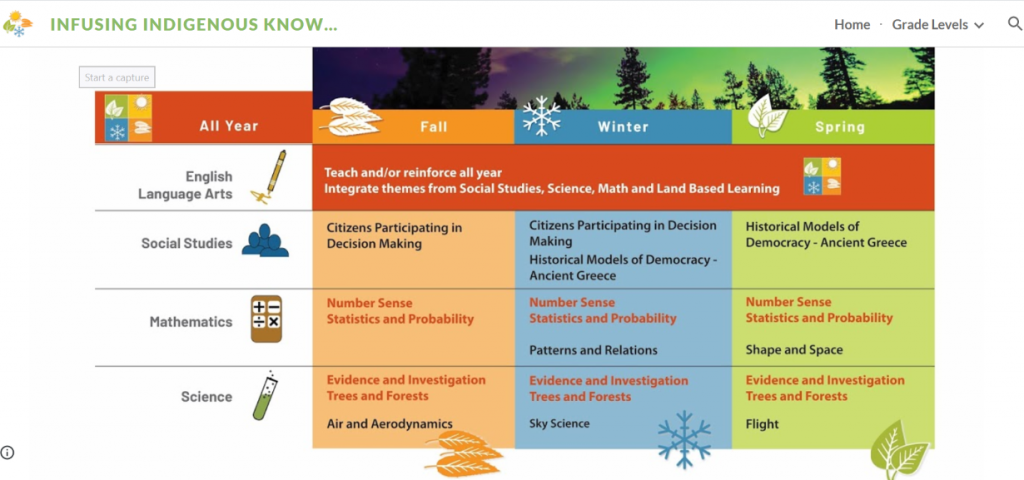
Infusing Indigenous Knowledge into Curriculum website focuses on the Alberta Curriculum for grades 1-6. The resources on the website were developed by the Alberta Regional Professional Development Consortia (ARPDC) and appear to have been recently developed in June 2020. The website’s resources are broken down into grade levels as well into four different seasons to help identify Essential Learning Outcomes for each core subject level throughout the school year. Looking through the site, you can find examples of the Essential Learning Outcome and ways to infuse Cree ways of knowing to support land based learning in Alberta through information charts. The charts are broken down with the Subject, the Big Idea, Learning Outcomes and ways to infuse the ways of knowing. This looks like a great place to start breaking down the Learning Outcomes and weave in Indigenous content that could transfer to palace based learning.
The Flight of the Hummingbird: A Parable for the Environment by Michael Nicoll Yahgulanaas.This is a story book that I do use in my classroom when teaching about Trees and Forests. This is the story of a hummingbird named Dukdukdiya, that despite her size, helps to put out a wildfire that threatens her home by dropping just one drop of water at a time. The illustrations are both a mix of Indigenous and Japanese art. The art is lovely and there is a strong message of being able to make a change in the world to protect our ecosystem. Although not tied directly to Alberta, the message of being able to make change in the world fits in well with place based learning. I had not been aware that there was a video and even an opera put on by the Pacific Opera Victoria and Vancouver Opera until recently, which is great to be able to use as an extra visual for using with students.
My video’s refused to show up so please click on either of the links to watch the short video:
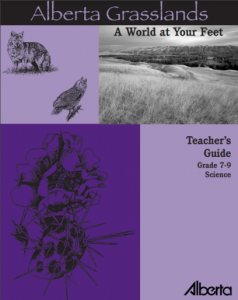
Alberta Grasslands: A World at Your Feet is a teacher resource put together by Alberta Environment. This guide is aimed for grades 7-9 and the focus of the guide is to provide resource material focused at, “Increasing students awareness, understanding, and appreciation for the native grassland ecosystem of Alberta.” Within the resource students are introduced to the history, biology and geography of the grasslands of Alberta. This resource also discusses, The Ways of the Aboriginal People as well as Aboriginal Uses of Plants, both of which would work well within a place based lesson plan. Teachers will have access to posters to help introduce students to the landscape with embedded information about the grasslands, as well as a Teacher’s Guide with Activity Masters. The resource guide focuses on six learning objectives: learn about Alberta’s geological formation, study aboriginal connections to the grasslands, discover the inter-relationships of grassland organisms, learn about basic grassland ecological processes, explore current environmental issues and apply new knowledge to conserve and protect the environment.