Concordia University’s Aboriginal Territories in Cyberspace (AbTeC) was established in 2005. It is a network of artists, academics, and technologists whose goal is to ensure Indigenous-populated spaces in Cyberspace. In 2017, Concordia shared a curated collection from AbTeC through an art show, Owerà:ke Non Aié:nahne / Combler les espaces vides / Filling in the Blank Spaces. This show “illustrate[ed] a multitude of ways in which Indigenous artists, researchers, educators, designers and community activists are creating and employing new media to strengthen and complement their cultures and communities” (Jason Edward Lewis, co-founder of AbTec, as cited by Dunk, 2017).
The AbTeC website includes a gallery of projects, both past and present. One of the projects, She Falls for Ages, was created by AbTeC’s other co-founder, Skawennati. The project’s website describes it as a “sci-fi retelling of the Haudenosaunee (Iroquois) creation story reimagines Sky World as a futuristic, utopic space and Sky Woman as a brave astronaut and world-builder.”
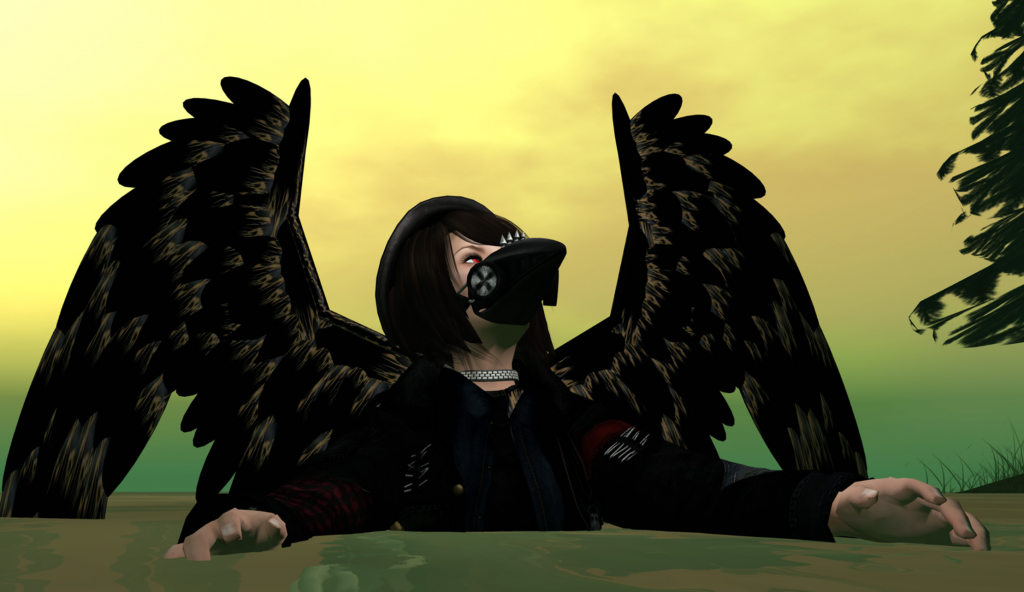
How the Loon Got Its Walk, created in a Skins machinima workshop at the MacKenzie Art Gallery
One of their ongoing projects is the Skins Workshop, which is part of their Indigenous Futures initiative:
The Skins Workshops teach Indigenous youth how to adapt stories from their community into experimental digital media, such as video games. One of our goals is to encourage our youth to envision themselves in the future while drawing from their heritage. We believe this helps to promote and preserve our stories, languages and cultures while also exposing our youth to the digital tools of today and tomorrow.
After completing the first module I realized that the current technology productions are in conflict with Indigenous culture. The questions that I had in mind: How is it possible to change that? How can an Indigenous led-space exist? How can engines and system be coded from an Indigenous worldview? Here I came with the core idea of my project: There is an urgent need for Indigenous people to be part of the future of this industry. It’s a mission that’s crucial not only for Indigenous people, but for anyone who wants a better, more inclusive technology.
Inline with the aim of my project inquiry, in the following TEDX (2013, September 30) production, Jason Lewis talks about the future imaginary for Indigenous communities (see the Initiative for Indigenous Futures [IFF] if you wish to know what this talk relates to). He warns that the lack of representation in technology sector (i.e., design and development) would lead to future made for Indigenous people rather than with them (7:13) and he adds that Indigenous absence from the technology world “implies at best lack of importance and at worse lack of existence” (7:26). These threats made him to work in collaboration with his colleague Skawennati Tricia Fragnito to create Aboriginal Territories in Cyberspace (ABTEC), which hosts the Skins workshops, where indigenous youth engage with the technical and creative aspects of digital media so “they become creators of technology rather than just consumers” (8:35). He emphasized that the importance of such effort is to “seed” into the Indigenous youth minds that they are also capable “to bend complex technology to their own ends” (9:08). He draws the attention that technology structures and systems reflect their builders’ perspectives and “affect us all” (12:57), and that “native people need to get involved in the building of these structures” (13:05). By that, Indigenous participants can increase the assumptions (epistemological/ cultural) upon which the technology systems are based and also the involvement will enable the indigenous people to “colonize some that future imaginary for [themselves]” (13:16). He ends his talk by stating that he asks his students to keep in their minds three questions while designing the future: “Whose past? Whose Present? Whose future?”(14:46), which I believe a message for youth to enact the future with and through their own identities/histories/cultures.