Tag Archives: authentic resources

First People’s Authentic literature connections M3P3

The stories that are often used in Indigenous teaching are often oral, so having a source when bringing in an elder or stroytelling isn’t possible is great.  While always having the stories told in person by an elder or someone who understands the values and lessons involved is always best, but this source gives a good summary of some of the meaning behind different stories.  It’s also arranged by general learning levels as well as by topic or theme.  With a summary and context for each book, it becomes much easier for a non-Indigenous teacher to select which ones they think would be great for their classroom.
M3P1: Indigenous Math Games

I came across this resource, and I plan on taking at least one of each type of game and incorporating it into the Alberta Program of Studies.

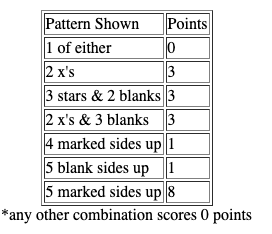
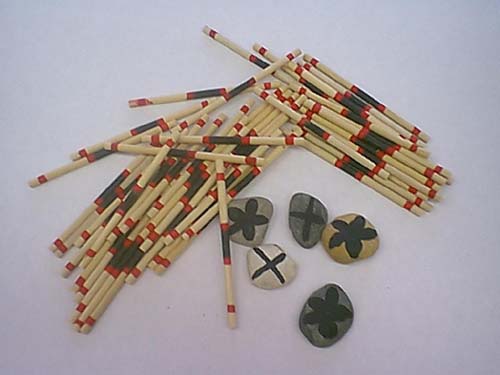
The game “Hubbub” caught my attention. Players take turns tossing the dice and collecting point values, represented by the sticks. The game ends when all of the counters are gone, and whoever has the most sticks at the end wins.

This is a very simple game that opens up lots of discussion about probability, at many different grade levels. I can see it being used in elementary for patterns and collecting data; in the middle school level for simple probability; and at the high school level for statistics and probability.

http://mathcentral.uregina.ca/RR/database/RR.09.00/treptau1/mathcontent.html

M2P5: Tua’ll (and then) I used math to tell a story

Tua’ll (and then) I used math to tell a story: Using think alouds to enhance agency and problem solving in an indigenous high school mathematics class

This thesis is an action-research project in a high school math classroom that focuses on student discourse and agency. I am excited that I found such a detailed and extensive account of someone’s journey of incorporating Indigenous culture into an Indigenous high school mathematics class.

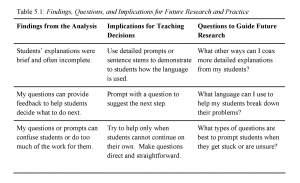
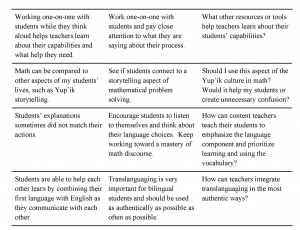
Below are some findings, implications, and questions from the report.

M2P4: Indigenous Learning Preferences and Interactive Technologies

A research study conducted in BC that studied the impact of interactive technologies on math achievement of Indigenous students in Grades 4-7.

Kitchenham, A. (2017). Indigenous Learning Preferences and Interactive Technologies. The Australian Journal of Indigenous Education, 46(1), 71-79. doi:10.1017/jie.2016.12

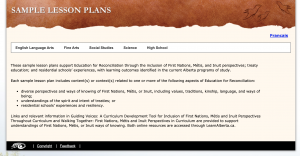
M2P3: Alberta Ed Sample Lesson Plans

These sample lesson plans support Education for Reconciliation through the inclusion of First Nations, Métis, and Inuit perspectives; treaty education; and residential schools’ experiences, with learning outcomes identified in the current Alberta programs of study.

Each sample lesson plan includes content(s) or context(s) related to one or more of the following aspects of Education for Reconciliation:

  • diverse perspectives and ways of knowing of First Nations, Métis, or Inuit, including values, traditions, kinship, language, and ways of being;
  • understandings of the spirit and intent of treaties; or
  • residential schools’ experiences and resiliency.”

I was excited to find this resource, but then noticed that Mathematics was not a subject included, which makes me eager to try to gather resources for teaching math in the K-12 classroom, but also makes me question why?

M2P2: Indspire Online Resource Centre

“Indspire is a national Indigenous registered charity that invests in the education of First Nations, Inuit and Métis people for the long term benefit of these individuals, their families and communities, and Canada.”

Within the Online Resource Centre contains documentation and evaluation of various projects that Indspire has completed. Some that interested me are:

M2P1: Stepping Stones

Stepping Stones is a publication of the Alberta Teachers’ Association Walking Together: Education for Reconciliation and is intended to support certificated teachers on their learning journey to meet the First Nations, Métis and Inuit Foundational Knowledge competency in the Teaching Quality Standard.”

This resource is helpful in providing a detailed overview of various topics including, but not limited to, terminology, Treaties, Canada’s history, First Nations Traditions and culture, and residential schools.

M2. P4

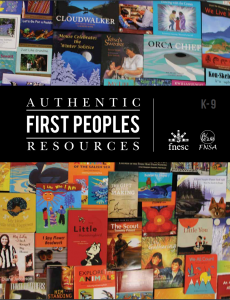
The FNESC which stands for First Nations Education Steering Committee has an incredible website with tons of valuable knowledge and resources for Educators. If you click on the image below, you will be taken to a PDF of authenticated First Peoples resources along with documents to help you or your school evaluate the authenticity of resources you find or bring into your building. As I’m focussing on Identity, I loved how each resource is annotated in-depth with information about all the authors, the retelling, Indigenous Language used, and features of the resource such as if it includes a teacher guide.

M2. P1

I’ve been spending a lot of time reframing my final project platform and topic to focus solely on developing a Unit that speaks to the First People’s Principle of Learning; How learning requires exploration of one’s identity

On my search for resources into how best to develop education around this principle, I came across a number of fantastic readings/videos, and sites. The first is from SET-BC which is a Ministry of Education Provincial Outreach Program which was created to “assist school districts in educating students who require or would benefit from using technology to access the curriculum.”

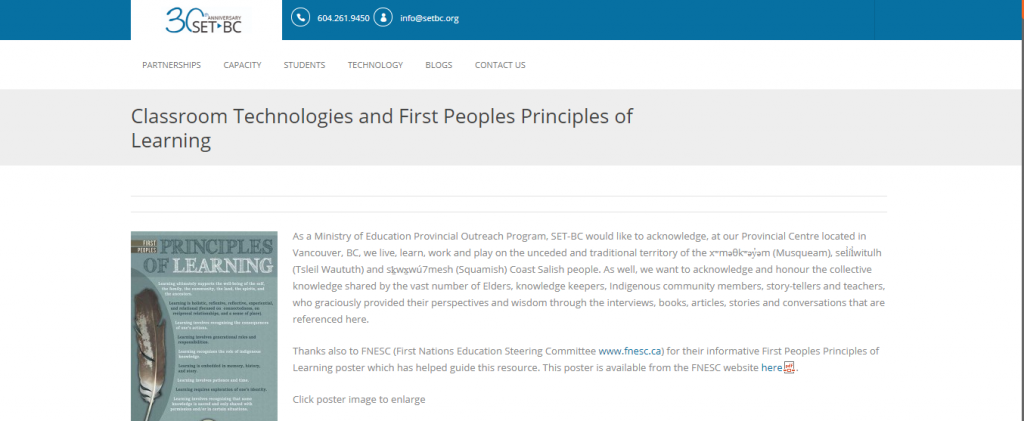
What I was most interested in was their Blog page which is where I found a post titled, “Classroom Technologies and First People’s Principles of Learning.” On this page, it provided a series of Modules that focussed on one particular principle. Each module includes audio, video, resources, and a breakdown of the content which can be used to fit your classroom. You can view the page by either clicking HERE or you can scroll through it below – EDIT (apparently iframes are not supported on this blog although I have used them many times before…so you can just see what the front page looks like instead or click above!)