Tag Archives: bccurriculum

M4. P1

Jo-Anne Chrona said it best when speaking about the FFPL and what needs to happen first:

“a deep understanding of the FPPL is first necessary, and this understanding can then be used to guide educators’ choices about what is important to learn, and what kinds of learning experiences to create for, and with, learners in the contexts the learners and educators are in. This will vary from place to place, and community of learners to community of learners” (2014).

As I was researching the worldviews, I came across this incredible video resource from Focused Education Resources. You can find the link HERE. Of note for me, was the video below which goes through connectedness and relationships. Through this course I have developed a deep understanding for the importance of these particular principles and how we must “look for ways to relate learning to students’ selves, to their families and communities.”

References

Chrona, J.First peoples principles of learning. Retrieved from https://firstpeoplesprinciplesoflearning.wordpress.com/

Focused Education Resources. (2021). Retrieved from https://focusedresources.ca/en/supports-tutorialsvideosguides

M4P4: Burnaby Village Museum, a step toward reconciliation

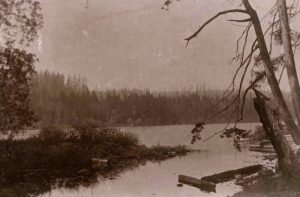
Over the past few years, Burnaby Village Museum has taken steps to undo “the part it has played in erasing Indigenous history from the place we now call Burnaby (Vancouver is awesome, 2019). This is an important step toward reconciliation and an example that can be discussed in class.

Out of this process has come the Indigenous History in Burnaby Resource Guide. This guide is an excellent resource for grade 5 and beyond, providing local context and story to the areas in which my school is found and where the kids play and live. This guide also serves another purpose though, and that is to open up conversation about how history is written. Who funded this book? Who consulted in this book? Who received credit for this book?

Naylor, C. (2019, November 1). Burnaby museum works to undo erasure of local Indigenous history. Vancouver Is Awesome. https://www.vancouverisawesome.com/history/indigenous-history-burnaby-village-museum-1946638.

M3P4: Gladys We Never Knew

Using the art of storytelling, this BCTF resource focuses on Gladys, an Indigenous girl from Spuzzum, and her life in a residential school. I appreciate its BC centered focus relating it directly to where students live and explore. It links to additional sites throughout the each lesson that enhance learning, but the information provided within the resource itself is rich. Each lesson is easily adaptable to earlier or older grades and provoke students to make connections to their lives. It is also available in French for those teachers who are in an immersion classroom.


M3P2: Location and Minecraft

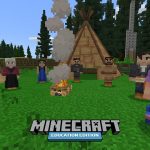
The importance of location was highlighted in this module, and I was inspired by the Anishinaabe World in Minecraft, a collaborative project between the Louis Reil Foundation and Microsoft, that “honours, celebrates and explores a Manitoba Anishinaabe community” (Minecraft Anishinaabe World, n.d.). It made me wonder if a similar project could be created that reflects the locality of First Nations on whose territories my school resides. To that end, the Cobblestone Collective offered a more in-depth look at Minecraft and the incorporation of Indigenous knowledge through an Elder led three-part session. The sessions focused on local plants, medicines, traditions that guided cultural practice and allowed students to engage in an immersive experience. It was full of relevant information for an educator looking to expand their use of Minecraft to remove the colonizing focus while responding to the cultural knowledge of their students.

Cobblestone Project three part series: https://cobblestonecollective.ca/manito-ahbee-aki-minecraft-education-edition/

References:

Minecraft Anishinaabe World. Louis Riel School Division. (n.d.). https://www.lrsd.net/What-We-Offer/Pages/Minecraft-Anishinaabe-World.aspx.

Module 2 – Post 2 Social Media as a resource?

I had never considered the possibility of posting an Instagram or TikTok account in a university discussion, but here we are 🙂

Peter NotSo White was introduced to some of my students with social media by a classmate. Since being introduced, his posts have sparked discussion and learning both in class and at home. He presents small but timely information bits on many different aspects of indigeneity, including where does knowledge on indigenous people come from and some of the stereotypes people are exposed to. He also uses story time to deliver messages about life that students in my class really connect with. His content is mostly age appropriate for grade 4/5 (scan first – I have not watched all of them) and his tone and manner are engaging.

His account, and others like it, is an important part of decolonizing my classroom. Relying on outdated texts that tell us a colonial view of history does not help move reconciliation forward. Neither does using texts or media created by non-indigenous voices. The Government of Canada, for example, has a plethora of information available but who benefits from its use?

Module 2 – Post 1 Colonial practice and Minecraft

While the days of Oregon Trail are well behind us, Minecraft has stepped in and filled the “exploration game” void. One of the most popular Microsoft games available for children, my school district has encouraged widespread use of Minecraft Education for socials and STEAM studies. And I happily jumped on the train: what a great way for students to be passionate about learning!

Like all technology, however, it requires a critical eye.

As we have discussed, technology goes not exist in a culturally neutral void and Minecraft is no exception. This infographic was shared by a colleague and, while simple, it effectively helped connect the game to our colonial history. There is a growing discussion about the use of Minecraft as a conquering game and who’s agenda is being pushed. Certainly, this infographic and the supporting documents I have attached have given me pause for classroom use of Minecraft. I do not believe the game itself needs to be thrown out. Rather, what conversations am I having with my students about the messages the game portrays? What activities am I asking them to do? What standard of behaviour is being set?

Further reading:

Minecraft: The Robinsonade of Creativity or Colonialism?

https://journals.sagepub.com/doi/pdf/10.1177/1555412016655678

M1P5: Indigenous Education Resources

This website houses some amazing information for Indigenous Education.

A school is also highlighted on this website:

“Nala’atsi is a school based in Courtenay, British Columbia for students with Indigenous ancestry in grades 10 to 12. It is a 10 month program that provides individualized support for students whose needs have not been met in a mainstream classroom setting. Nala’atsi aims to give students a sense of community and belonging, a safe and compassionate learning environment, as well as access to a variety of exciting cultural activities within the community and beyond.”

M1P2: British Columbia’s FPPL

First People’s Principles of Learning

  • Looking forward to referencing this document and incorporating these principles into my classroom, and seeing how they can align with Alberta curriculum.
  • I also found this link as an “informational URL” on the BC Government’s website, offering suggestions for how teachers can include the FPPL in their classrooms.

Module 1 Post 4

Hidden History is an interactive e-book that offers resources to educators on the history of residential schools in Canada, which is part of the grade 4/5 curriculum I teach. It includes information on the formation of residential schools, the practices within, and consequences. It also looks towards reconciliation and the role of teacher in this process. I found the six steps outlined by project of the heart particularly impactful as action that can be taken within the classroom. It expands beyond “teaching about” and gives teachers a stepping stone for helping students listen to the stories of survivors and to take social justice action. It is a collaboration between the BC Teacher’s Federation (BCTF) and Indigenous peoples of BC, and offers some authentic voices along with a western written history.

Hidden History E-Book

Project of Heart information

Further resources related to Project of the Heart


M1. P3.

The First Peoples Principles of Learning are deeply engrained in the curriculum for me. This particular site is a blog created by Jo Chrona di waayu. Kitsumkalum di wil’waatgu. Ganhada di pdeegu. She has over 20 years of experience in K-12 and post-secondary systems in BC and among many other degrees, she holds a Masters of Education Technology too. Her blog has invaluable knowledge of the FPPL, authentic resources, professional development, and experiences. Of note, which is a crucial part of our discussions lately, is the last paragraph on her Home page:

A final note – while the words are mine (except for the Principles themselves, and where referenced otherwise) the ideas shared on this site are built upon the knowledge gained from a vast number of Indigenous peoples including Elders, knowledge-keepers, formal and informal teachers, scholars, and story-tellers (oral and written) from whom I have learned during the journey of my life. This work is for them and for the learners yet to come.

You can visit and explore the blog HERE

– Sasha Passaglia