Tag Archives: community

Project of Heart (M4P1)

Project of Heart is an artistic inquiry into the history of Indigenous people in Canada and the legacies of the Indian Residential Schools (IRS). Though open to all Canadians, it is geared towards schools and students. The website is organized by Province to help provide local context and resources. 

The project’s framework includes 6 steps:

  1. Investigate the History and Legacy of Residential Schools in Canada
  2. Look closer at a specific IRS in your local area, including whose territory it is located on and the children taken to the school
  3. Create a gesture of Reconciliation
  4. Survivor Visit
  5. Social Justice Action
  6. Finishing Up Project of the Heart

For Step 3, the website gives several suggestions for projects, from their traditional commemorative wooden tiles to crafting feather wreaths or writing a song. The provincial pages also provide blog-rolls with examples from schools. An approach that I think would be interesting is a collaborative mosaic. Ideally, this would be done in collaboration with a local Indigenous artist who would create the overall design and perhaps teach the students some art lessons. For examples of Collaborative Mosaics, check out Jen Jolliff‘s school ones, and the Global Roots Project.
M4P5: Youth who inspire

These five First Nations youth are being highlighted for their action in restoring language and culture and ultimately hope in their communities. They are also an example to students of action: it is personal, it takes different forms, and it is in response to a personal connection. As the final project considers using technology to inspire activism in the classroom, all of these youth use technology for their purpose. Exploring who they are, their message, and their delivery offers students a rich experience of activism in action.

M4P2: SFU Museum of Archeology and Ethnology

My focus for the final module has been on local sources that can enhance my students’ understanding of the area around them. Given my school’s proximity to Simon Fraser University (SFU), there are many resources that directly relate to this subject. SFU’s Museum of Archeology and Ethnology is primarily designed to be enjoyed in person. With COVID, however, the museum has shifted to creating online content for educators, the majority of which relates to First Nations culture (though not all). While the site offers many resources, of particular note is the Tse’K’wa history of project that raises some interesting discussion around archeology and who owns what.

M4P1: The Bill Reid Centre

The Bill Reid Centre is located at Simon Fraser University, a forty-minute hike from my school, but I did not realize its website was so rich in resources. It uses digital technologies such as photographs, drawings, videos, and other visual media to highlight the depth and vibrancy of Northwest Coast culture. Each section is so plentiful in resources that an entire year of curriculum could be developed with the website as a starting point. Its stated mandated is to (1) encourage community and academic conversations regarding the visual culture of Northwest Coast First Nations, and (2) promote public understanding and respect for the First Nations of the Northwest Coast past and present. The digital village project, in particular, could be of particular value in my class when using Minecraft to showcase knowledge.

M3P4: Gladys We Never Knew

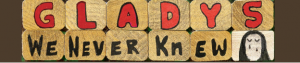
Using the art of storytelling, this BCTF resource focuses on Gladys, an Indigenous girl from Spuzzum, and her life in a residential school. I appreciate its BC centered focus relating it directly to where students live and explore. It links to additional sites throughout the each lesson that enhance learning, but the information provided within the resource itself is rich. Each lesson is easily adaptable to earlier or older grades and provoke students to make connections to their lives. It is also available in French for those teachers who are in an immersion classroom.


M3P2: Location and Minecraft

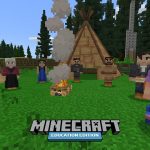
The importance of location was highlighted in this module, and I was inspired by the Anishinaabe World in Minecraft, a collaborative project between the Louis Reil Foundation and Microsoft, that “honours, celebrates and explores a Manitoba Anishinaabe community” (Minecraft Anishinaabe World, n.d.). It made me wonder if a similar project could be created that reflects the locality of First Nations on whose territories my school resides. To that end, the Cobblestone Collective offered a more in-depth look at Minecraft and the incorporation of Indigenous knowledge through an Elder led three-part session. The sessions focused on local plants, medicines, traditions that guided cultural practice and allowed students to engage in an immersive experience. It was full of relevant information for an educator looking to expand their use of Minecraft to remove the colonizing focus while responding to the cultural knowledge of their students.

Cobblestone Project three part series: https://cobblestonecollective.ca/manito-ahbee-aki-minecraft-education-edition/

References:

Minecraft Anishinaabe World. Louis Riel School Division. (n.d.). https://www.lrsd.net/What-We-Offer/Pages/Minecraft-Anishinaabe-World.aspx.

M1P4: Indigenous Cinema in the Classroom

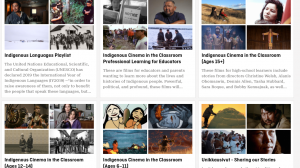
“Our educational playlists are selections of films on themes that tie in with Canadian curricula and address the important issues of the day. Many of the playlists are also linked to our study guides.”

Within the “Indigenous Voices and Reconciliation” tab, some playlists that I have flagged for review are:

  • Indigenous Cinema in the Classroom Professional Learning for Educators
  • Indigenous Cinema in the Classroom (Ages 15+)
  • Indigenous Cinema in the Classroom (Ages 12-14)
  • Indigenous Cinema in the Classroom (Ages 6-11)

https://www.nfb.ca/education/educational-playlists/#indigenous-voices-and-reconciliation

Module 1 Post 2

This virtual museum provides information on Métis history and culture. It presents collections, exhibits, learning resources and some information on Michif, the orally based language of the Métis. Returning to the idea of presenting and preserving culture in its many forms, this is an interesting resource for deepening student understanding of Métis people. I found it particularly relevant for a French immersion classroom, given the history of the French on the Métis. I think the use of primary documents is of particular importance as we gain growing awareness on who’s voice is being heard when history and reality are being taught.  From a technology standpoint, it is an interesting blend of visual, audio and video files including oral history interviews.

The Virtual Museum of Métis History and Culture.

Module 1, Post #4 – Revitalizing Indigenous Language Through Technology

Our planet is home to over 7000 languages currently spoken, yet this unique linguistic diversity—the defining characteristic of our species—is under extreme stress, as are the indigenous communities that speak these increasingly endangered languages.

Indigenous and other historically marginalized speech communities are leveraging new digital tools and technologies in inspiring ways to reclaim their languages and move historically oral traditions into online spaces.

The National Research Council of Canada (NRC) is working on various collaborative projects that aim to utilize speech- and text-based technologies to assist the stabilization, revitalization and reclamation of Indigenous languages. I have included a screenshot of the different projects from the website: https://nrc.canada.ca/en/research-development/research-collaboration/programs/canadian-indigenous-languages-technology-project


M1. P2.

Indigeneity is tied to land and place. I’m very interested in learning more about the importance of place and identity and how technology can be integrated in a meaningful way to support this. I came across an incredible program from Pirurvik, which is an Inuit-owned center of learning based in Nunavut’s capital, Iqualuit. Through this program, there is an online free opportunity called Tusaalanga which allows anyone to learn Inuktut in seven different dialects and with thousands of sound files. This can be accessed anywhere you have wifi or internet. Furthermore, Pirurvik has launched a packet of 3 keyboards for use on Apple’s iPhone for free so that it can be converted into syllabics on screen. This was really exciting to see because the people who identify with this land, have not only created a holistic space where Inuit language, cultural expression, and wellbeing would be fully integrated but have also done so with various technologies.

You can visit Pirurvik by clicking HERE

You can visit Tusaalanga by clicking HERE

– Sasha Passaglia