Tag Archives: TRC

Module 4, Post 5 | Publishers & Reconciliation in Canada

The Calls to Action do not specifically mention publishers, though these businesses can be important players in the dissemination of knowledge. BookNet recently published some interesting articles on how publishers can find their role in reconciliation by seeing themselves in the Calls to Action. Notably,

  1. We call upon the federal, provincial, and territorial governments, in consultation and collaboration with Survivors, Aboriginal peoples, and educators, to (i) make age-appropriate curriculum on residential schools, Treaties, and Aboriginal peoples’ historical and contemporary contributions to Canada a mandatory education requirement for Kindergarten to Grade Twelve students.
  1. We call upon the corporate sector[…] to (i) Commit to meaningful consultation, building respectful relationships, and obtaining the free, prior, and informed consent of Indigenous peoples before proceeding with economic development projects. (iii) Provide education for management and staff on the history of Aboriginal peoples, including the history and legacy of residential schools, the United Nations Declaration on the Rights of Indigenous Peoples, Treaties and Aboriginal rights, Indigenous law, and Aboriginal–Crown relations. This will require skills based training in intercultural competency, conflict resolution, human rights, and anti-racism.
  1. We call upon Library and Archives Canada to (i) fully adopt and implement the United Nations Declaration on the Rights of Indigenous Peoples and the United Nations Joinet-Orentlicher Principles, as related to Aboriginal peoples’ inalienable right to know the truth about what happened and why, with regard to human rights violations committed against them in the residential schools.

https://www.booknetcanada.ca/blog/2021/6/21/taking-action-towards-reconciliation-in-the-book-industry

https://www.booknetcanada.ca/blog/2021/6/21/what-it-means-to-talk-about-reconciliation
 

Decolonizing Reflexive Practice Through Photo Essay (M4P5)

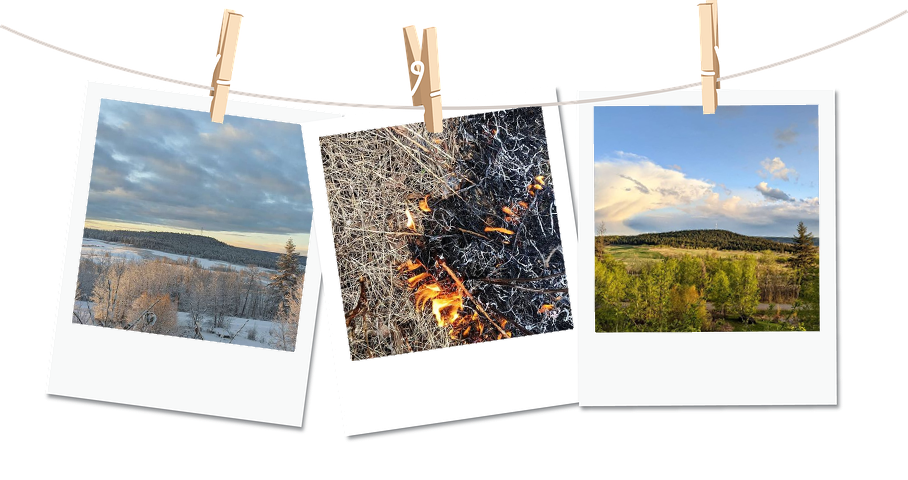
The coming school year will be the first time I teach Photography 11/12, and I am hoping this resource will help me prepare for that. The paper, Decolonizing Reflexive Practice Through Photo Essay Aisinai’pi Storying Place (Walsh et al., 2018) outlines a photo essay project that situates the students’ identities with place. A photo essay is “a series of images evoking stories of original peoples and settlers on this land and fuels important questions about identity and belongingness” (p. 103).

Photo essay example

An example of a photo essay, representing the importance of (controlled) burns for healthy ecosystems.

In the paper, the authors describe using a photo essay of the City of Calgary to orient students with Indigenous worldviews and a sense of place. Each photo has a theme, and many interconnect. For each photo, they asked students key questions, such as:

  • Who originally occupied this land?
  • How do Eurocentric societies and Indigenous societies understand Mother Earth?
  • What are your beliefs about live-giving forces?
  • What promotes health and wellness?
  • How do you understand the notion of all entities to be interconnected and interdependent?
  • etc.

I think this could be a valuable way to introduce students to both photo essays and to local history. You could extend the learning by having students create their own place-based photo essays.


Reference:

Walsh, C. A., St-Denis, N., & Eagle Bear, A. (2018). Decolonizing Reflexive Practice Through Photo Essay Aisinai’pi Storying Place. Cultural and Pedagogical Inquiry, 10(1). https://doi.org/10.18733/cpi29376

Project of Heart (M4P1)

Project of Heart is an artistic inquiry into the history of Indigenous people in Canada and the legacies of the Indian Residential Schools (IRS). Though open to all Canadians, it is geared towards schools and students. The website is organized by Province to help provide local context and resources. 

The project’s framework includes 6 steps:

  1. Investigate the History and Legacy of Residential Schools in Canada
  2. Look closer at a specific IRS in your local area, including whose territory it is located on and the children taken to the school
  3. Create a gesture of Reconciliation
  4. Survivor Visit
  5. Social Justice Action
  6. Finishing Up Project of the Heart

For Step 3, the website gives several suggestions for projects, from their traditional commemorative wooden tiles to crafting feather wreaths or writing a song. The provincial pages also provide blog-rolls with examples from schools. An approach that I think would be interesting is a collaborative mosaic. Ideally, this would be done in collaboration with a local Indigenous artist who would create the overall design and perhaps teach the students some art lessons. For examples of Collaborative Mosaics, check out Jen Jolliff‘s school ones, and the Global Roots Project.

Module #4 Post #1 – TRC special message Dec 1, 2015

The final report has been delivered in 2015.  Where are we today?  This was a video used in one of the lesson plans for teaching using Gord Downie’s “The Secret Path” and it quite powerful.  How much has changed in 6 years?  It took 6 years for the commission to issue the 94 Calls To Action and now 6 years later, where are we?  What a powerful piece of research for students.

M1P5: Indigenous Education Resources

This website houses some amazing information for Indigenous Education.

A school is also highlighted on this website:

“Nala’atsi is a school based in Courtenay, British Columbia for students with Indigenous ancestry in grades 10 to 12. It is a 10 month program that provides individualized support for students whose needs have not been met in a mainstream classroom setting. Nala’atsi aims to give students a sense of community and belonging, a safe and compassionate learning environment, as well as access to a variety of exciting cultural activities within the community and beyond.”

M1P4: Indigenous Cinema in the Classroom

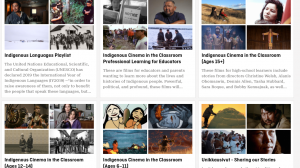
“Our educational playlists are selections of films on themes that tie in with Canadian curricula and address the important issues of the day. Many of the playlists are also linked to our study guides.”

Within the “Indigenous Voices and Reconciliation” tab, some playlists that I have flagged for review are:

  • Indigenous Cinema in the Classroom Professional Learning for Educators
  • Indigenous Cinema in the Classroom (Ages 15+)
  • Indigenous Cinema in the Classroom (Ages 12-14)
  • Indigenous Cinema in the Classroom (Ages 6-11)

https://www.nfb.ca/education/educational-playlists/#indigenous-voices-and-reconciliation

M1P2: British Columbia’s FPPL

First People’s Principles of Learning

  • Looking forward to referencing this document and incorporating these principles into my classroom, and seeing how they can align with Alberta curriculum.
  • I also found this link as an “informational URL” on the BC Government’s website, offering suggestions for how teachers can include the FPPL in their classrooms.

M1P1: The Alberta TQS

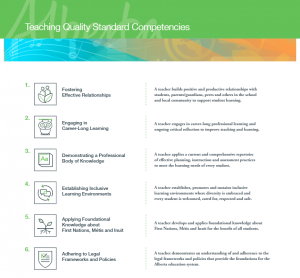
“The professional practice of all Alberta teachers is guided by the Teaching Quality Standard (TQS). This standard is the basis for certification of all Alberta teachers and holds them accountable to the profession and to the Minister of Education.”

In 2008, a sixth competency was added: Applying Foundational Knowledge about First Nations, Métis and Inuit. As it is important for all teachers to keep up to date with their professional practice, the TQS is an important document that I will be referencing throughout this course.

Alberta Teaching Quality Standard infographic

Mod #1 Post #5 Call to Action #10

Under the education section in the 94 Calls to Action, #10 states:

We call on the federal government to draft new
Aboriginal education legislation with the full
participation and informed consent of Aboriginal
peoples. The new legislation would include a
commitment to sufficient funding and would
incorporate the following principles:
i. Providing sufficient funding to close identified
educational achievement gaps within one
generation.
ii. Improving education attainment levels and success
rates.
iii. Developing culturally appropriate curricula.
iv. Protecting the right to Aboriginal languages,
including the teaching of Aboriginal languages as
credit courses.
v. Enabling parental and community responsibility,
control, and accountability, similar to what parents
enjoy in public school systems.
vi. Enabling parents to fully participate in the education
of their children.
vii. Respecting and honouring Treaty relationships.

What the government website says is happening…

Based on the policy proposal for transforming the Government of Canada’s support for First Nations elementary and secondary education that was co-developed with First Nations, Indigenous Services Canada has established a new policy framework for First Nations elementary and secondary education.

I’m not sure what the policy framework is, because it was not linked to the government site.  But suffice to say that I will be inquiring and investigating more about it and to see if it supports this call to action.

Mod #1 Post #4 Call to Action #9

94 Calls to Action as a result of the Truth and Reconciliation Commission Call to Action #9.

We call upon the federal government to prepare and
publish annual reports comparing funding for the
education of First Nations children on and off reserves,
as well as educational and income attainments of
Aboriginal peoples in Canada compared with nonAboriginal people.

As you can see from the repetition of parts of this call, Call #8 was to eliminate the discrepancy, and then call #9 is about reporting out.  This report only speaks to 2016-2017.  It’s 2021… I find it interesting that there is not clearer data even though every school year there should be a report.  I did find the chart particularly interesting below. In theory, anyone attending a provincial school even on-reserve should have full funding from the government.  I wonder if they are?

What is happening?

Indigenous Services Canada is continuing to produce reports on education funding. The most recent public report is from the 2016 to 2017 school year:

Of particular interest for those that are not understanding, FTE means “Full-Time Equivalent” so if a student is part-time they are not a 1.0FTE.  Those schools under self-governance agreements are something I am very interested in learning more about.

Table 1: First Nations K-12 education: Number of FTE students by type of school (2016-2017)
BC AB SK MB ON QC Atlantic All provinces % of total
First Nation-operated schools 4,639 9,752 15,834 15,143 12,884 6,230 1,661 66,141.9 65%
Provincial schools 7,143 6,838 3,556 5,693 5,915 1,597 1,536 32,277.6 32%
Private/Independent schools 725 243 28 189 525 344 44 2,096.6 2%
Federal schools 70 1,398 1,468.0 1%
Total FTE students 12,472 16,902 19,418 21,024 20,722 8,171 3,240 101,984.1 100%
Note: Figures may not add up due to rounding. FTE counts do not include students under self-government agreements.