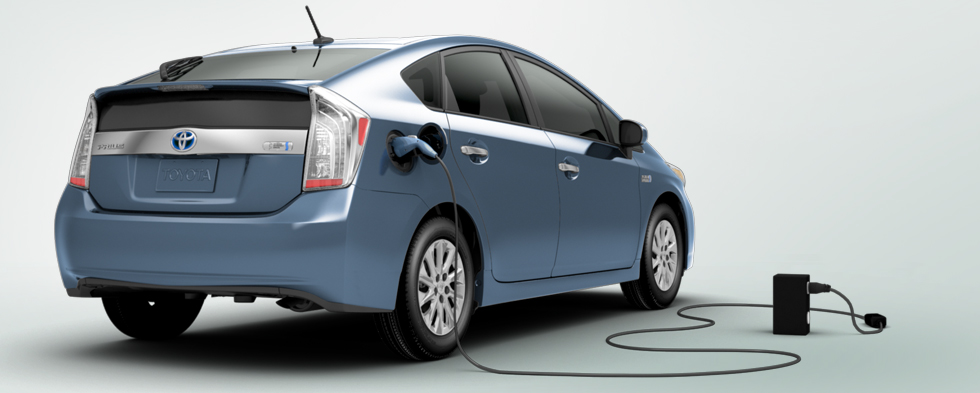
The new Toyota Prius – image from toyota.ca (http://mediapv4.toyota.ca.s3.amazonaws.com/media/lang/main_prius_plugin.jpg)
Toyota Motor Corp has been among the market leaders in hybrid car production. However, after the disappointing reception of the eQ since its launch two years ago, the auto giant is reducing the rollout plans for this model, with an aim to sell 100 eQ’s in the US and Japan this next year, and a total of 2600 electric cars over the next three years.
There is a shortage in demand for environmentally friendly cars. Goods priced relatively high (compared to their alternatives) must provide extra value equivalent to their excess price – cost-benefit analysis. Hybrids have two major selling points: trendiness and quality. They are environmentally friendly alternatives (trendiness) that save you running costs (quality). Although I support the environment, the additional $10,000 price tag to “hybrid” a car doesn’t appeal to me, but, the amount of money this investment could save me does. Well, the breakeven point of Toyota hybrids, where gas price plus car price is equal for standard and hybrid cars, often ranges between 47 and 142 thousand miles (the average US driver travels about 14 thousand miles a year), meaning a hybrid won’t save you money for a few years. If Toyota wants to expand their hybrid market, they must make the cost-benefit analysis of buying a hybrid equal that of a standard car.